500 kg Robotic Welding Positioner for Tower Manufacturing in Kolkata
Case Study: 1
A telecom tower manufacturer in Kolkata approached Cyclotron positioners to improve the production of aluminium telecom towers. Their existing manual welding process was slow, labour-intensive, and prone to distortion, resulting in high rejection rates.
Instead of solving the problem with a single machine, Cyclotron designed a two-stage welding workflow that separated geometry control from robotic welding access. The result was a faster production process, significantly lower rejection rates, and consistent weld quality.
The Challenge
Manufacturing a four-faced aluminium telecom tower presents two challenges that often compete with each other.
The first is geometry. Before any continuous welding begins, all four faces of the tower must be held perfectly square. If the structure is tacked even slightly out of alignment, welding distortion locks those errors into the finished assembly, leading to costly rework or rejection.
The second is welding access. Robotic welding delivers the best results when welding in the flat (downhand) position. On a four-sided tower, however, only one face can be correctly positioned at any given time.
Before automation, the customer relied entirely on manual welding performed by four welders. Each tower required around 8 hours to complete, distortion was common, and 10-15% of fabricated towers required job rejection or major rework. As demand increased, the customer needed a solution that could increase production capacity without compromising quality.
Cyclotron Welding Positioners from India
Cyclotron manufactures industrial welding positioners from 100 kg to 100 Tons capacity, designed for robotic/manual welding, heavy fabrication, and high-production welding environments.
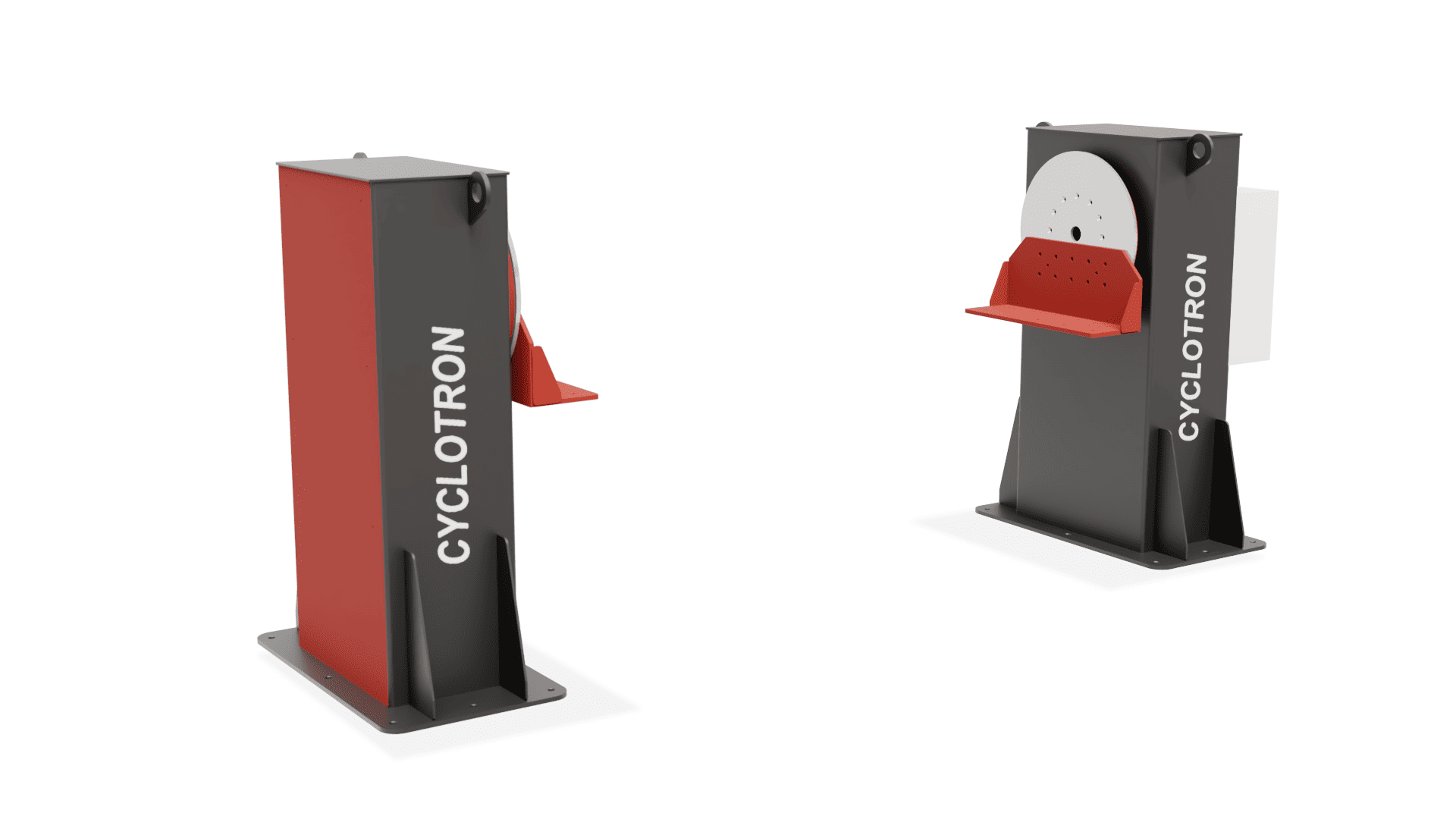
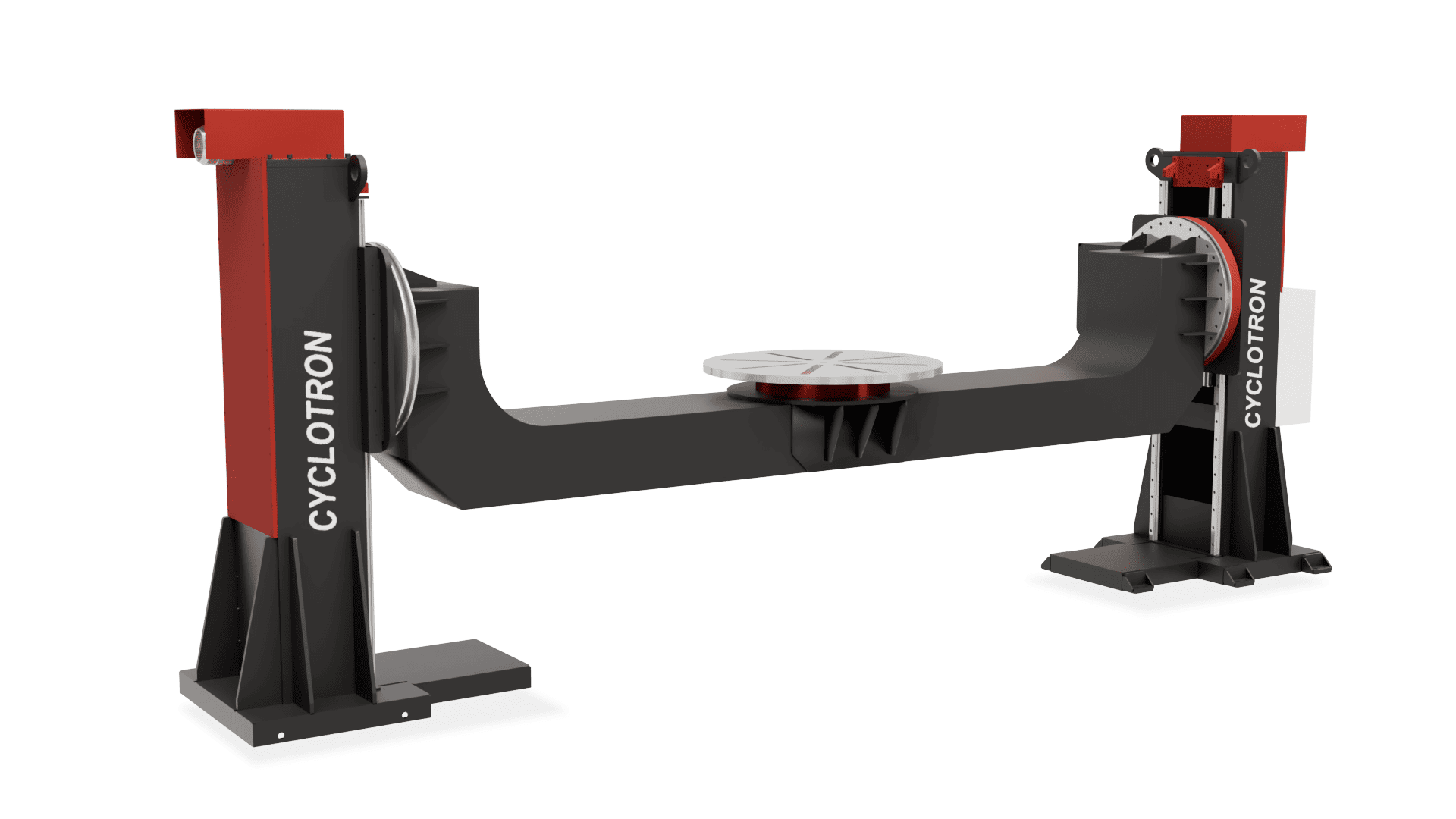
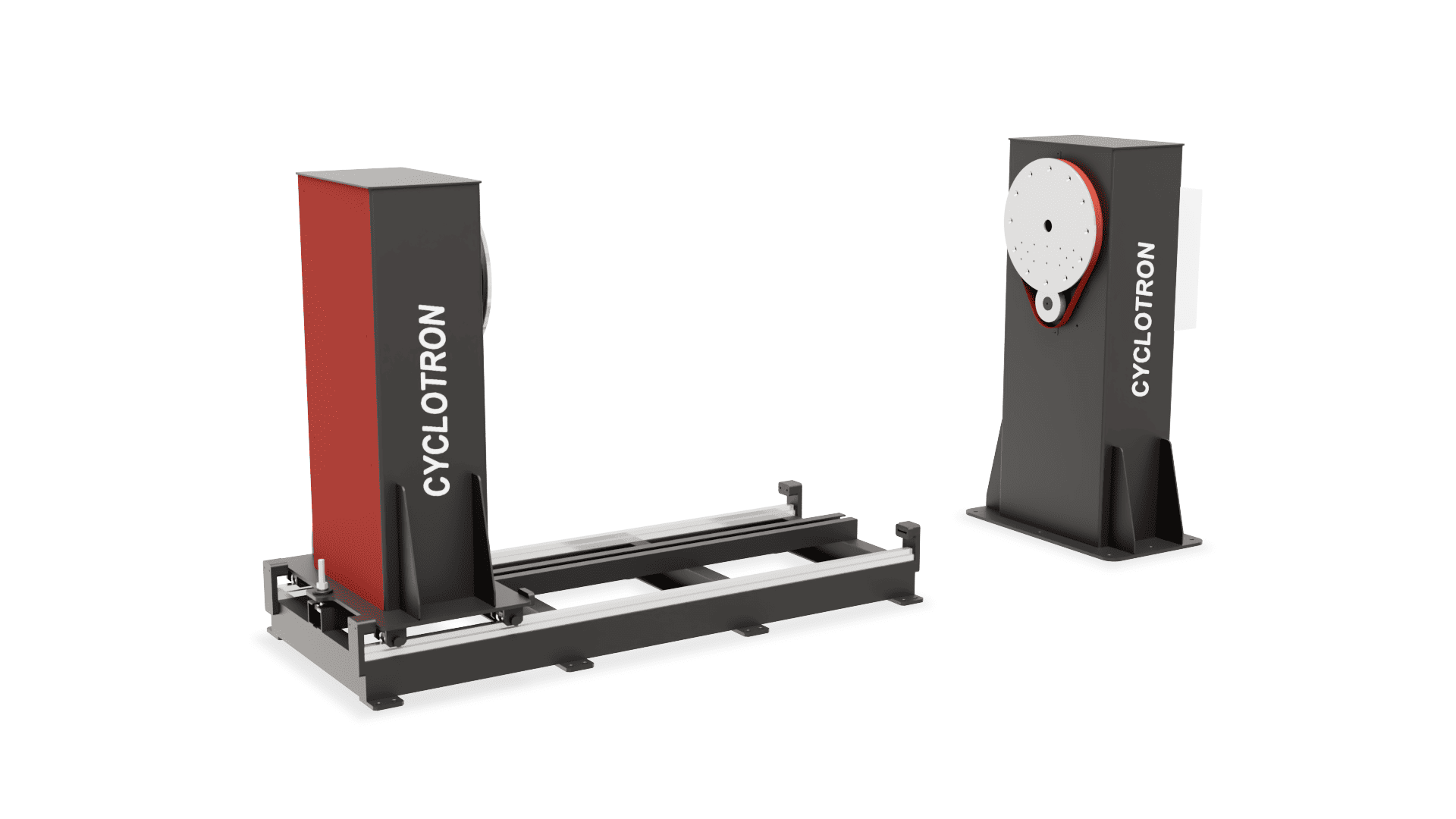
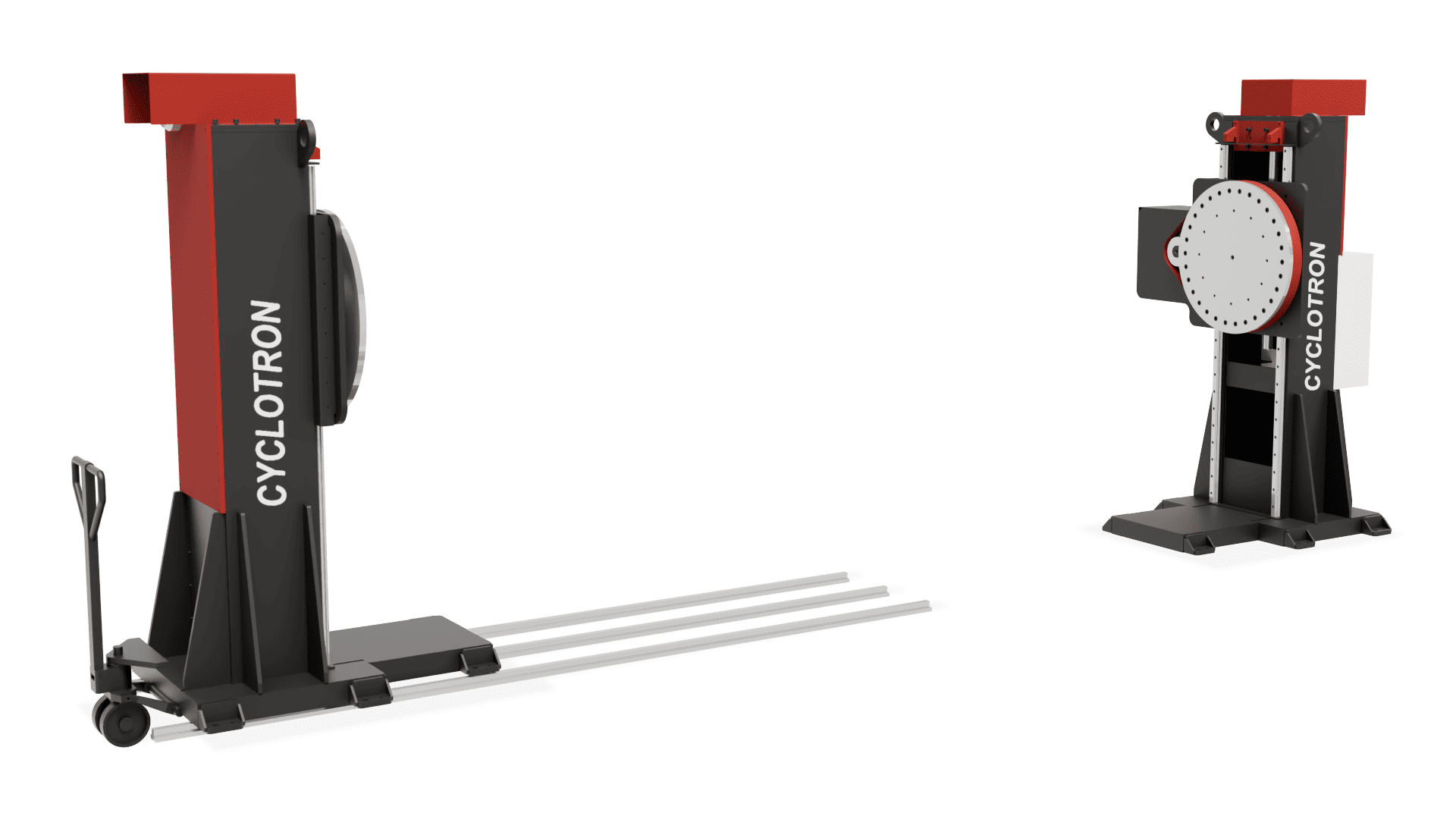
- Cyclotron manufactures all types of Manual/Robotic welding positioners like 1 axis, 2 axis, 3 axis, Headstock-tailstock, L Type, skyhook, etc
Our Approach
Cyclotron addressed the problem by separating the process into two dedicated stations, each designed for a specific purpose.
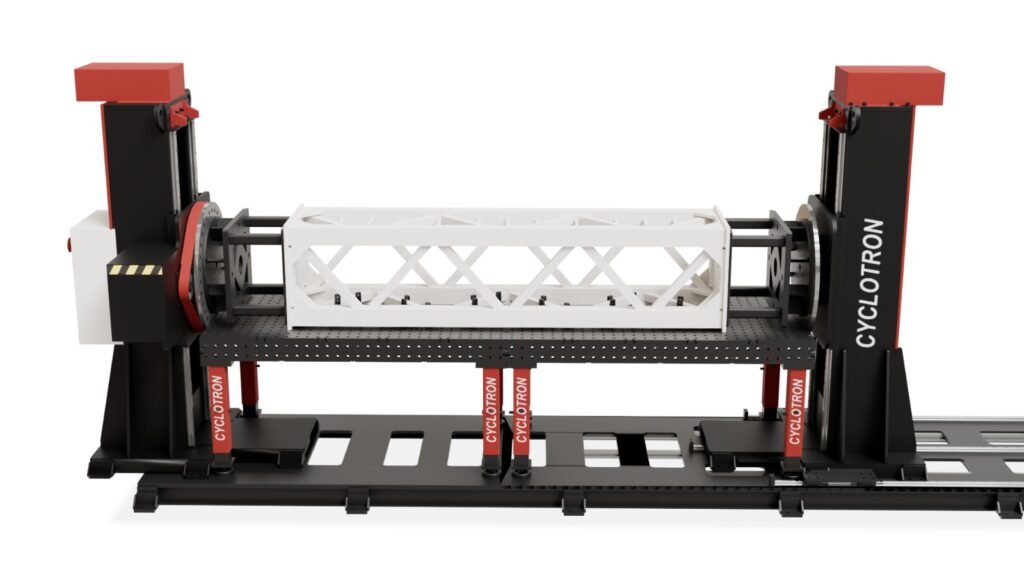
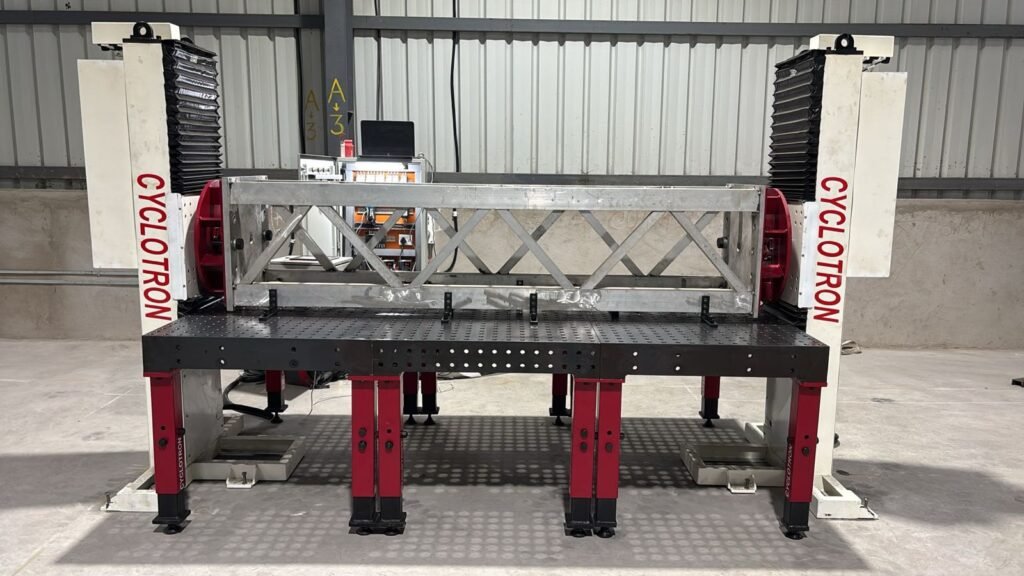
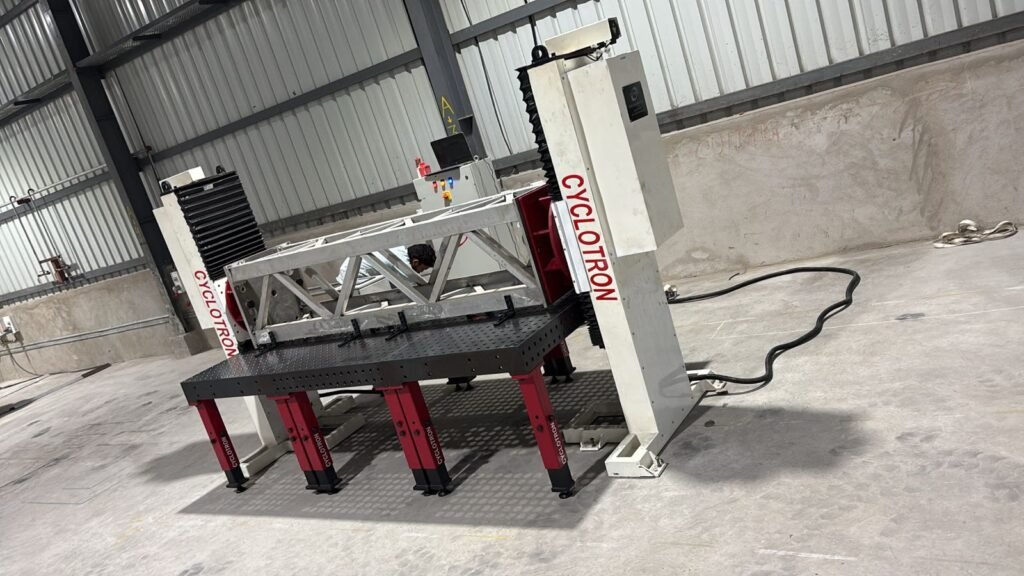
Stage 1: Tack Welding: For Locking the Geometry
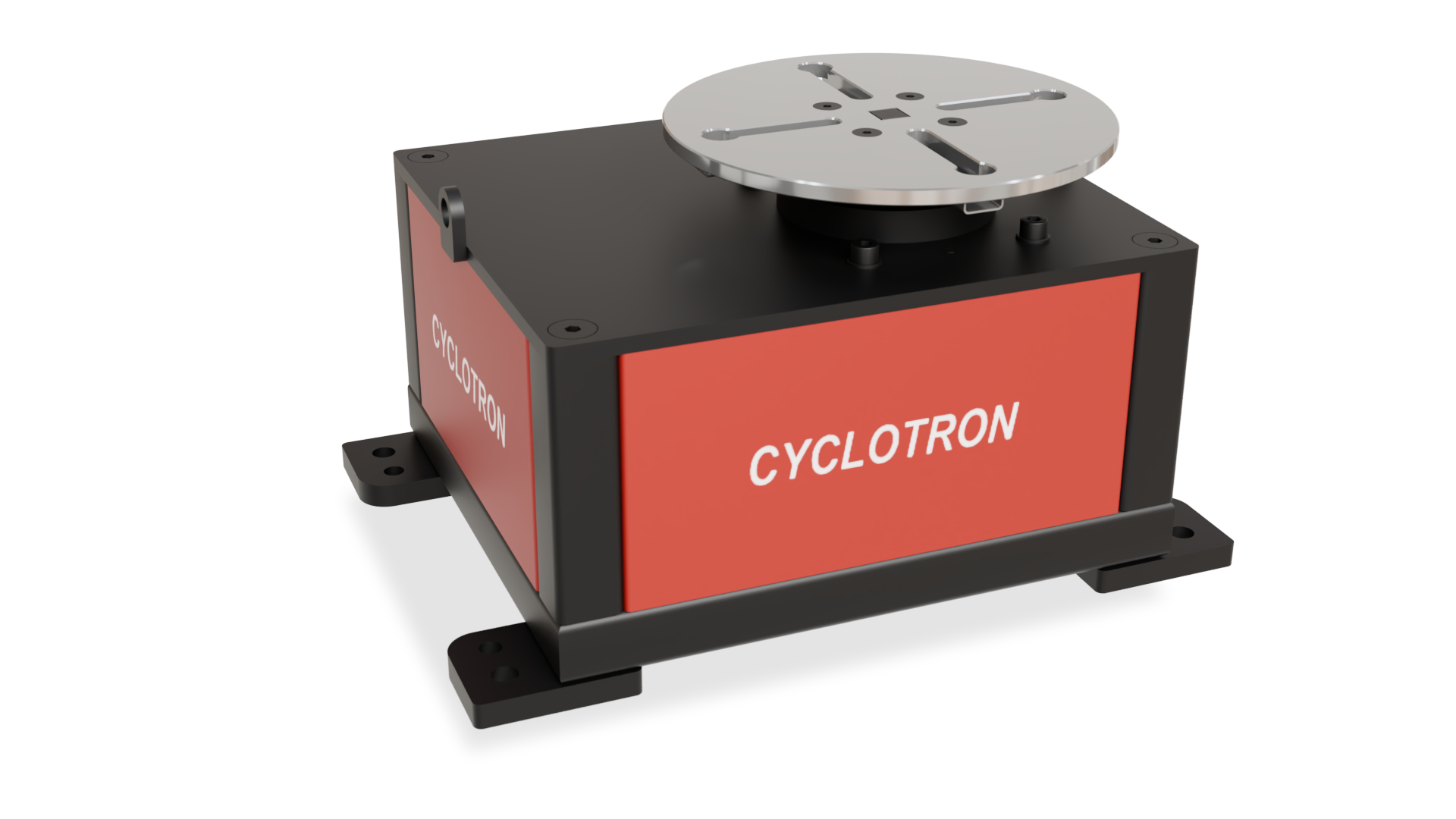
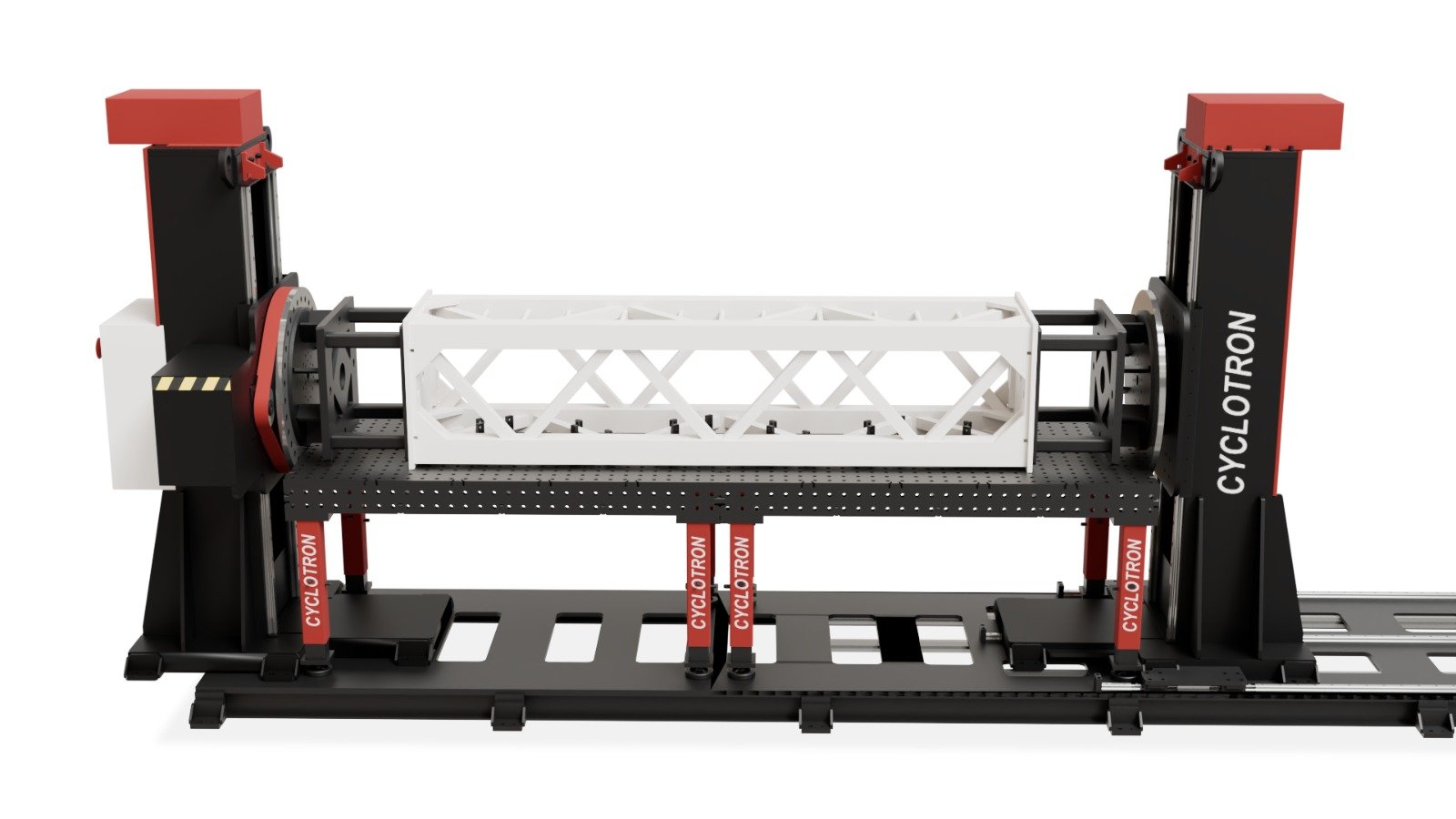
The process begins on a Cyclotron welding table equipped with a purpose-built clamping fixture. The aluminium tower is securely positioned, and each of its four faces is tack-welded individually and the fixture rotates the structure by 90 degrees between each operation.
This stage is critical because it establishes the tower’s geometry before any heavy welding takes place. Once the structure is accurately tacked, its alignment is locked. If the tower were assembled out of square at this stage, no amount of precise robotic welding could restore the correct geometry later.
Stage 2: Robotic Welding: Optimising Weld Access
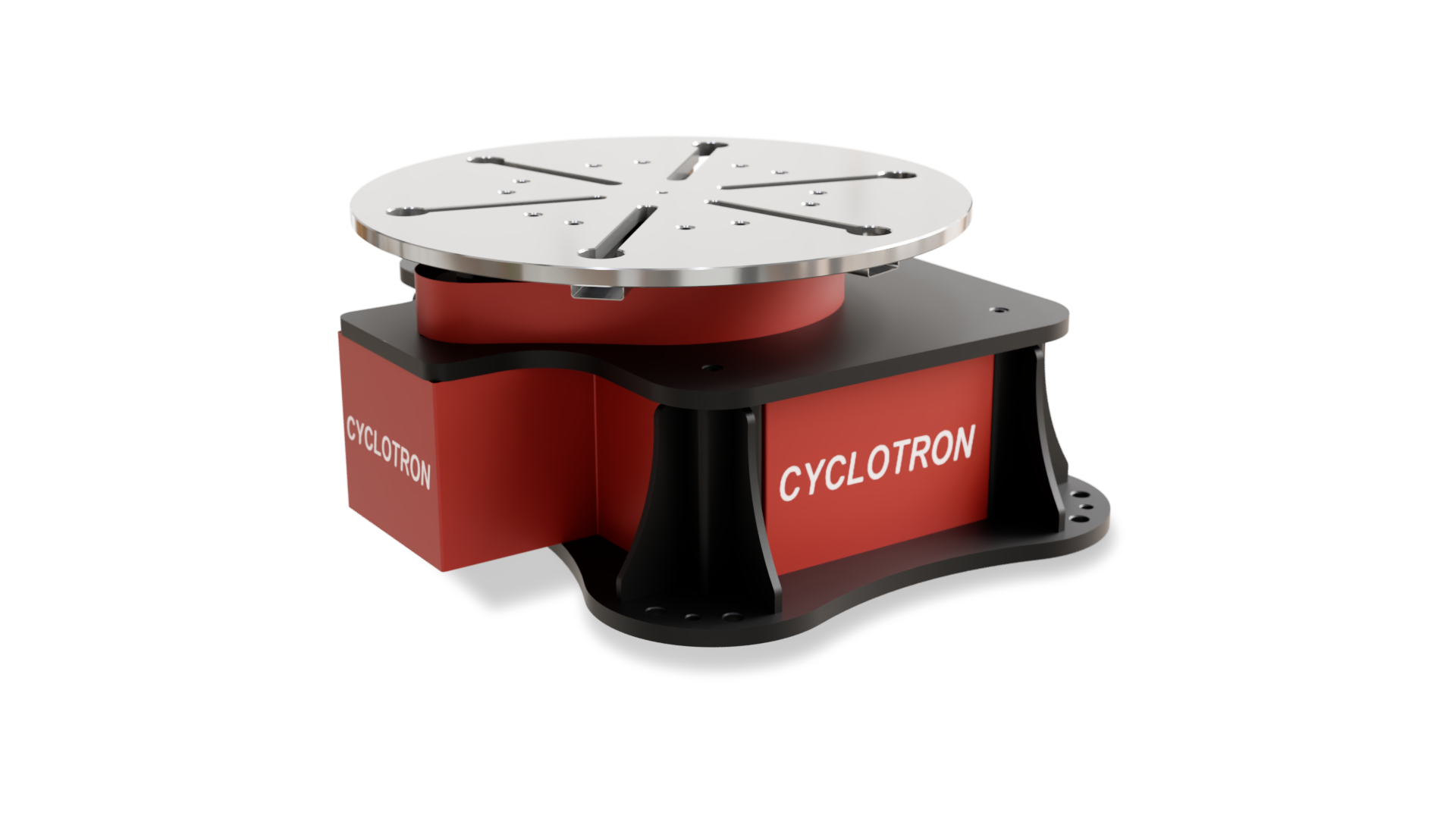
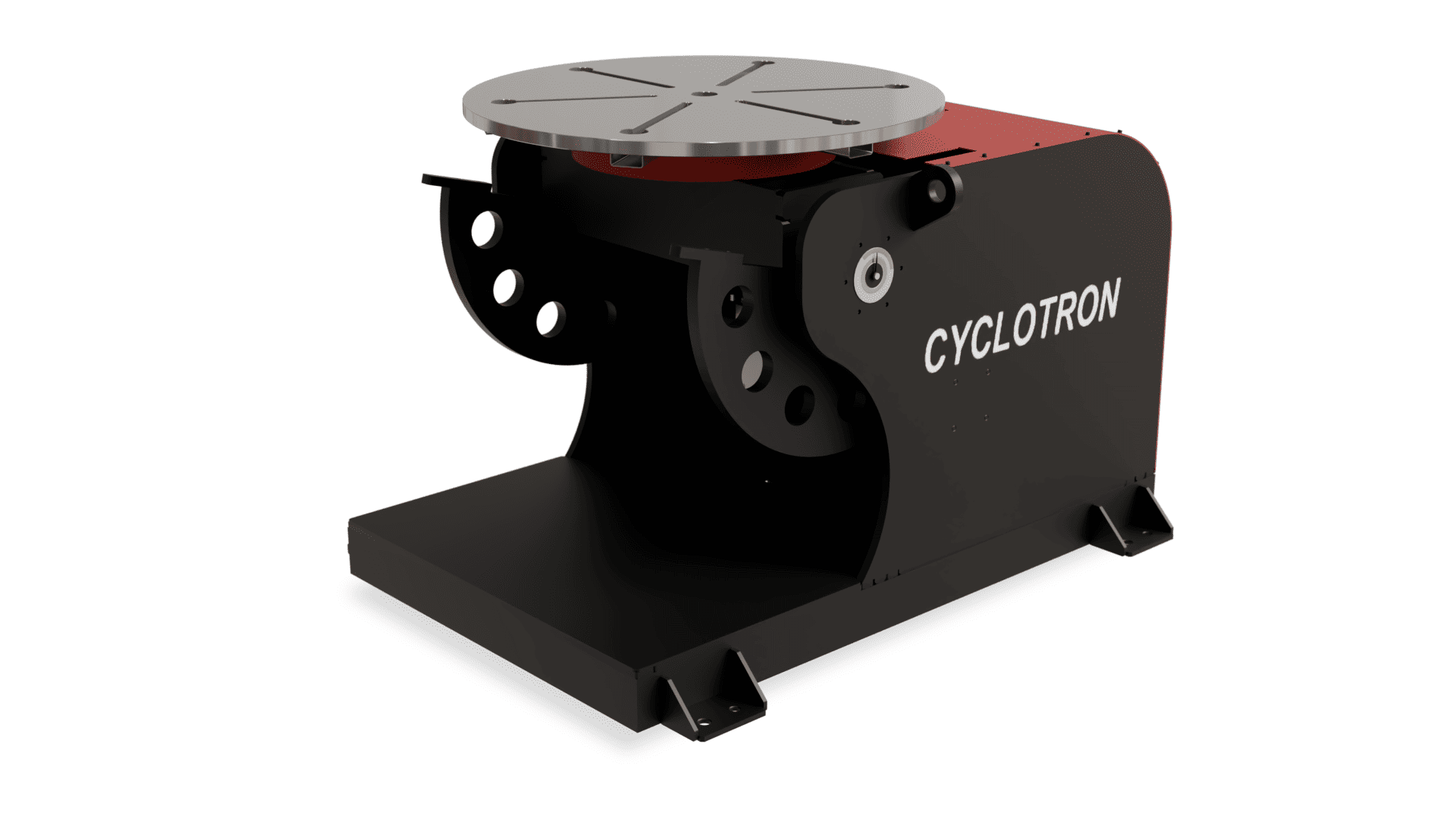
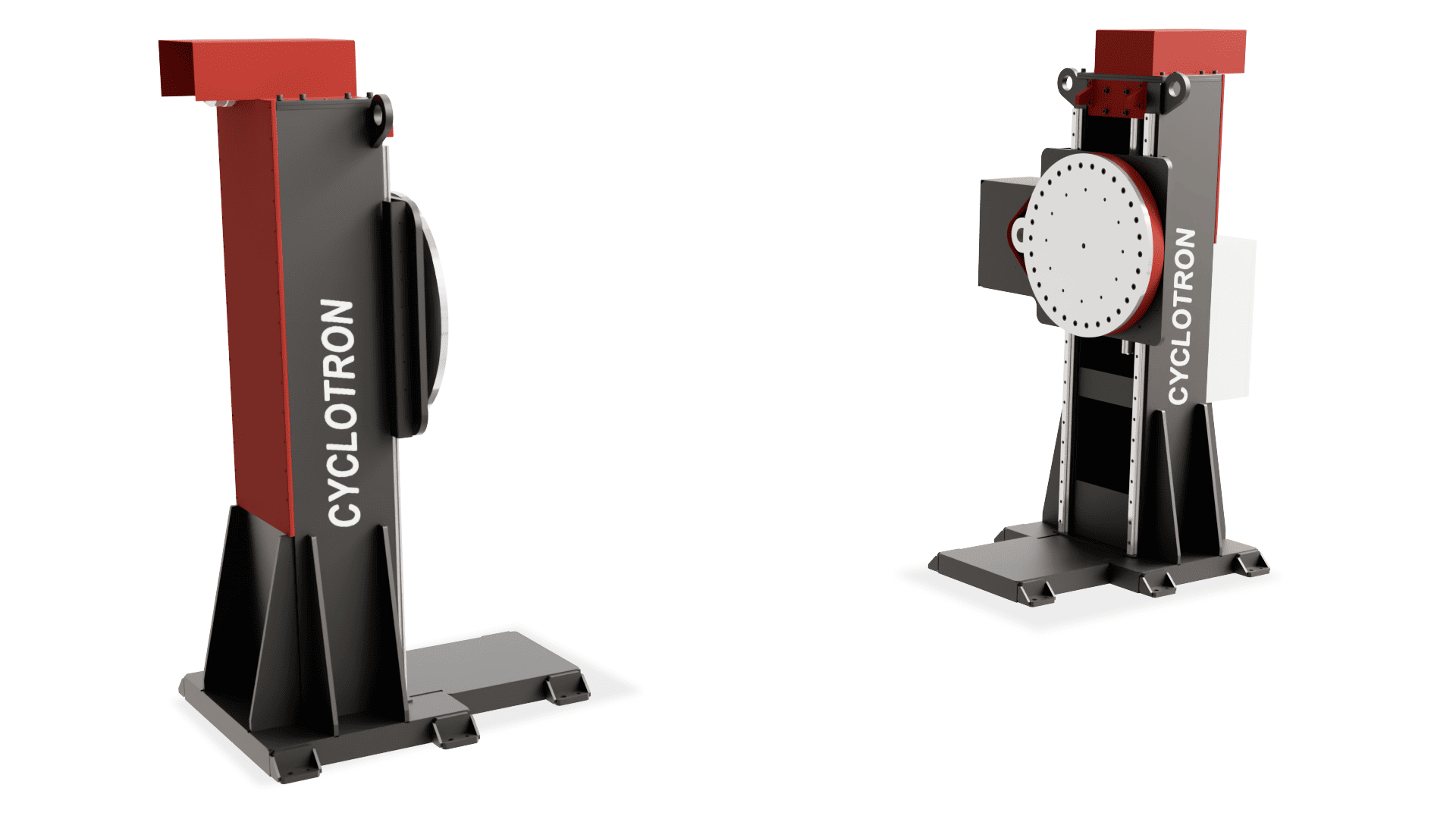
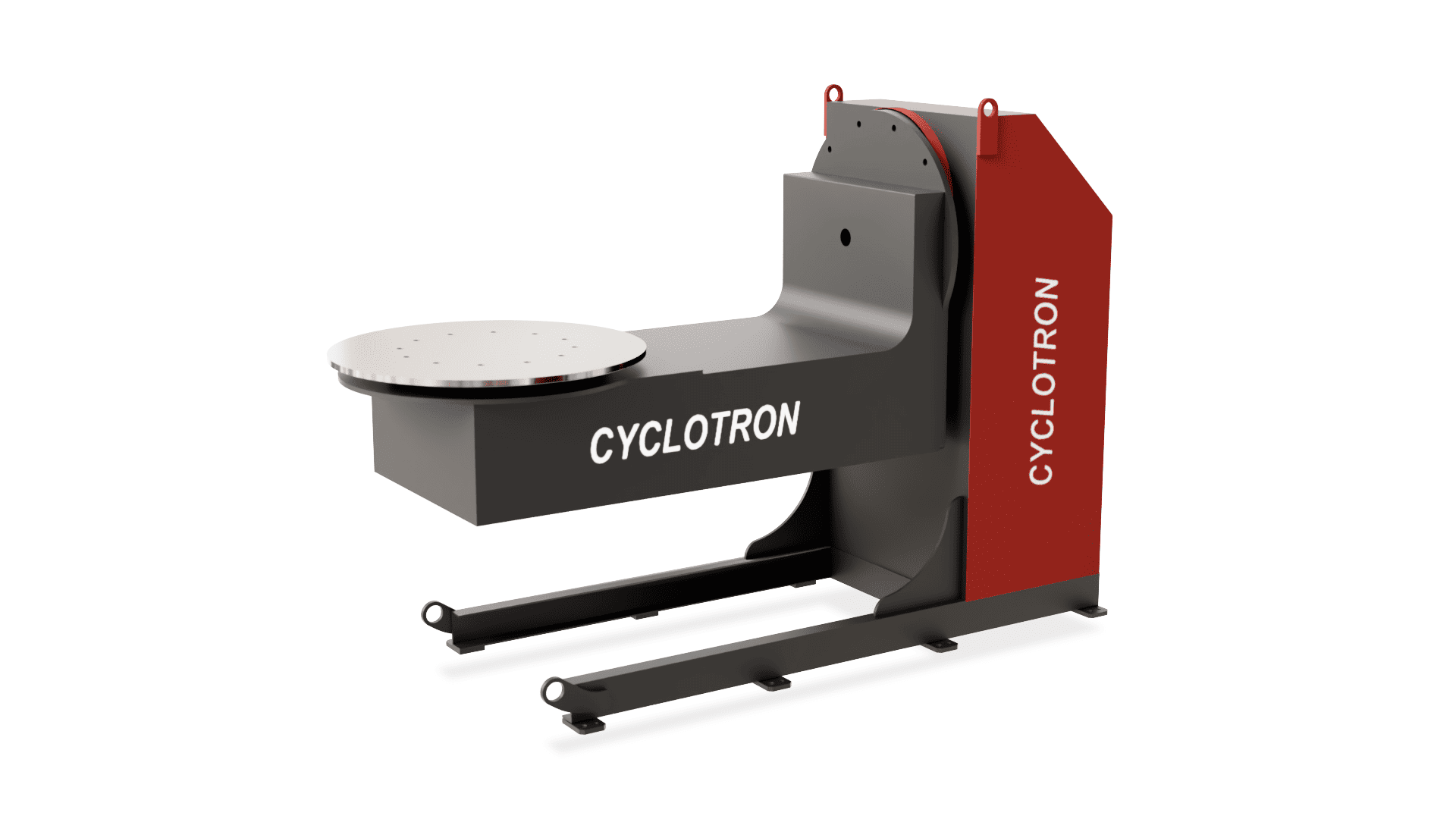
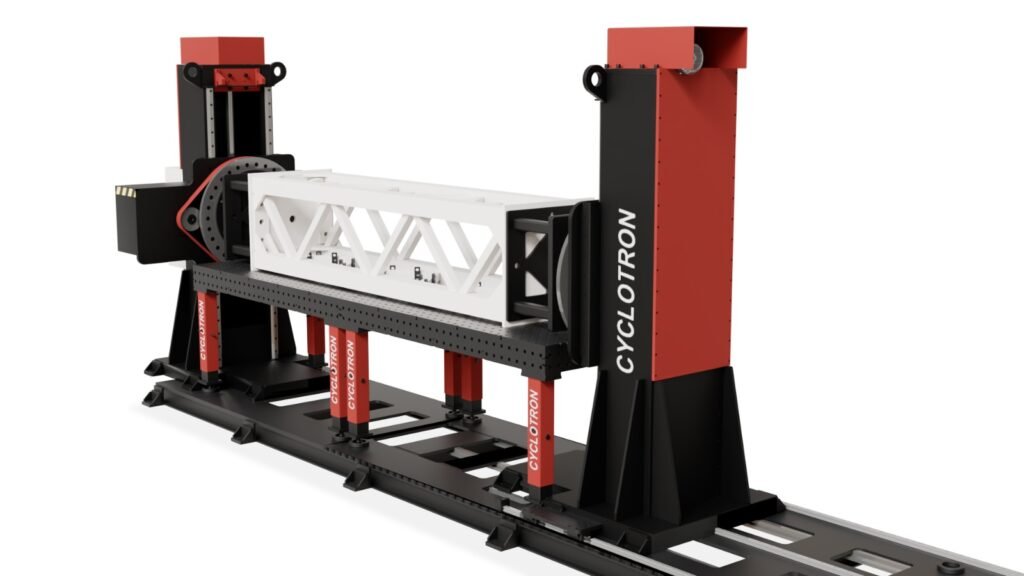
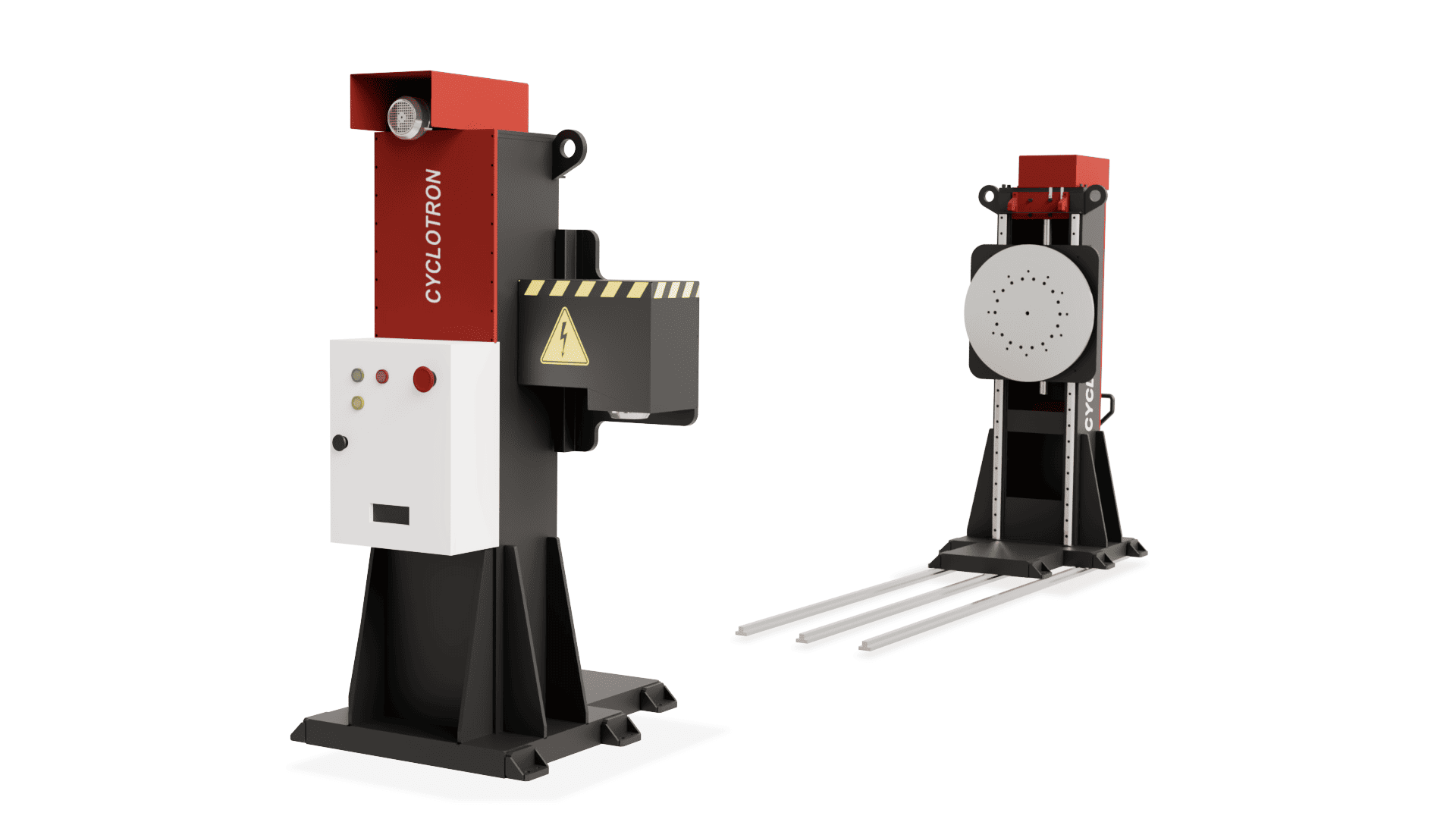
After tack welding, the completed assembly is transferred to Cyclotron’s 500 kg robotic welding positioner.
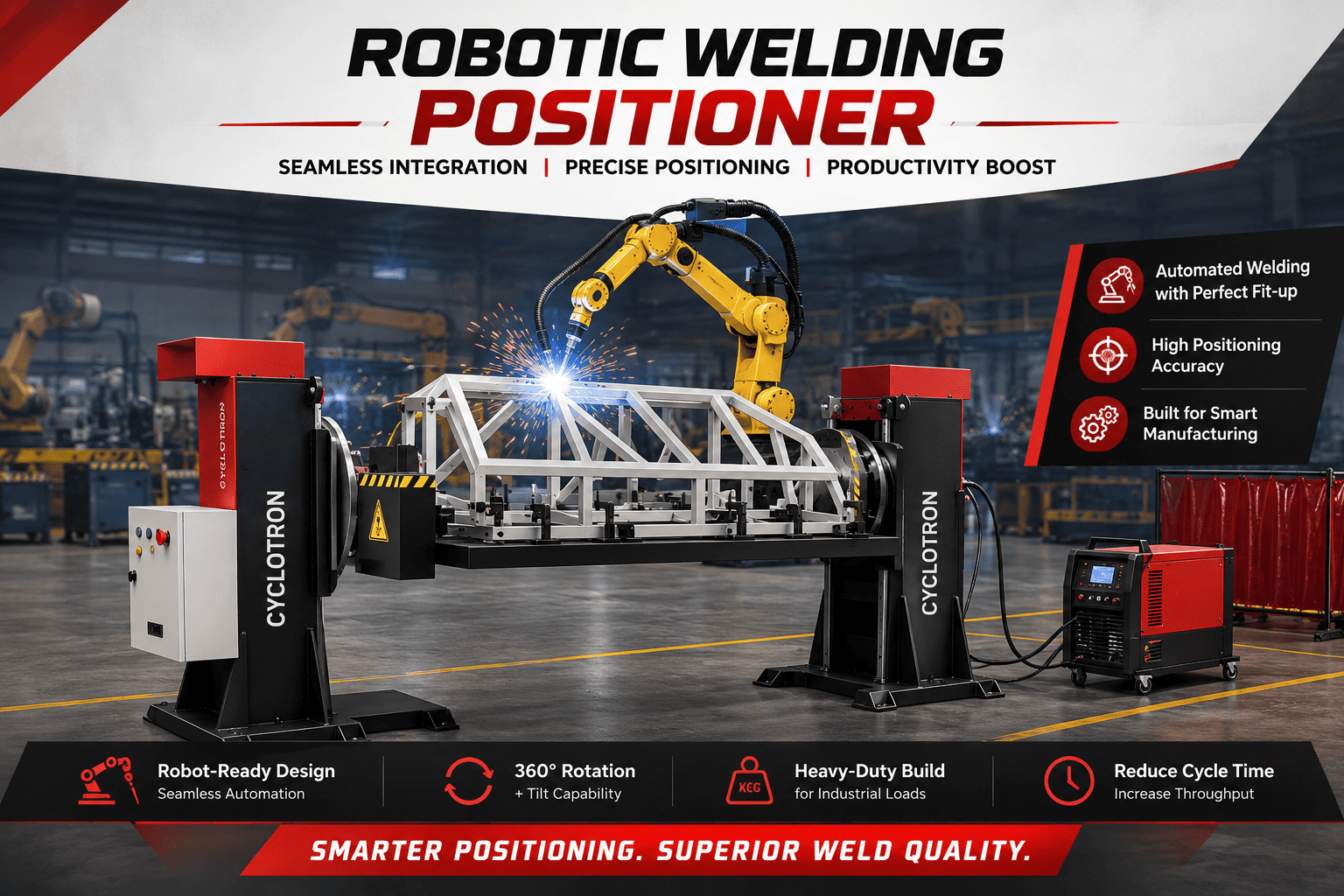
The positioner rotates and presents each weld seam in the optimal flat position for the FANUC robotic welding system. Instead of operators repositioning the tower manually with cranes and repeated handling, the positioner continuously delivers the correct orientation, allowing the robot to perform consistent, uninterrupted welds.
The key insight behind the system is simple:
The fixture controls geometry. The positioner controls access.
Many fabrication shops attempt to make one station perform both functions, often compromising both alignment and welding efficiency. Separating these tasks produced a more reliable manufacturing process.
Integration
Cyclotron designed and supplied the 500 kg robotic welding positioner in accordance with FANUC’s external-axis interface specifications. The customer’s robot system integrator completed the robotic cell integration.
This approach follows standard industry practice, ensuring seamless compatibility while maintaining the robot manufacturer’s integration standards and warranty requirements. Cyclotron focused on delivering a robust, precision-built positioner that integrates reliably within the customer’s automated welding cell.
The Result
The improvements were measurable across production, quality, and labour efficiency.
Metric | Before | After |
Production Time per Tower | 8 Hours | 3 Hours |
Rejection Rate | 10–15% | Less than 1% |
Welders Required |
4 |
1 |
Production Capacity | Limited | Significantly Increased |
With this arrangement, we were able to
- Reduce production time by more than 60%
- Eliminated distortion-related rework, and
- Reduced manual labour requirements,
The customer successfully expanded production capacity while maintaining consistent weld quality. The two-stage workflow proved that solving geometry and welding access separately delivers better results than trying to solve both with a single station.
Need to Weld Multi-Face Structures More Efficiently?
If you’re manufacturing telecom towers, lattice structures, or other complex fabrications, the right welding process starts with the right workflow.
Send us your part drawing, and we’ll help you determine the most efficient welding positioner and fixture solution for your application.
Similar Case Studies

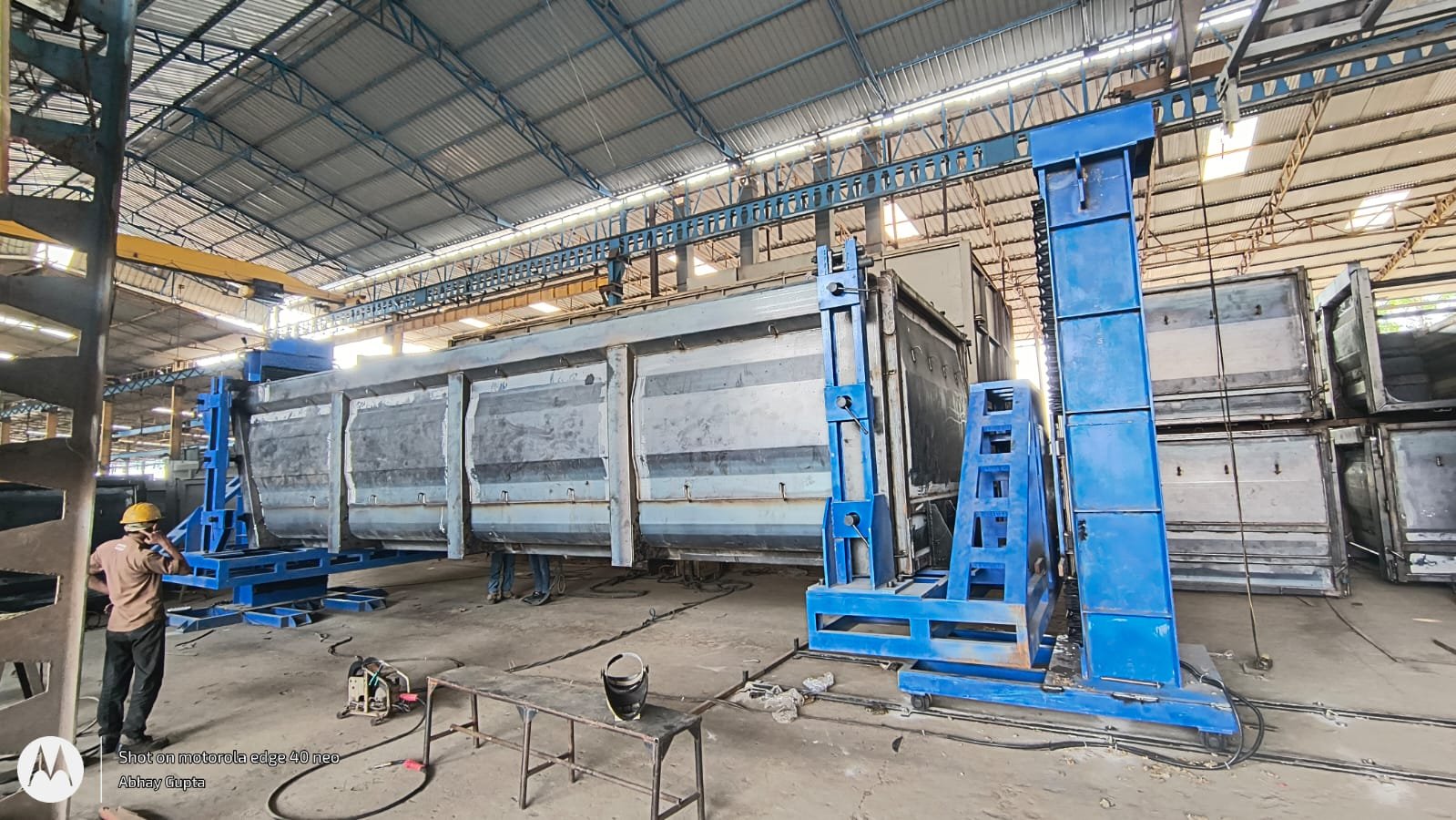
10 Ton Welding Positioner for Truck Dumper in Chhattisgarh
A truck dumper body manufacturer in Chhattisgarh approached Cyclotron positioners to improve production capacity and enhance safety during fabrication. The company manufactures heavy truck dumper bodies weighing approximately 6 tonnes and measuring 6 to 7 metres in length for the mining industry
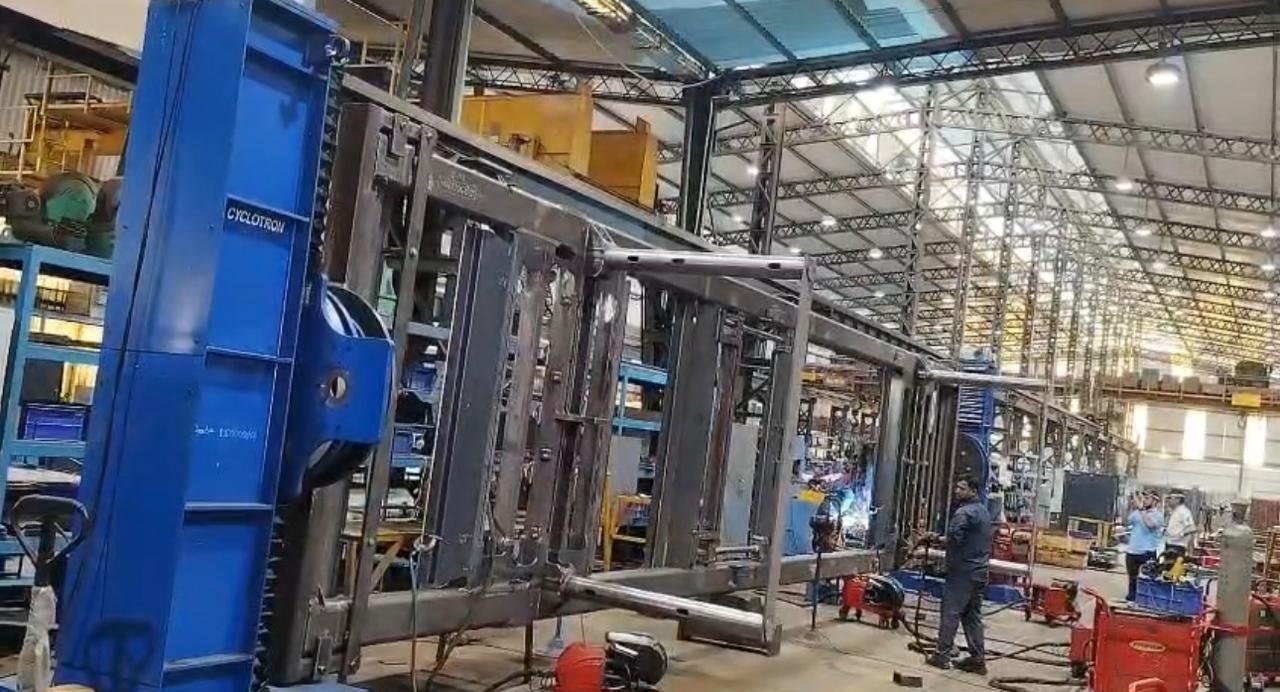
30 Ton Welding Positioner for Railway Bogie Frame in Haryana
A leading railway bogie manufacturer in Haryana was looking to increase production capacity while maintaining the welding quality required for RDSO-certified railway bogie frames. Fabricating these heavy, asymmetric structures required multiple crane-assisted lifts to reposition the workpiece, adding handling time and creating safety concerns on the shop floor.
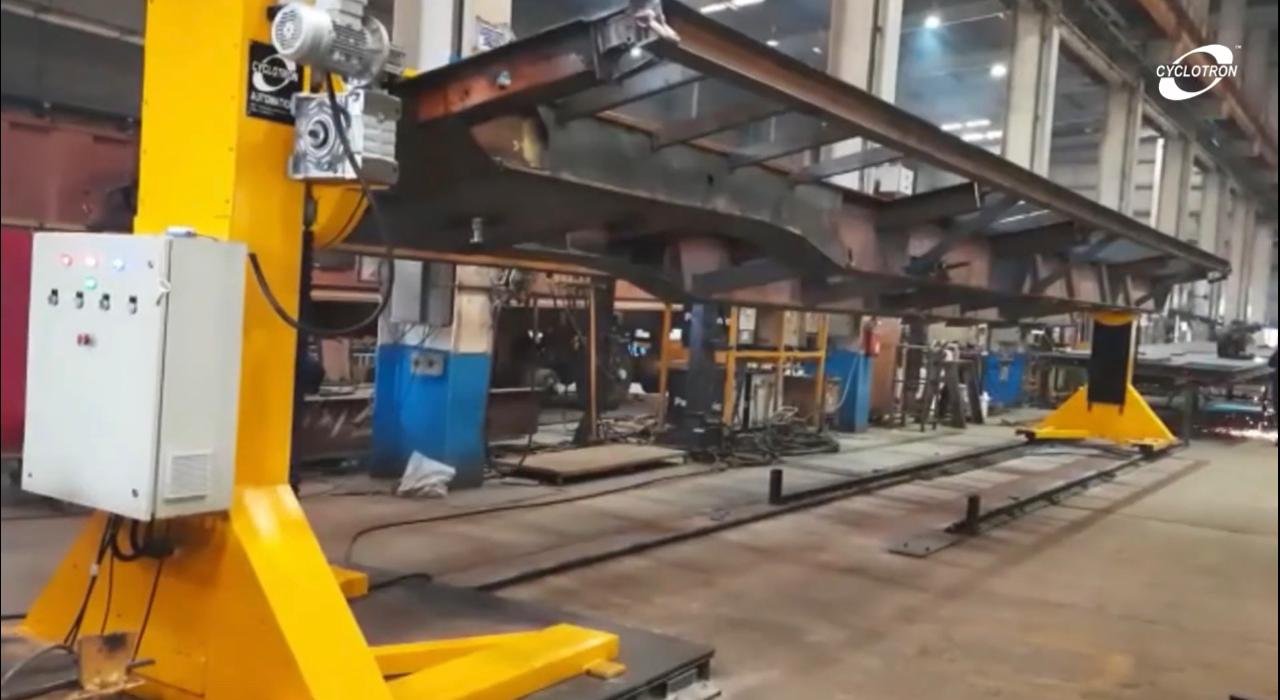
6 Ton Welding Positioner for Truck Trailer in Pune
A leading flatbed trailer manufacturer in Pune partnered with Cyclotron to improve productivity and maintain dimensional accuracy during the fabrication of 12-metre trailer chassis. Although the chassis weighed approximately 5.5-6 tons, the primary challenge was not lifting the workpiece but welding a long, flexible structure