Cyclotron Welding Positioners

6 Ton welding positioner for truck trailer in Pune

6 Ton Welding Positioner for Truck Trailer in Pune

Case Study: 4

A leading flatbed trailer manufacturer in Pune partnered with Cyclotron to improve productivity and maintain dimensional accuracy during the fabrication of 12-metre trailer chassis. Although the chassis weighed approximately 5.5-6 tonnes, the primary challenge was not lifting the workpiece but welding a long, flexible structure with hundreds of fillet welds. To address repeated crane handling, overhead welding, and frame sag during fabrication,

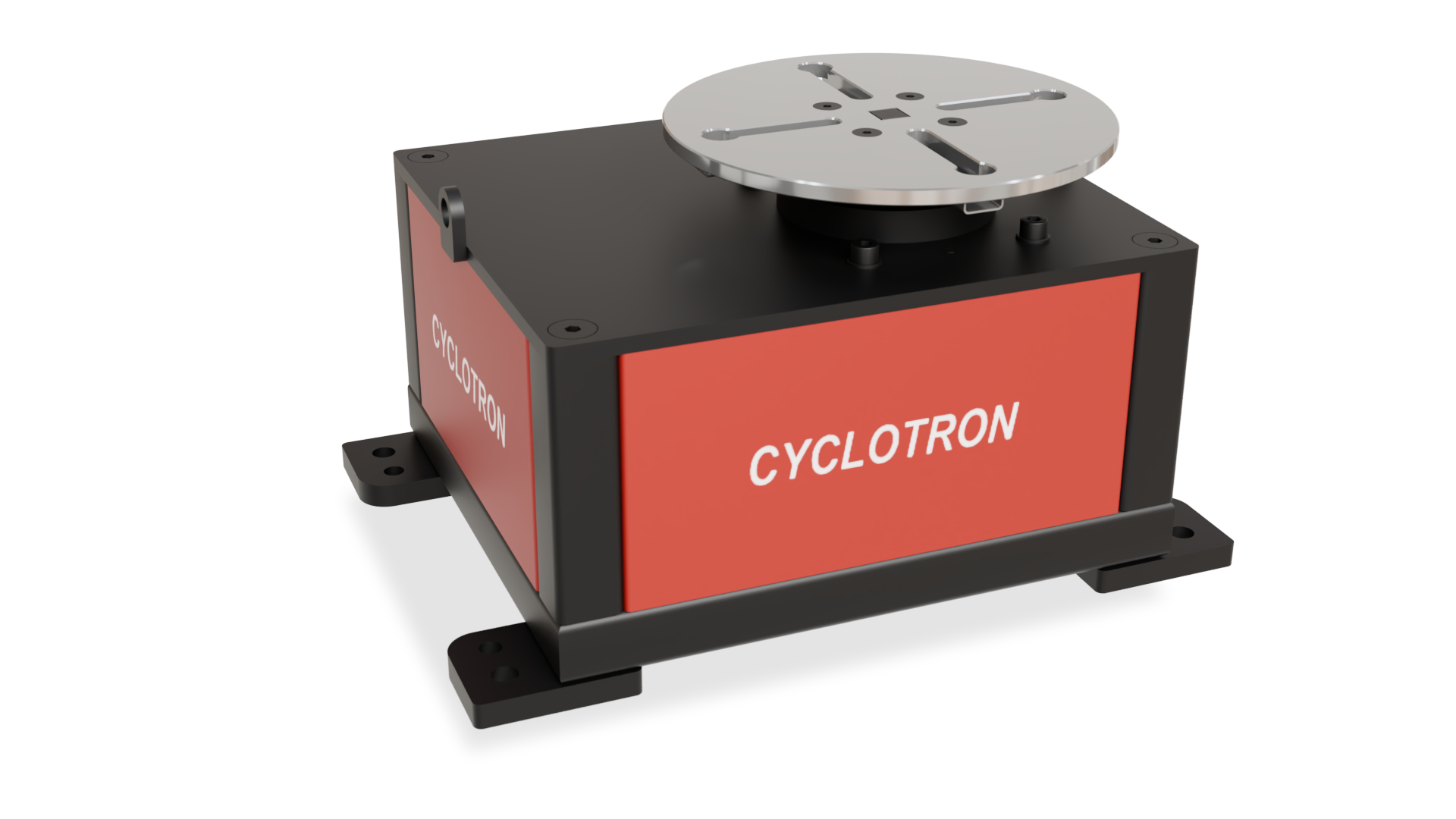
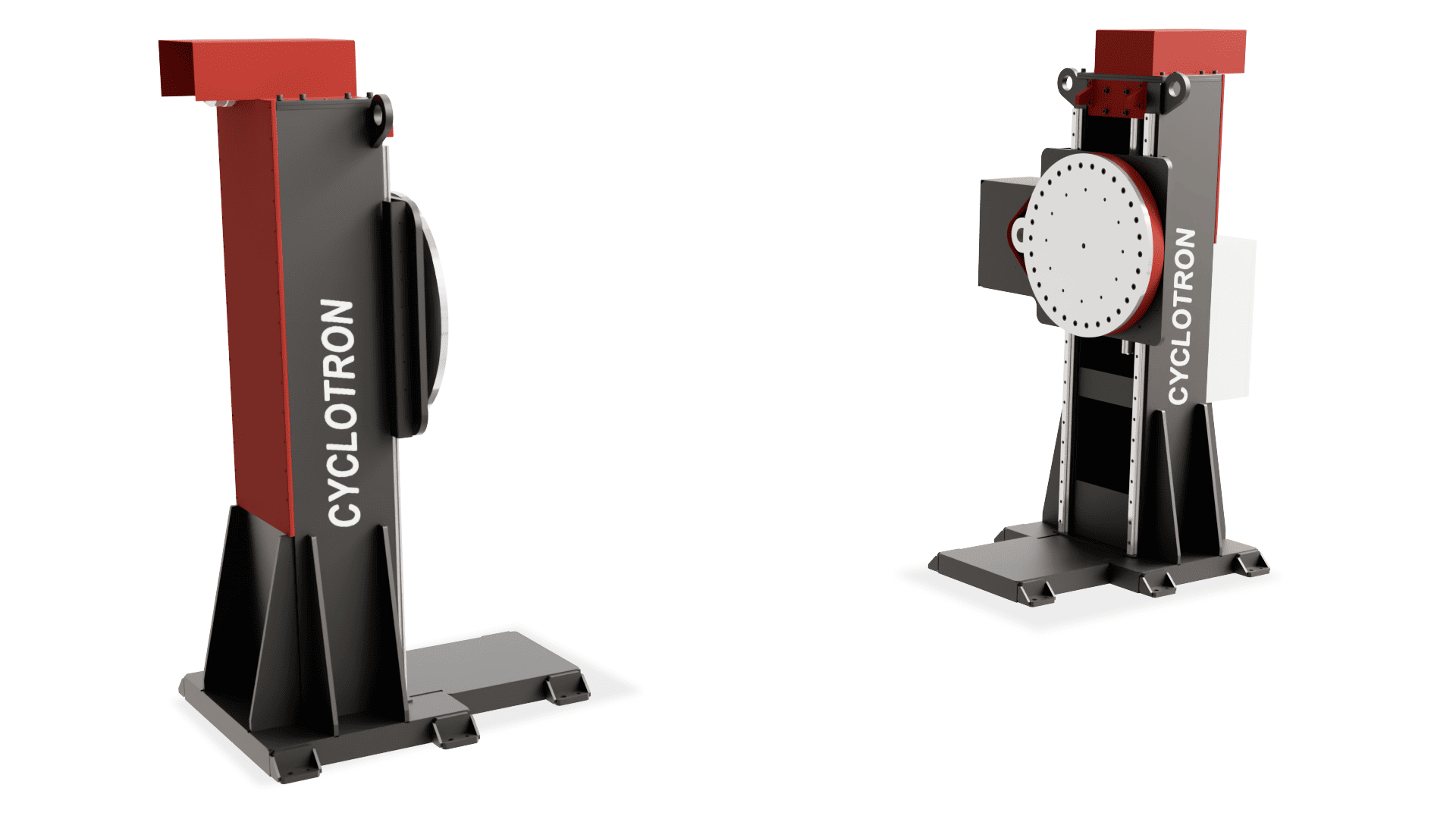
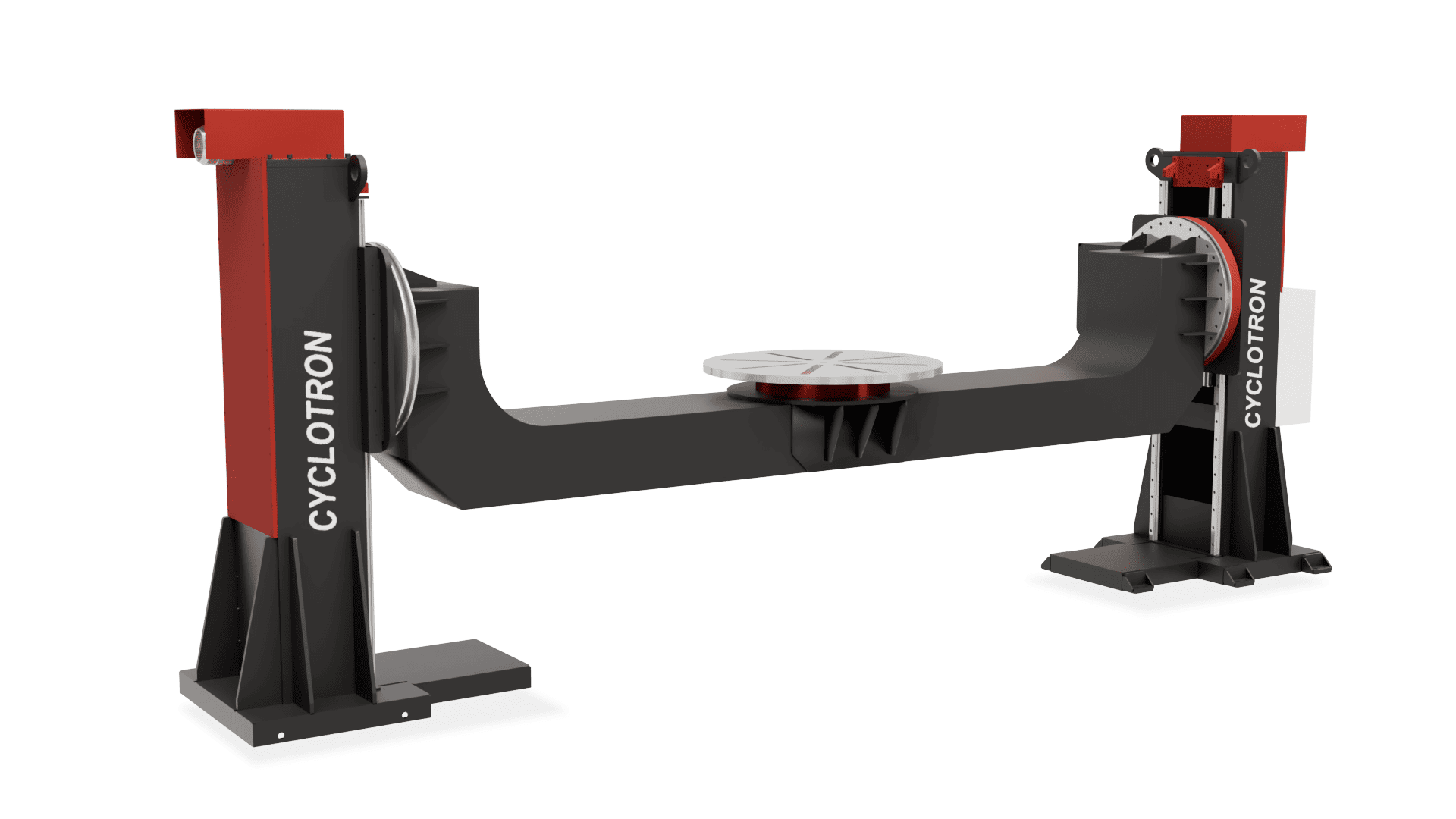
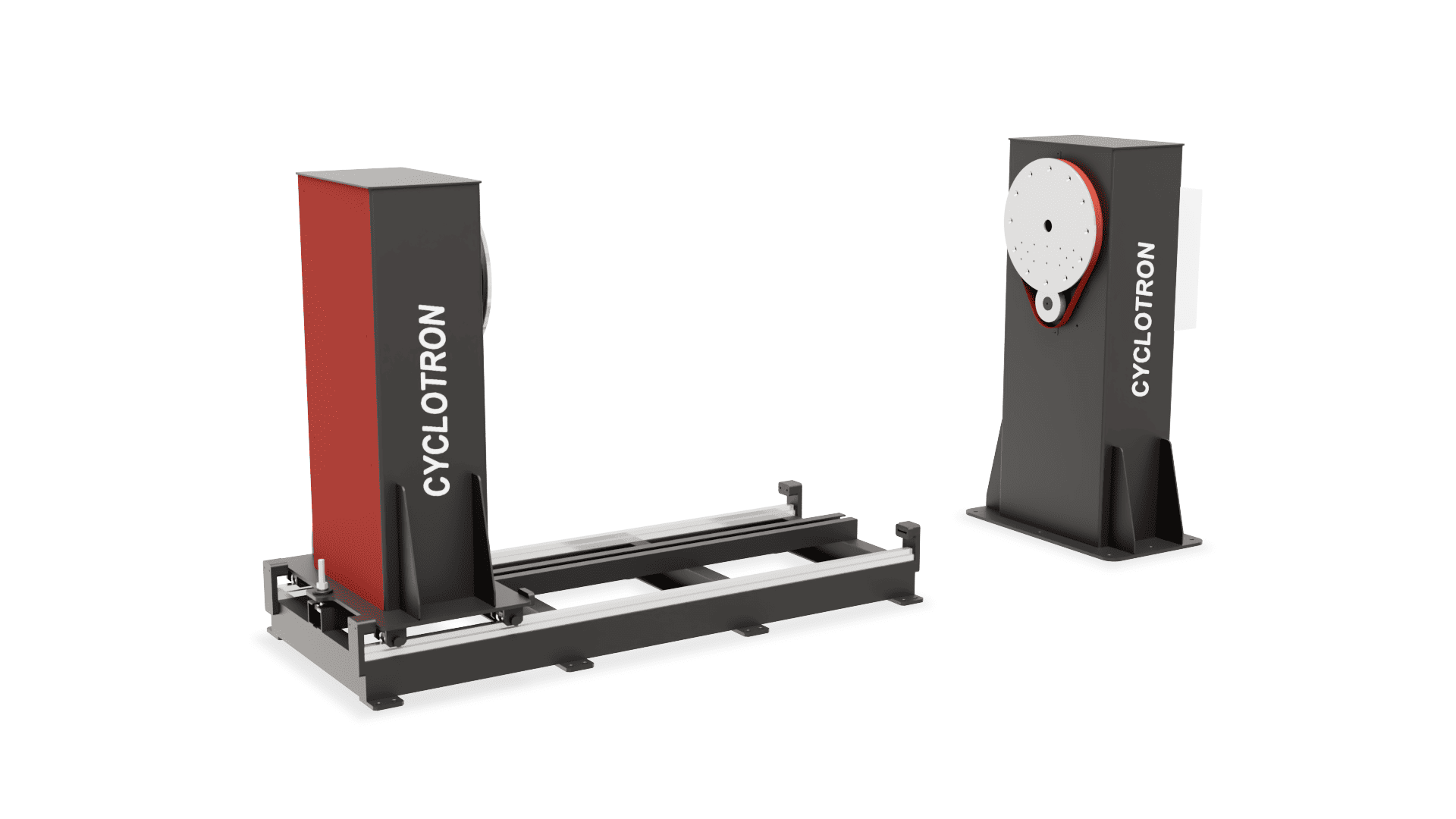
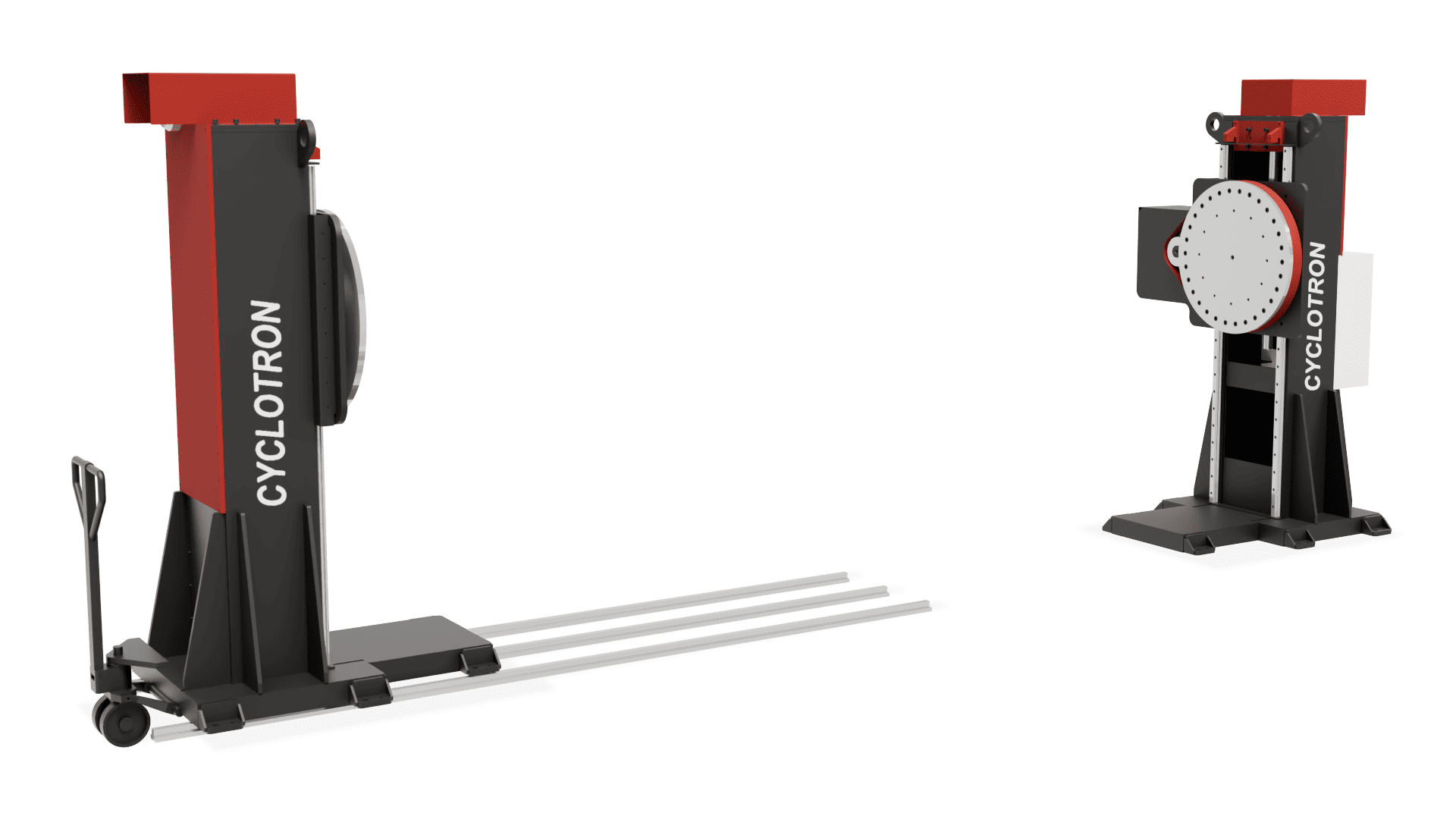
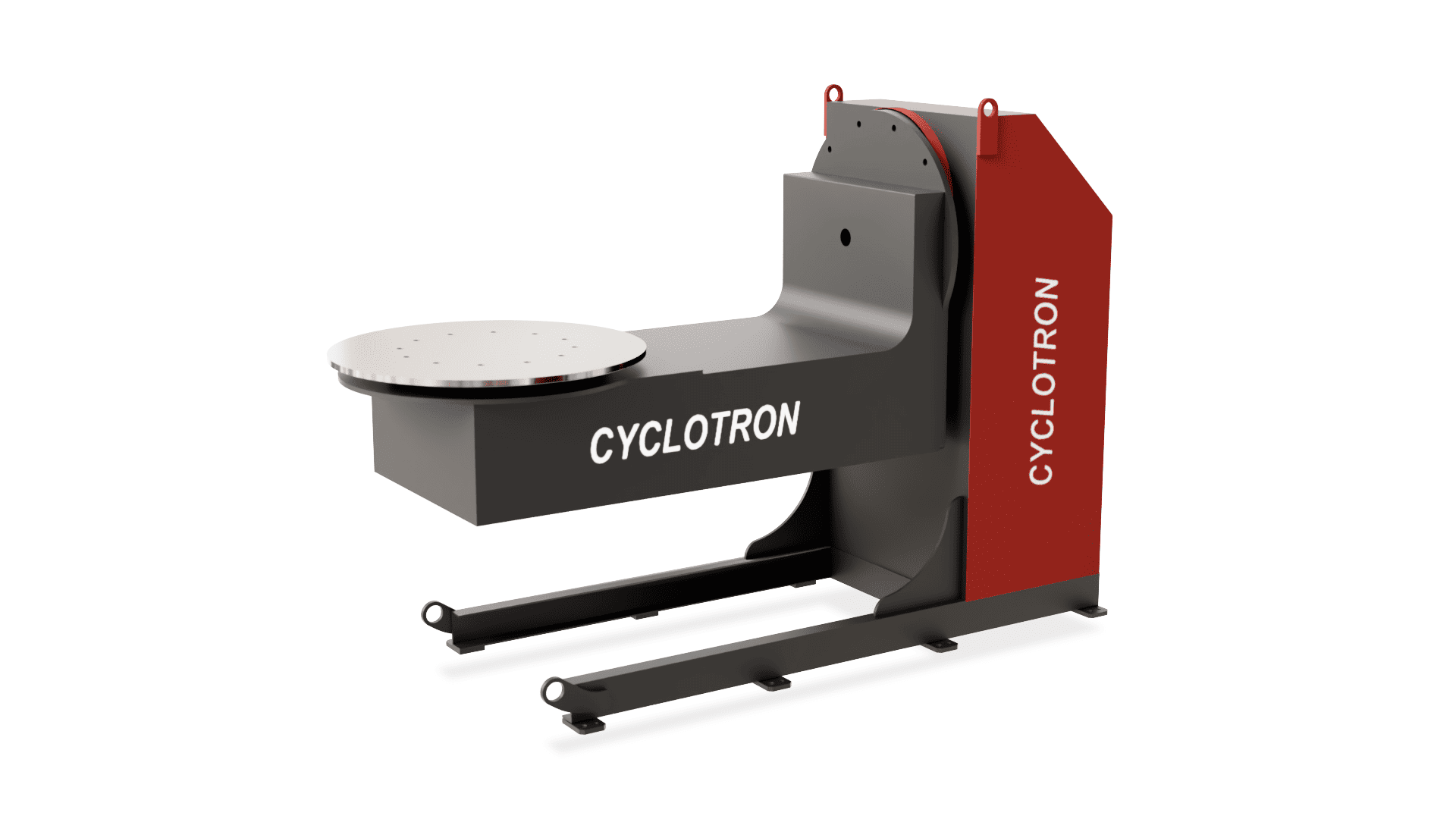
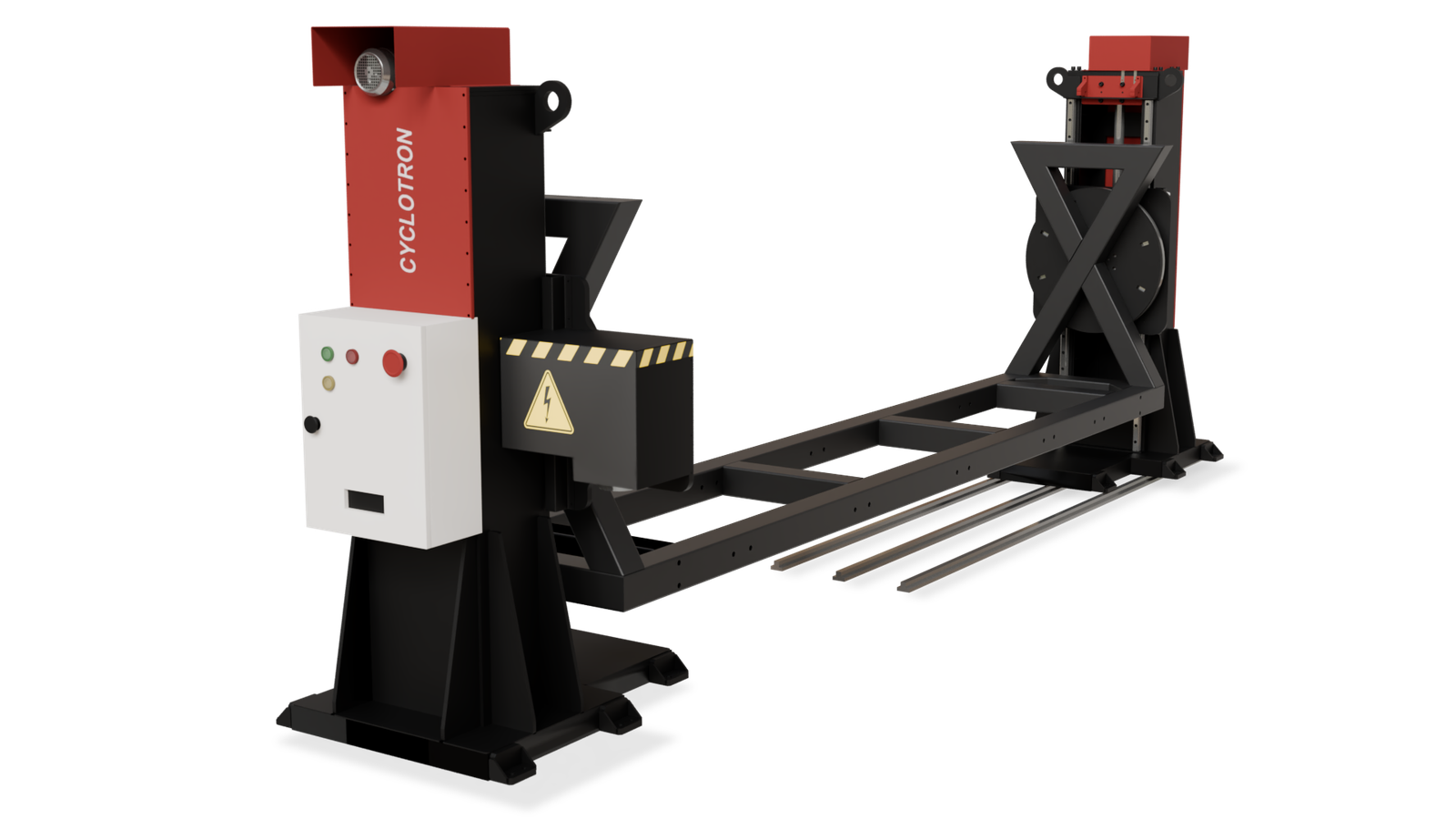
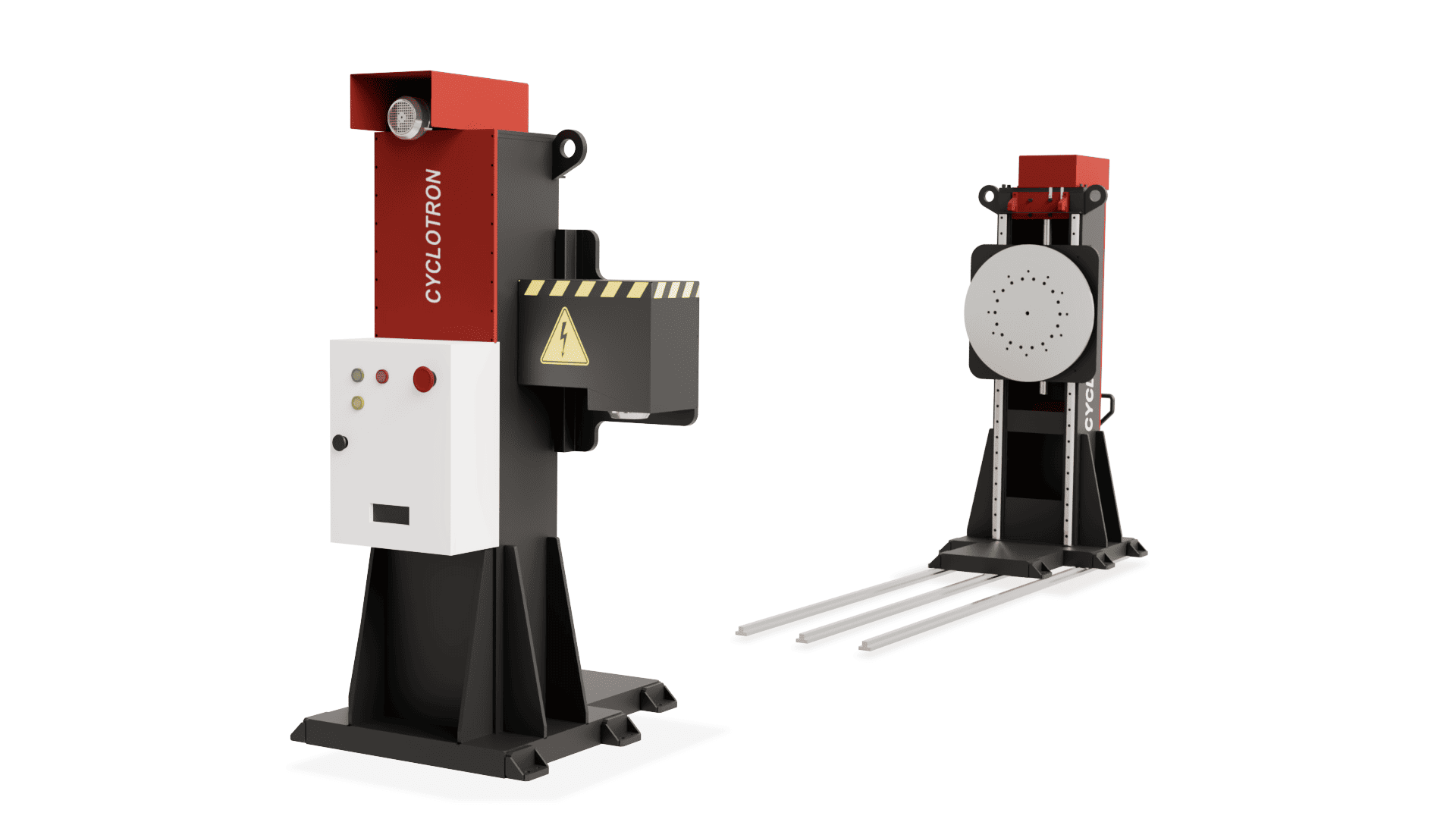
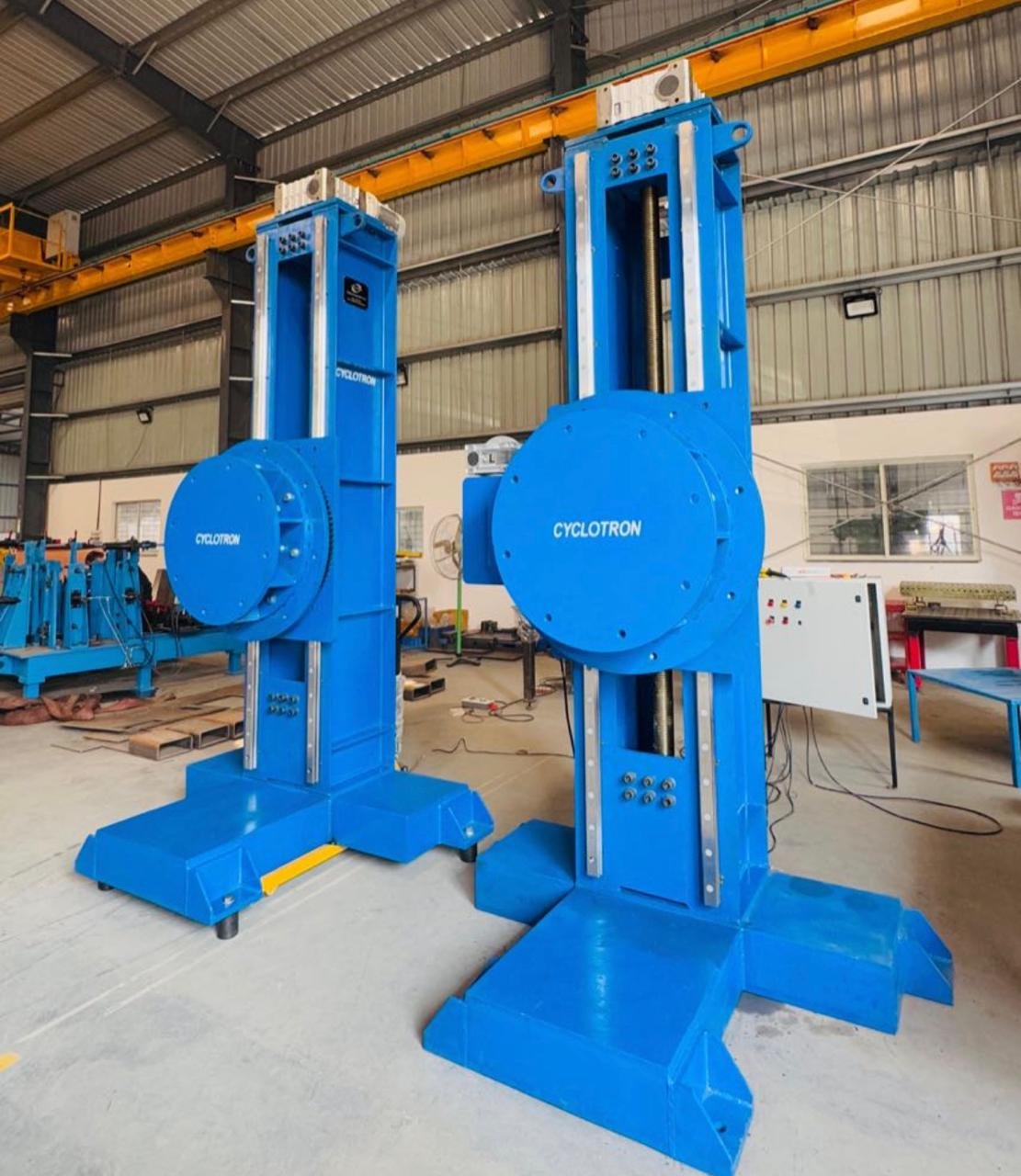
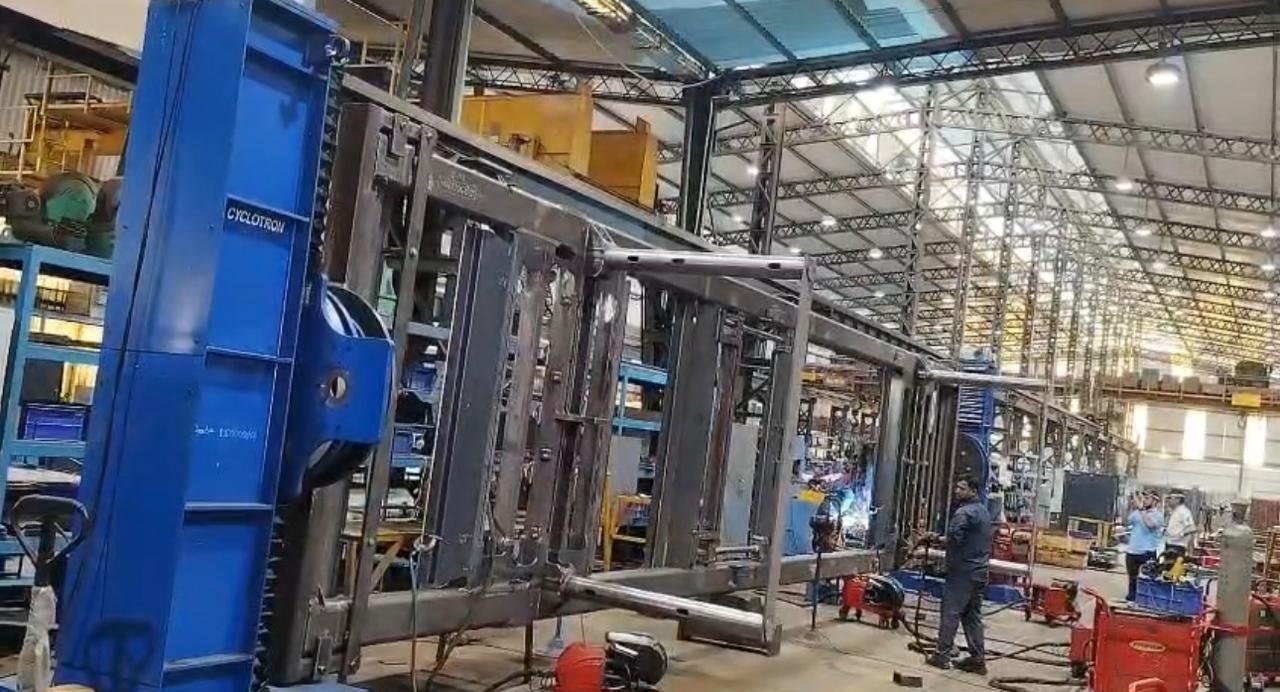
Cyclotron supplied a 6 Ton Headstock-Tailstock Welding Positioner. The solution enabled nearly every weld to be completed in the flat position while eliminating crane-assisted flipping and improving workflow across the fabrication line.

Cyclotron HTP Welding positioner 1
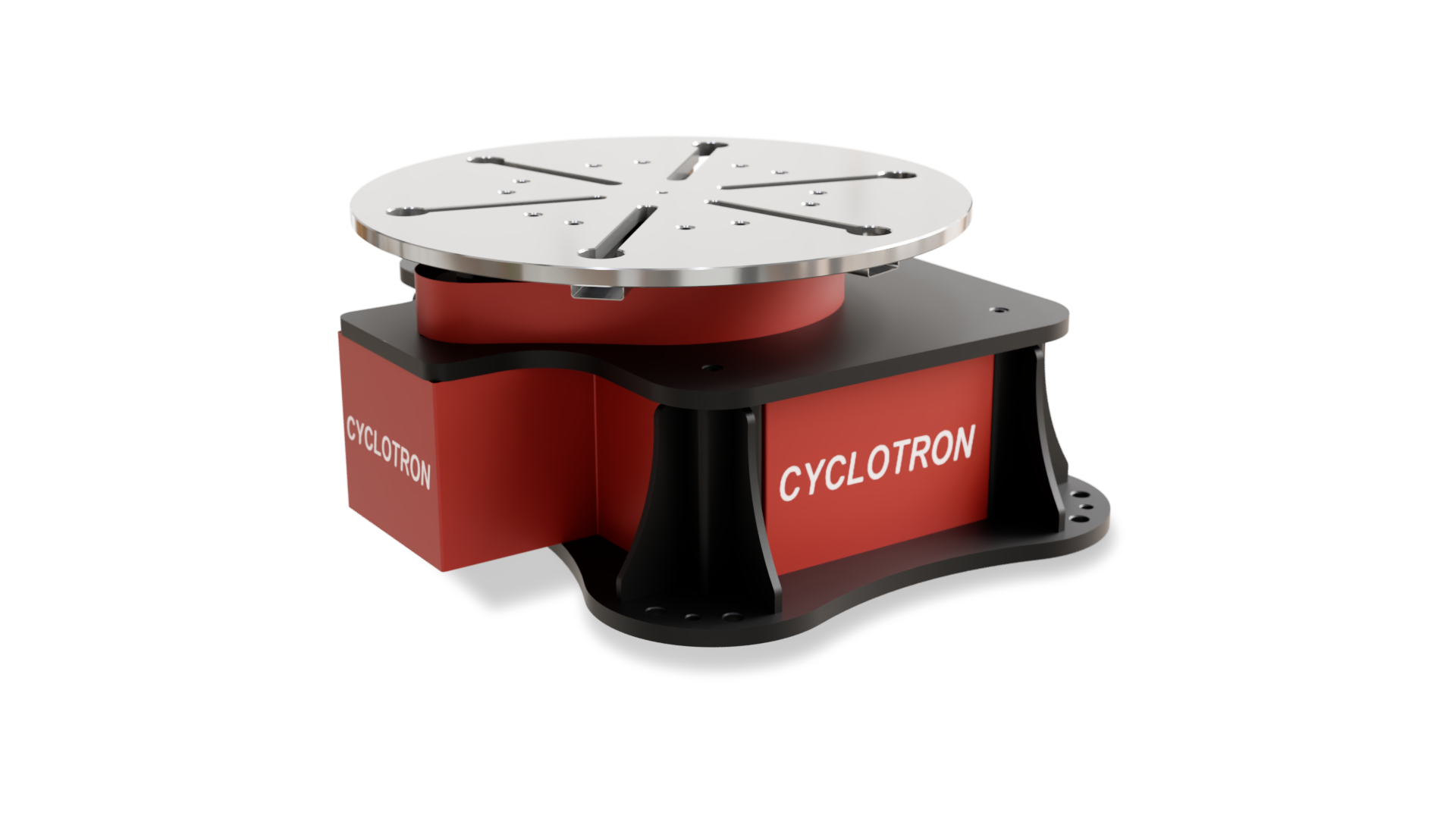
Cyclotron HTP Welding positioner 2
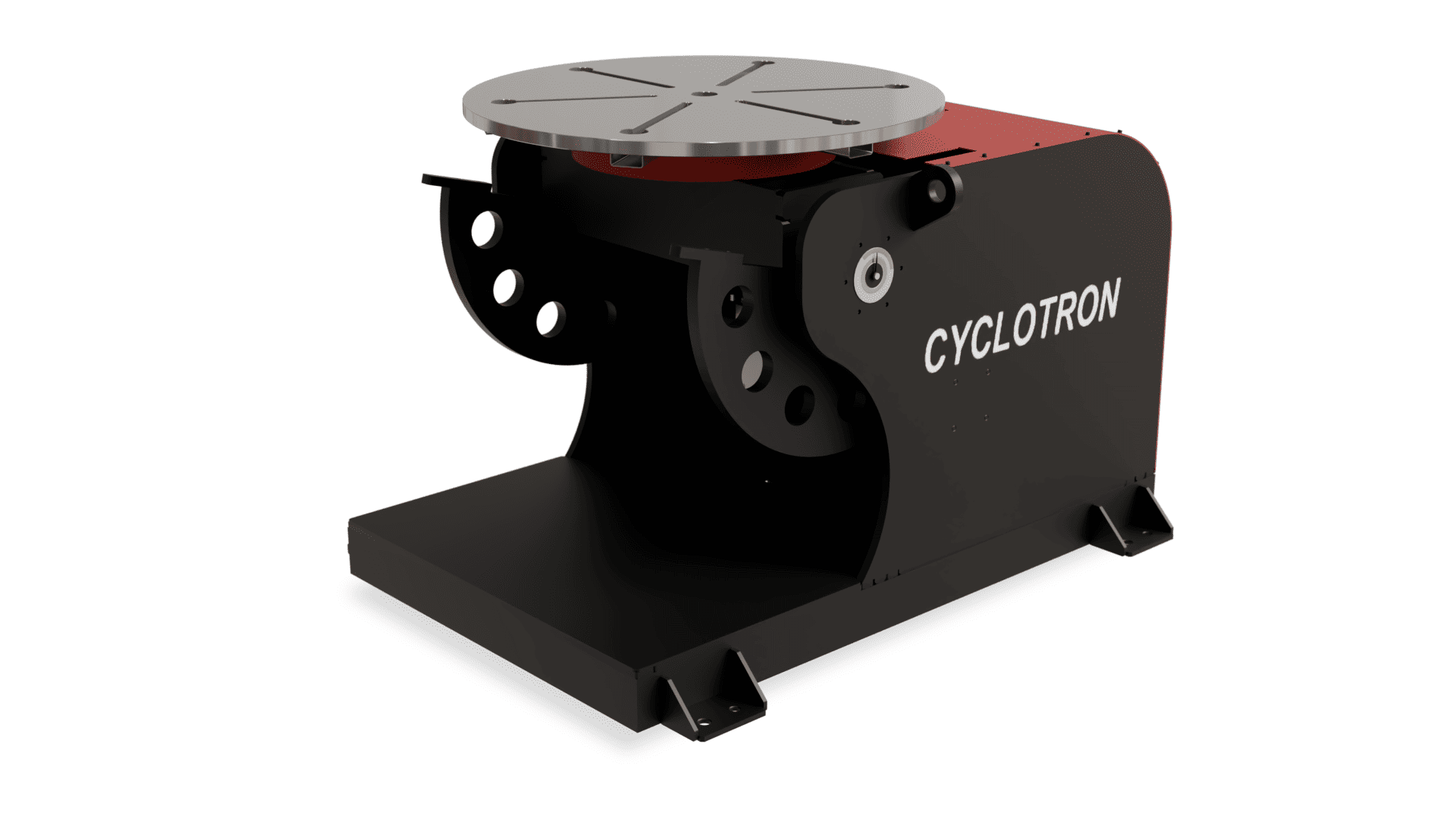
Cyclotron welding positioner

The Challenge

A flatbed trailer chassis is a long ladder-frame structure comprising two main rails, 24 cross-members, 18 gussets, 10 outriggers, and multiple suspension brackets. While the chassis weighs approximately 6 tonnes, the greater challenge lies in fabricating a 12-metre-long structure with hundreds of welds while maintaining dimensional accuracy.

Each chassis requires approximately 480 fillet weld joints, with every joint needing two weld legs. When fabricated on conventional trestles, nearly 50% of these welds must be completed in vertical or overhead positions. These welding positions reduce travel speed, increase operator fatigue, and often require additional grinding to achieve the desired finish.

The length of the chassis introduced another challenge. A 12-metre frame naturally deflects under its own weight. If welding is carried out while the chassis is sagging, the resulting distortion can become permanent, requiring additional straightening or rework later in the process.

Handling also consumed valuable production time. Before installing the positioner, each chassis required approximately four crane-assisted flips. Every repositioning involved lifting the frame, rotating it, re-levelling the workpiece, and carrying out alignment checks before welding resumed. Grinding and rework added approximately two hours per chassis.

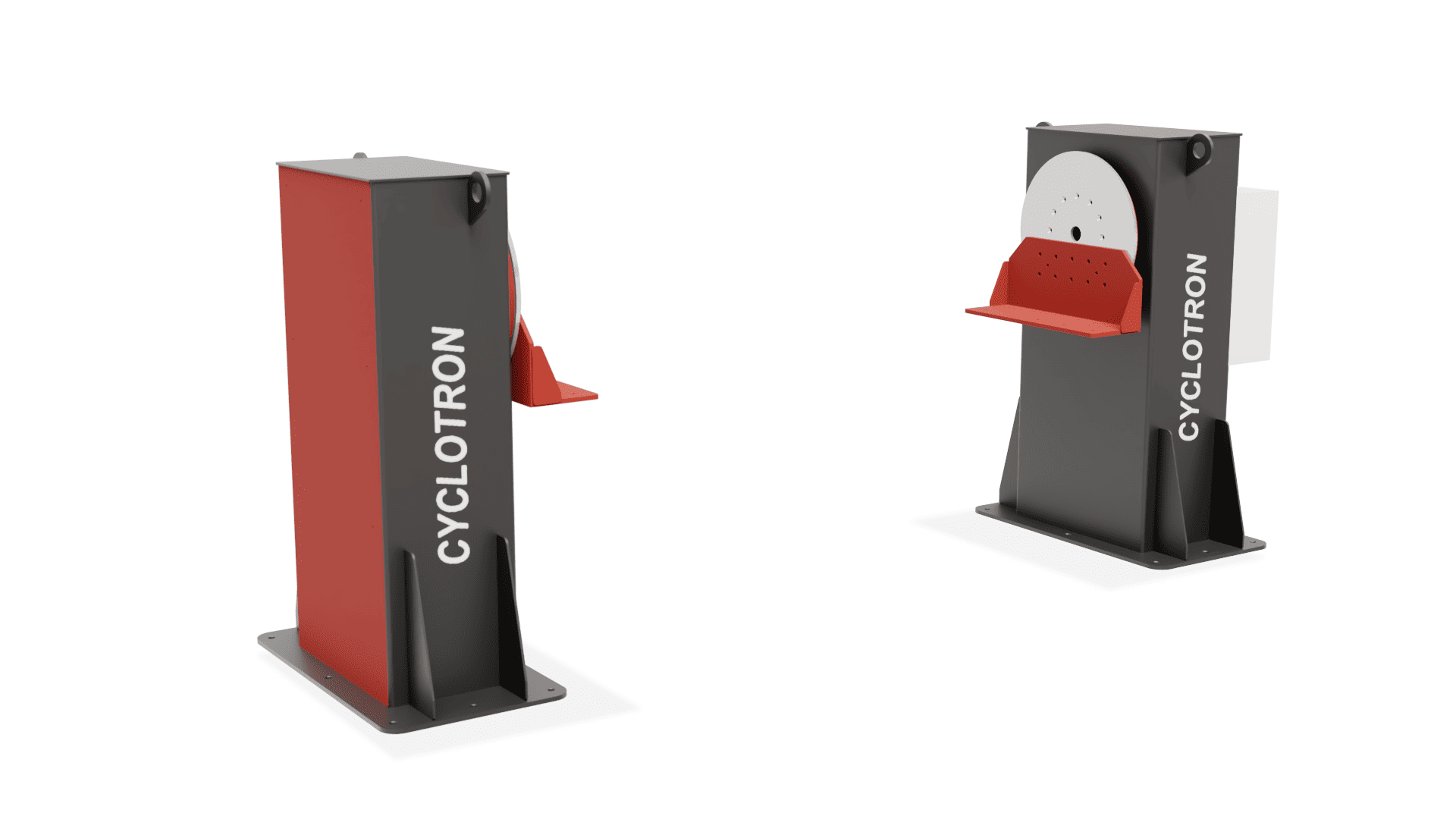
Cyclotron HTP Welding positioner 1

Cyclotron Welding Positioners from India

  • Cyclotron manufactures industrial welding positioners from 100 kg to 100 Tons capacity, designed for robotic/manual welding, heavy fabrication, and high-production welding environments.

  • Cyclotron manufactures all types of Manual/Robotic welding positioners like 1 axis, 2 axis, 3 axis, Headstock-tailstock, L Type, skyhook, etc
Headstock tailstock welding positioner 2 axis with rail 3

Our Approach

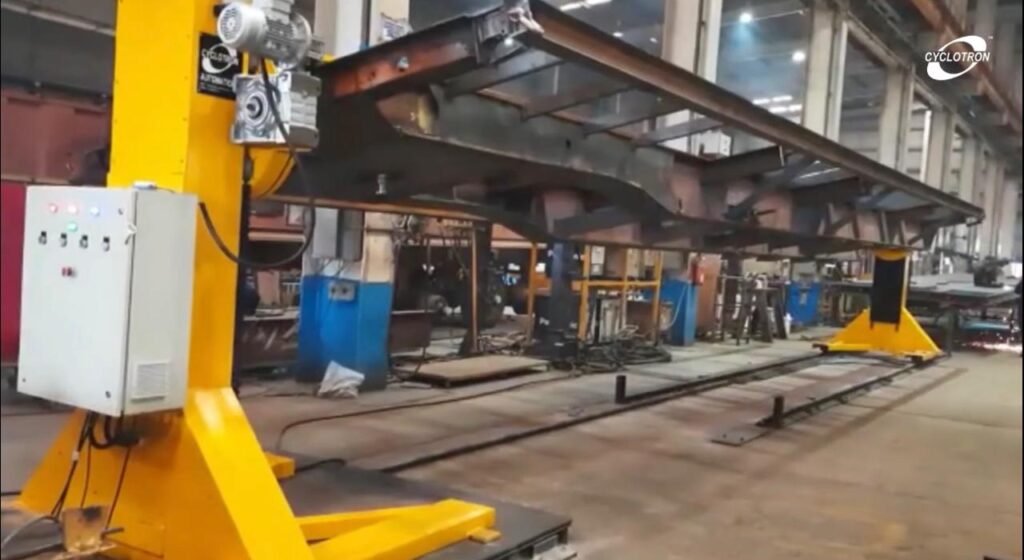
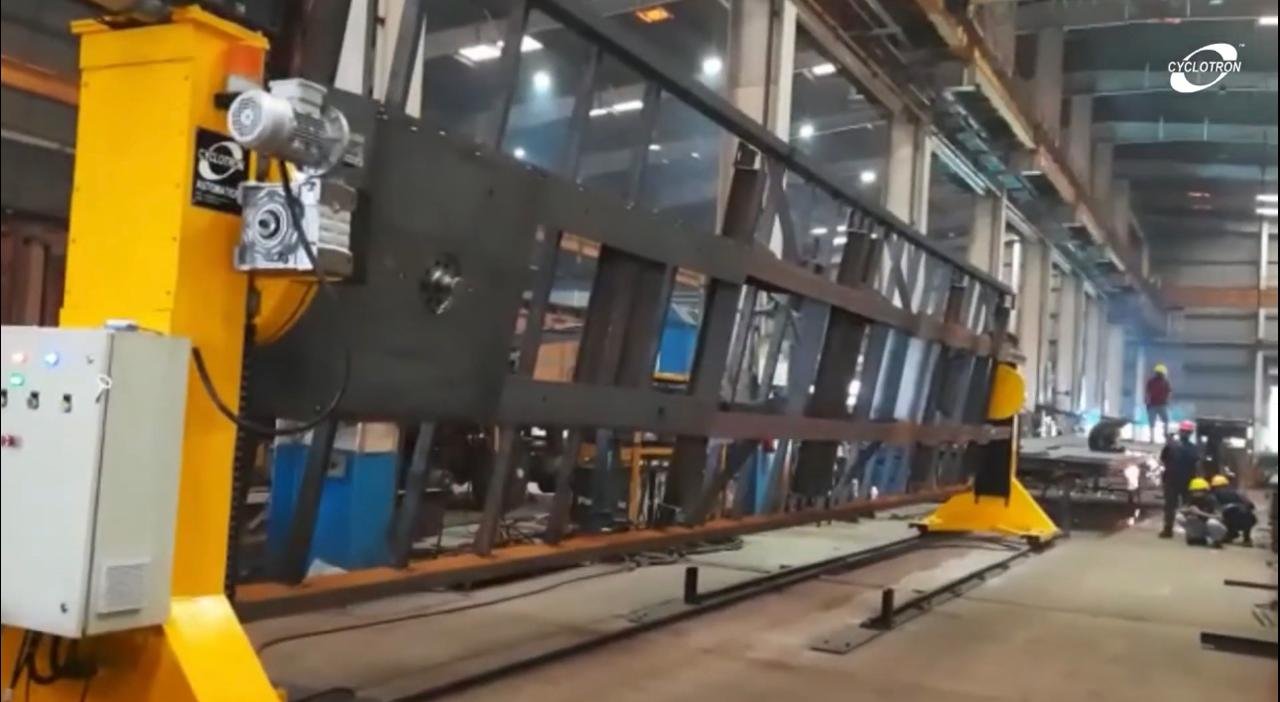
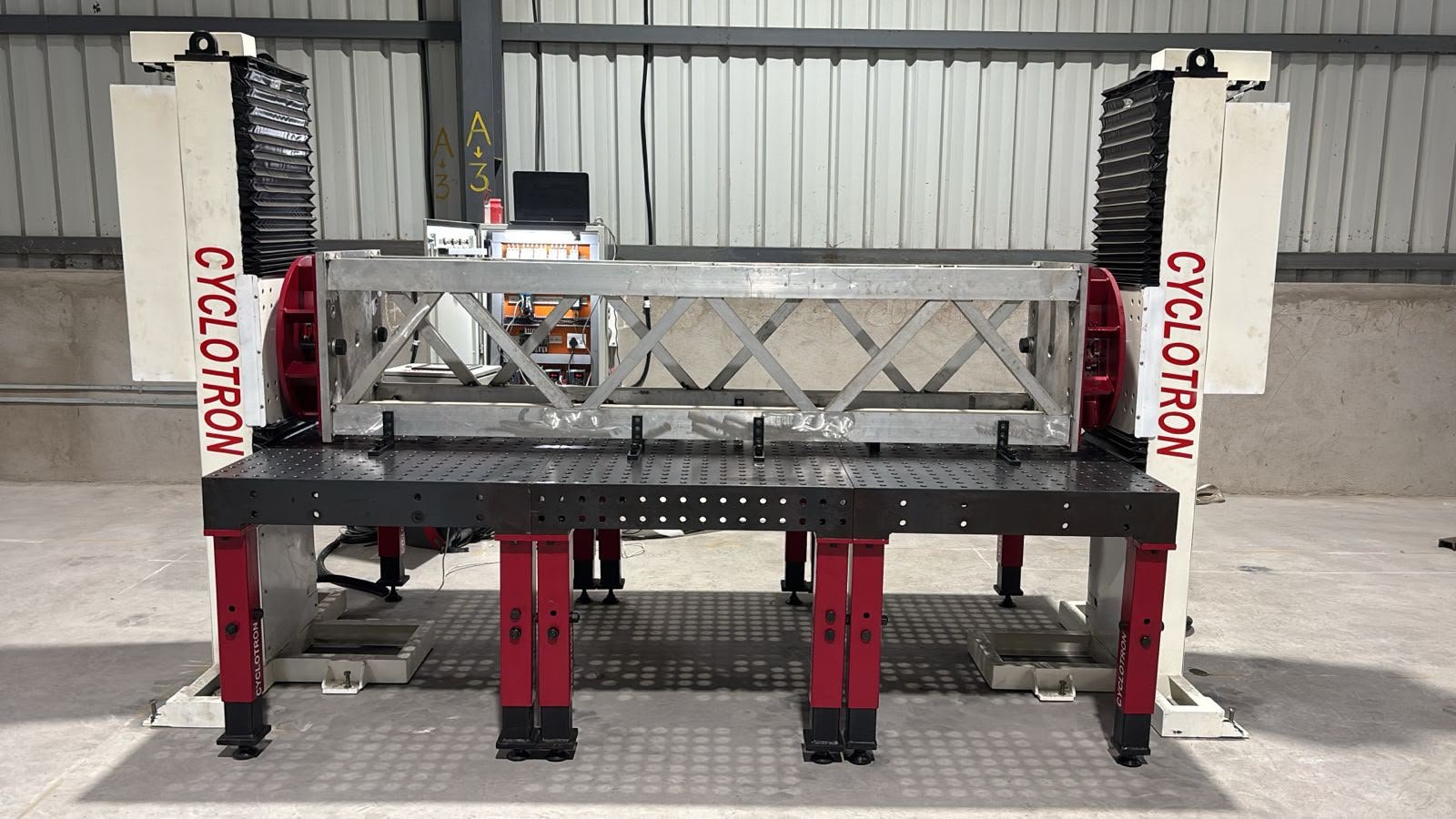
Cyclotron supplied a 6 Ton Headstock-Tailstock Welding Positioner designed specifically for long structural weldments. The system incorporated a headstock-tailstock arrangement, intermediate supports, and adjustable support saddles to support the full length of the trailer chassis during fabrication.

The Impact

Instead of relying on an overhead crane to flip the chassis, the positioner rotated the workpiece in a controlled manner, allowing welders to access different sides of the frame without removing it from the fixture.

This made it possible to complete nearly every fillet weld in the flat or horizontal welding position, rather than in vertical or overhead positions.

For trailer fabrication, this change has a significant impact. Downhand fillet welding generally allows higher travel speeds, improved penetration, better deposition rates, more consistent weld leg sizes, and reduced undercut. Across approximately 480 weld joints, even small improvements at each joint contribute to a noticeable reduction in overall fabrication time.

Right Chassis Support

Supporting the chassis correctly was equally important. Rather than suspending the workpiece from one end, the headstock-tailstock configuration with intermediate supports distributed the load across the entire 12-metre length. With a centre of gravity height of approximately 550 mm and an eccentricity of 450 mm, the support arrangement helped minimise deflection during welding and maintained chassis straightness.

Once the chassis was mounted, the underside could be rotated into position without crane assistance. There was no need for repeated lifting, slinging, or re-levelling between welding operations.

Ergonomics Improved

Welders remained on the shop floor, performing most welding at chest height instead of working overhead or underneath the chassis.

This project reinforced an important observation. In trailer fabrication, productivity is often lost through hundreds of small inefficiencies rather than one major bottleneck. Reducing vertical welding, eliminating repeated handling, and maintaining a stable workpiece throughout fabrication together produced a measurable improvement.

Sizing a Long, Flexible Frame

Selecting a welding positioner for a trailer chassis is more complex than matching the machine’s rated capacity to the workpiece weight.

Although the chassis weighed approximately 6 tonnes, the greater engineering challenge was supporting a 12-metre-long flexible frame without introducing deflection during welding. The positioner was selected for a 450 mm eccentricity, 550 mm centre of gravity height, and a headstock-tailstock arrangement with intermediate supports to maintain stability throughout fabrication.

For long structural weldments, keeping the frame straight is often more challenging than supporting its weight.

Cyclotron Welding positioner 30 ton 5

The Result

These figures are a projection based on typical position-of-weld and handling improvements, not a measurement of this installation.

Parameter

Before

After

Fillet weld joints per chassis

480

480

Vertical/Overhead welds

~50%

<5%

Crane-assisted flips

4


0

Grinding and rework

~2 hours

~0.5 hour

Handling time

2–3 hours

Eliminated

  • Based on a production volume of 20 chassis per month, the estimated productivity improvement is:

    • Handling time saved: Approximately 2.5 hours per chassis
    • Loaded labour rate: ₹1,100 per hour
    • Estimated labour saving: Approximately ₹55,000 per month
    • Including reduced grinding and crane usage: Estimated total savings of ₹75,000-₹1,20,000 per month

    With a typical investment of ₹14-18 lakhs, the expected payback period is generally 12-18 months, depending on production volume and labour costs.

    On high weld-count trailer fabrication, the biggest productivity improvement rarely comes from one dramatic change. It comes from eliminating hundreds of small inefficiencies repeated on every chassis.

Improve your Fabrication Quality: Get Quote

Manufacturing flatbed trailers, truck chassis, or other long structural weldments? Visit our Bhosari facility to see a heavy-duty welding positioner in operation and discuss the right solution for your fabrication line. Book a call with us by phone or WhatsApp to schedule a visit

Similar Case Studies

Cyclotron welding positioner system robotic 1

500 kg Robotic Welding Positioner for Tower Manufacturing in Kolkata

A telecom tower manufacturer in Kolkata approached Cyclotron positioners to improve the production of aluminium telecom towers. Their existing manual welding process was slow, labour-intensive, and prone to distortion, resulting in high rejection rates.
Dumper fabrication using positioner

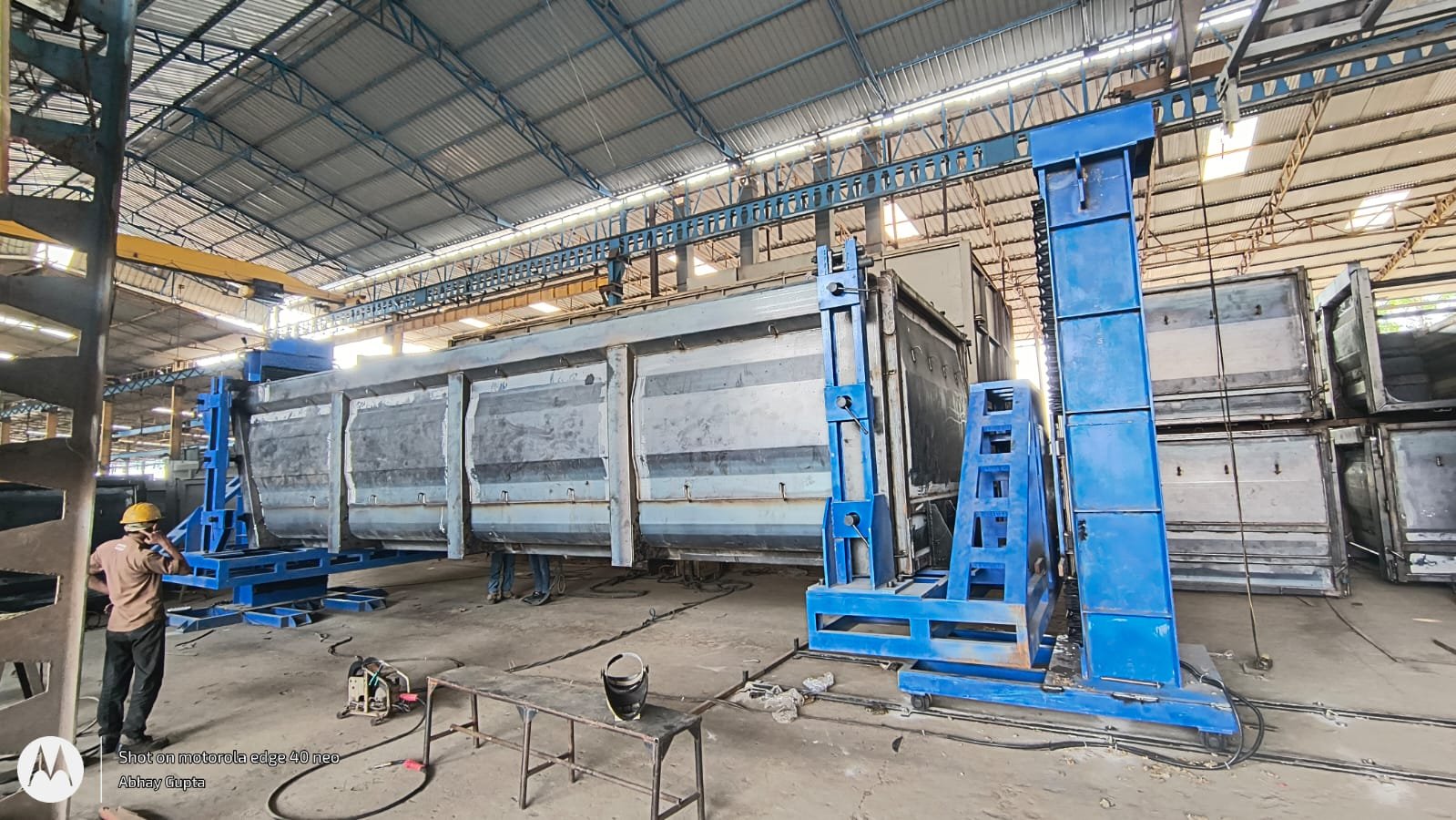
10 Ton Welding Positioner for Truck Dumper in Chhattisgarh

A truck dumper body manufacturer in Chhattisgarh approached Cyclotron positioners to improve production capacity and enhance safety during fabrication. The company manufactures heavy truck dumper bodies weighing approximately 6 tonnes and measuring 6 to 7 metres in length for the mining industry
Cyclotron HTP Welding positioner 30 ton 2

30 Ton Welding Positioner for Railway Bogie Frame in Haryana

A leading railway bogie manufacturer in Haryana was looking to increase production capacity while maintaining the welding quality required for RDSO-certified railway bogie frames. Fabricating these heavy, asymmetric structures required multiple crane-assisted lifts to reposition the workpiece, adding handling time and creating safety concerns on the shop floor.