What is a Welding Positioner?
A Complete Beginner's Guide
Welding automation has become an important part of modern manufacturing and fabrication industries. Companies today focus heavily on improving weld quality, increasing productivity, and reducing manual labor. One of the most effective tools used in this process is the welding positioner.
In many welding jobs, maintaining the correct welding angle can be difficult when handled manually. Welders often need to bend, rotate, or reposition heavy components repeatedly during fabrication. This slows down production and also affects weld consistency and operator comfort. A welding positioner solves these problems by automatically rotating and tilting the workpiece into the ideal welding position.
As a vital part of welding automation equipment, welding positioners are widely used in industries such as pipe fabrication, automotive manufacturing, structural steel production, and pressure vessel fabrication.
What Is a Welding Positioner?
- If you are wondering what is a welding positioner, it is a machine designed to hold, rotate, and tilt a workpiece during welding operations. Its main purpose is to position the job at the best angle for welding, helping operators achieve better weld quality and greater efficiency.
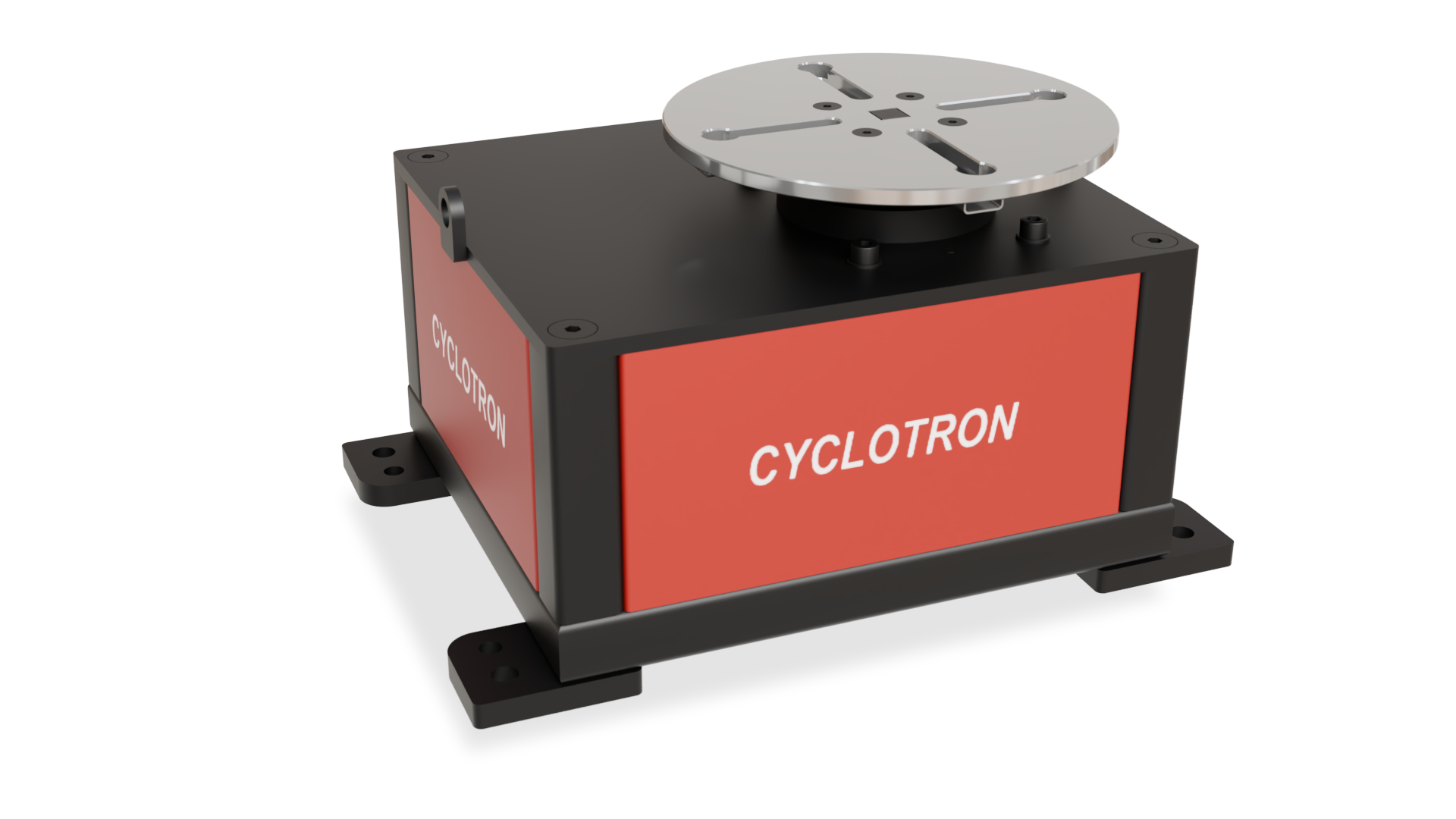
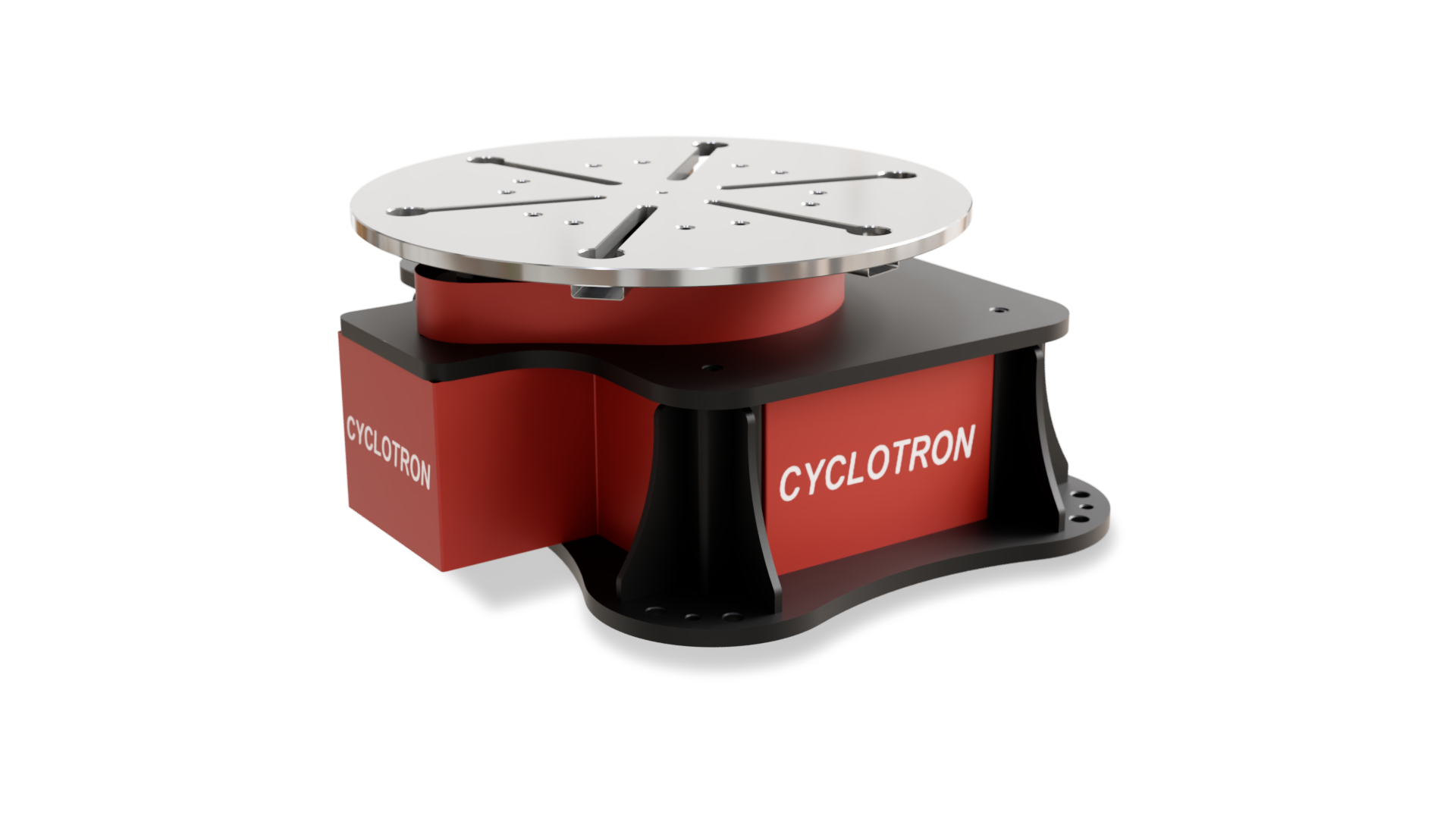
- A typical welding positioner includes a rotating table or chuck powered by a motor. The workpiece is mounted securely on the table, allowing controlled movement during welding.
- For example, when welding around a pipe or cylindrical tank, manually rotating the workpiece can be difficult and time-consuming. A welding positioner automatically rotates the component while the welder remains in a comfortable position. This helps maintain a steady welding speed and consistent weld quality.
- Welding positioners reduce manual handling, improve operator safety, and increase productivity in fabrication environments. They are especially useful for repetitive welding tasks and heavy industrial applications.
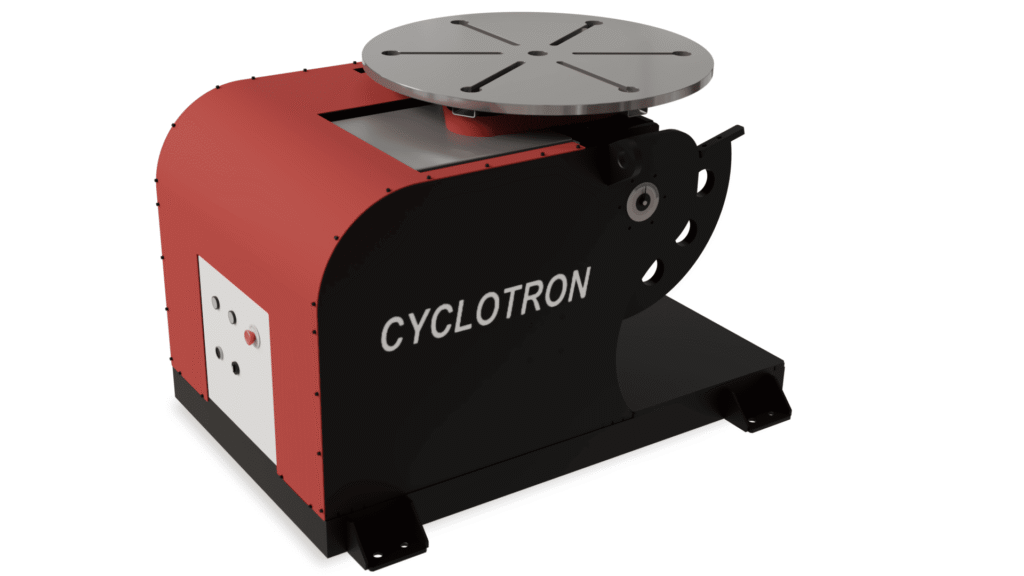
Cyclotron Welding Positioners from India
Cyclotron manufactures industrial welding positioners from 100 kg to 100 Tons capacity, designed for robotic/manual welding, heavy fabrication, and high-production welding environments.
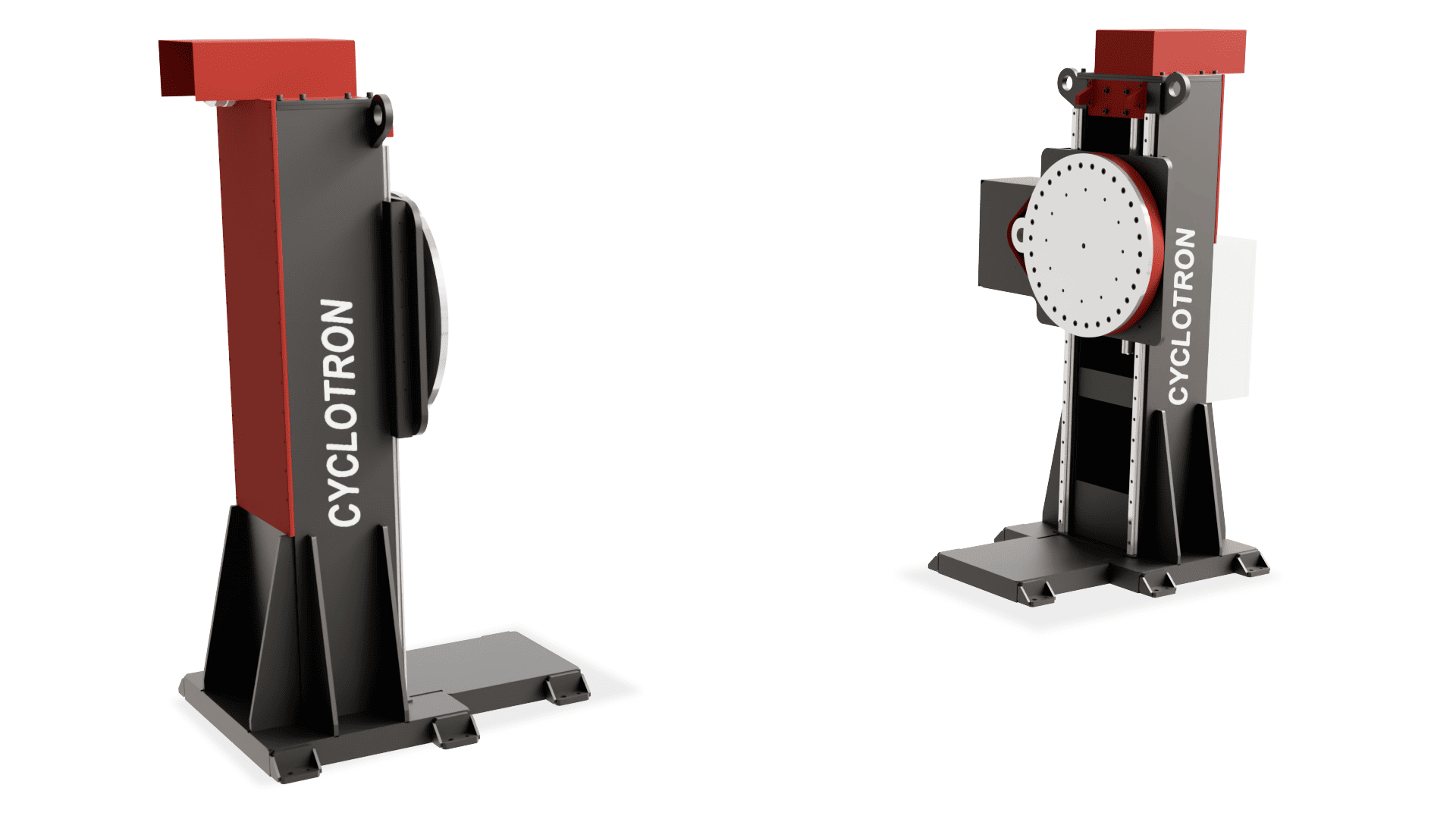
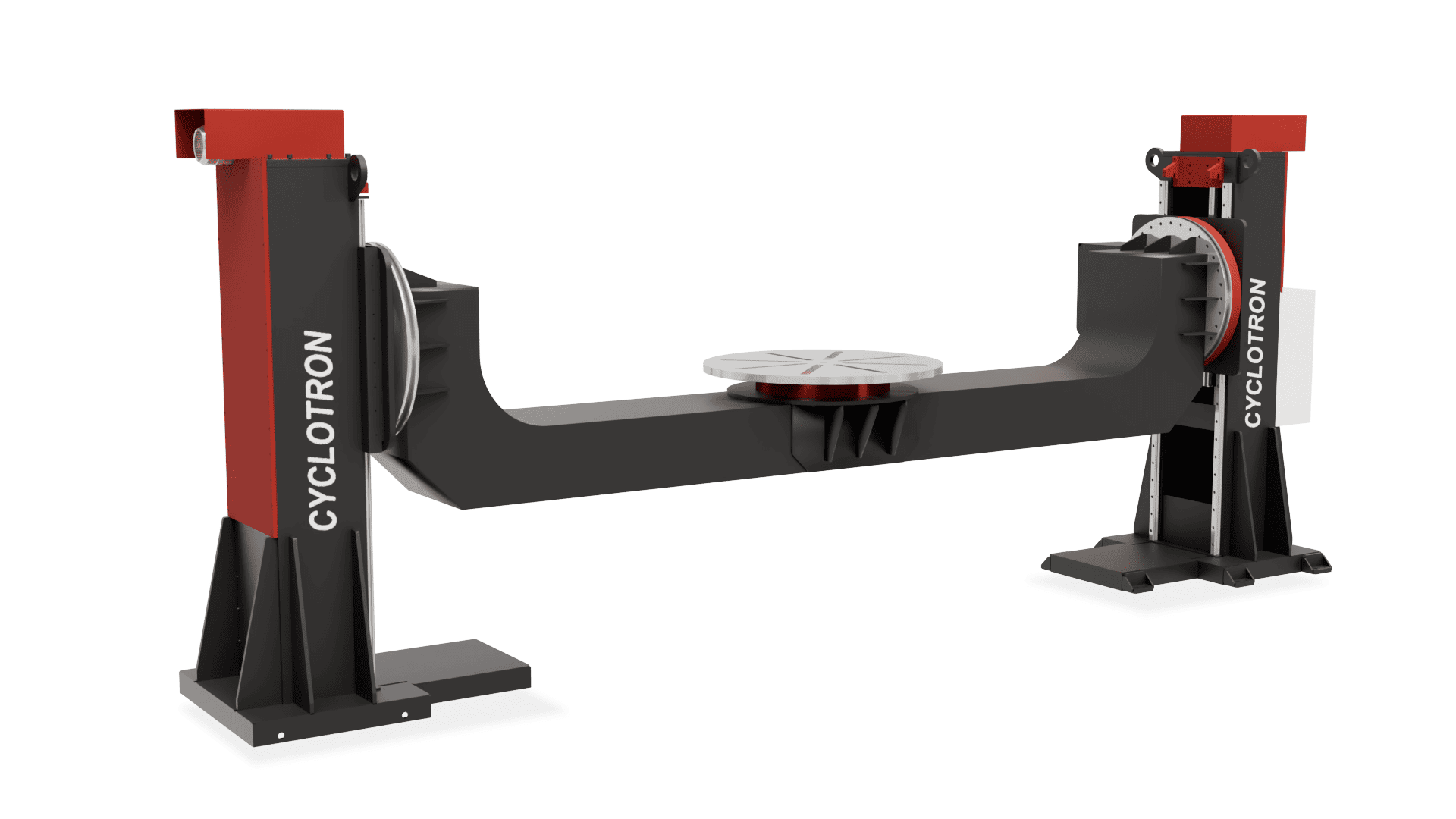
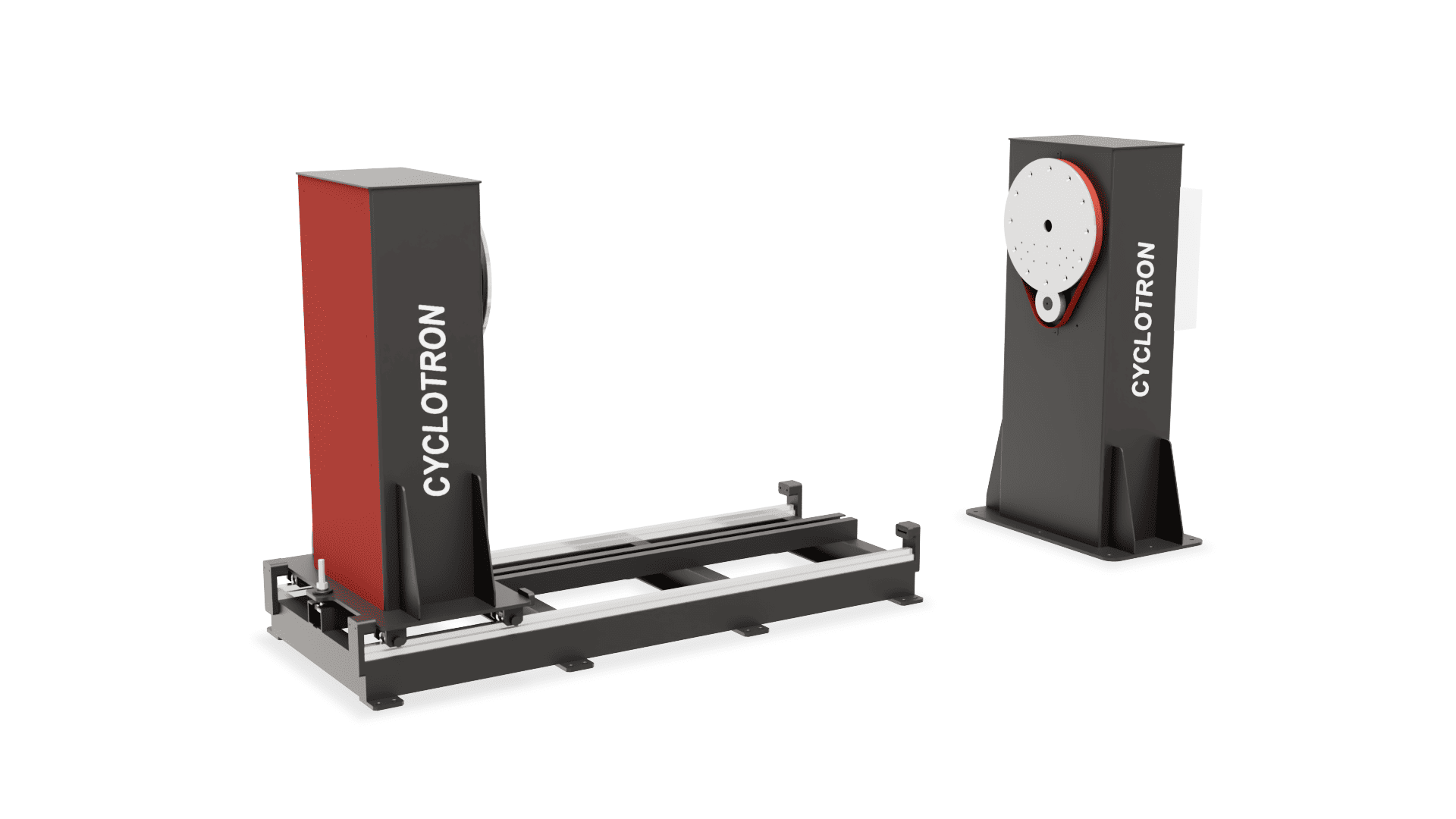
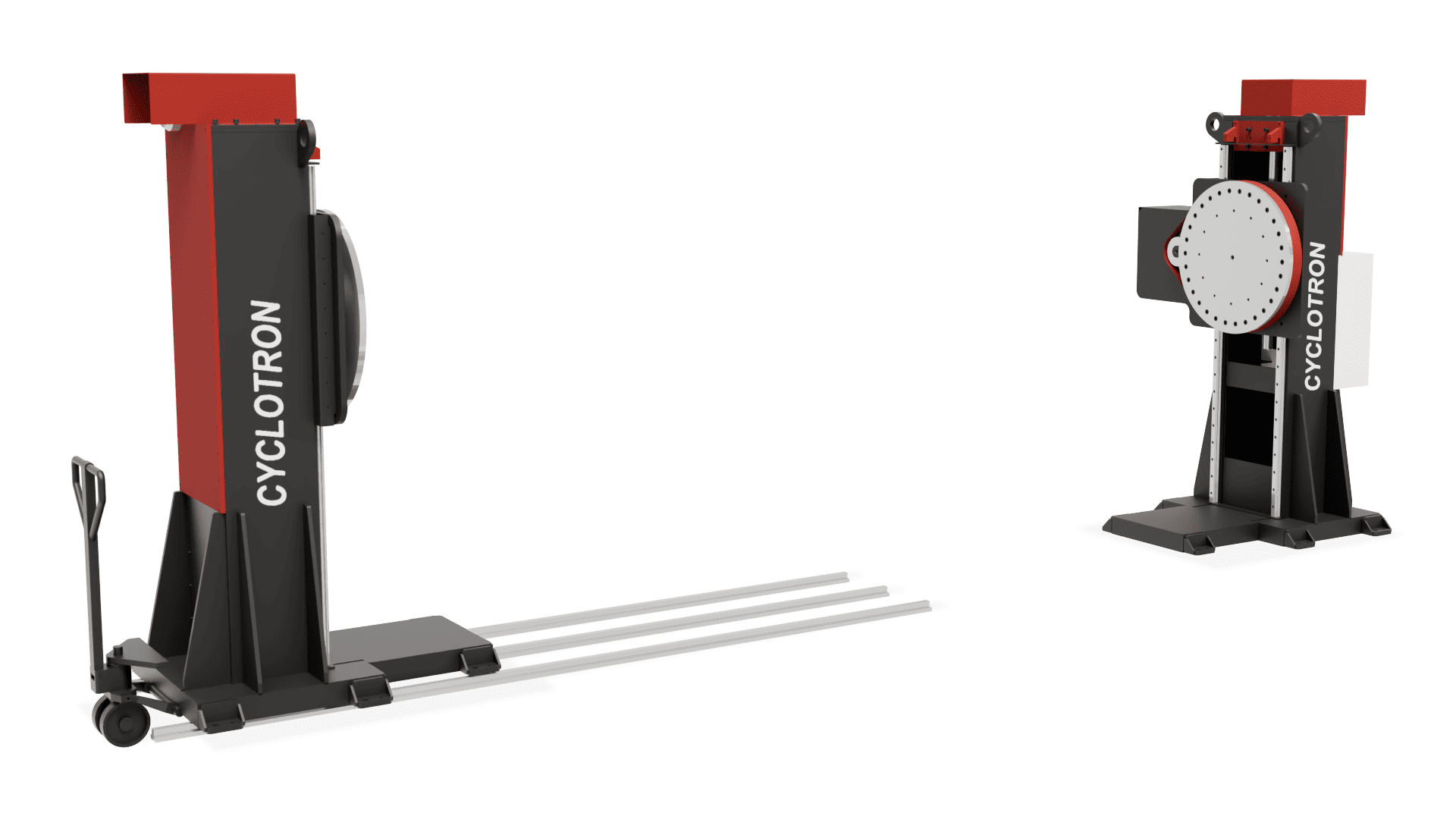
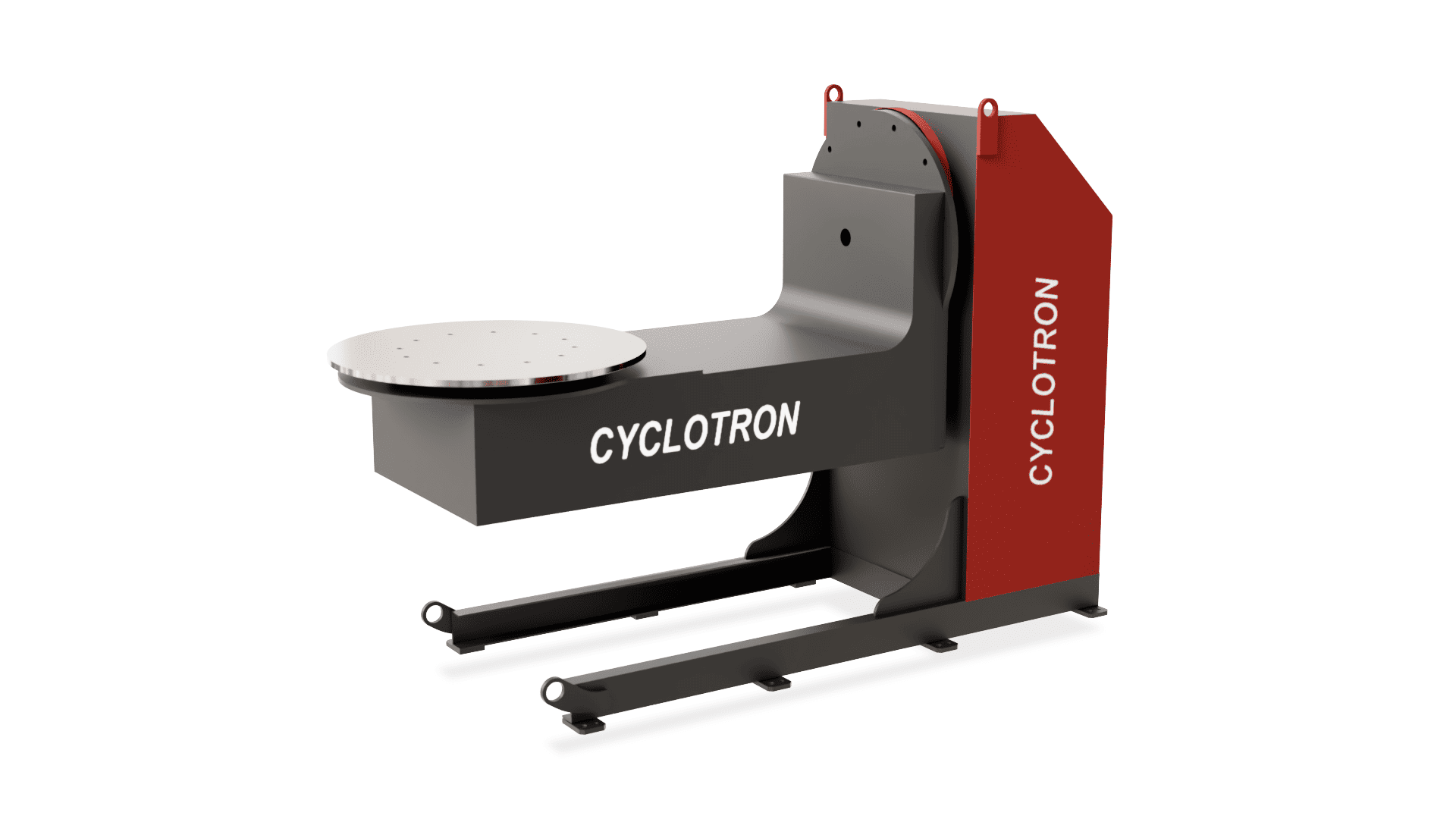
- Cyclotron manufactures all types of Manual/Robotic welding positioners like 1 axis, 2 axis, 3 axis, Headstock-tailstock, L Type, skyhook, etc
Working of welding positioner
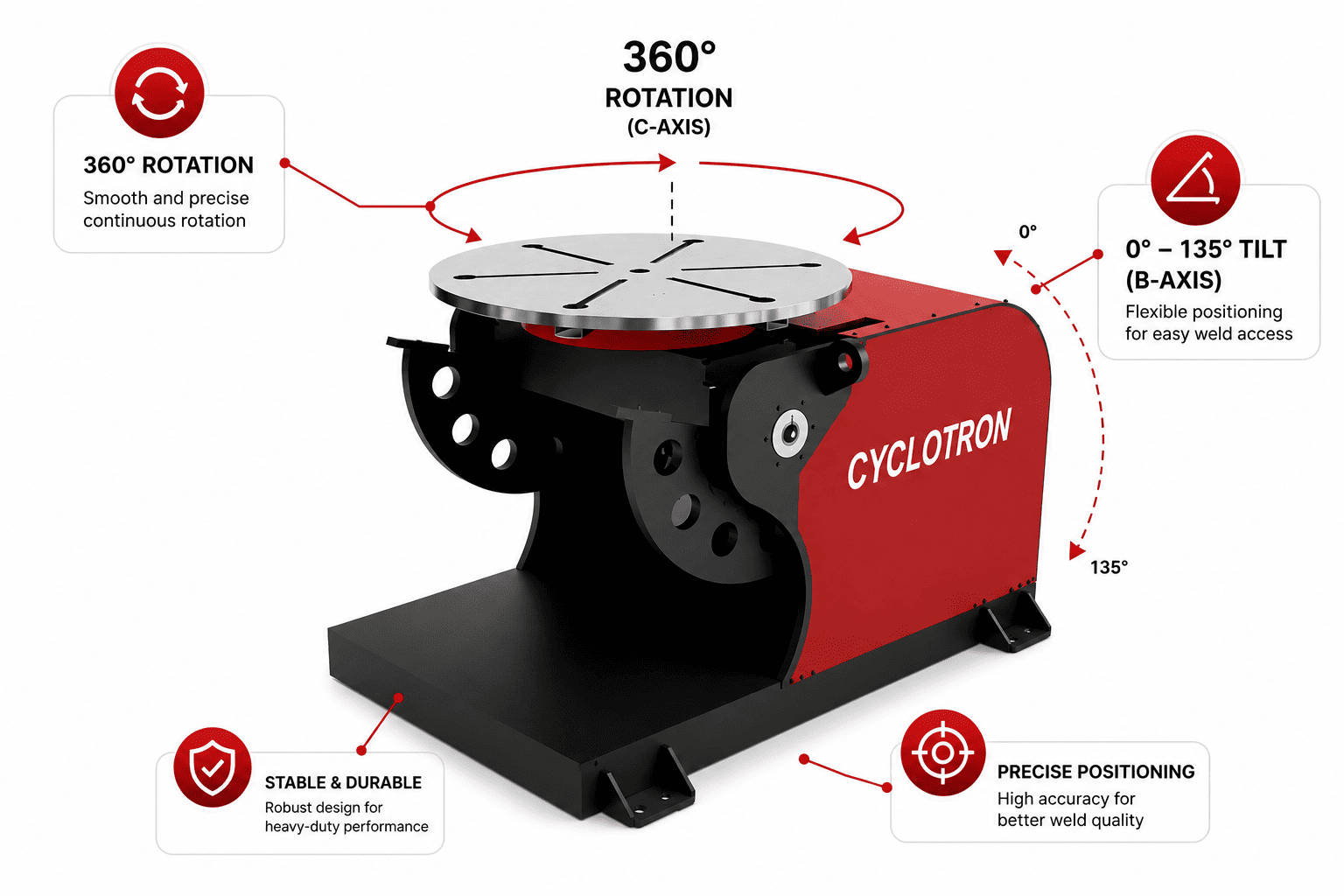
Understanding welding positioner working principles is simple once you know its main components.
A welding positioner part includes:
- Rotating table or chuck
- Tilt mechanism
- Motor and gearbox
- Control system
- Adjustable speed controls
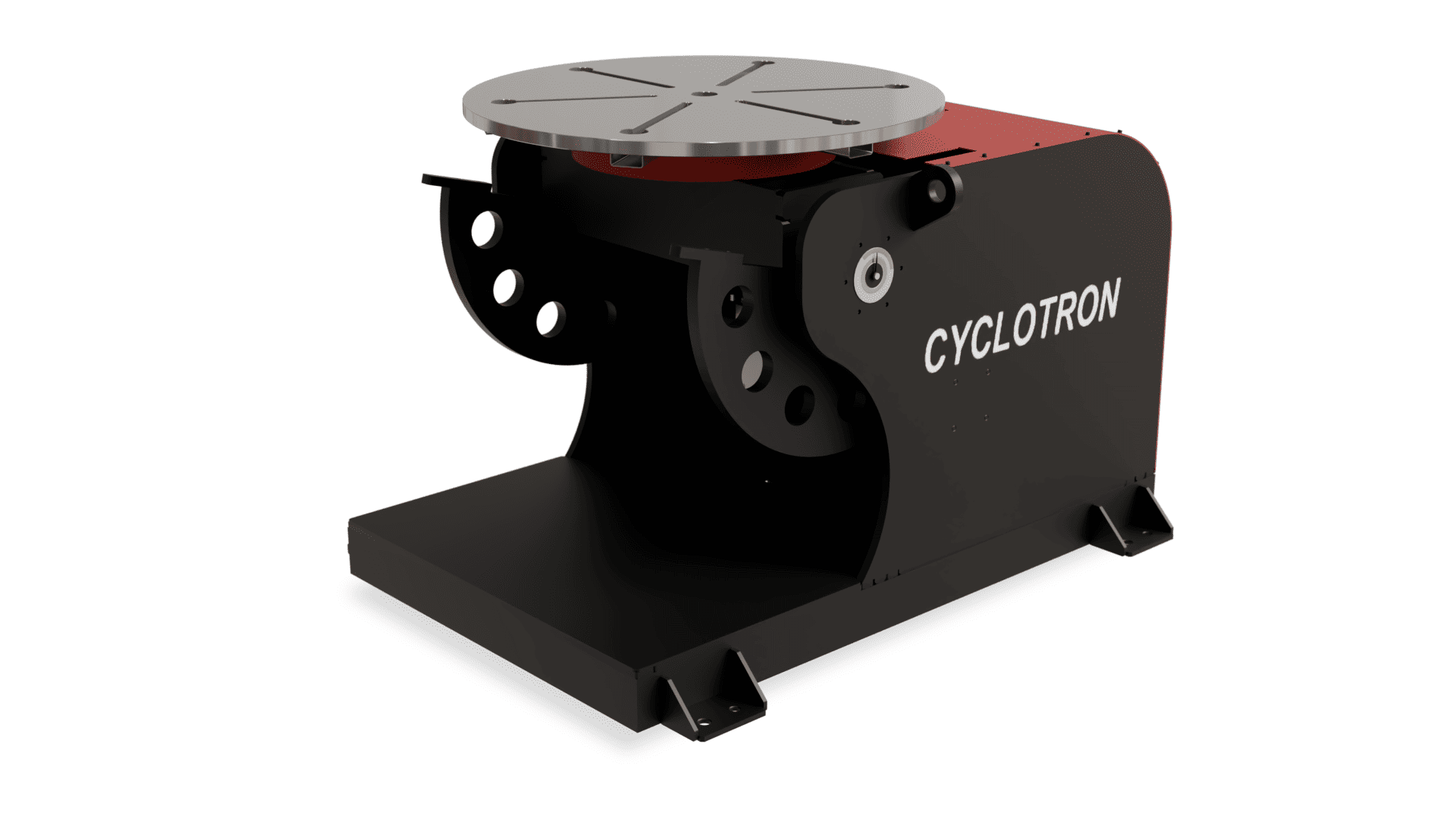
The rotating table moves the workpiece in a circular direction during welding. At the same time, the tilt mechanism changes the angle of the component so the welder can maintain the correct welding position.
An automatic welding positioner allows operators to control both rotation speed and tilt angle depending on the welding application. This flexibility helps improve weld penetration and overall weld consistency.
The motor and gearbox provide smooth and controlled movement, while the control system allows easy operation and positioning adjustments during fabrication work.
Types of Welding Positioners
Different fabrication jobs require different types of welding positioners. Below are the most commonly used types in industrial welding applications.
1. Turn Table Type Positioner
This type rotates the workpiece horizontally and is commonly used for circular welding applications such as pipes, flanges, and cylindrical components.
2. Head & Tailstock Positioner
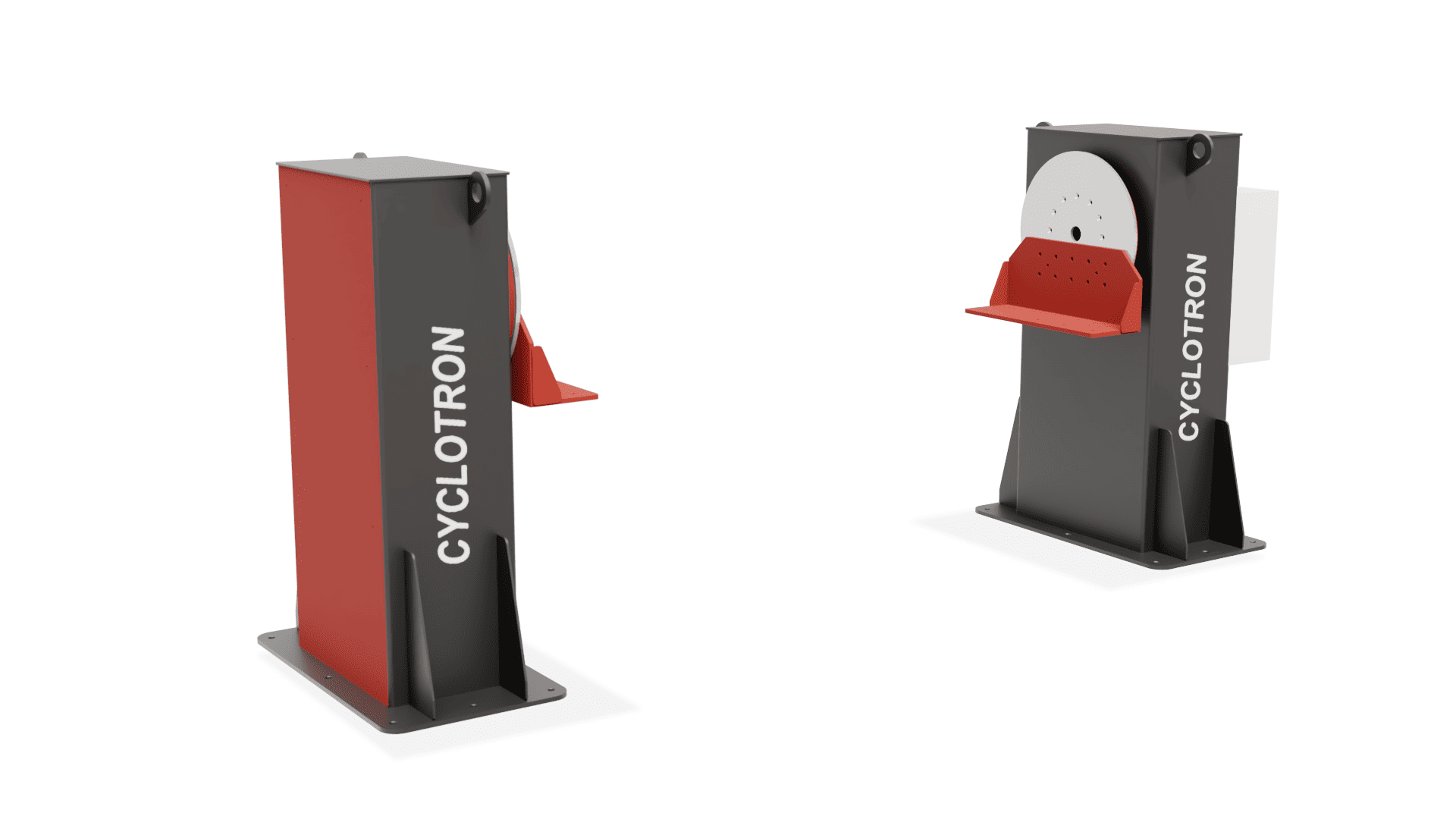
A head and tailstock positioner supports long or heavy workpieces between two ends. It is ideal for shaft welding and structural fabrication projects.
3. Universal Positioner
A universal positioner offers both tilting and rotational movement, making it suitable for complex welding applications that require multi-angle positioning flexibility.
4. L Type Positioner
The L-type positioner features an L-shaped structure that simplifies loading and welding of irregular or asymmetrical components in medium-duty fabrication.
5. Robotic Welding Positioner
A robotic welding positioner works alongside robotic welding systems in automated production lines. These are widely used in automotive and high-volume manufacturing industries.
An industrial welding positioner is available in different capacities depending on application needs. Specialized systems like a pipe welding positioner are designed specifically for pipe and circumferential welding operations.
Applications of Welding Positioners
There are many important welding positioner applications across modern manufacturing industries.
Common industries using welding positioners include:
- Pressure vessel manufacturing
- Pipe fabrication
- Structural steel fabrication
- Tank manufacturing
- Automotive production
- Heavy equipment manufacturing
These machines are especially useful in circumferential welding where continuous rotation improves welding consistency. In heavy fabrication environments, welding positioners help operators handle large workpieces safely and efficiently.
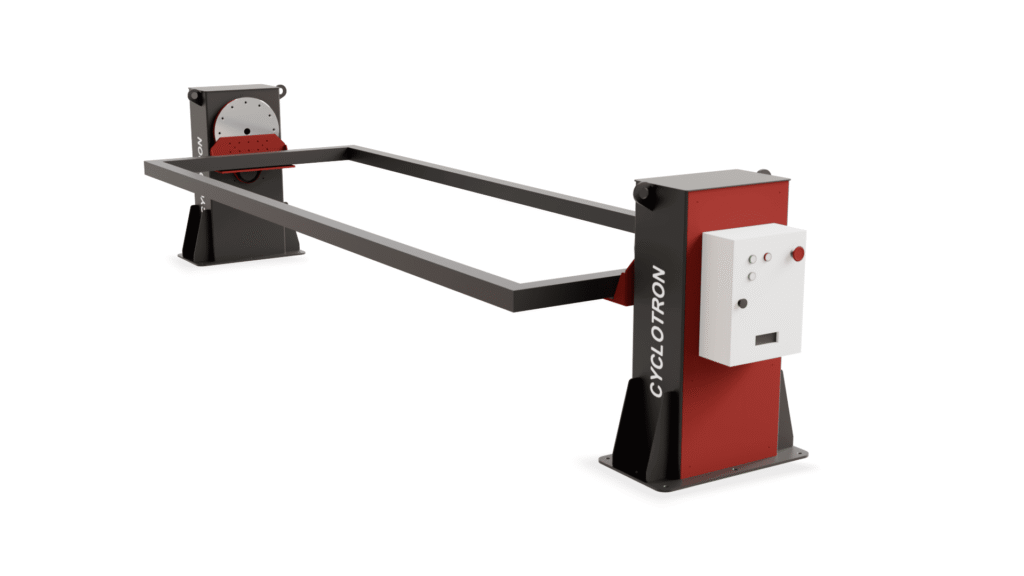
Benefits of Using a Welding Positioner
The benefits of welding positioner systems make them essential for modern fabrication facilities.
1. Improved Weld Quality
Maintaining the correct welding angle results in cleaner welds, better penetration, and reduced welding defects.
2. Higher Productivity
Positioners reduce manual repositioning time and allow continuous welding operations, increasing production efficiency.
3. Better Operator Safety
Operators can work in comfortable positions without excessive lifting or awkward body movements, reducing workplace injuries.
4. Reduced Rework
Consistent weld positioning minimizes welding errors and lowers repair costs.
5. Easier Access to Weld Joints
Complex weld areas become easier to reach when the workpiece rotates automatically during welding.
Overall, welding positioners play a major role in welding productivity improvement and long-term manufacturing efficiency.
Conclusion
A welding positioner is an essential tool in modern welding automation and fabrication industries. It improves weld quality, increases productivity, reduces operator fatigue, and enhances workplace safety.
If you operate a small fabrication workshop or a large industrial manufacturing facility, investing in the right welding positioner can significantly improve operational efficiency and welding consistency.
If you are planning to upgrade your fabrication process, explore advanced welding automation solutions and industrial welding equipment designed for modern manufacturing needs at Cyclotron Welding Positioners. Share your requirements and get a personalized quote for your project needs.
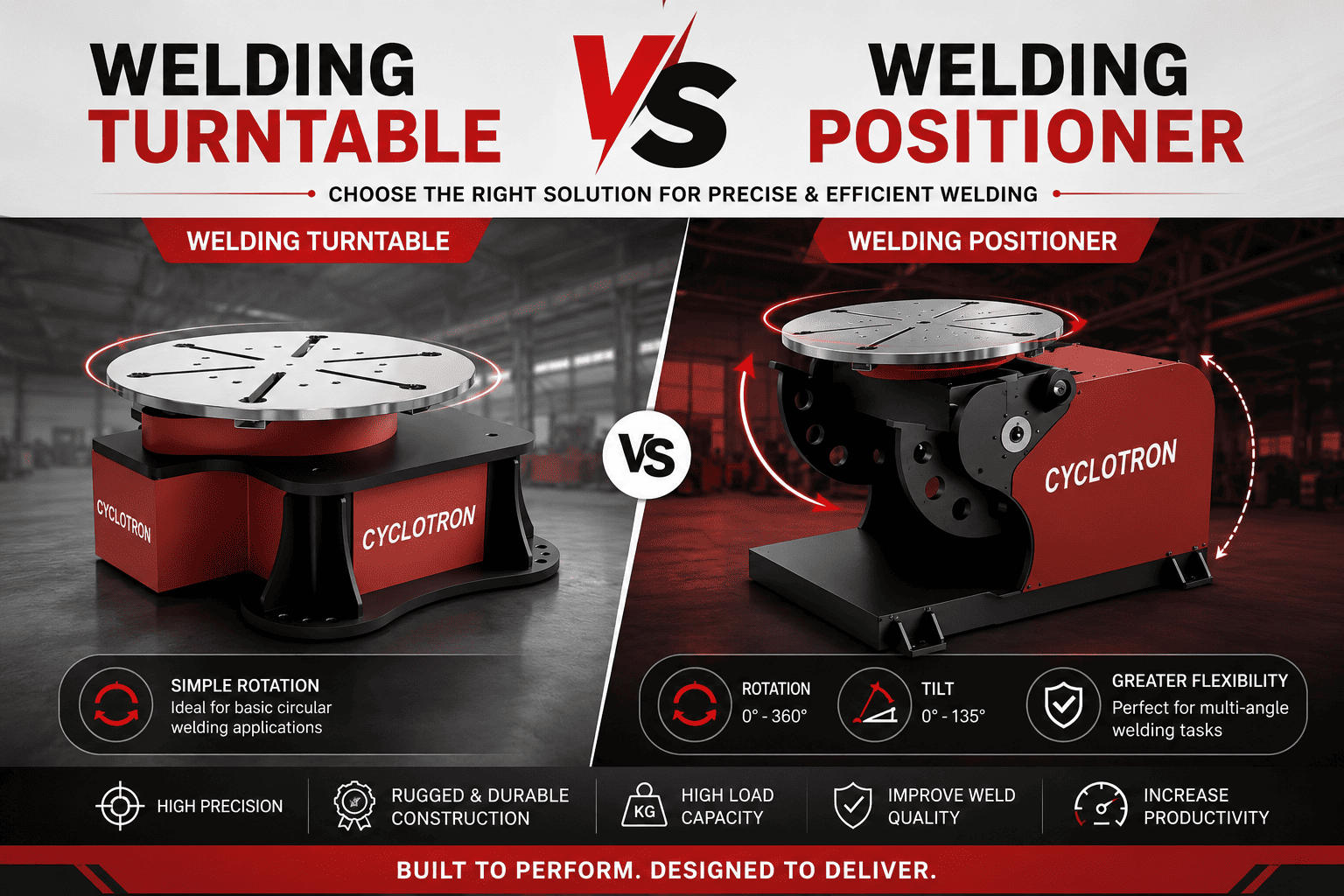
Welding Turntable vs Welding Positioner: What’s the Difference?
A welding turntable provides simple rotation for smooth, consistent welds. A welding positioner can also tilt and angle the workpiece,
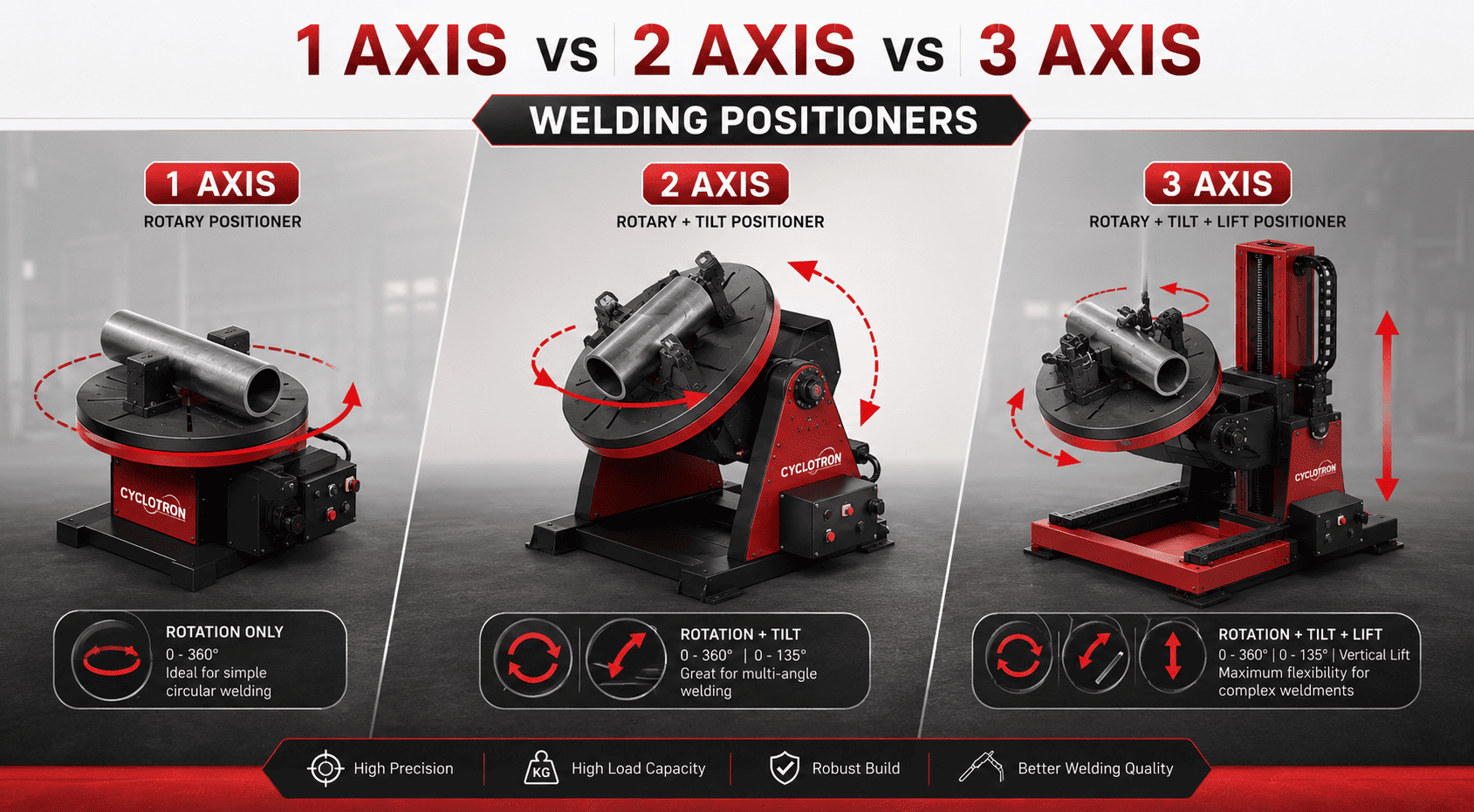
1 Axis vs 2 Axis vs 3 Axis Welding positioners
Compare 1 axis vs 2 axis vs 3 axis welding positioners based on rotation, tilt, flexibility, applications, cost, and automation. Learn which welding positioner is best for your fabrication needs.
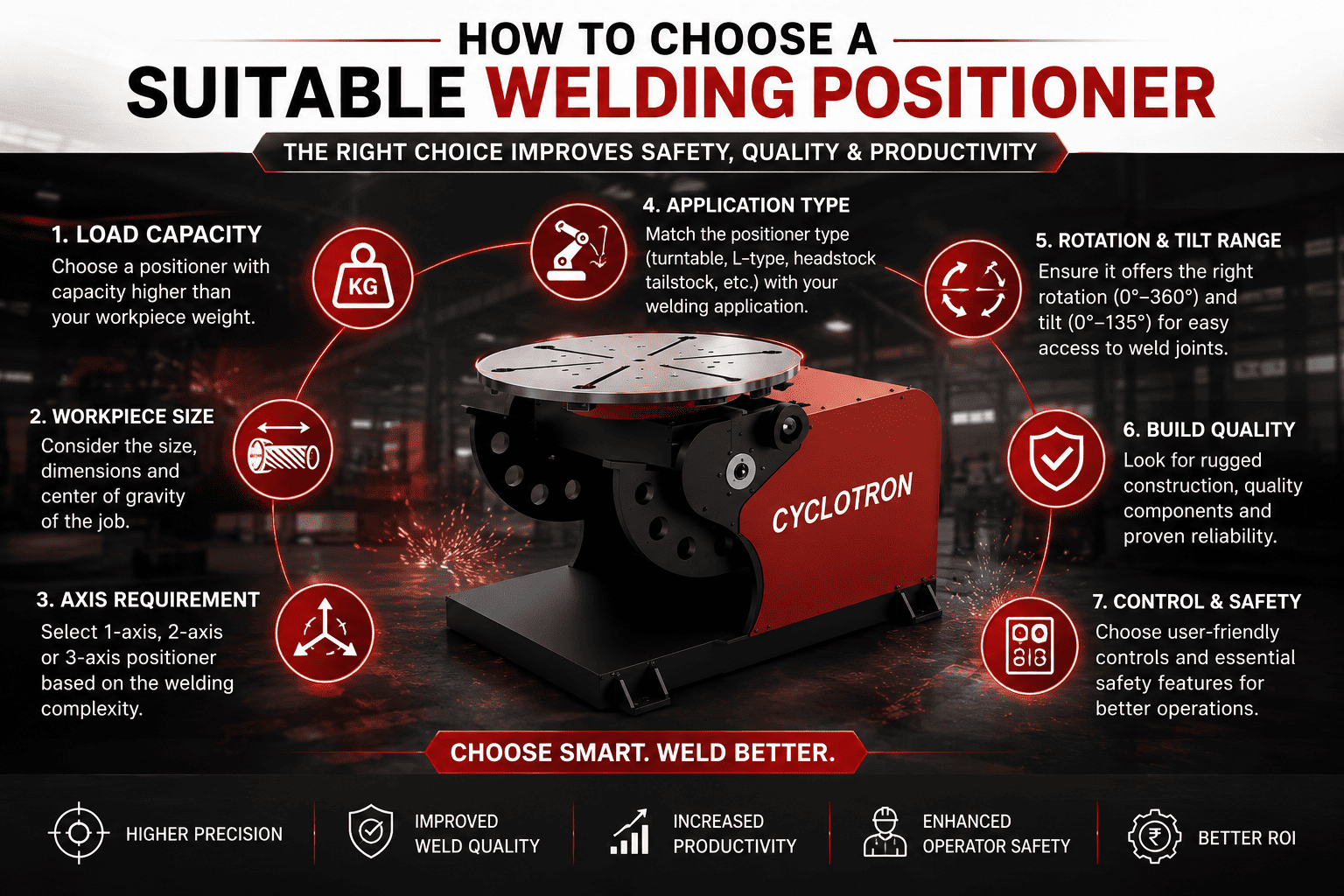
How to select a suitable welding positioner?
Selecting the right welding positioner plays a critical role in the fabrication setup. Welding positioners are designed to handle different load ranges.
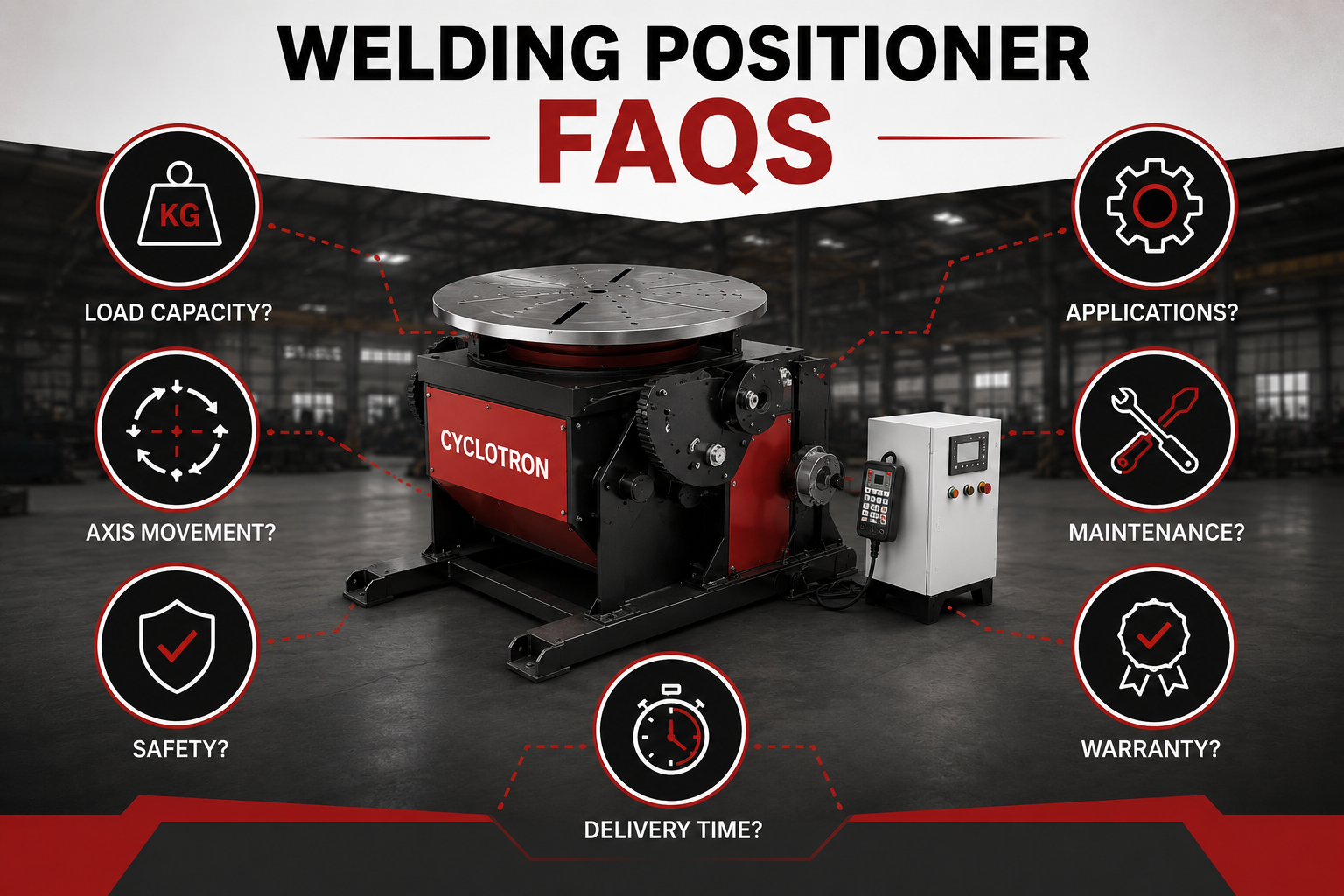
In this blog we will address all the commonly asked questions related to Welding positioners or Cyclotron Welding positioners specifically