Welding Positioner FAQs
A complete guide
In this blog we will address all the commonly asked questions related to Welding positioners or Cyclotron Welding positioners specifically
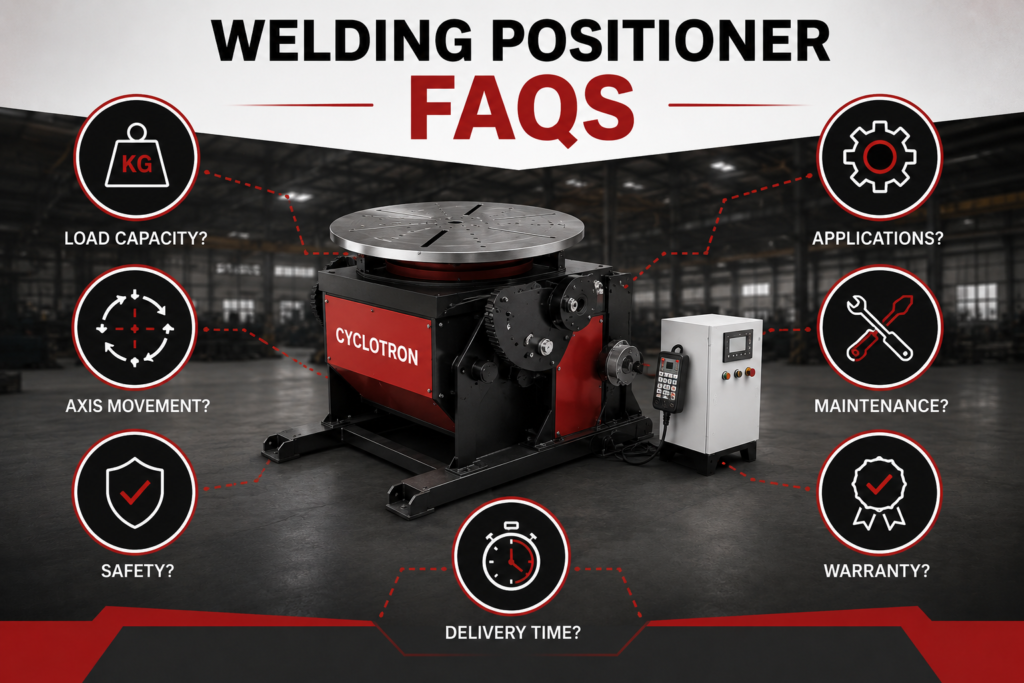
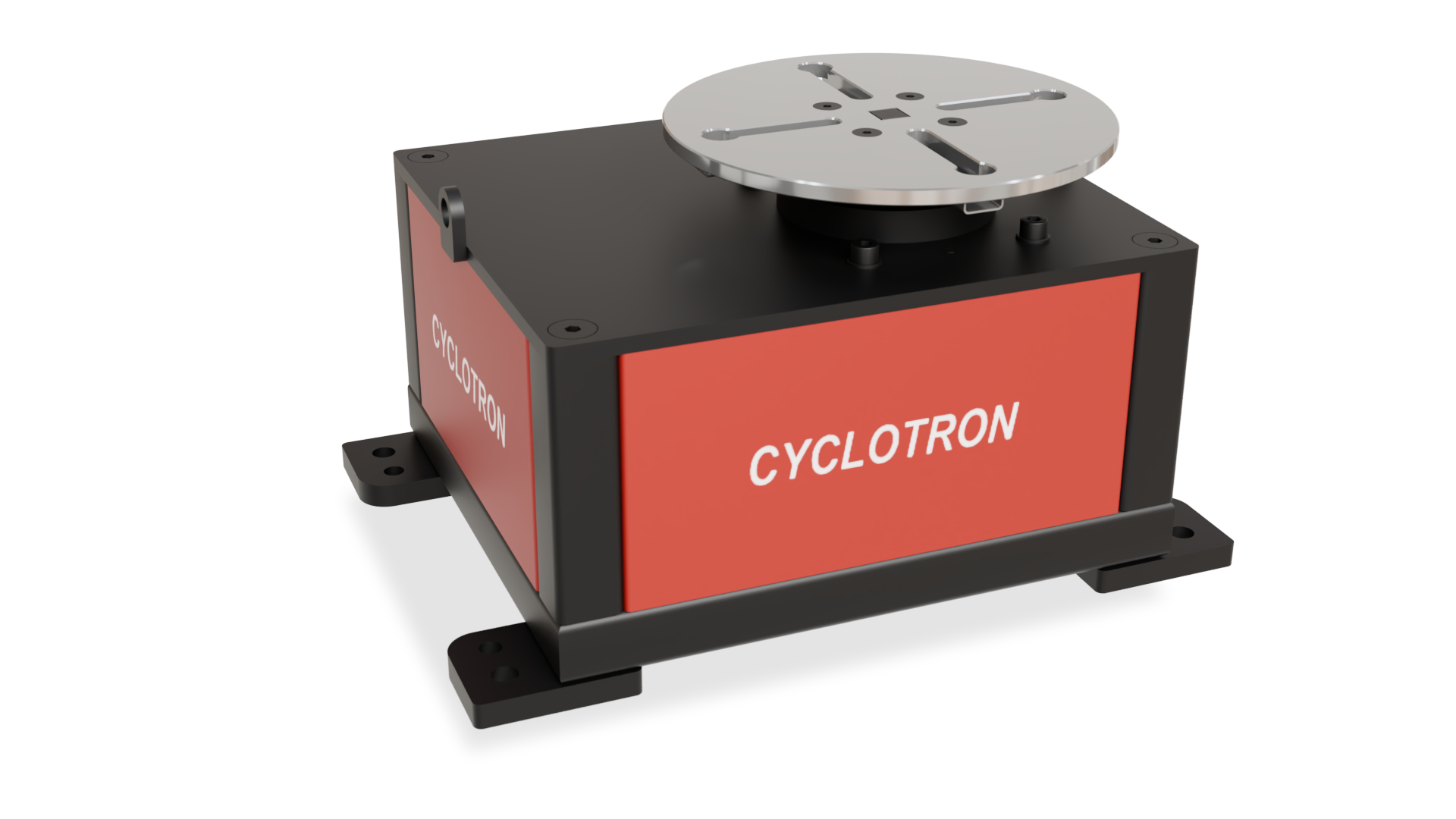
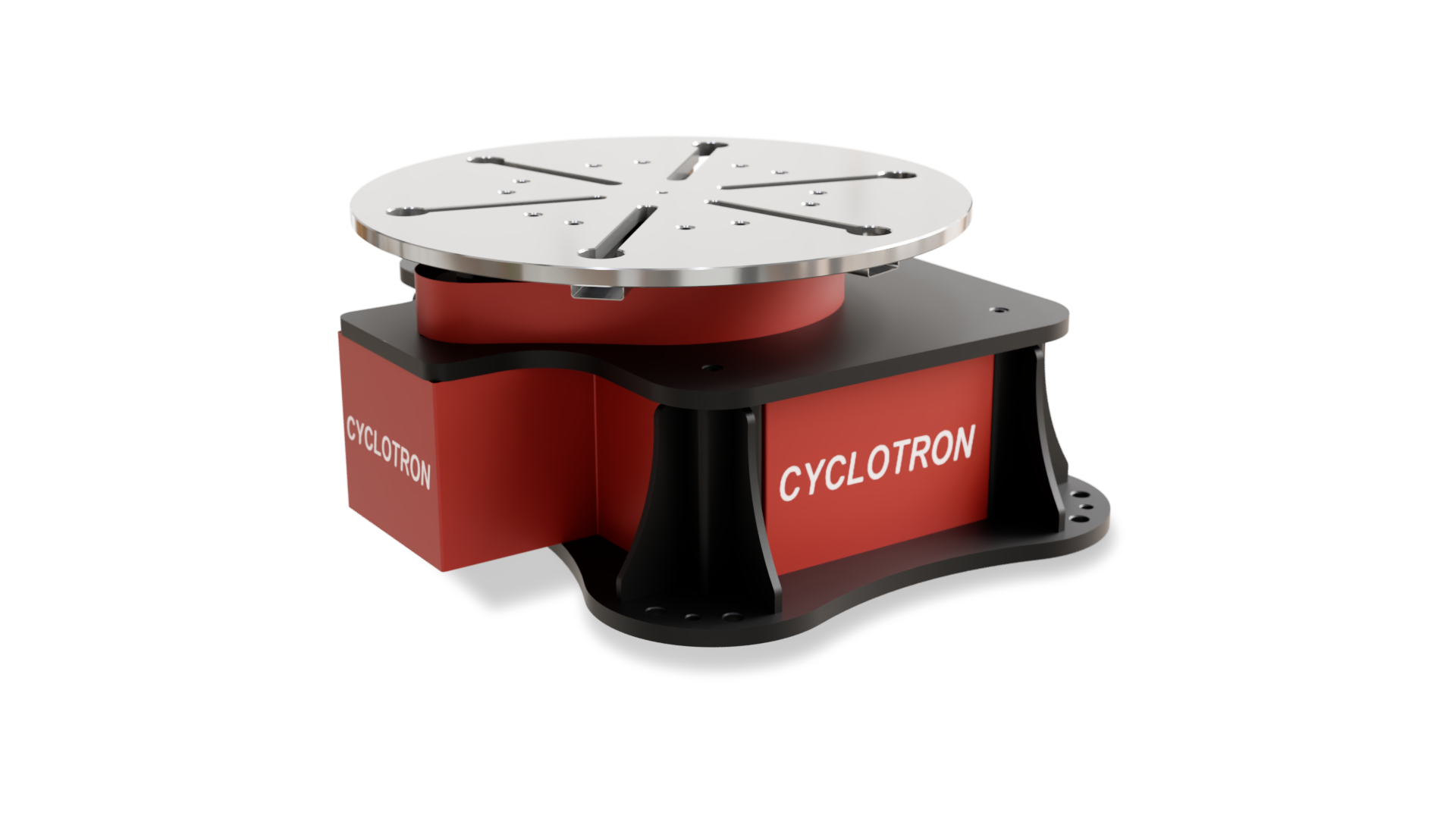
A welding positioner holds, rotates, and tilts a workpiece so the weld can be made in the flat or downhand position. This improves weld quality, reduces welder fatigue, and increases productivity by allowing the operator or robot to keep the torch in the best welding position throughout the job
A welding positioner rotates and tilts a workpiece, while a welding rotator only rotates cylindrical jobs using powered rollers. Rotators are best for pipes, tanks, and pressure vessels, whereas positioners can handle a much wider range of shapes and off-centre loads.
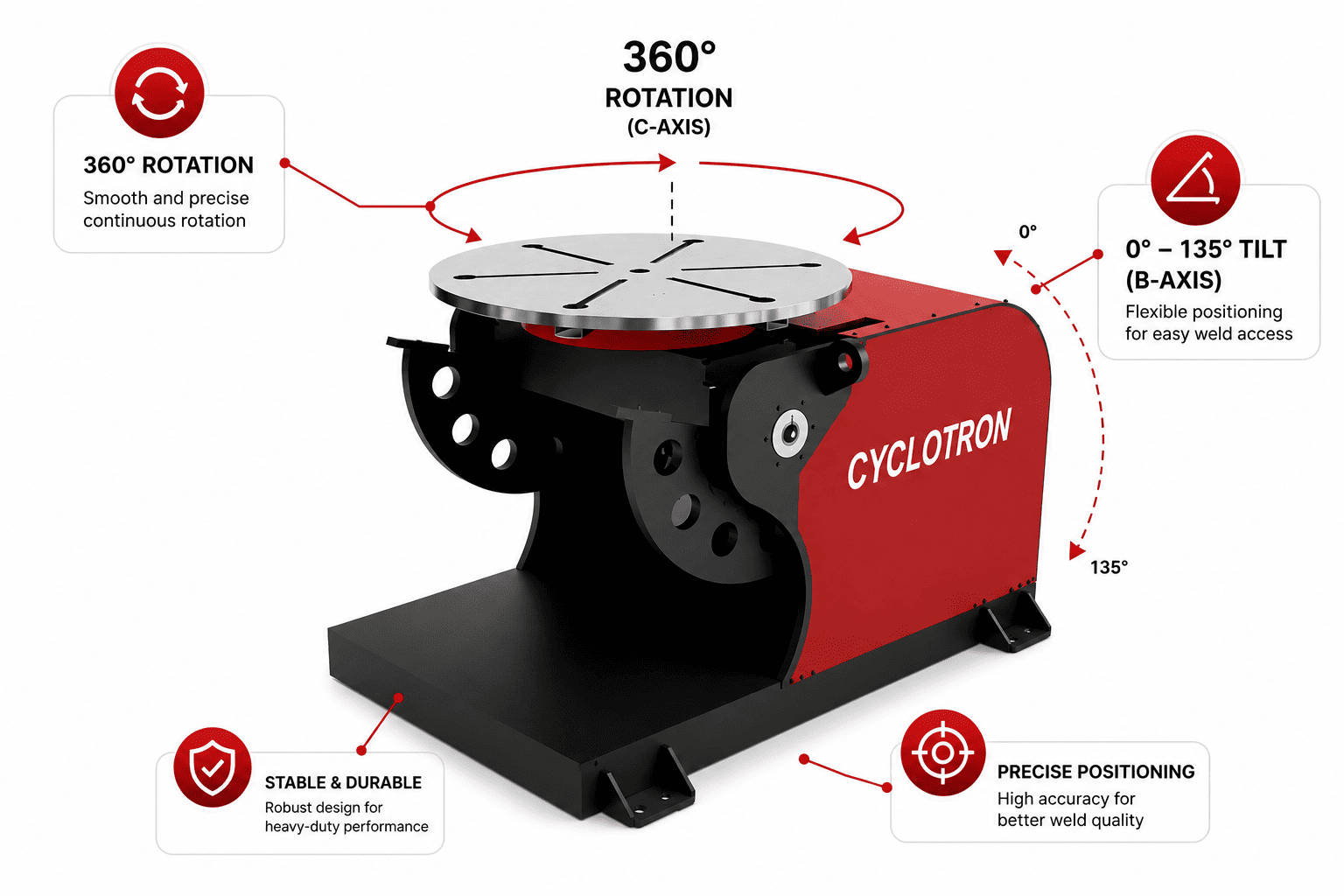
A 2-axis welding positioner provides two movements: table rotation and tilt. Together, these movements allow the workpiece to be positioned for easier welding, reducing manual handling and also helping maintain better weld quality and operator comfort.
4. What is a 3 axis welding positioner ?
A 3-axis welding positioner combines rotation, tilt, and a third axis, usually vertical lift or cradle movement, to provide greater positioning flexibility. It’s commonly used for larger or more complex fabrications where precise workpiece positioning improves welding efficiency.
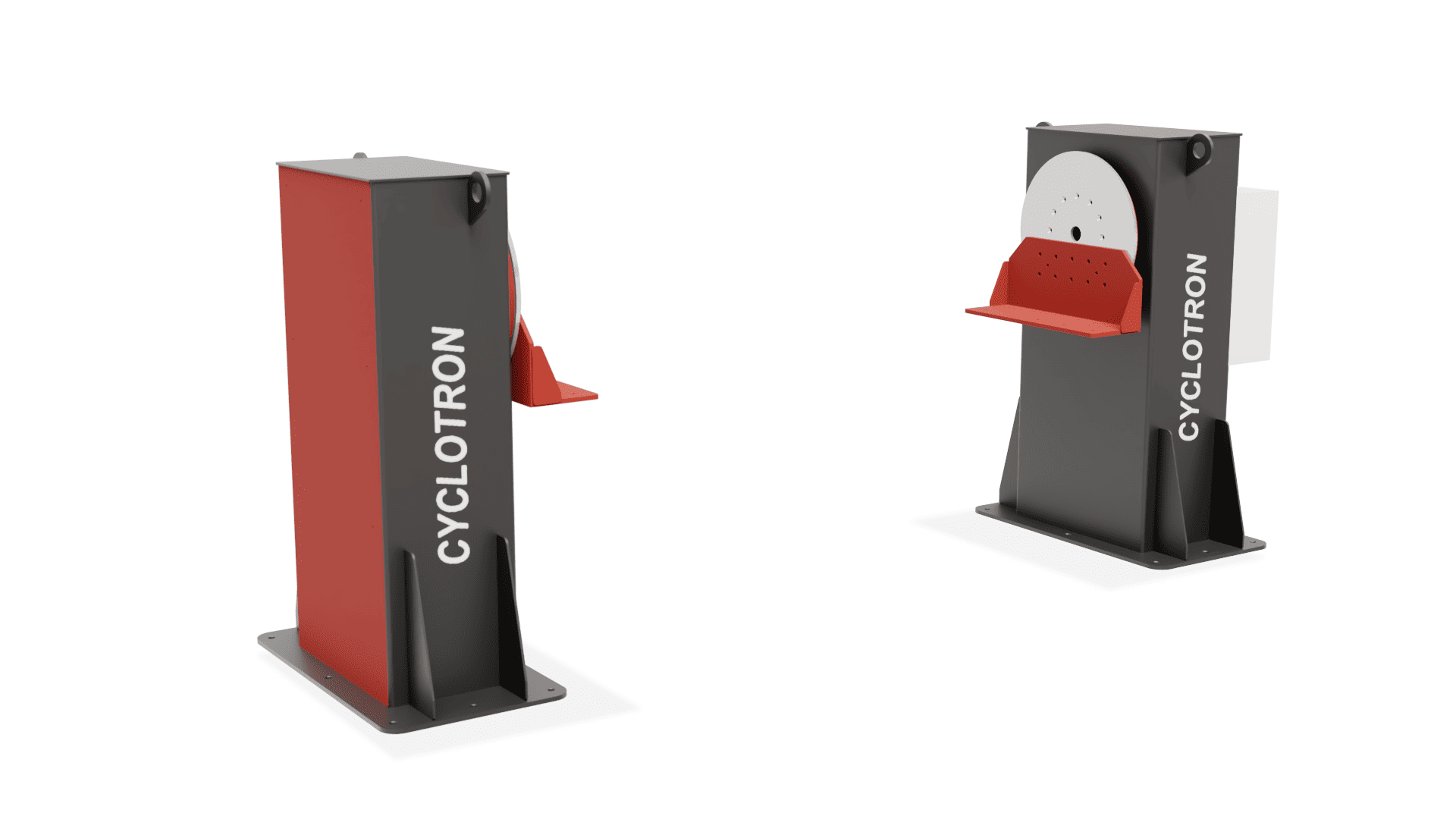
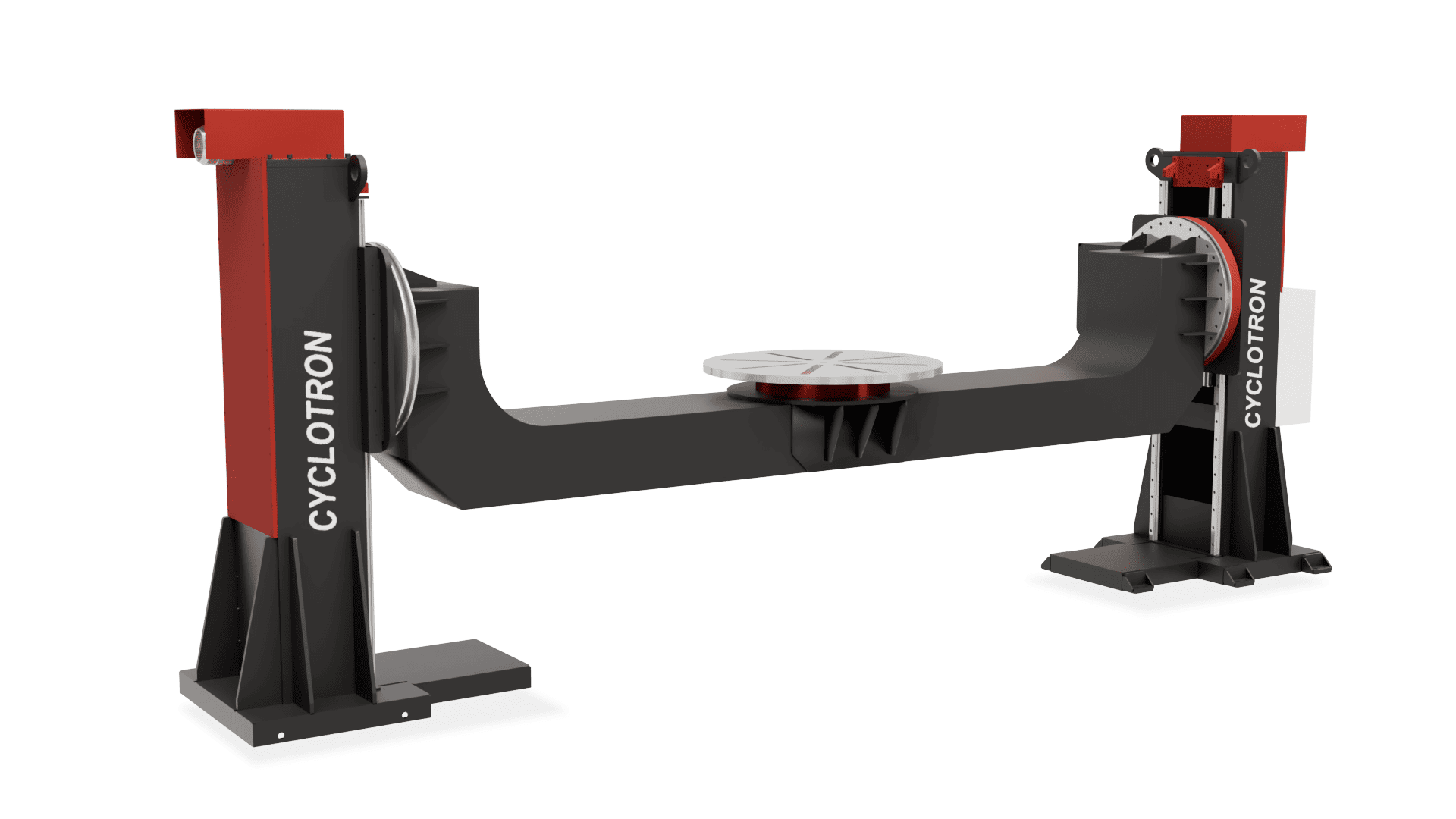
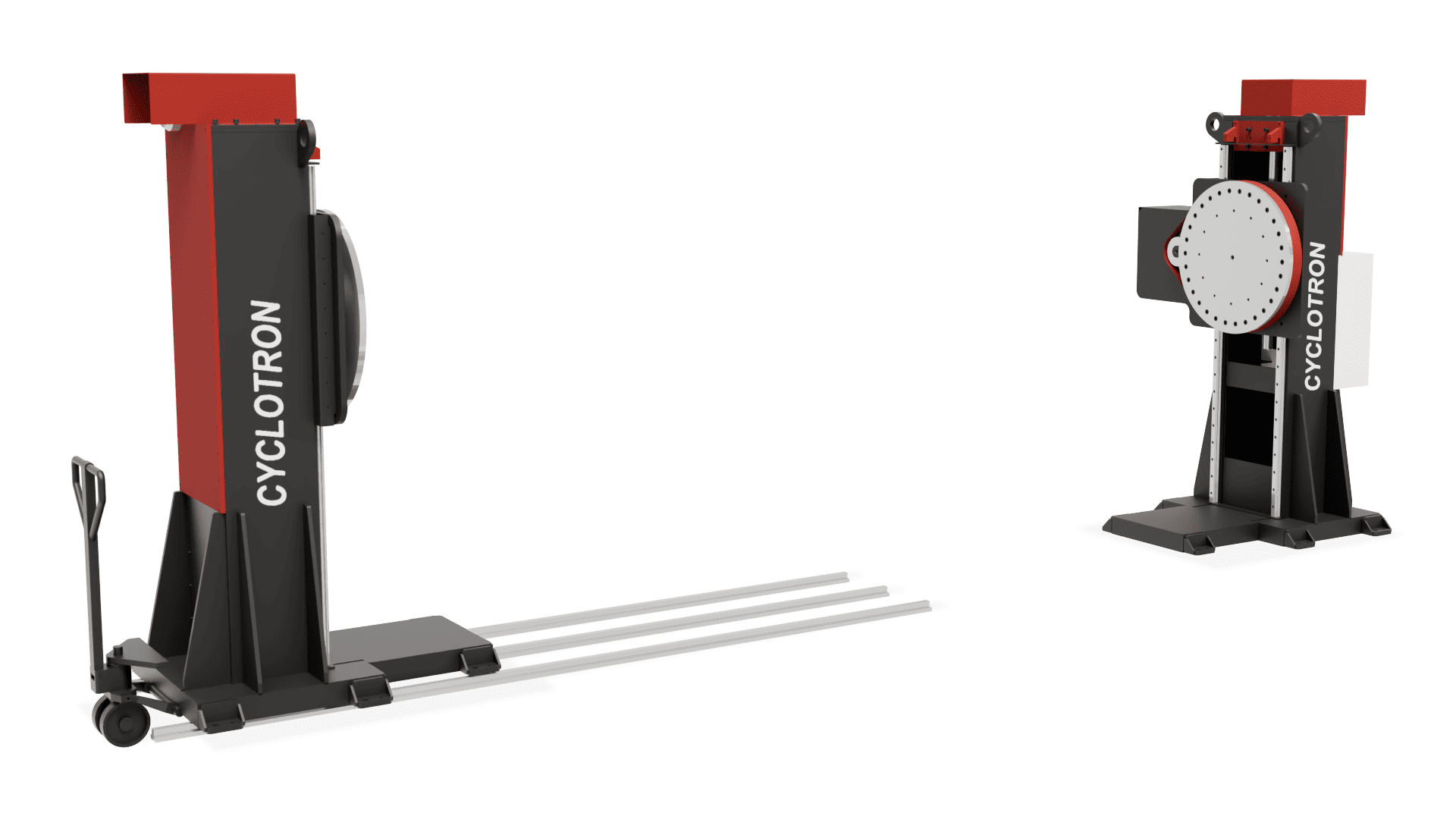
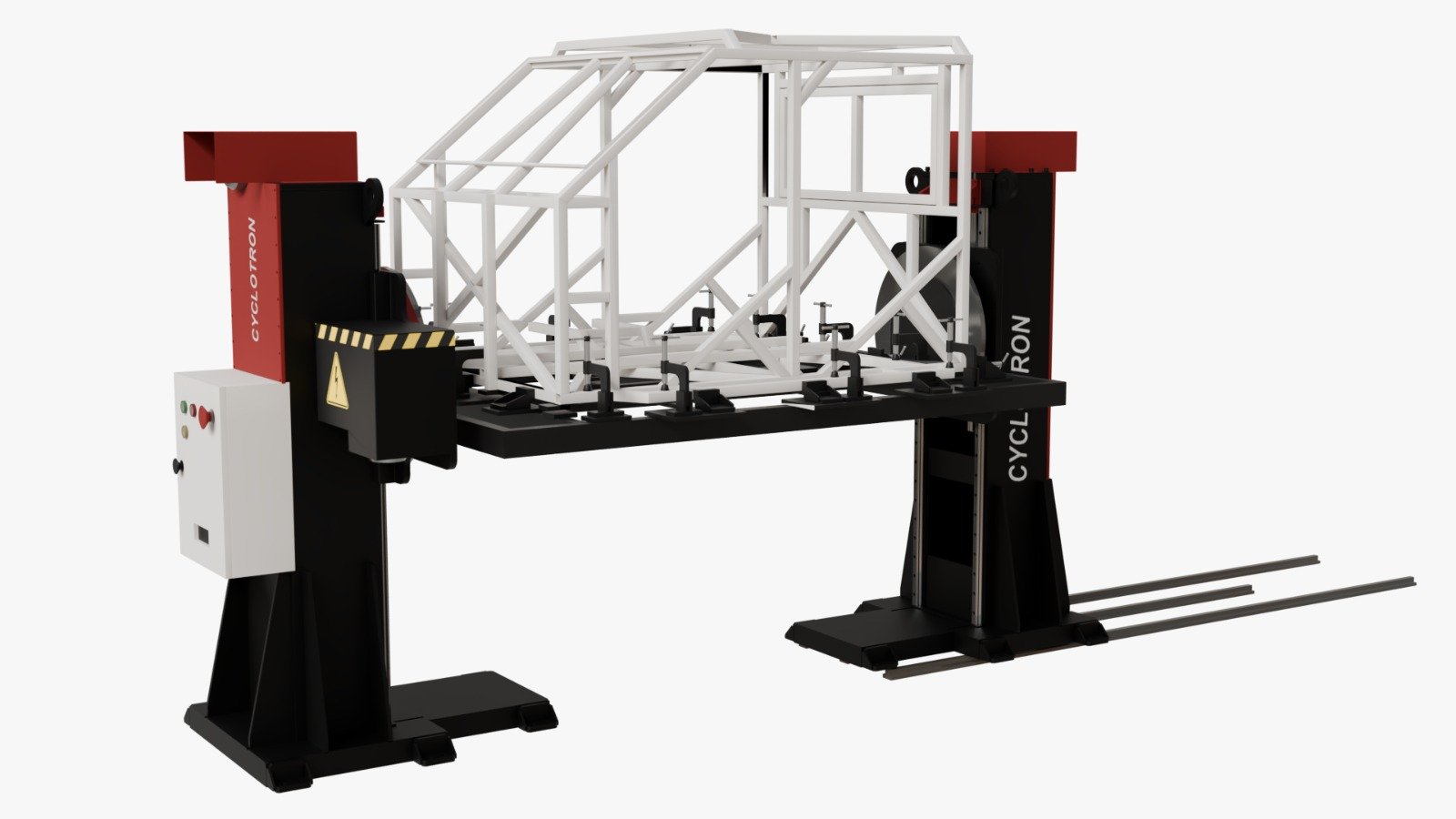
A headstock-tailstock positioner is designed for long or heavy workpieces that need support at both ends. It keeps the component stable during rotation, reduces deflection, and is commonly used for structural beams, shafts, frames, and other long fabrications.
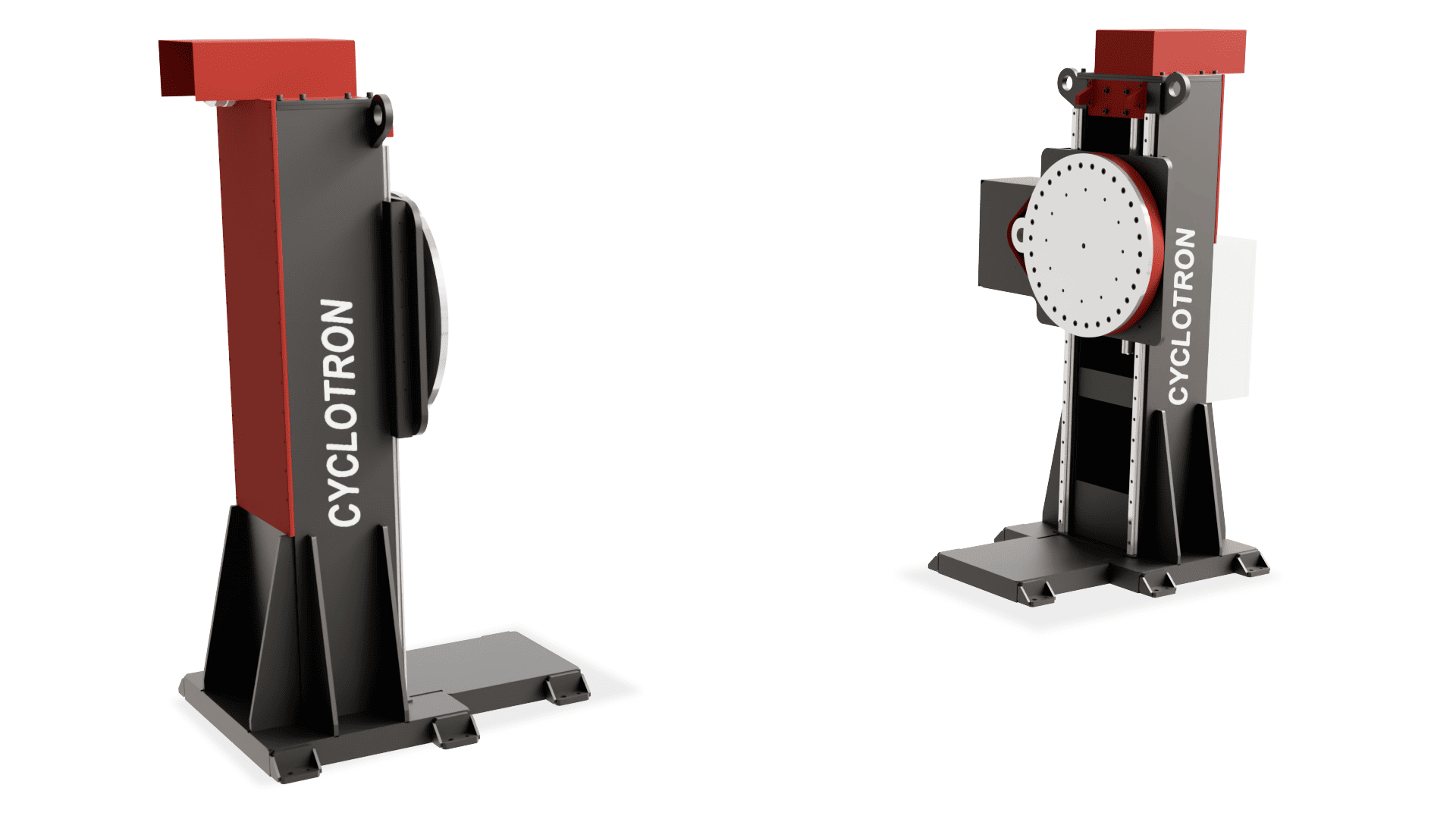
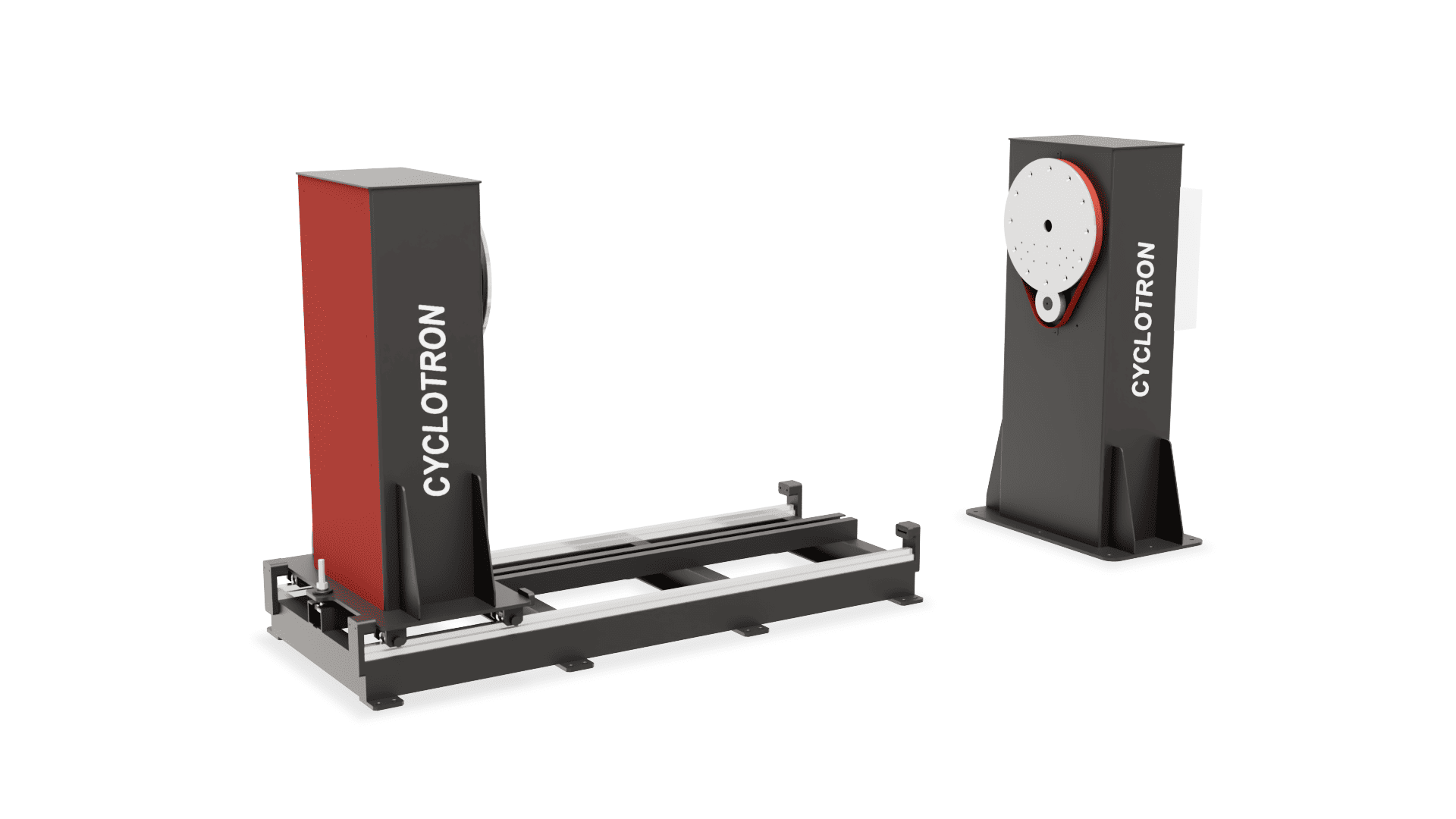
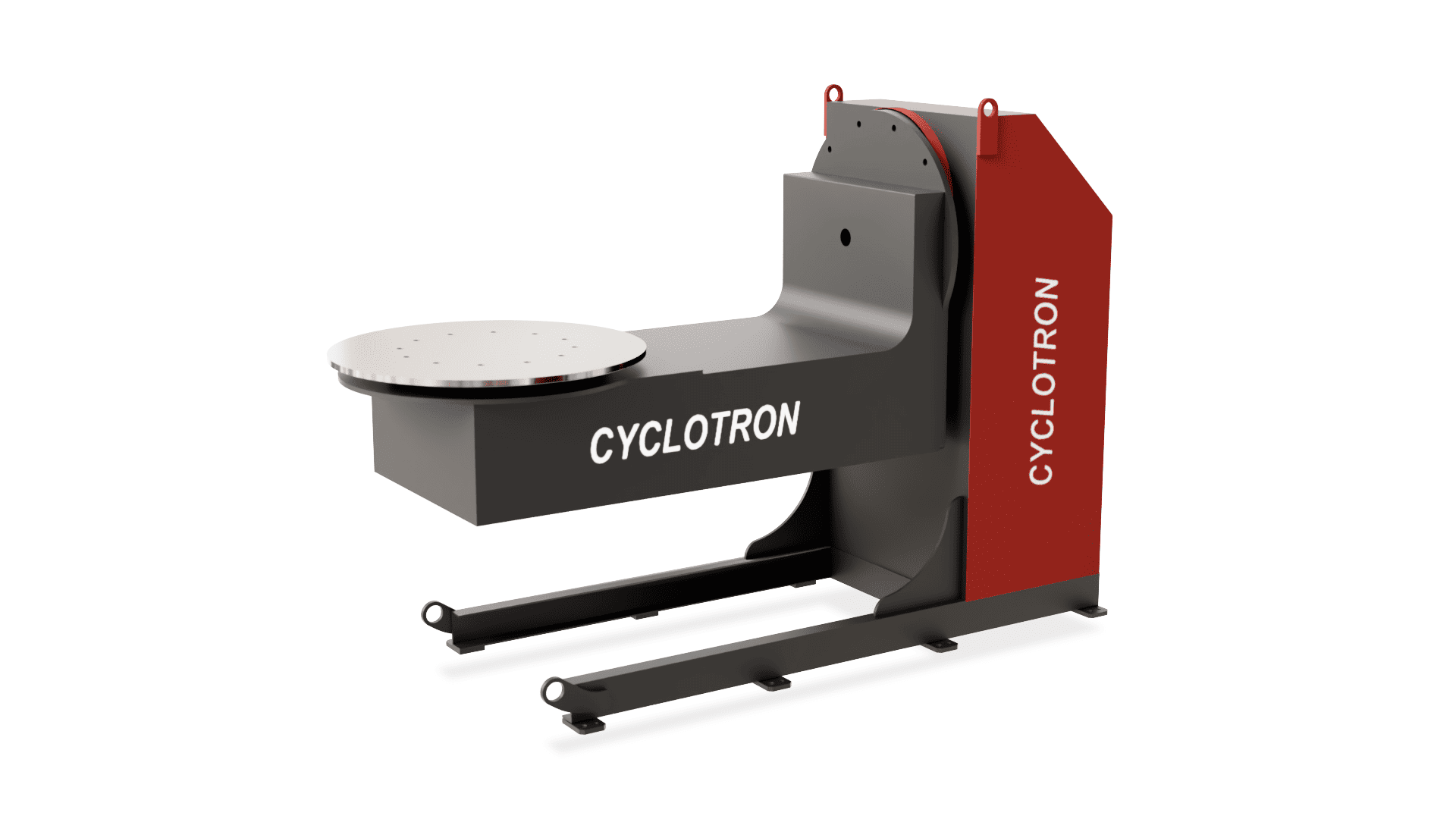
An L-type welding positioner supports the workpiece from one side, making it ideal for box sections, fabricated frames, cabinets, and other irregular components. However, it’s not the best choice for very long workpieces, which are better suited to a headstock-tailstock configuration.
Cyclotron Welding Positioners from India
Cyclotron manufactures industrial welding positioners from 100 kg to 100 Tons capacity, designed for robotic/manual welding, heavy fabrication, and high-production welding environments.
- Cyclotron manufactures all types of Manual/Robotic welding positioners like 1 axis, 2 axis, 3 axis, Headstock-tailstock, L Type, skyhook, etc
The right welding positioner capacity depends on several factors. You also need to consider the centre of gravity, eccentricity, and how the load is mounted, as these affect the forces acting on the machine.
8. What is eccentricity, and why does it matter?
Eccentricity is the distance between the workpiece’s centre of gravity and the positioner’s rotating axis. Two workpieces can weigh the same but require different-sized positioners if one has a greater offset, because higher eccentricity creates more turning force and reduces the machine’s safe working capacity.
9. What rotation speed do I need?
The ideal rotation speed depends on the workpiece diameter and your required welding travel speed. Larger components usually rotate more slowly, while smaller parts can turn faster. Choosing the right speed helps maintain a consistent weld bead and improves overall welding quality.
10. Why does a welding positioner need an earthing brush?
An earthing brush safely carries the welding current to ground instead of letting it pass through the bearings. Without it, electrical current can damage the bearings, leading to premature failures, costly repairs, and unnecessary downtime.
Cyclotron Welding Positioners from India
Cyclotron manufactures industrial welding positioners from 100 kg to 100 Tons capacity, designed for robotic/manual welding, heavy fabrication, and high-production welding environments.
- Cyclotron manufactures all types of Manual/Robotic welding positioners like 1 axis, 2 axis, 3 axis, Headstock-tailstock, L Type, skyhook, etc
The price of a welding positioner in India typically starts at around Rs 50,000 for smaller standard models and can exceed ₹50 lakh for heavy-duty or custom-built systems. The final cost depends on capacity, table size, automation features, and application requirements. See our Welding Positioner Pricing Guide for more details.
12. How long does delivery of welding positioners take?
Standard welding positioners are usually delivered within 4-8 weeks, while custom-built machines typically take 8-16 weeks depending on the design, capacity, and level of customisation. We’ll confirm the delivery schedule once the technical specifications are finalised.
13. Do you provide installation and commissioning?
Yes. We provide installation support, commissioning, and operator training to ensure your welding positioner is installed correctly and performs as intended. Our team also assists with testing, alignment, and system checks before the equipment is handed over for production. (extra cost)
14. What warranty do you provide?
Our Cyclotron welding positioners are backed by a one-year warranty against manufacturing defects under normal operating conditions. The warranty details will be provided in your quotation, while consumables and damage caused by misuse or improper maintenance are excluded.
15. Can you build a custom welding positioner?
Yes. We design and manufacture custom welding positioners to suit your workpiece, production process, and automation requirements. Whether you need a higher capacity, special table size, additional axes, or custom tooling, we can engineer a solution for your application.
16. Do you export welding positioners from India?
Yes. We manufacture and export welding positioners from India to customers across the Middle East, Southeast Asia, Africa, Europe, USA and other international markets. Our export services include custom engineering, documentation, and technical support to meet project and country-specific requirements.
Cyclotron Welding Positioners from India
Cyclotron manufactures industrial welding positioners from 100 kg to 100 Tons capacity, designed for robotic/manual welding, heavy fabrication, and high-production welding environments.
- Cyclotron manufactures all types of Manual/Robotic welding positioners like 1 axis, 2 axis, 3 axis, Headstock-tailstock, L Type, skyhook, etc
17. What's the maximum capacity Cyclotron manufactures?
Cyclotron manufactures welding positioners with capacities of up to 50 Tonnes capacity. Our range includes standard and custom-built models for everything from small fabrication shops to heavy industrial applications in sectors such as energy, shipbuilding, construction, and process equipment.
Yes. Our welding positioners can be built to meet the robot manufacturer’s external-axis specifications for robotic welding applications. The robot supplier then connects the positioner to the robot controller, configures the external axis, and commissions the complete robotic welding cell.
19. Do welding positioners need a special foundation?
It depends on the machine’s capacity. Smaller welding positioners can often be installed on a standard reinforced workshop floor. But the larger and heavier systems may require an engineered foundation to safely support the equipment and maintain positioning accuracy during operation.
20. What maintenance does a welding positioner need?
A welding positioner requires regular inspection of lubrication points, fasteners, electrical connections, bearings, and the earthing brush. Keeping the machine clean and following the recommended maintenance schedule helps prevent unexpected downtime and extends the life of the equipment.
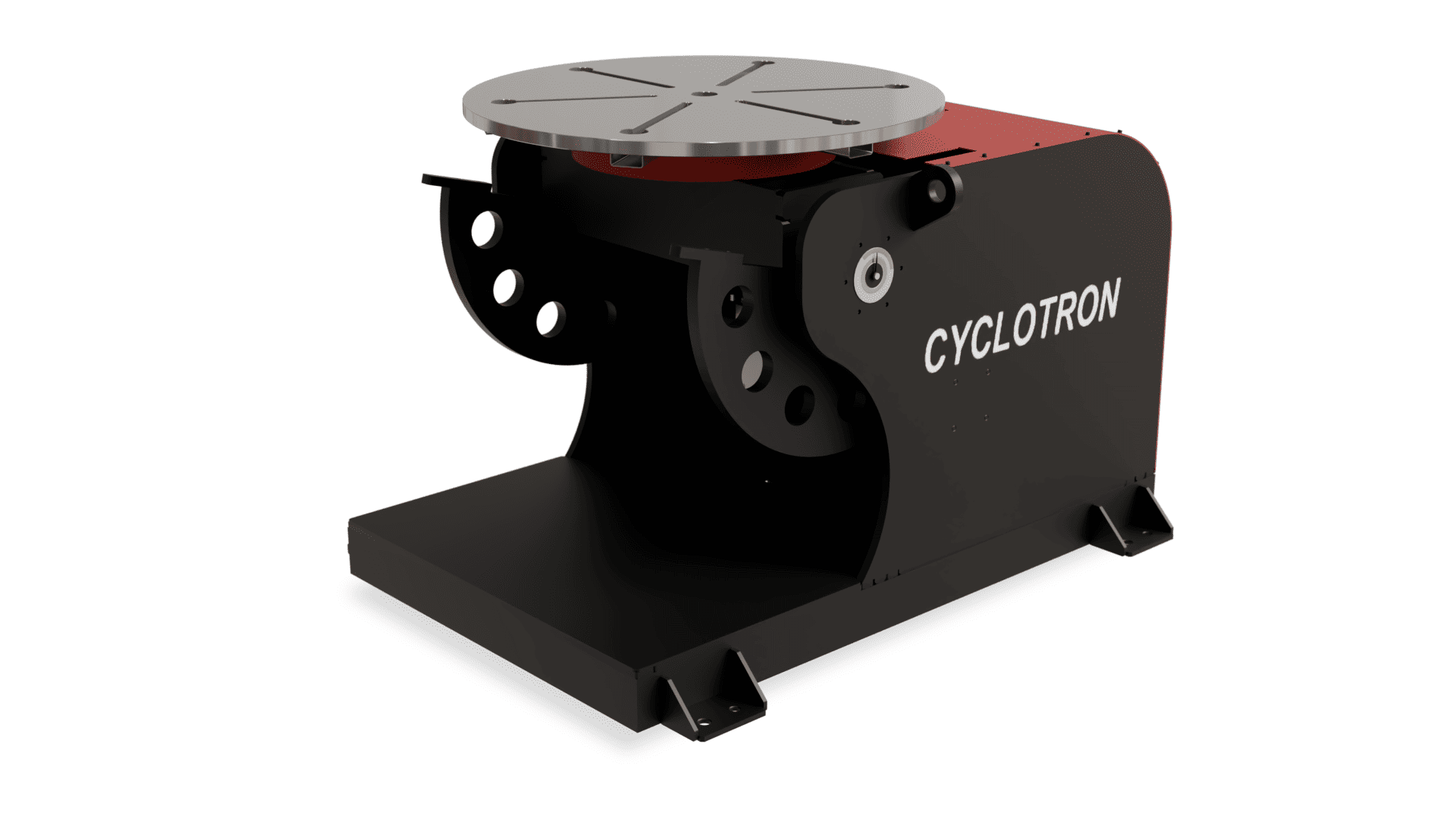
What is a welding positioner?
Its main purpose is to position the job at the best angle for welding, helping operators achieve better weld quality and greater efficiency.
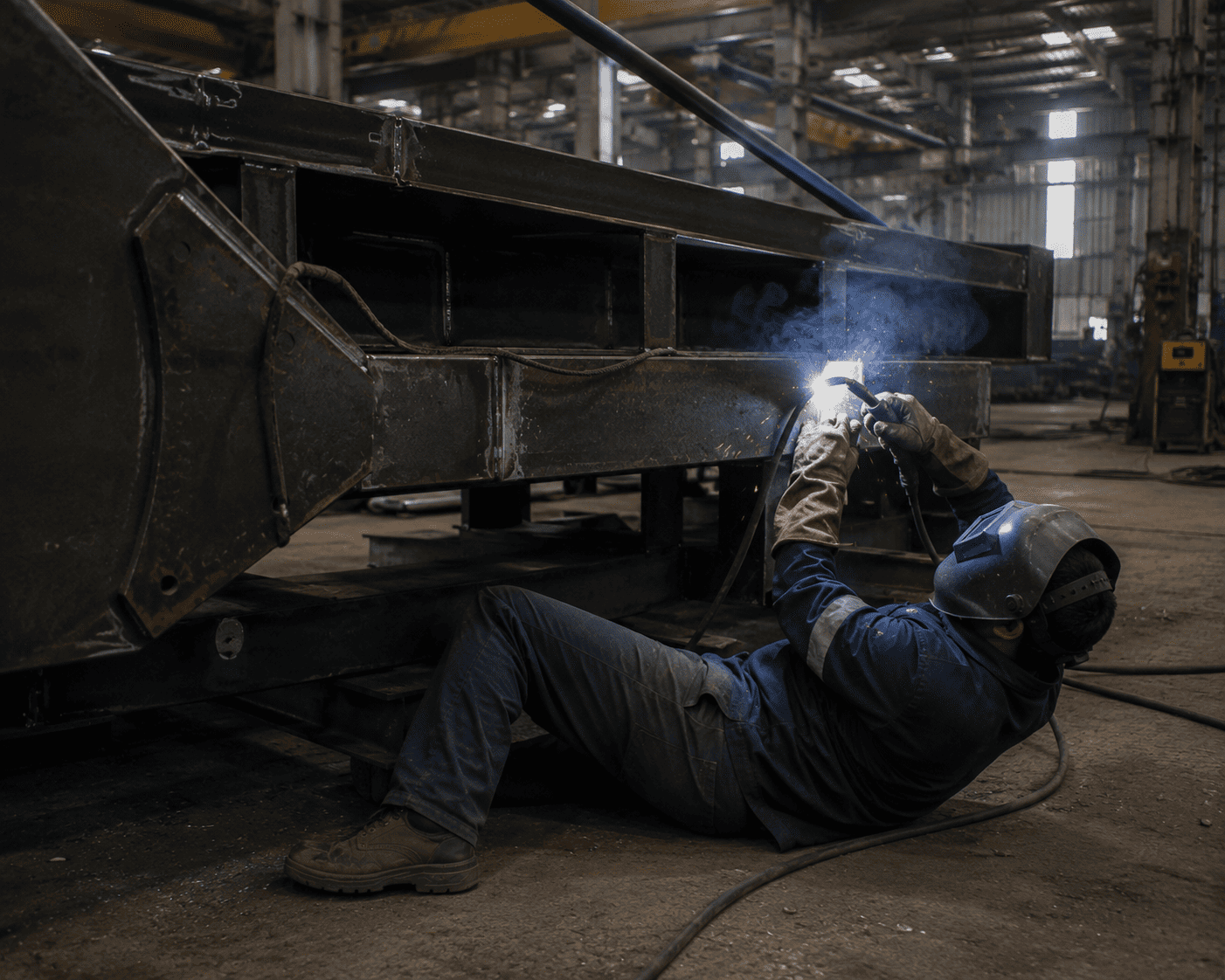
5 Common Welding Problems that a Positioner Can Solve
1. Poor weld quality due to welding positioners. 2. Excessive welder fatique 3. Longer welding cycle times, etc
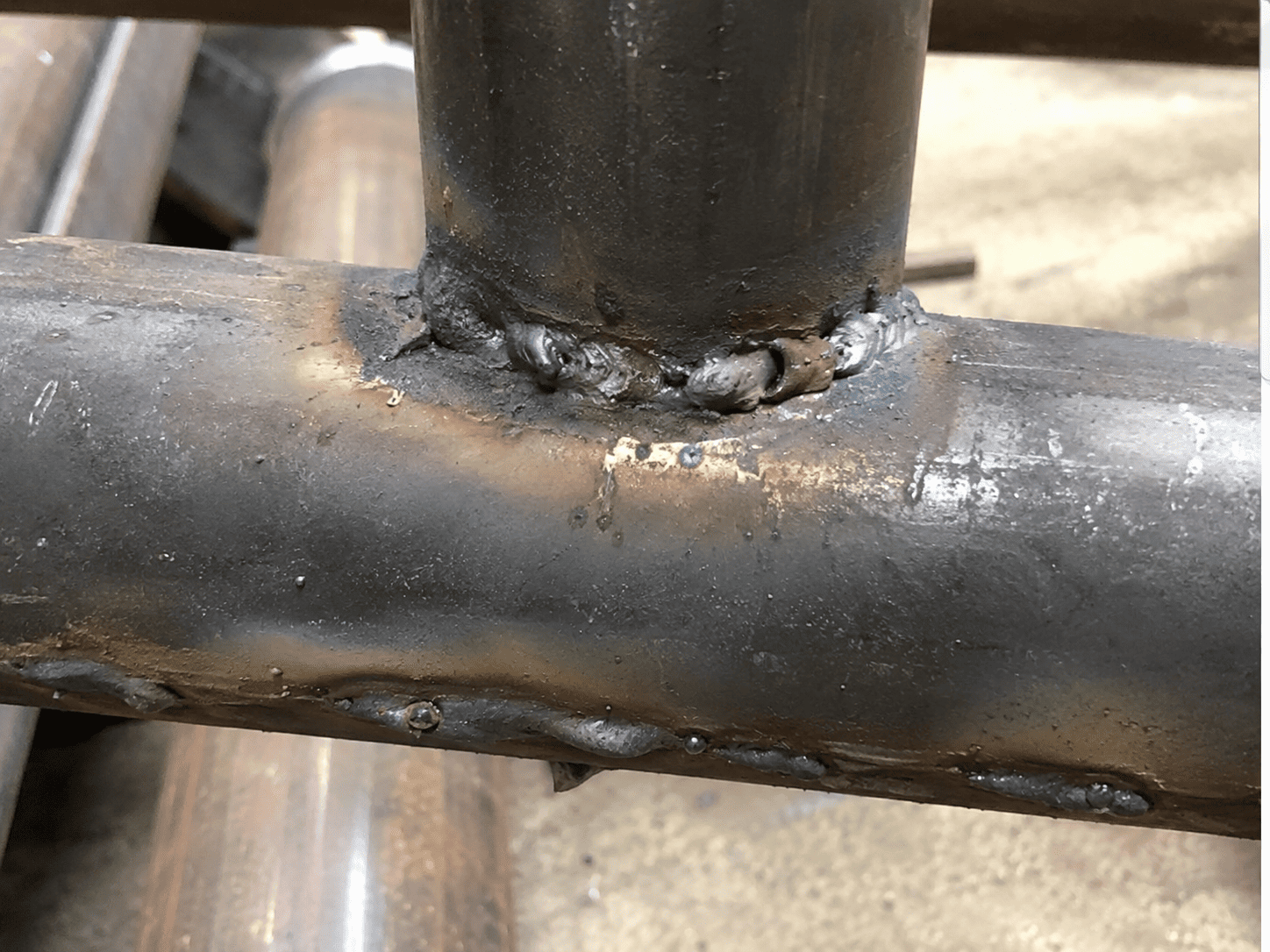
Inconsistent Welds- How a positioner can fix that
Welding positioner can help you with constantly changing weld angles, it can help you with operator fatique, etc
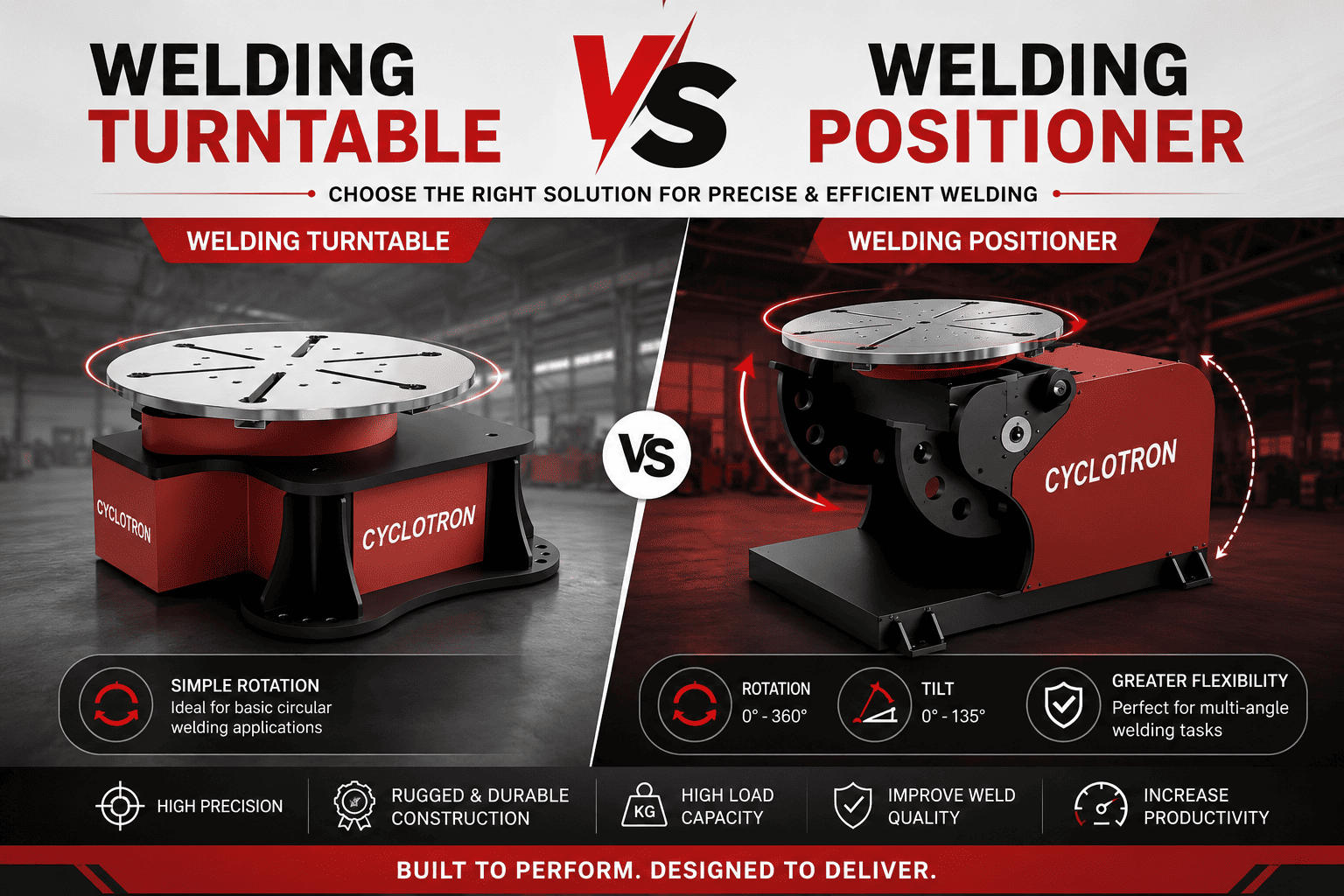
Welding Turntable vs Welding Positioner: What’s the Difference?
A welding turntable provides simple rotation for smooth, consistent welds. A welding positioner can also tilt and angle the workpiece,
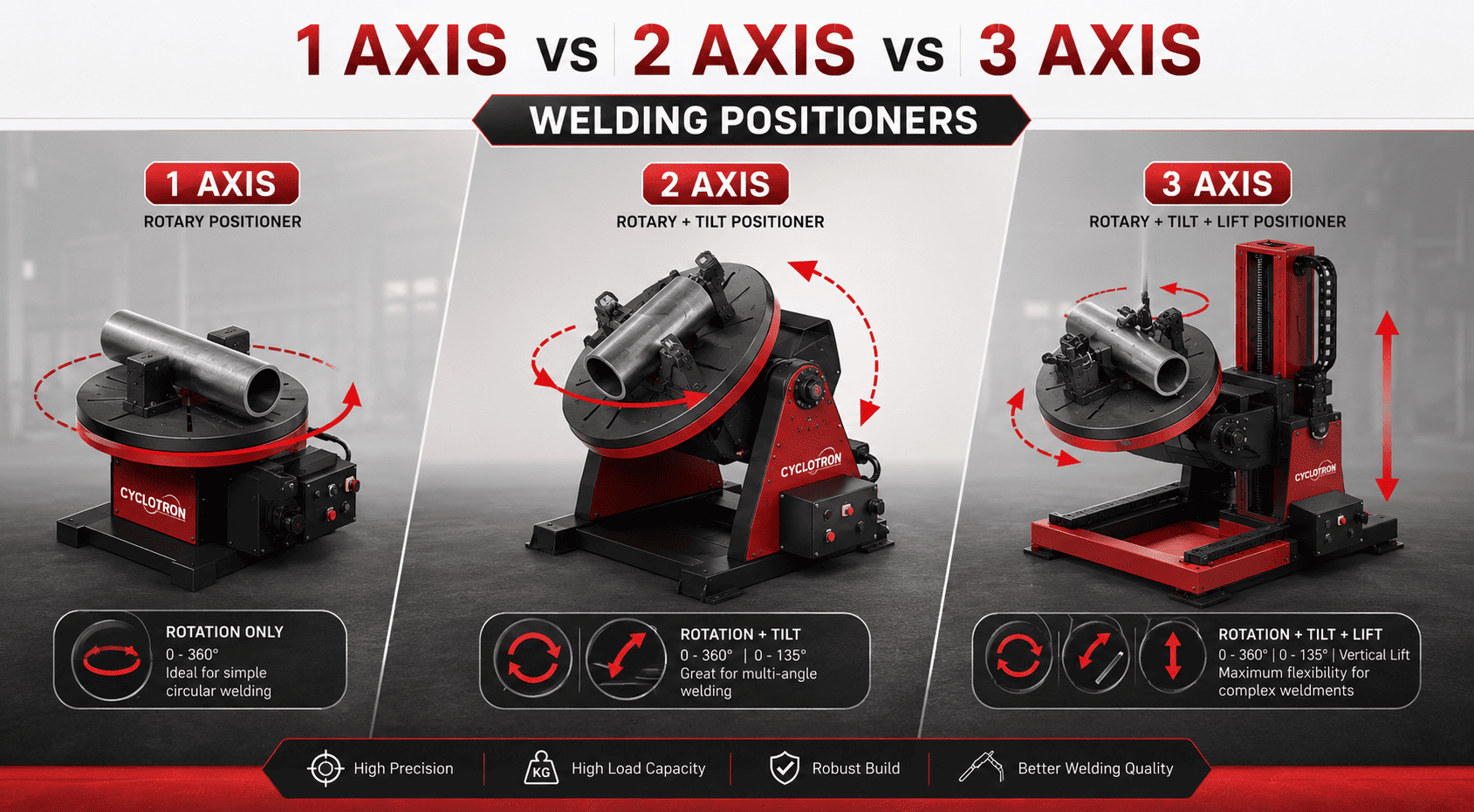
1 Axis vs 2 Axis vs 3 Axis Welding positioners
Compare 1 axis vs 2 axis vs 3 axis welding positioners based on rotation, tilt, flexibility, applications, cost, and automation. Learn which welding positioner is best for your fabrication needs.
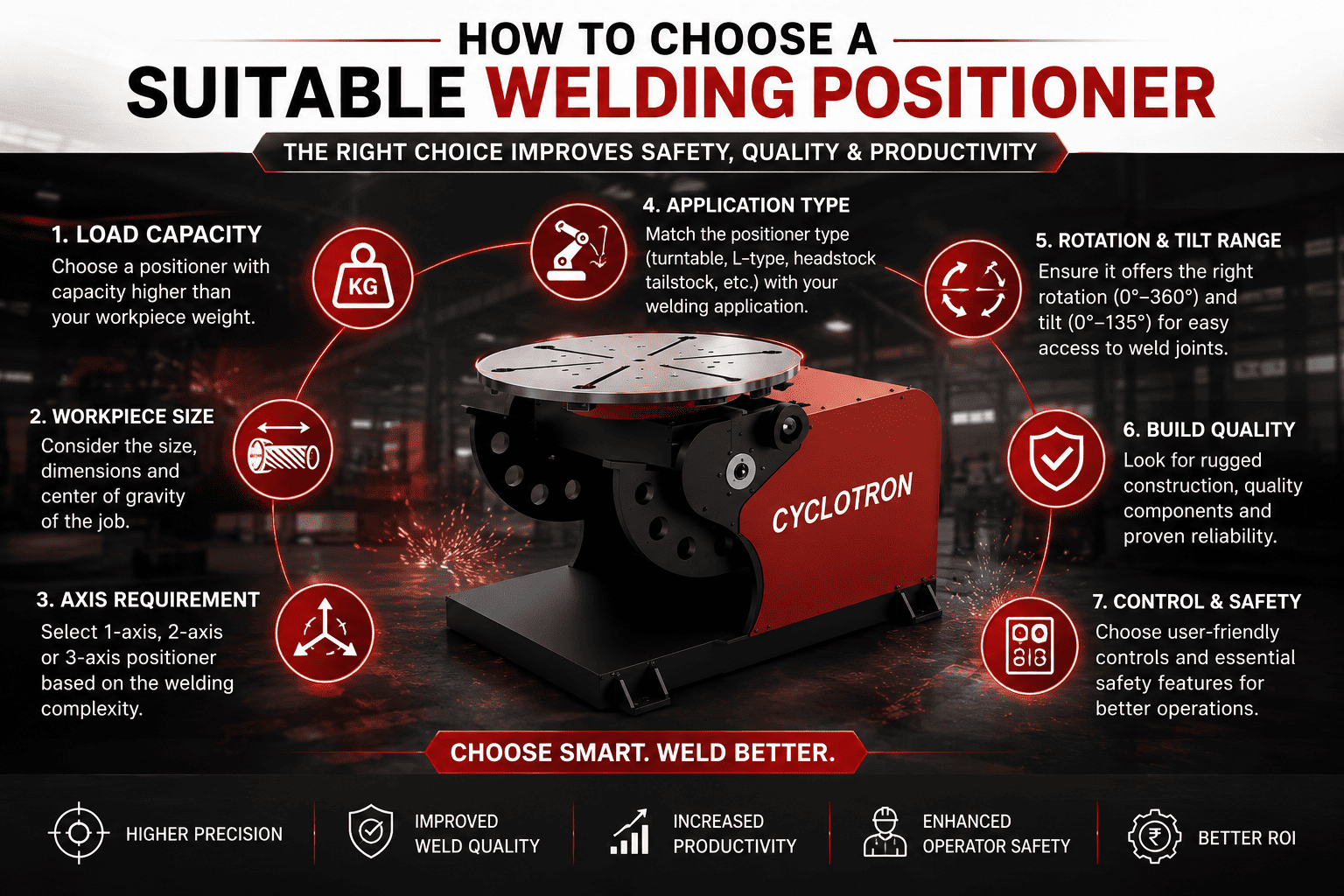
How to select a suitable welding positioner?
Selecting the right welding positioner plays a critical role in the fabrication setup. Welding positioners are designed to handle different load ranges.