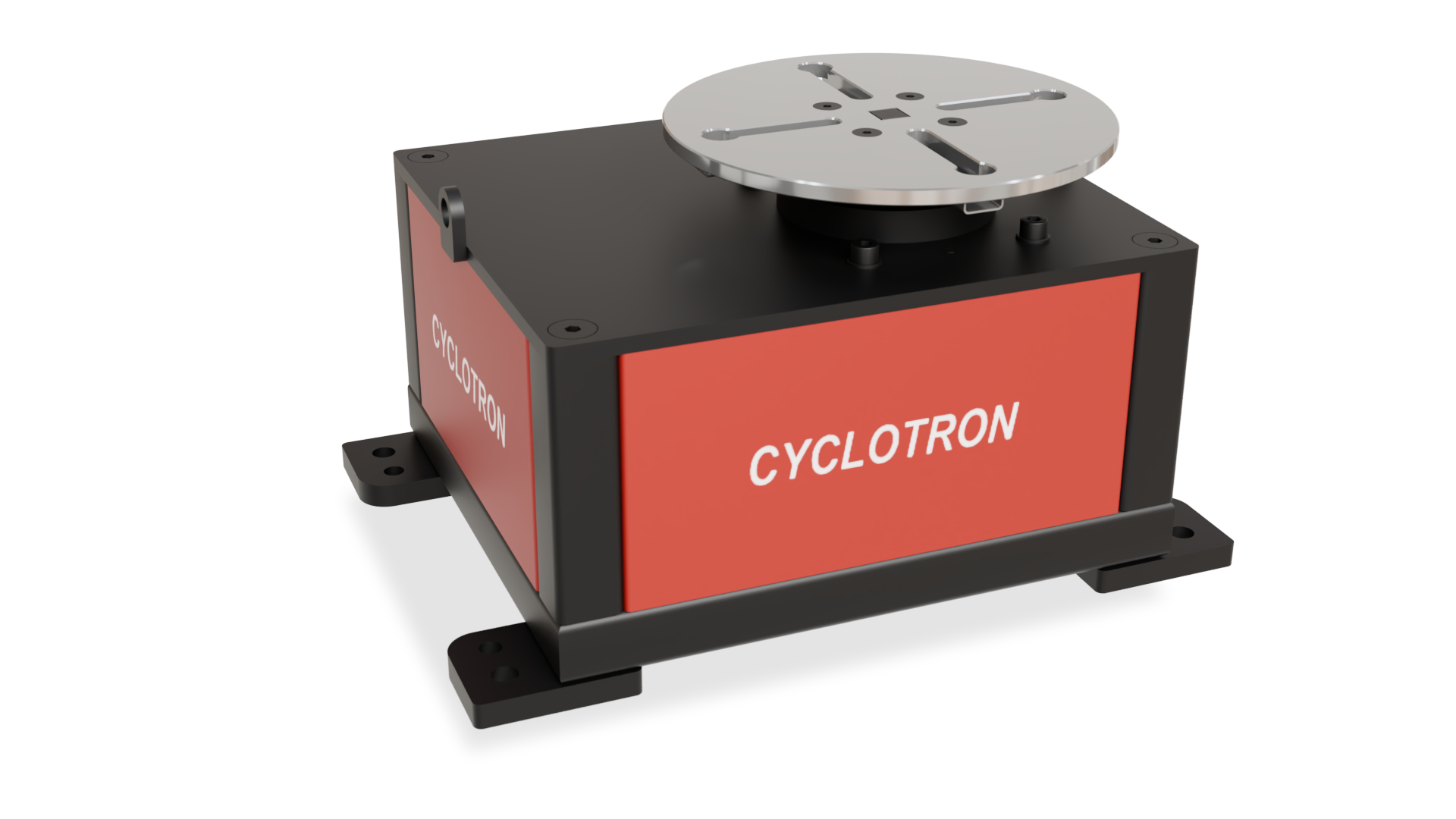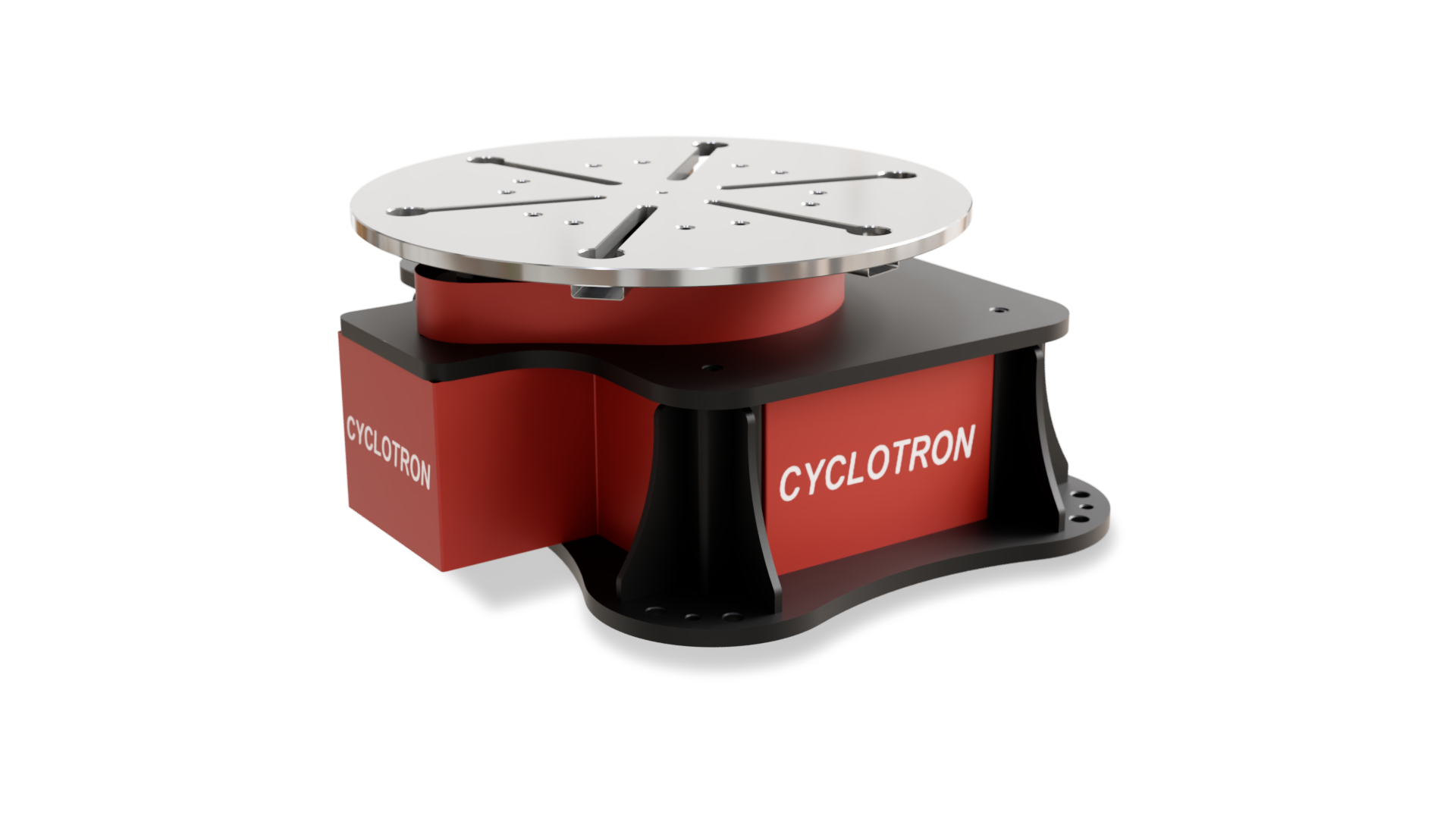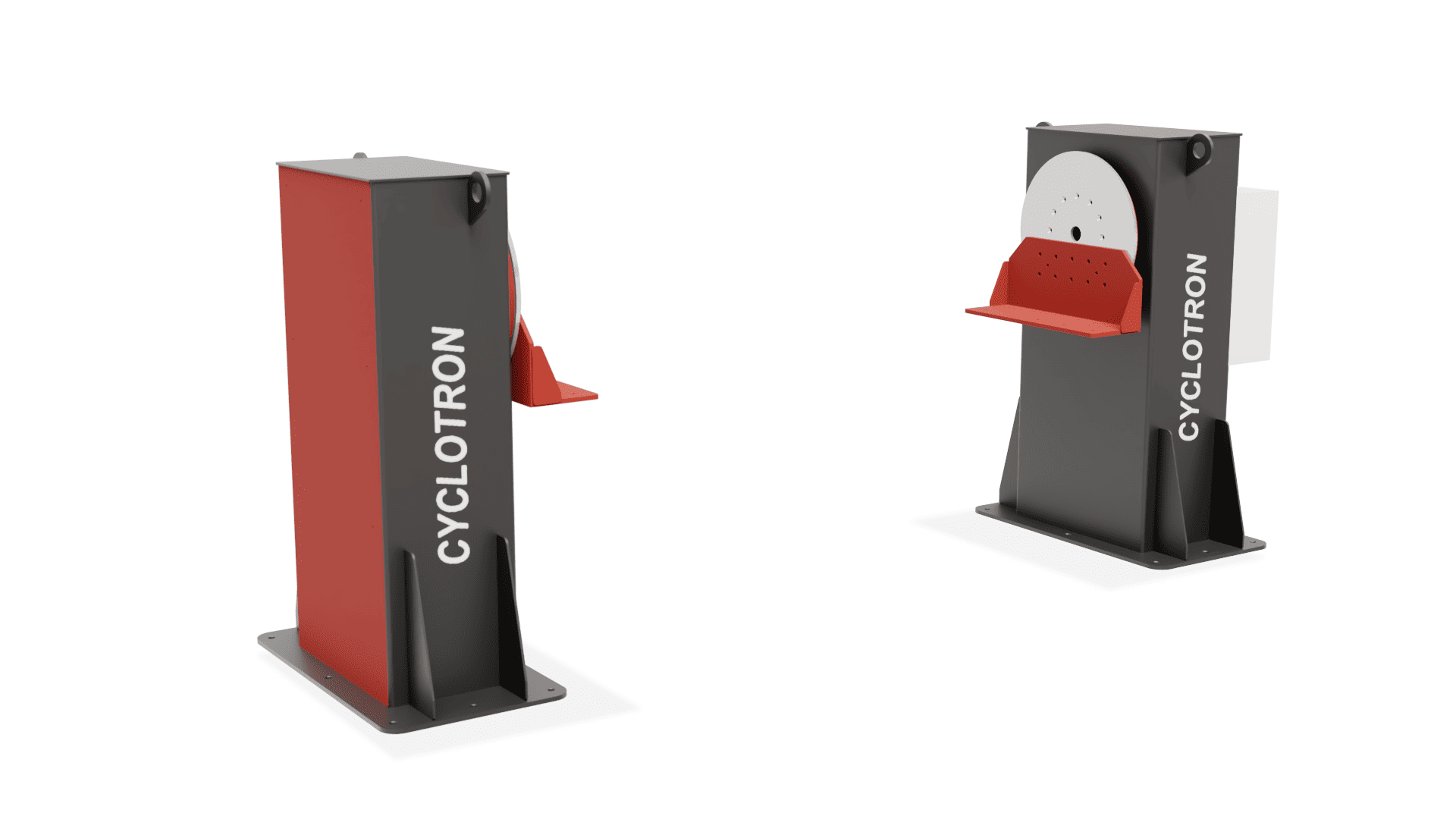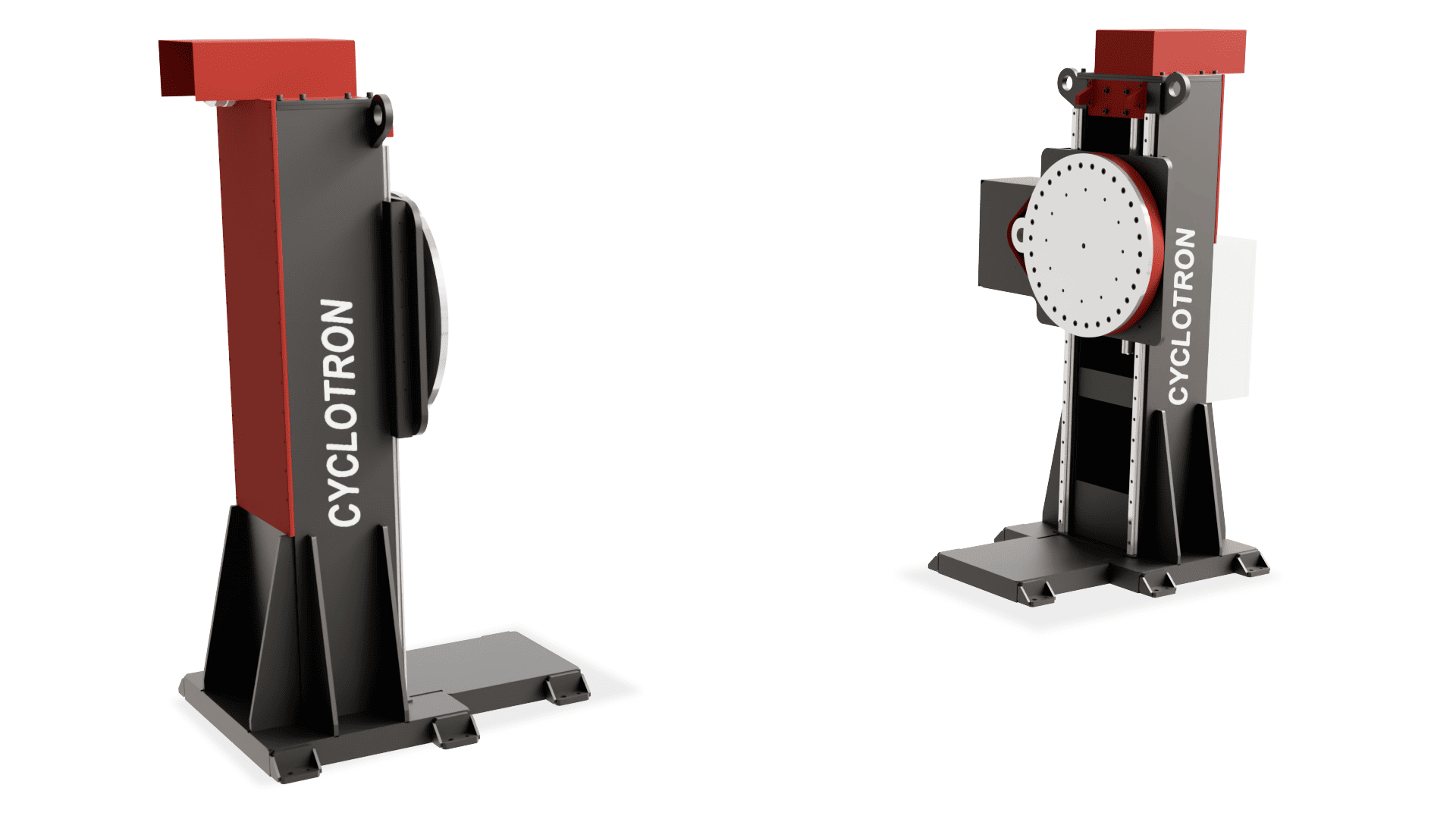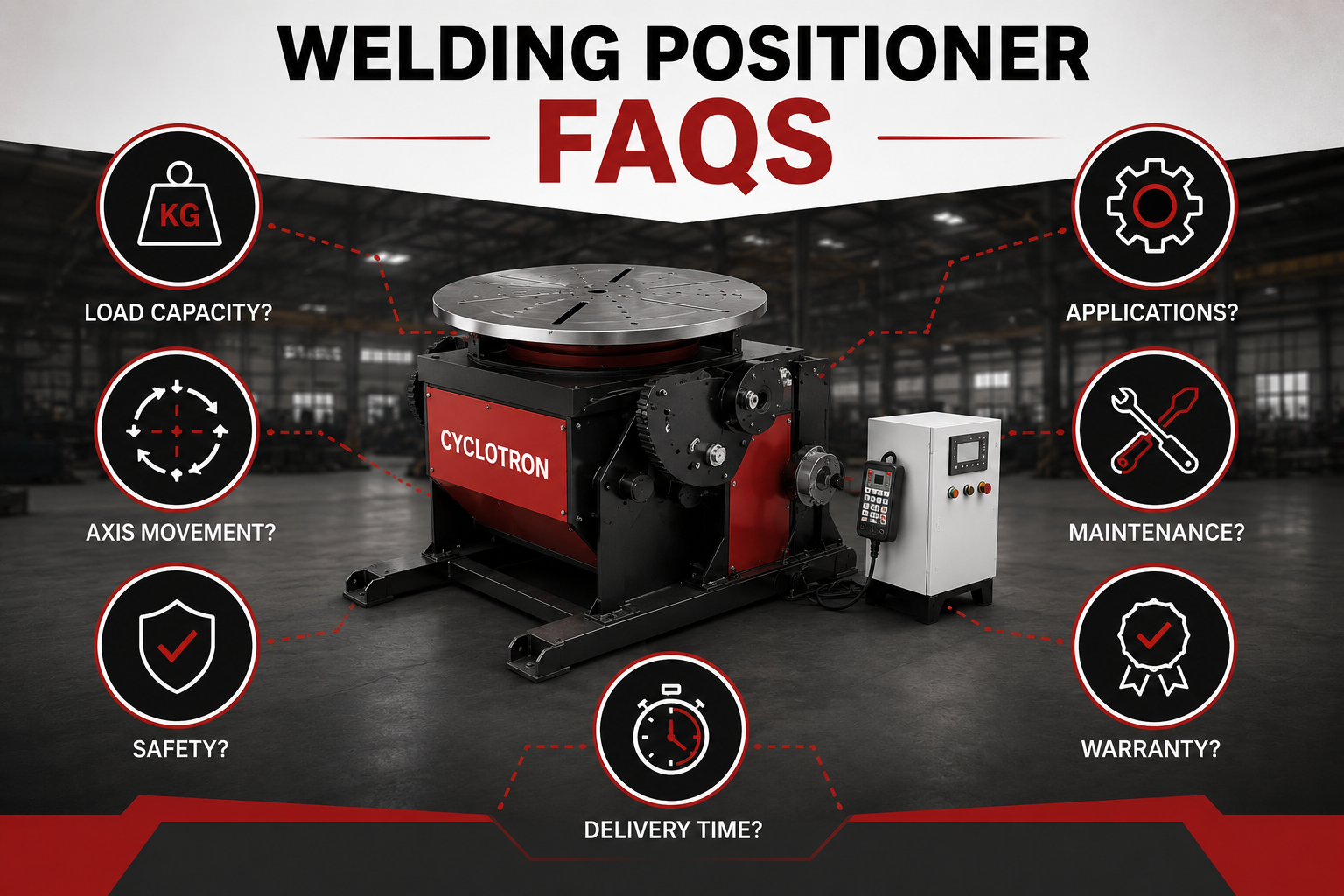
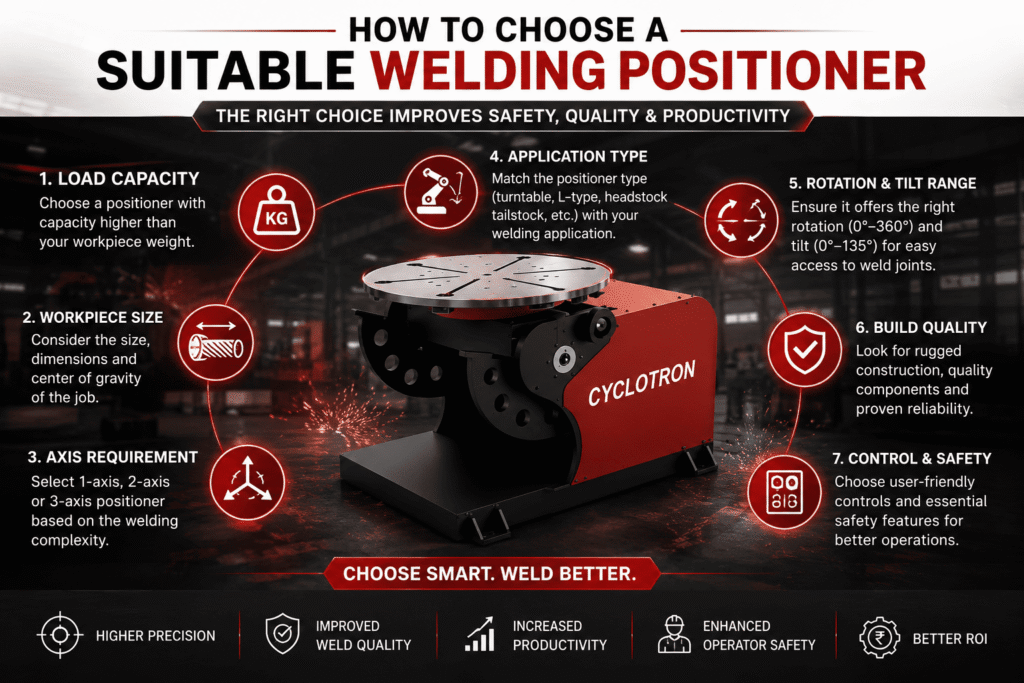
How to select a suitable welding positioner ?
A complete guide
Selecting the right welding positioner plays a critical role in the fabrication setup. Welding positioners are designed to handle different load ranges. Choosing the wrong tonnage can lead to safety concerns, poor weld quality, equipment strain, and higher operating costs. If you are working with small components or large industrial structures, understanding welding positioner capacity helps ensure safe and reliable operation while maximizing the lifespan of your equipment.
What Does Welding Positioner Capacity Mean?
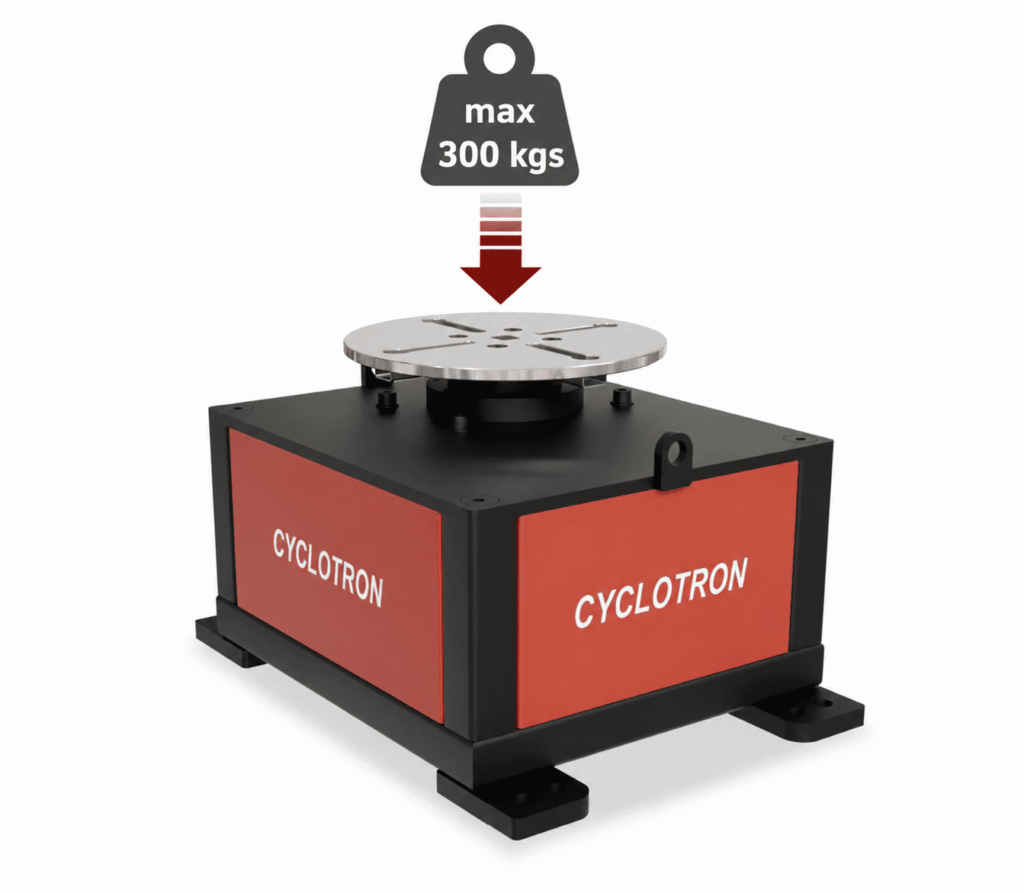
Welding positioner capacity refers to the maximum load a positioner can safely support, rotate, and tilt during operation. This capacity is measured in kilograms or tons and serves as a key specification when selecting equipment.
A welding positioner’s load capacity is not limited to weight alone. It considers the machine’s ability to rotate and tilt the workpiece without compromising stability or performance. In industrial welding positioner applications, manufacturers often evaluate both static load (when the workpiece is stationary) and dynamic load (when it is moving during positioning) to determine safe operating limits.
Why Choosing the Right Positioner Matters
Selecting the wrong positioner capacity can create serious operational challenges. An undersized positioner may struggle to handle the load, causing safety risks, motor overload, and accelerating wear on critical components. Over time, this can reduce equipment reliability and service life.
On the other hand, investing in an oversized heavy duty welding positioner may result in unnecessary expenses, higher power consumption, and a larger equipment footprint than your application requires.
The goal is to balance capacity with actual production needs, ensuring both efficiency and long-term value.
Key Factors That Affect Welding Positioner Capacity Selection
Choosing the correct welding positioner sizing requires more than checking the workpiece weight. Several factors influence how much capacity is required.
Weight of the Workpiece
Start by calculating the total weight of the fabrication, including fixtures, jigs, clamps, and any additional tooling attached during welding. These components contribute to the overall load placed on the positioner.
Center of Gravity
The center of gravity is one of the most critical factors in capacity selection. When a load is positioned away from the rotational axis, it generates additional torque and stress on the machine. Even if the weight falls within the rated capacity, an off-center load may require a larger positioner to maintain safe and stable operation.
Job Shape and Dimensions
Large-diameter or complex-shaped workpieces can affect stability during rotation and tilting. In many cases, larger jobs require increased capacity to ensure smooth movement and proper support throughout the welding process.
Tilting Requirements
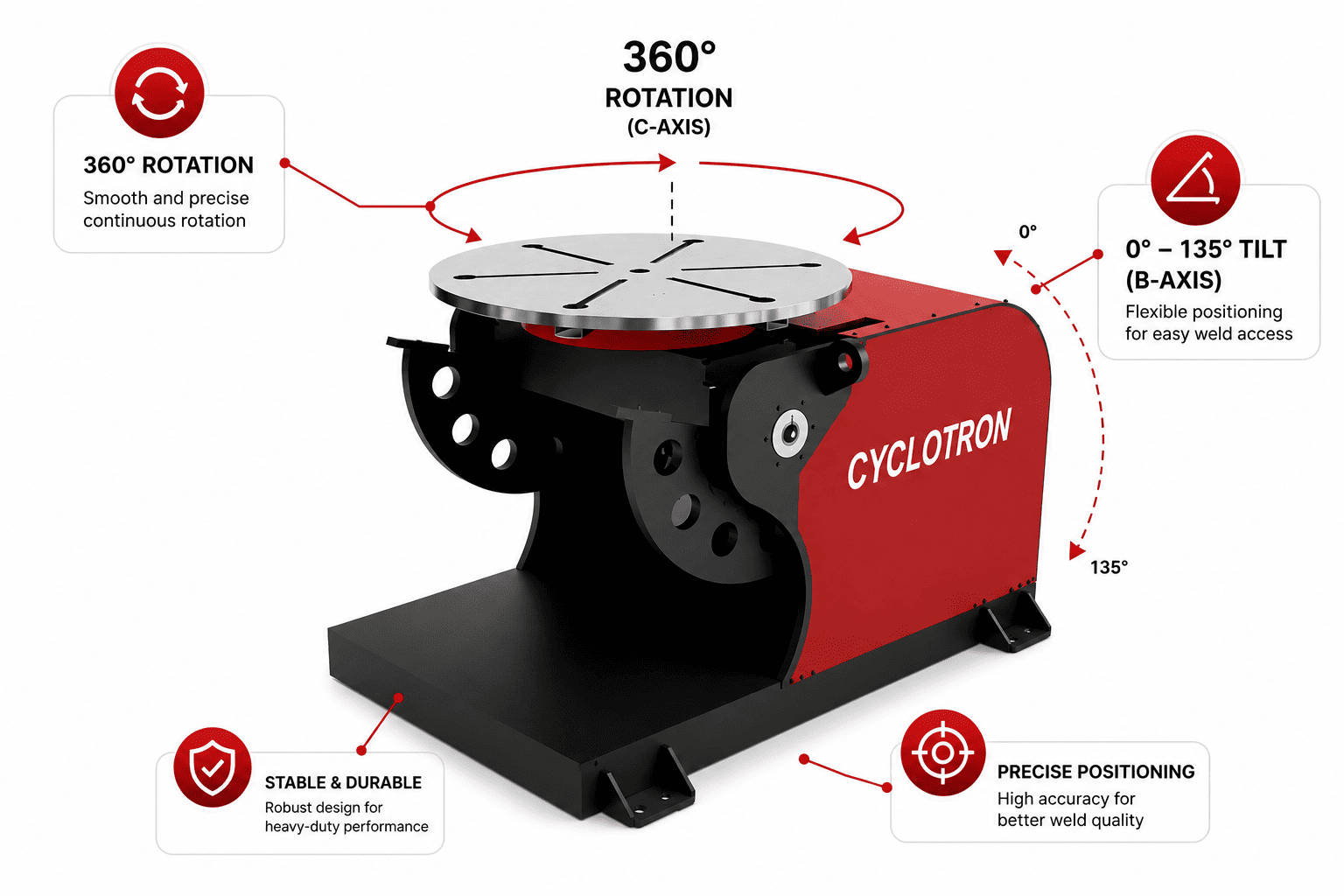
Many users focus on rotational capacity but overlook tilt capacity. Depending on the design of the welding automation equipment, the maximum tilting capacity may be lower than the rotational rating. Both specifications should be carefully reviewed before making a selection.
Common Welding Positioner Capacity Ranges
Different industries require different capacity levels. The following ranges are commonly used across fabrication environments:
| Capacity | Typical application |
|---|---|
| 100-500 kg | Small fabrication jobs and light components |
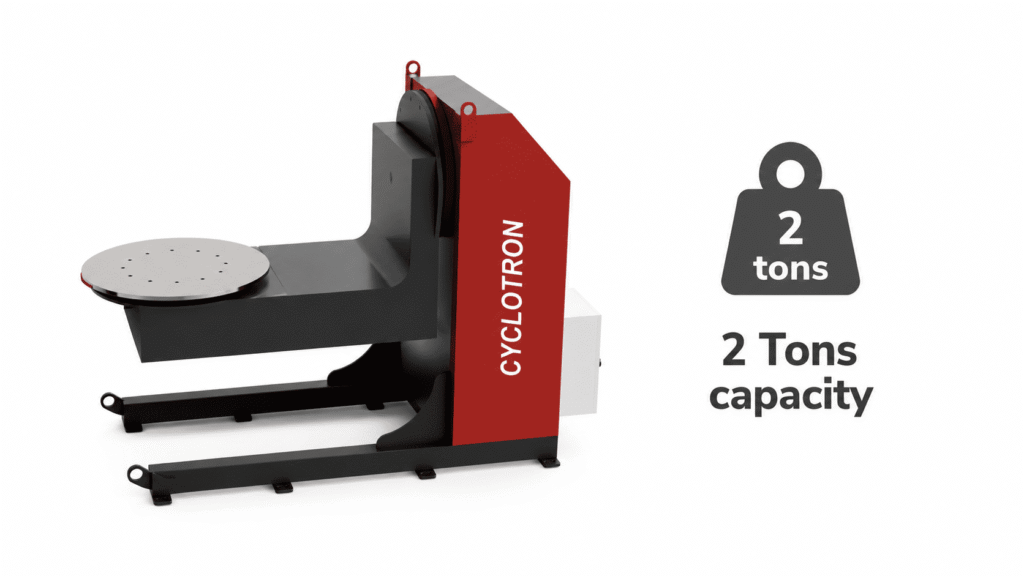
| 1-2 Tons | Medium fabrication projects and assemblies |
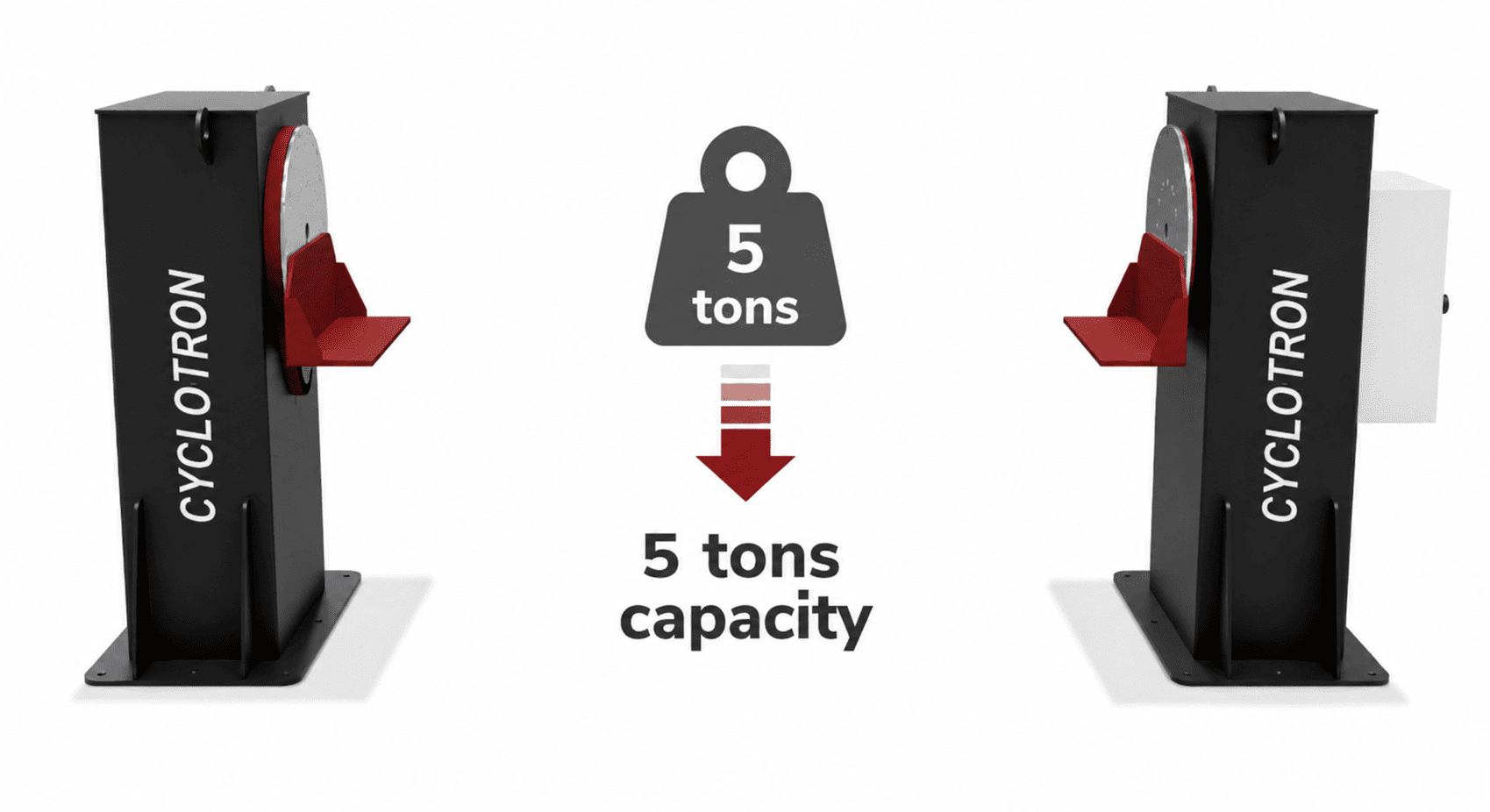
| 2-5 Tons | Heavy fabrication and industrial equipment |
| 5 Tons + | Pressure vessels, structural fabrication, and large-scale manufacturing |
Many welding positioner manufacturers also offer custom-built solutions for specialized applications and exceptionally heavy loads.
How to Choose the Right Welding Positioner Tonnage
When choosing welding positioner tonnage, it’s important to look beyond your current project requirements. Consider future production needs and potential increases in workpiece size or weight.
Always evaluate both rotational and tilt capacities, and include fixture weight in your calculations. If automation, robotic welding, or production expansion is planned, ensure the positioner can support those requirements as well.
Most manufacturers recommend incorporating a safety factor to account for load variations and operational conditions. Working with an experienced supplier can help ensure the selected equipment matches your application and performance goals.
Conclusion
Choosing the correct welding positioner capacity is essential for maintaining safety, improving productivity, and extending equipment life. The right selection depends not only on workpiece weight but also on factors such as center of gravity, dimensions, and tilting requirements.
If you’re unsure about the ideal tonnage for your application, contact our team for custom welding positioner solutions and expert capacity consultation tailored to your fabrication needs.
Frequently Asked Questions
1. How is welding positioner capacity calculated?
The welding positioner capacity is determined by evaluating the total load weight, centre of gravity, rotational torque requirements, and tilting forces generated during operation.
2. What happens if a welding positioner is overloaded?
Overloading can cause equipment damage, motor strain, instability, safety hazards, and reduced service life.
3. Why is the centre of gravity important in welding positioners?
An off-centre load creates additional torque that can affect stability and may require a higher-capacity positioner.
4. Can welding positioners be customized for heavy loads?
Yes. Many manufacturers offer customized welding positioners designed to handle specific dimensions, weights, and heavy-duty industrial applications.

What is a welding positioner?
Its main purpose is to position the job at the best angle for welding, helping operators achieve better weld quality and greater efficiency.
5 Common Welding Problems that a Positioner Can Solve
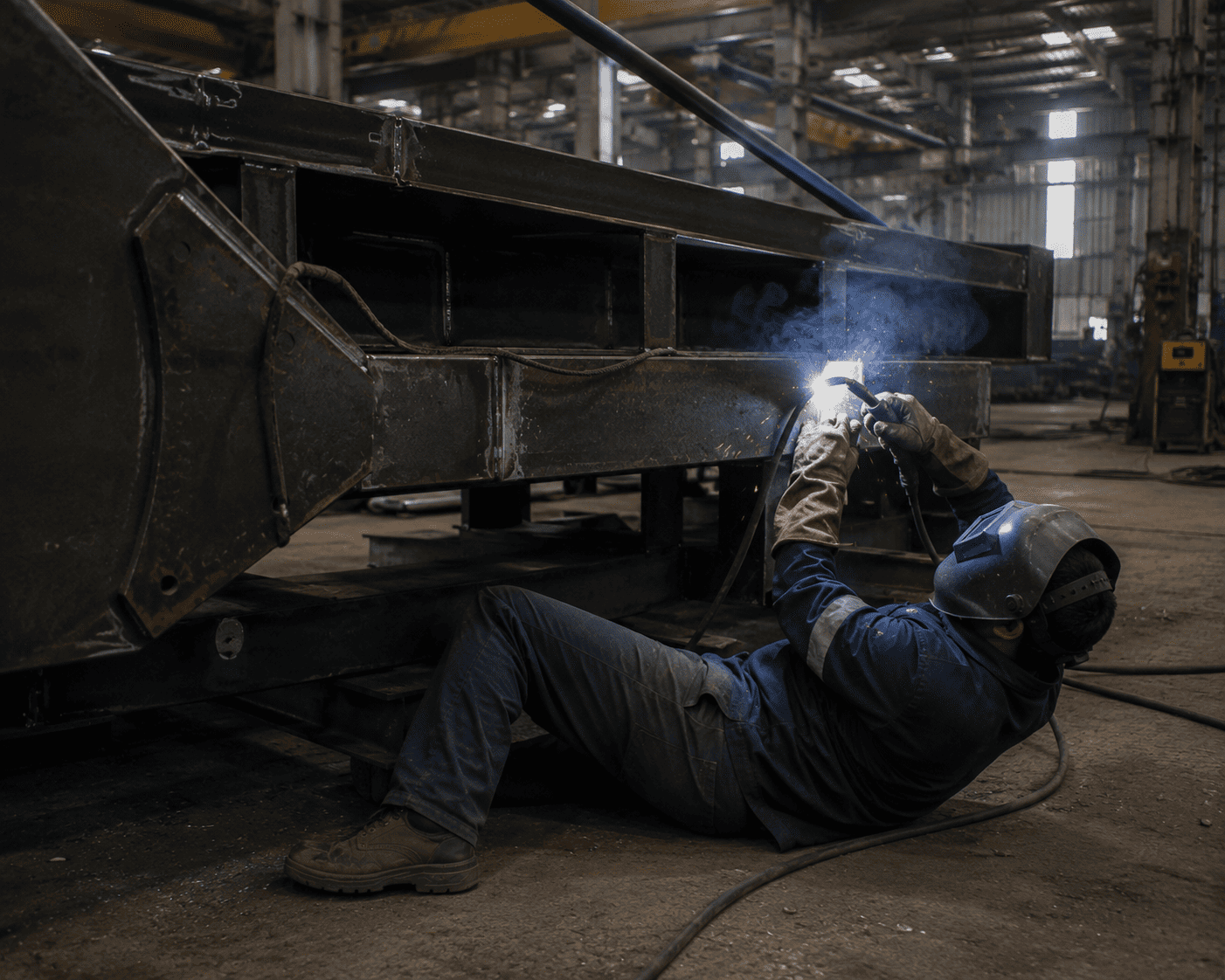
1. Poor weld quality due to welding positioners. 2. Excessive welder fatique 3. Longer welding cycle times, etc
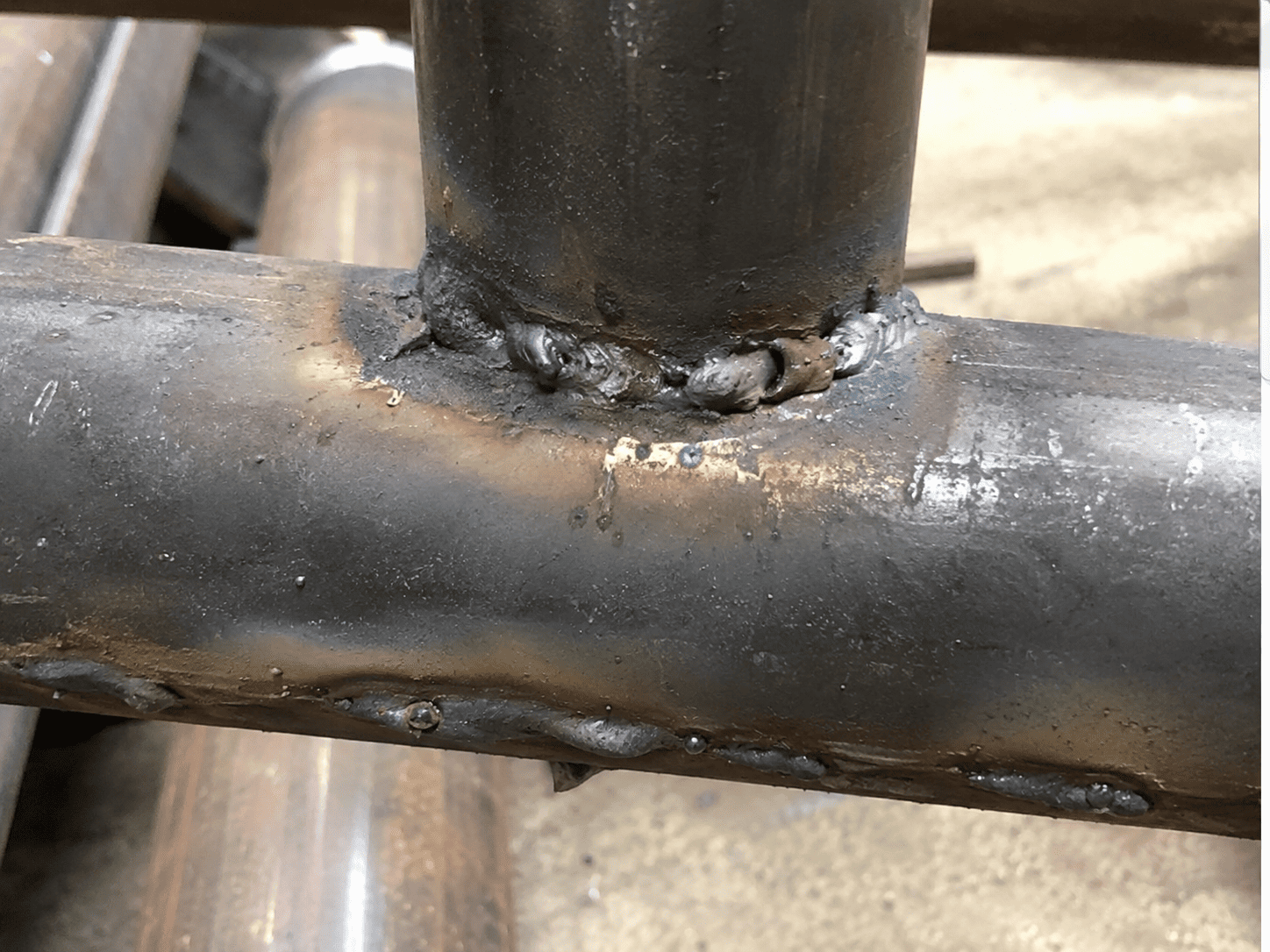
Inconsistent Welds- How a positioner can fix that
Welding positioner can help you with constantly changing weld angles, it can help you with operator fatique, etc
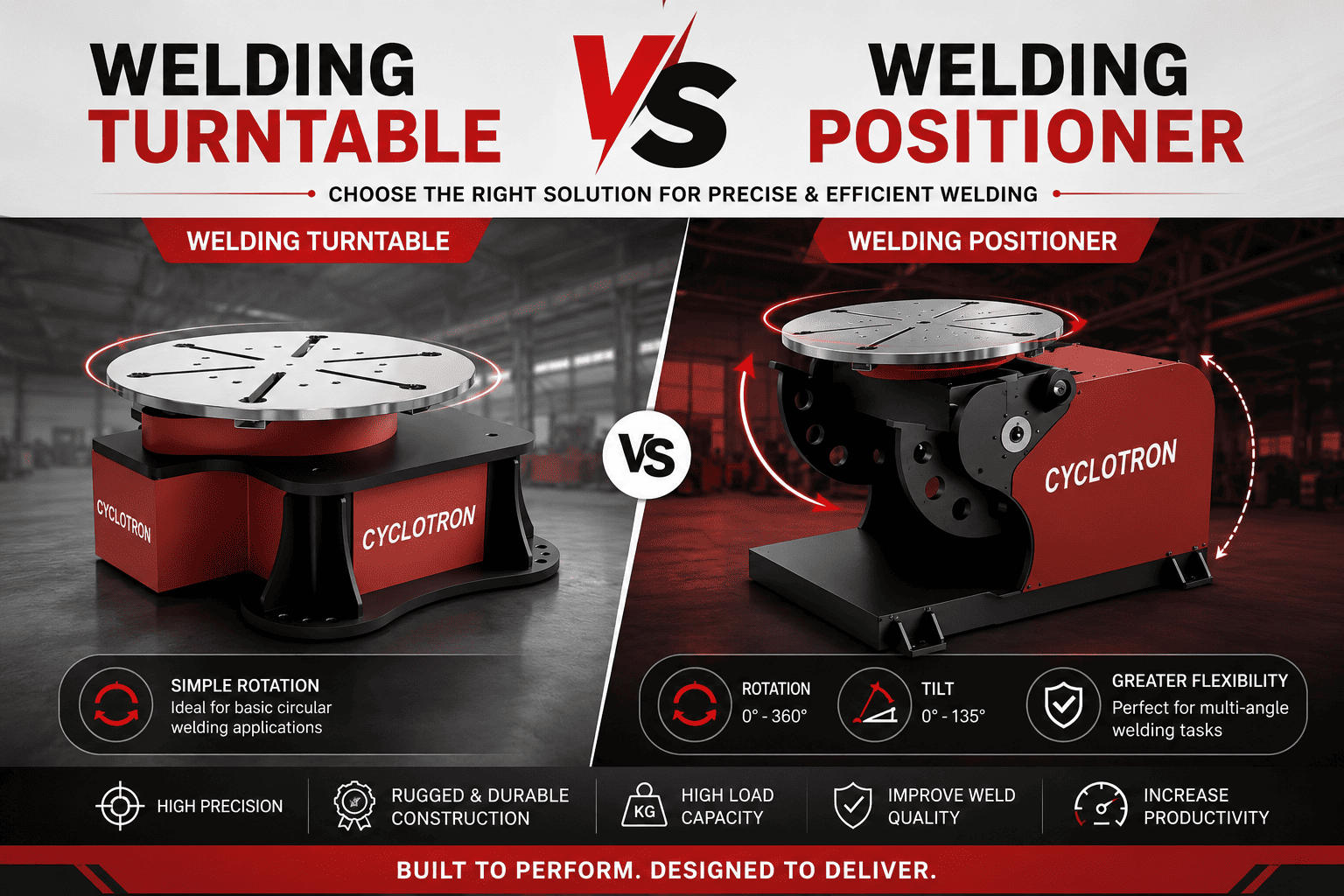
Welding Turntable vs Welding Positioner: What’s the Difference?
A welding turntable provides simple rotation for smooth, consistent welds. A welding positioner can also tilt and angle the workpiece,
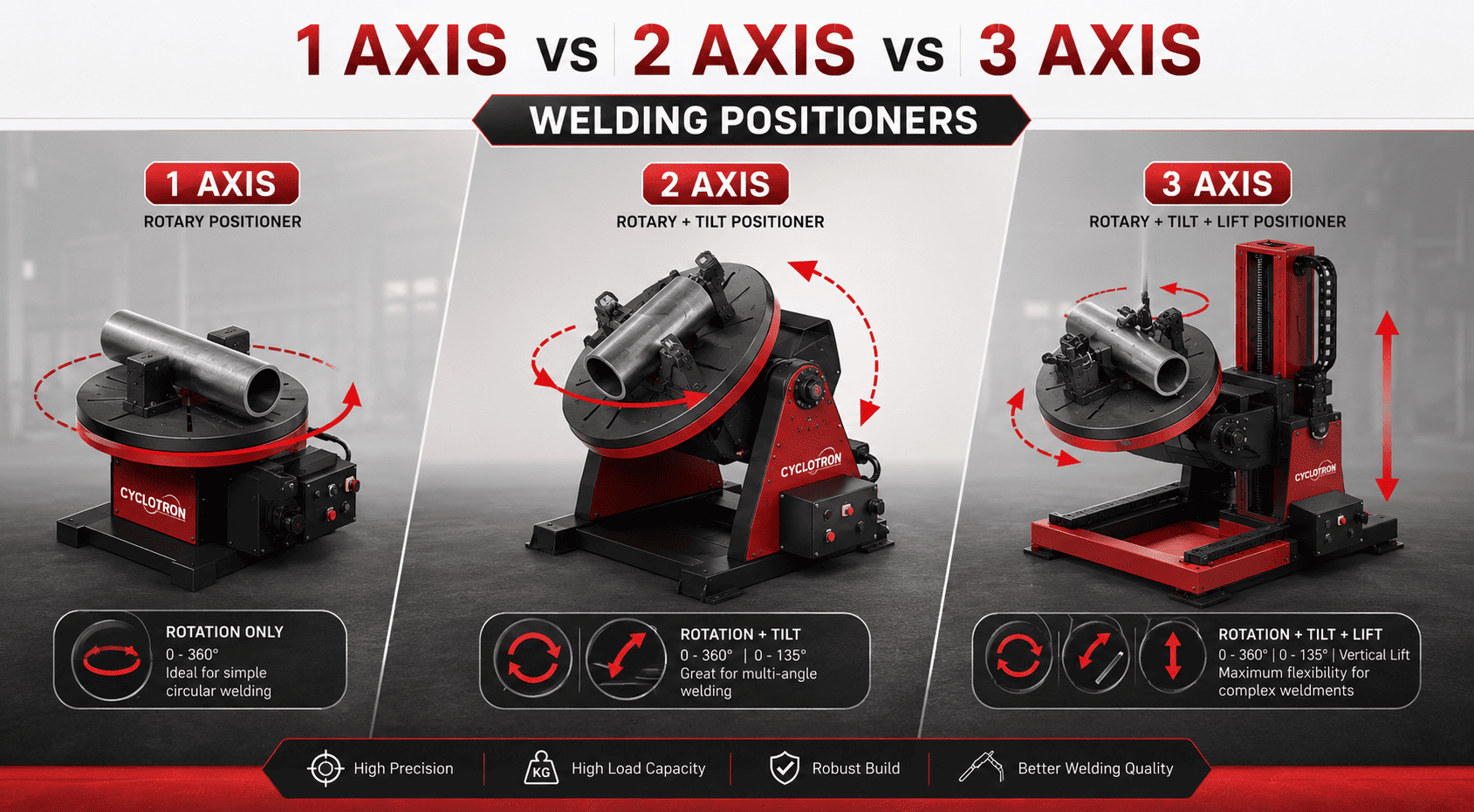
1 Axis vs 2 Axis vs 3 Axis Welding positioners
Compare 1 axis vs 2 axis vs 3 axis welding positioners based on rotation, tilt, flexibility, applications, cost, and automation. Learn which welding positioner is best for your fabrication needs.
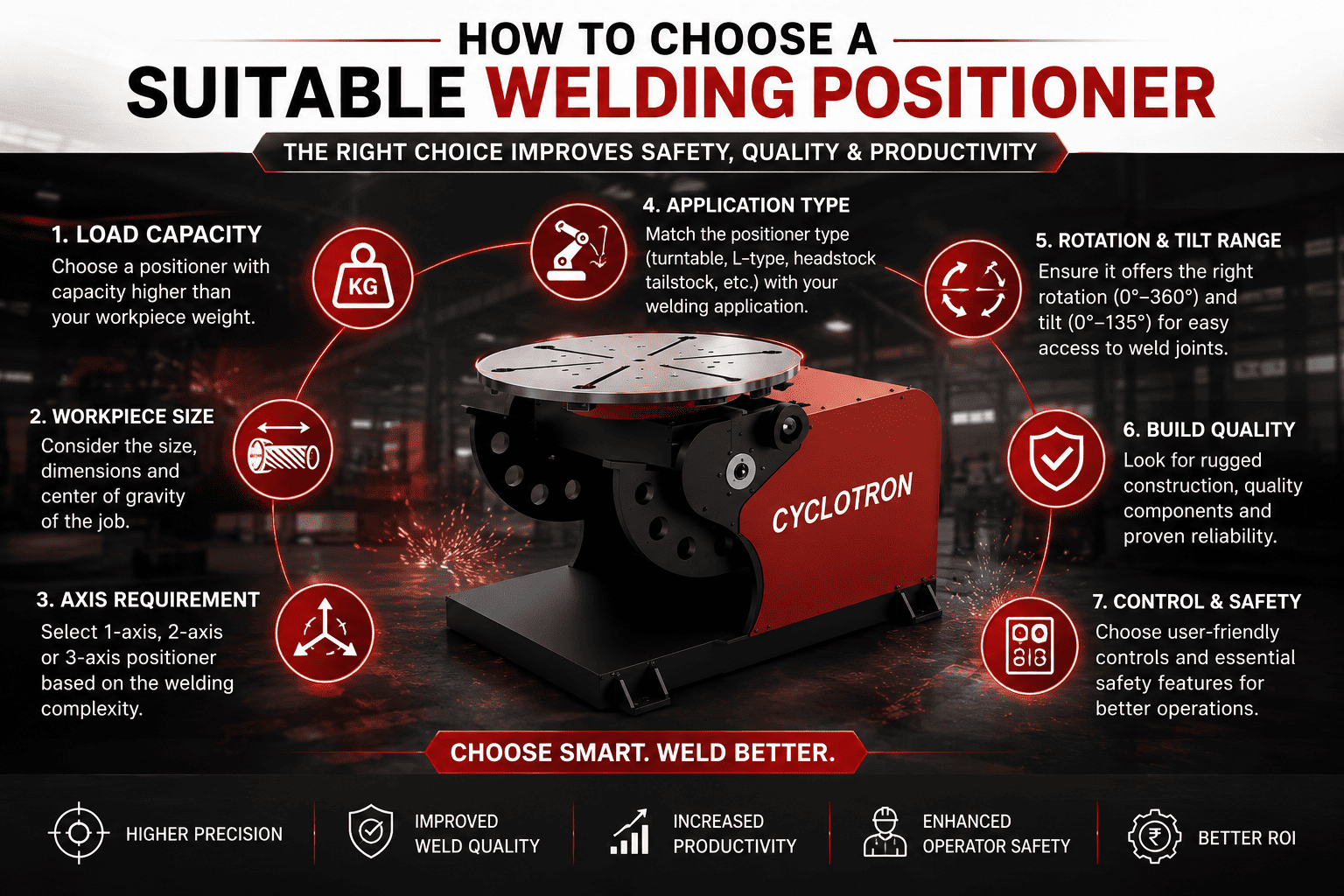
How to select a suitable welding positioner?
Selecting the right welding positioner plays a critical role in the fabrication setup. Welding positioners are designed to handle different load ranges.