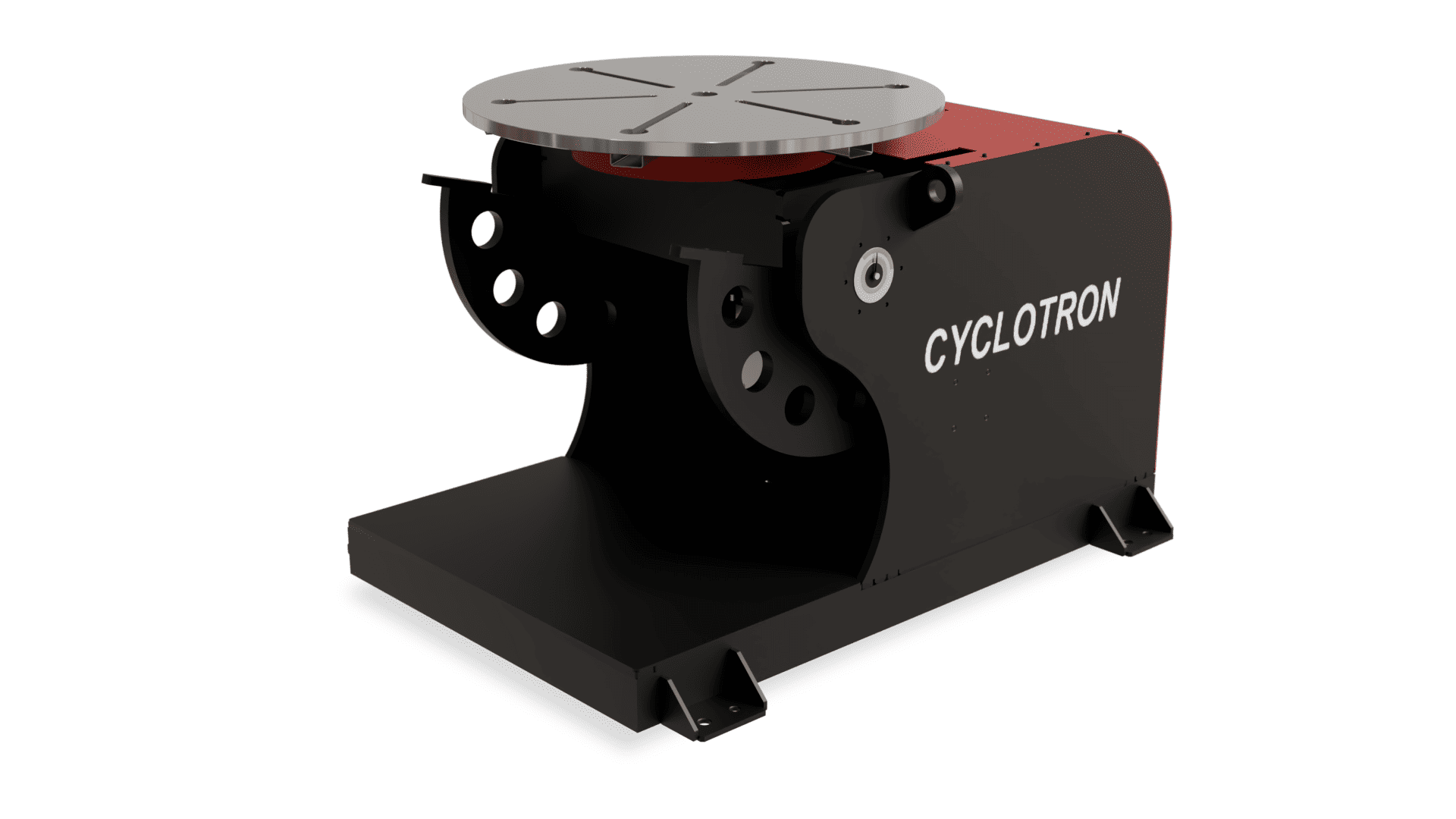
Centre of gravity vs Weight in Welding Positioner selection
Simple Guide
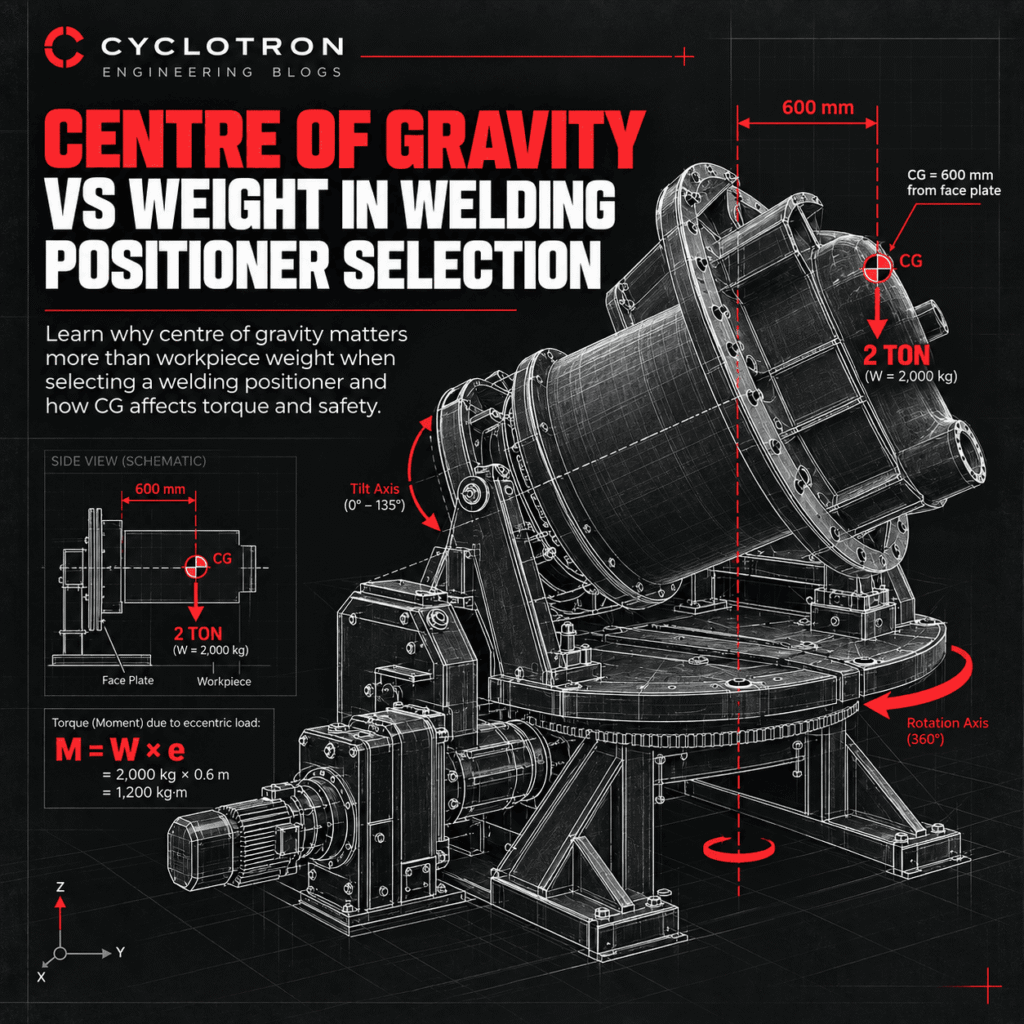
Two components can weigh exactly 5 tons and still require completely different welding positioners. The reason is the location of the combined workpiece-and-fixture centre of gravity (CG) relative to the rotation and tilting axes.
In simple terms, weight tells you how much you are moving. CG tells you how that load acts on the machine.
What Is the Centre of Gravity of a Workpiece?
The centre of gravity is the point at which the combined weight of an object can be considered to act.
For welding positioner selection, the important point is that the positioner does not see only the workpiece. It takes up the combined load of the workpiece, fixture, clamps, and tooling.
So if a 5,000 kg fabrication is mounted on a 700 kg fixture, the engineering review should consider the combined assembly and its CG, not simply the 5,000 kg fabrication. This is crucial as the CG may not sit directly on the positioner’s rotation or tilting axis.

Cyclotron Welding Positioners from India
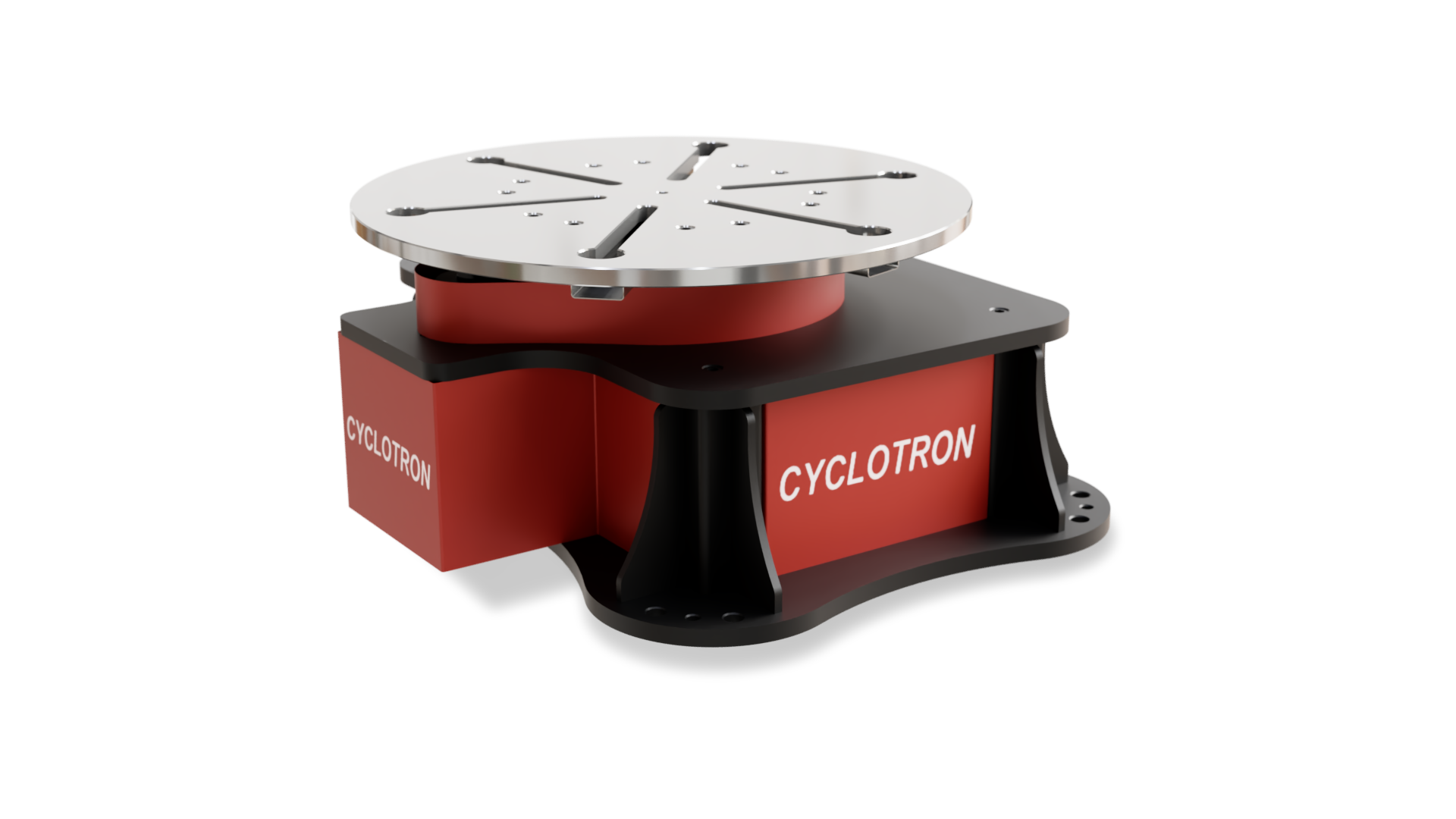
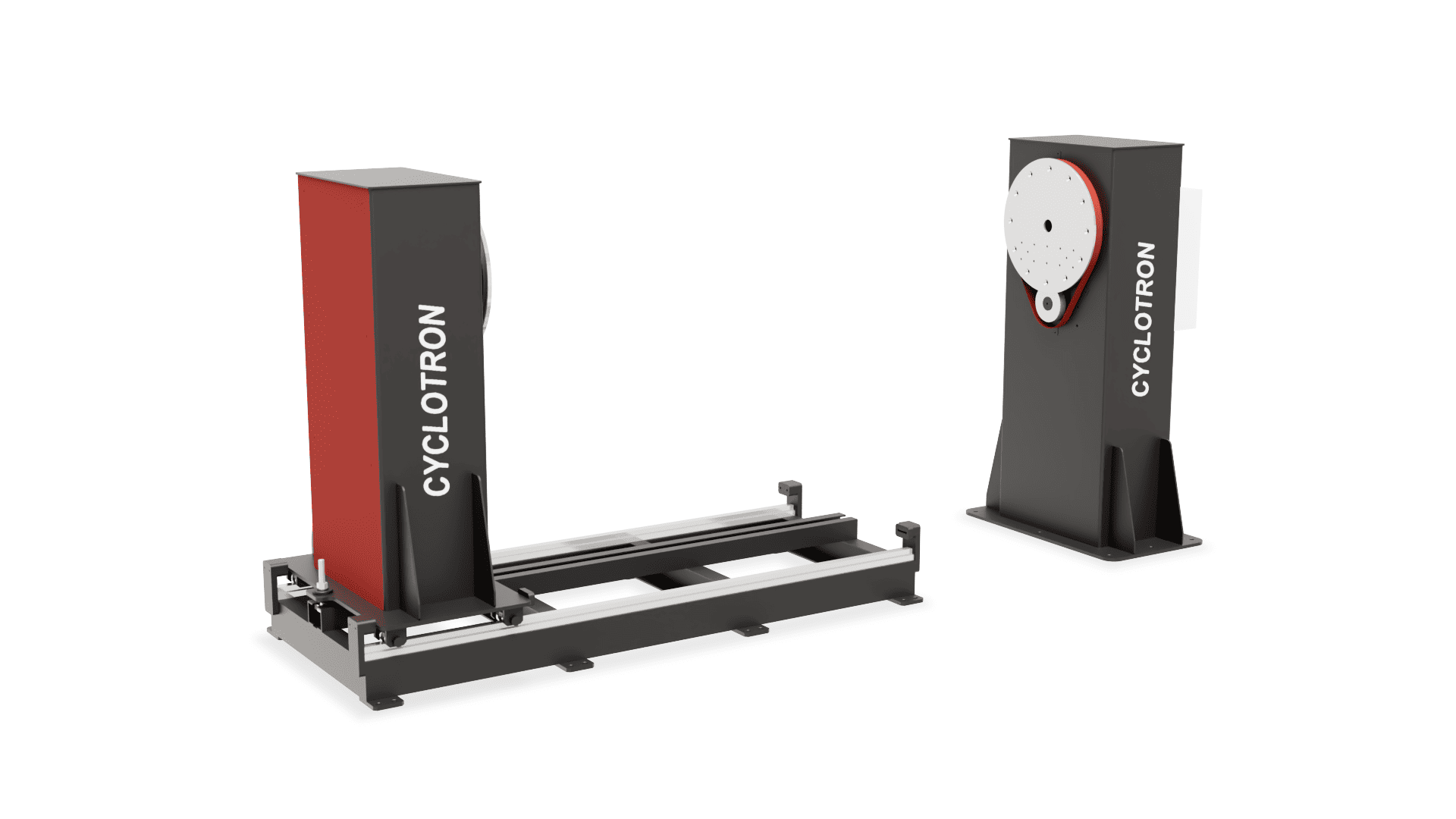
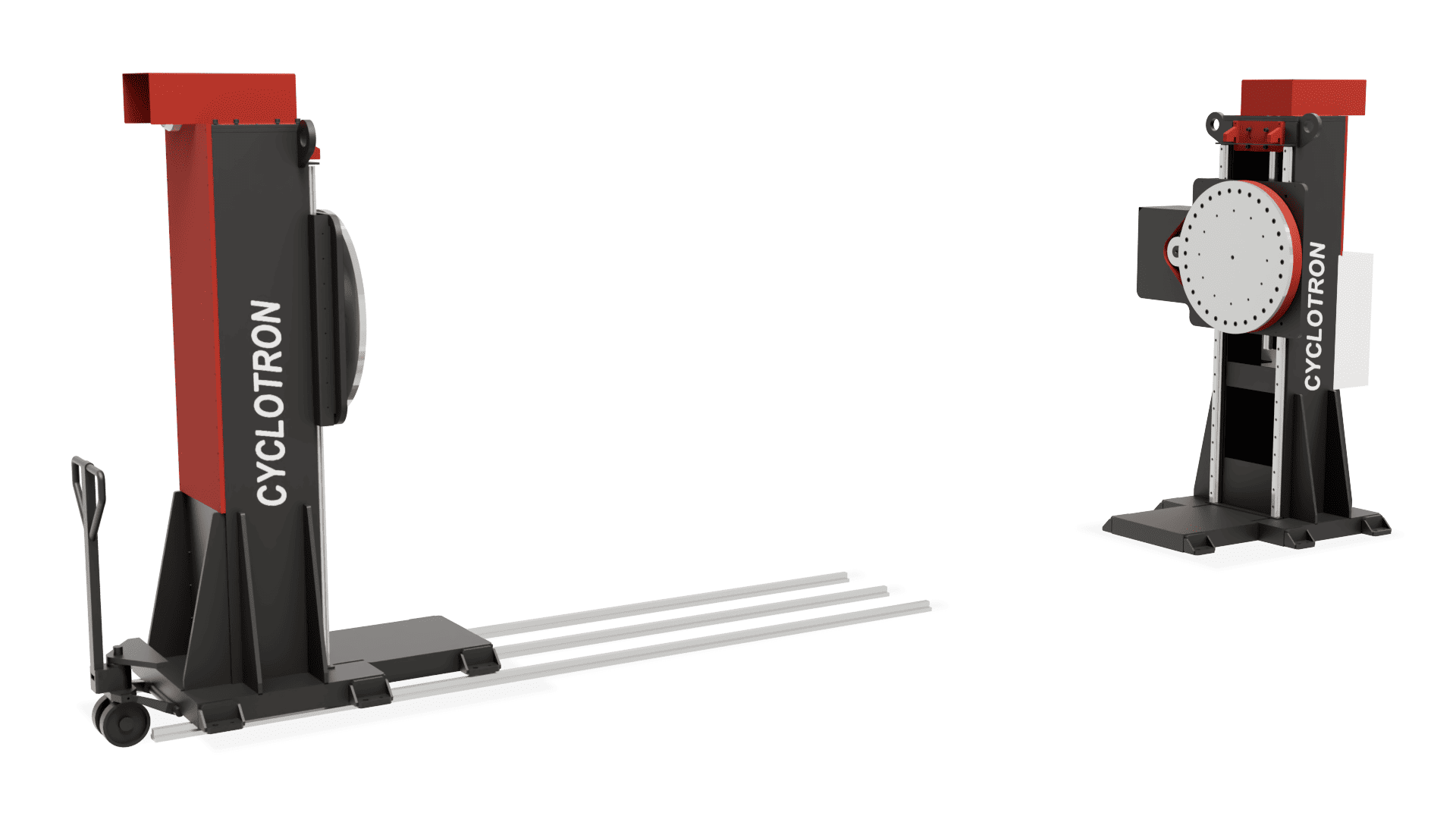
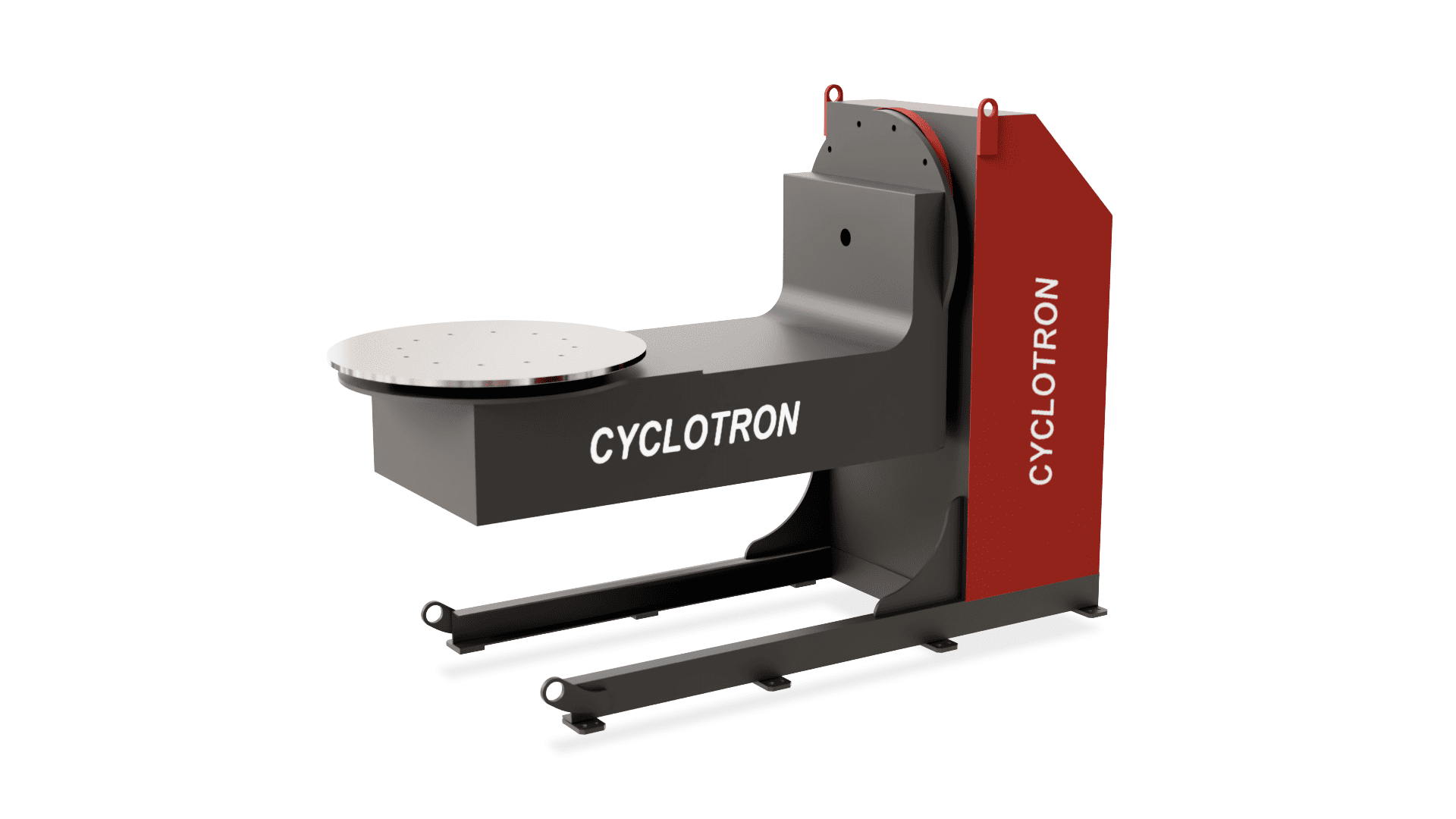
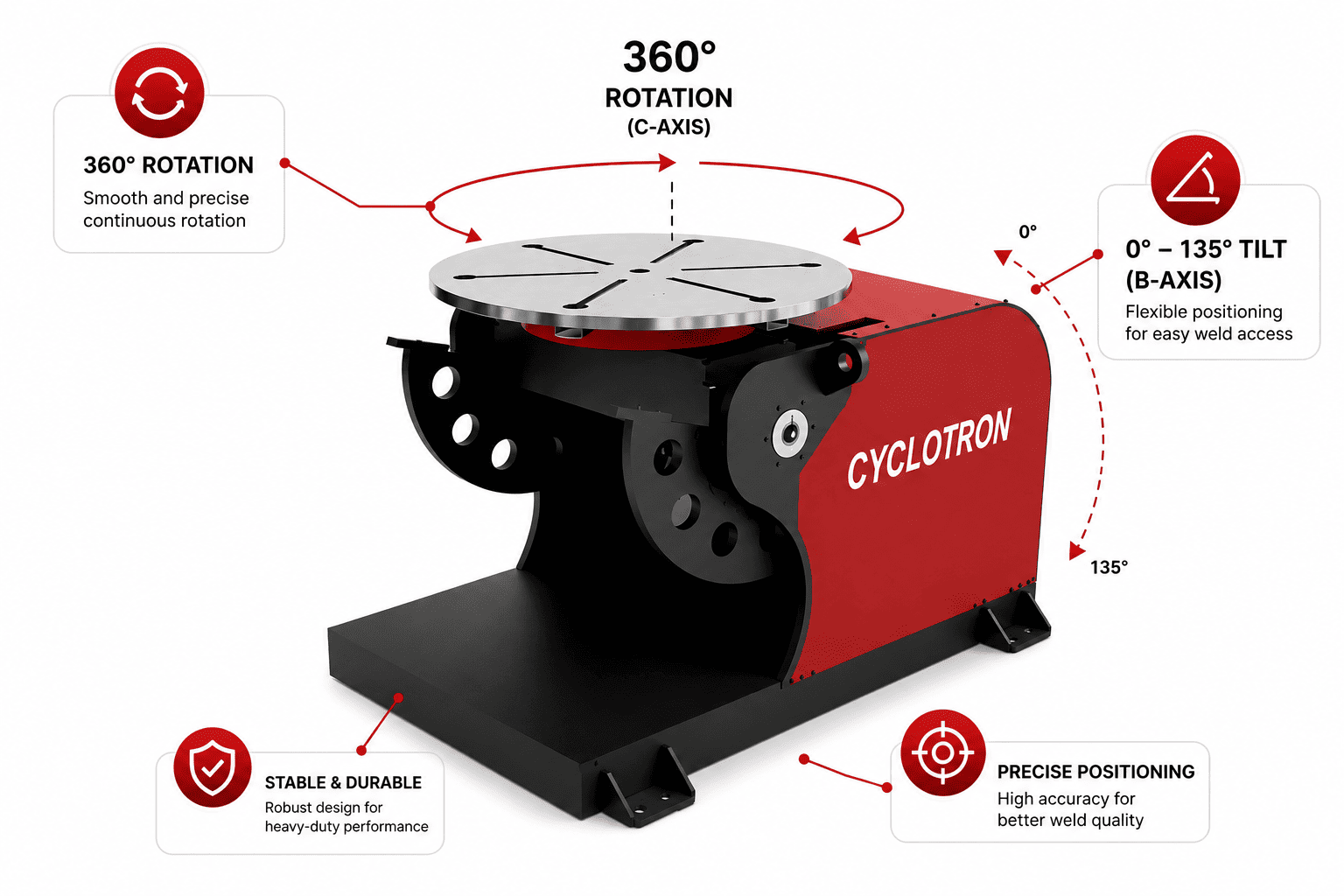
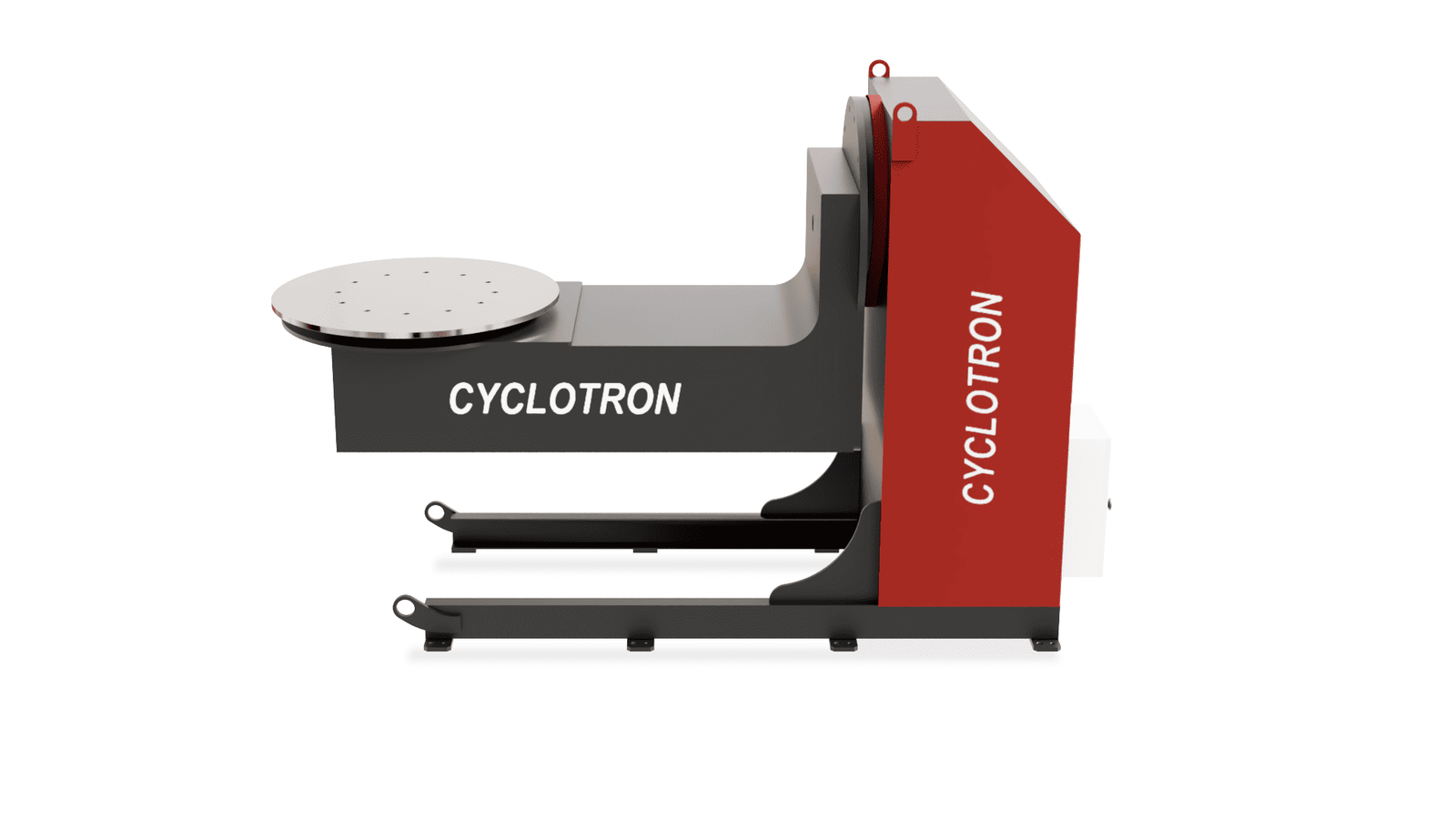
Cyclotron manufactures industrial welding positioners from 100 kg to 100 Tons capacity, designed for robotic/manual welding, heavy fabrication, and high-production welding environments.
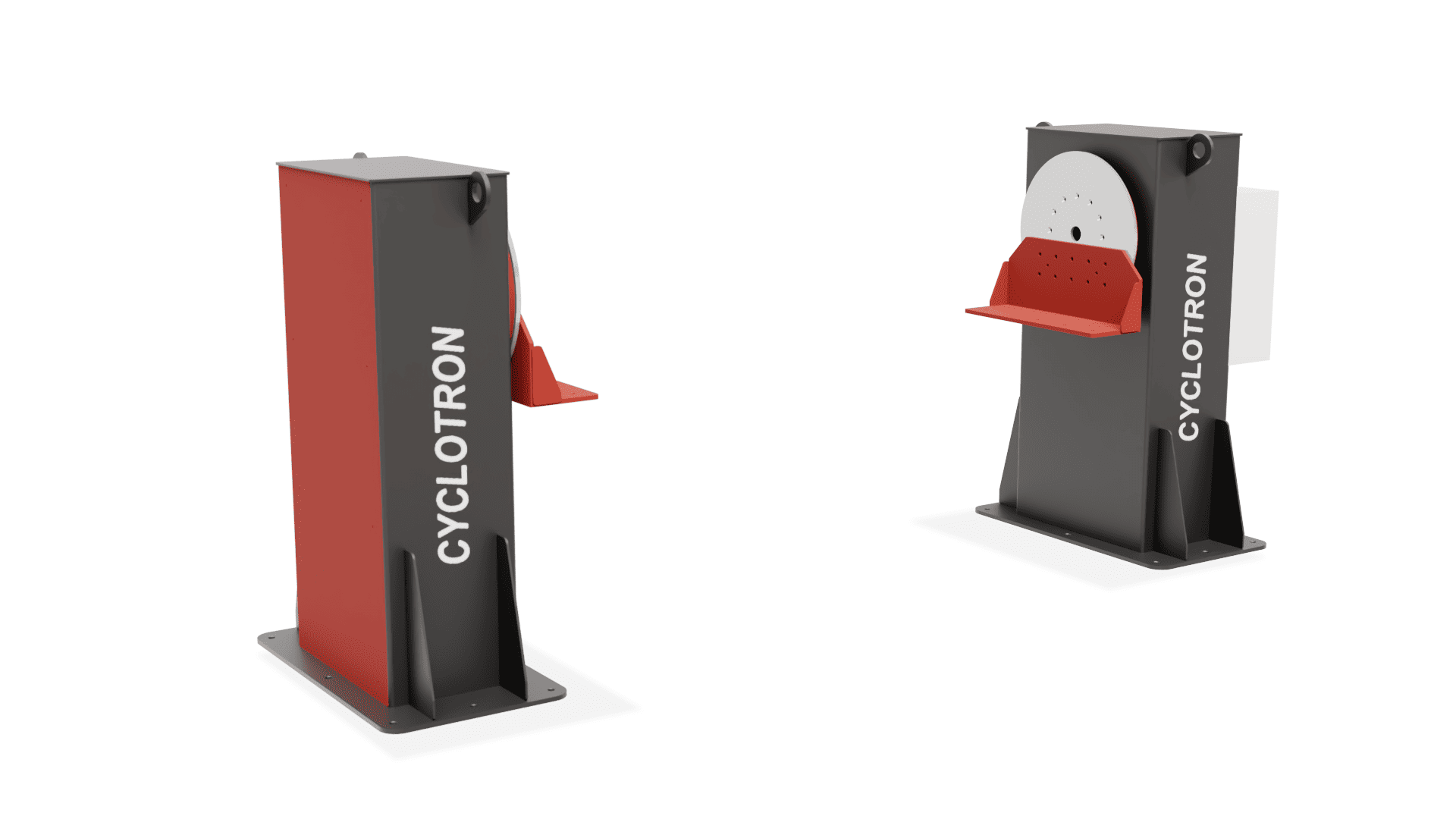
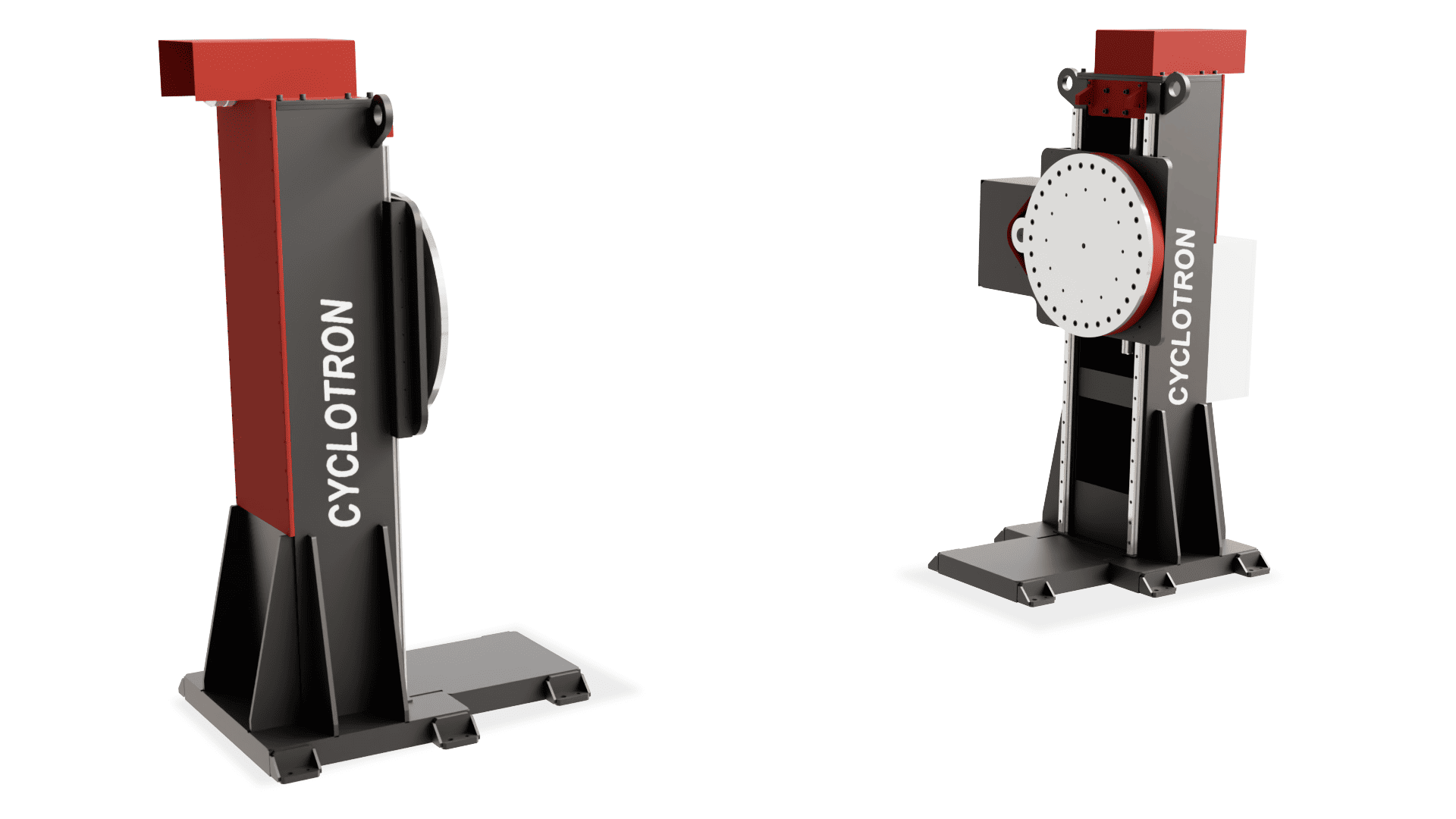
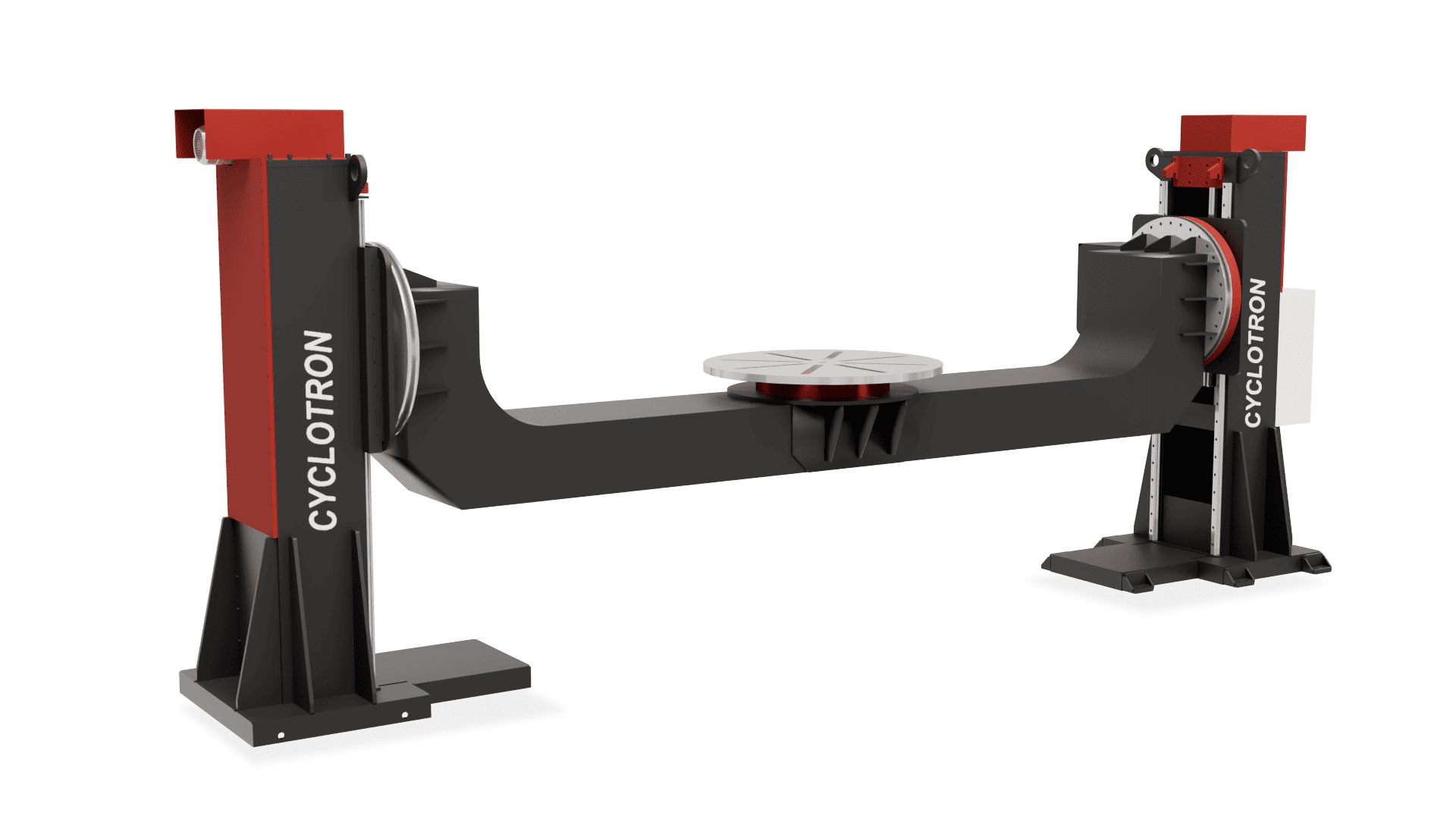
- Cyclotron manufactures all types of Manual/Robotic welding positioners like 1 axis, 2 axis, 3 axis, Headstock-tailstock, L Type, skyhook, etc
How Does Centre of Gravity Create Load Moment?
The basic relationship is:
Moment = Force × Perpendicular Distance
As the CG moves farther from the relevant axis, the moment increases.
For suppose, imagine a 5-ton load. If its CG is close to the rotation axis, the resulting moment may be relatively small. As you move the same mass farther away, the positioner has to handle a greater mechanical moment.
That is why positioner load moment and CG eccentricity are critical inputs during sizing.
What Is the Difference Between CG Height and CG Eccentricity?
What does CG height mean?
The center of gravity (CG) height refers to the vertical distance between the combined load’s centre of gravity and the relevant mounting or interface plane.
It becomes particularly important when evaluating tilting arrangements and the loads acting through the positioner’s structure and support system.
What is CG eccentricity?
CG eccentricity is the radial displacement of the combined centre of gravity from the rotation axis. The farther the CG is offset from the axis, the greater the resulting moment for the same load.
For complex weldments, a side-view and front-view CG assessment can make this relationship much easier to understand.
What Happens When the Same 5-Ton Load Has Different CG Offsets?
Consider a simplified 5,000 kg load with different CG offsets.
CG offset | Relative load moment |
100 mm | 1× |
300 mm | 3× |
500 mm | 5× |
The important point is the relationship: moment increases directly with perpendicular distance when the load remains constant.
So moving the CG from 100 mm to 500 mm from its relevant axis increases the moment by a factor of five.
This is why saying “the component weighs 5 tons” is not enough information for proper positioner selection.
What Can Happen If CG Is Ignored?
Ignoring CG and eccentricity can result in a positioner being selected without adequately accounting for the actual mechanical demands of the application.
Depending on the machine and load case, the consequences can include:
- Higher gearbox and drive loading
- Greater brake requirements
- Increased bearing loads
- Higher structural stresses
- More demanding tilting operation
- Reduced usable capacity
- Less predictable motion and load control
The exact effect depends on the positioner design and the specific load geometry. A positioner’s rated tonnage does not describe every possible load configuration at that weight.
How Does Cyclotron Evaluate the Centre of Gravity?
Cyclotron’s application review should look beyond the basic workpiece weight.
Key inputs include:
- Workpiece and fixture mass
- CG location in X/Y/Z
- CG eccentricity from the relevant axis
- Rotational and tilting moments
- Component geometry and overhang
- Required speed and duty
- Fixture and mounting arrangement
For complex asymmetric weldments, CAD or 3D model data can make the CG and load geometry much easier to evaluate accurately.
What Should You Send for Positioner Sizing?
Don’t send only just the raw details like “Weight = 5 tons.”
Provide the workpiece weight, fixture weight, component dimensions, mounting arrangement, and CG data wherever available.
That information gives the engineering team a much clearer picture of the actual load case and helps determine the appropriate positioner configuration.

Cyclotron Welding Positioners from India
Cyclotron manufactures industrial welding positioners from 100 kg to 100 Tons capacity, designed for robotic/manual welding, heavy fabrication, and high-production welding environments.
- Cyclotron manufactures all types of Manual/Robotic welding positioners like 1 axis, 2 axis, 3 axis, Headstock-tailstock, L Type, skyhook, etc

What is a welding positioner?
Its main purpose is to position the job at the best angle for welding, helping operators achieve better weld quality and greater efficiency.
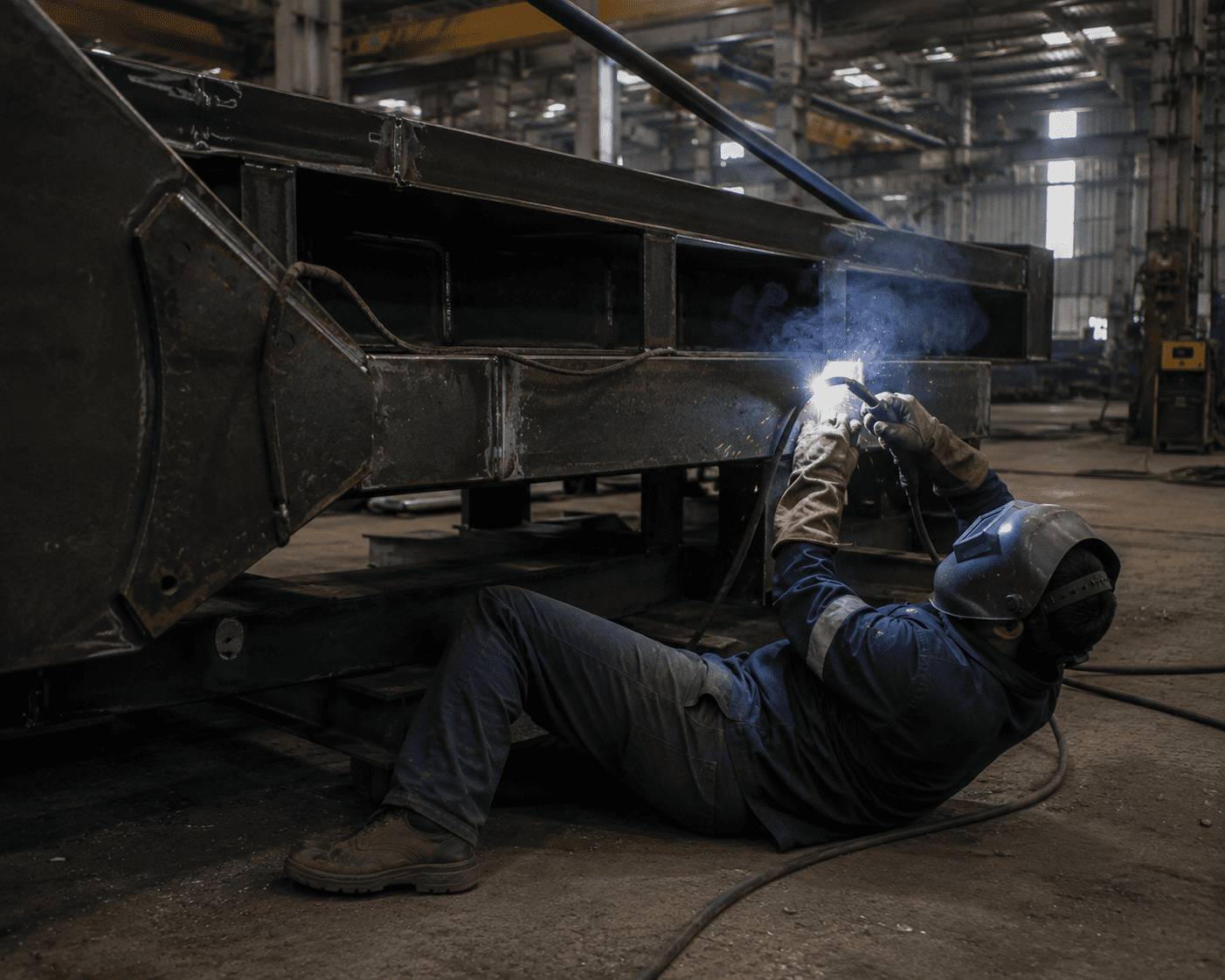
5 Common Welding Problems that a Positioner Can Solve
1. Poor weld quality due to welding positioners. 2. Excessive welder fatique 3. Longer welding cycle times, etc
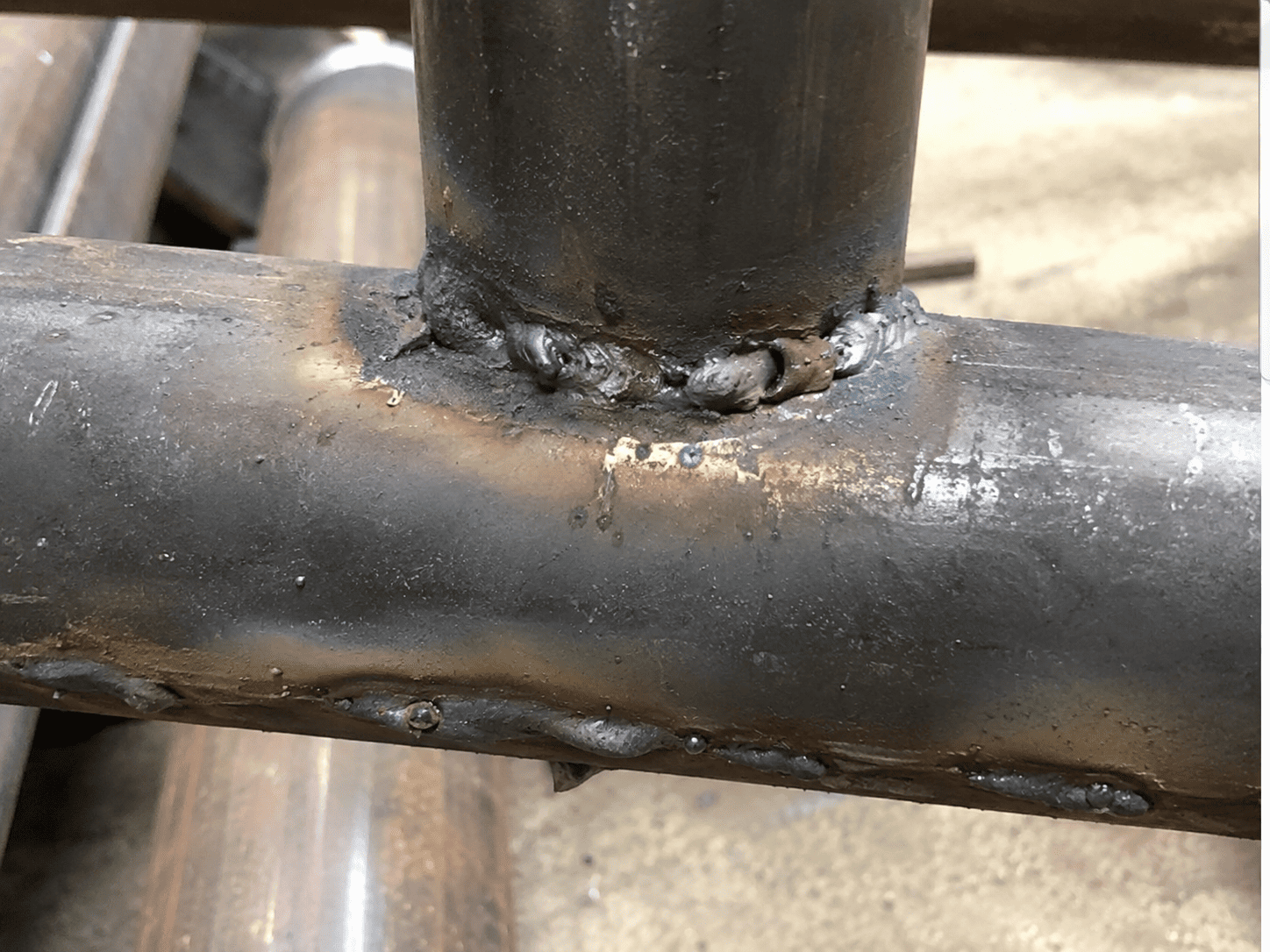
Inconsistent Welds- How a positioner can fix that
Welding positioner can help you with constantly changing weld angles, it can help you with operator fatique, etc
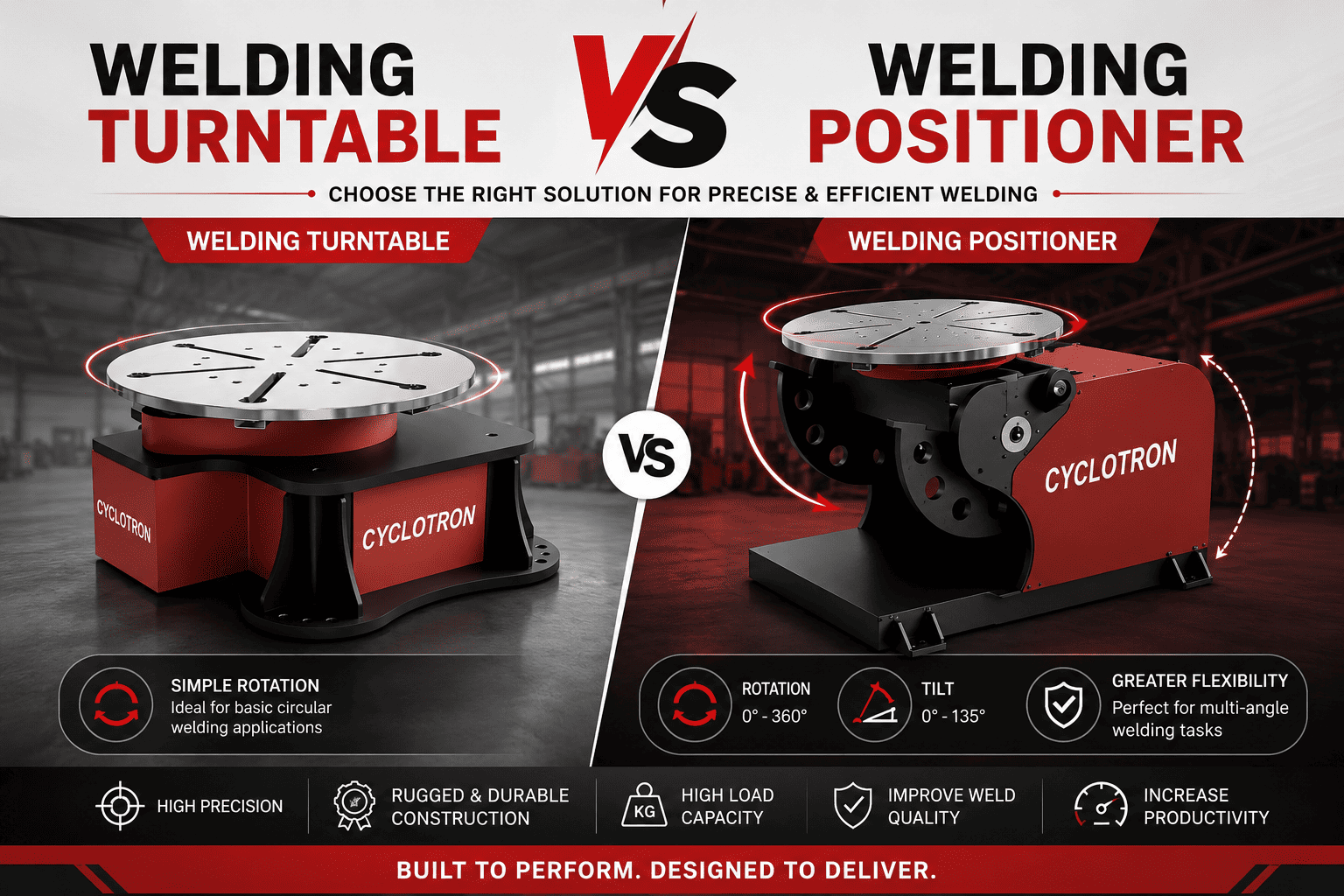
Welding Turntable vs Welding Positioner: What’s the Difference?
A welding turntable provides simple rotation for smooth, consistent welds. A welding positioner can also tilt and angle the workpiece,
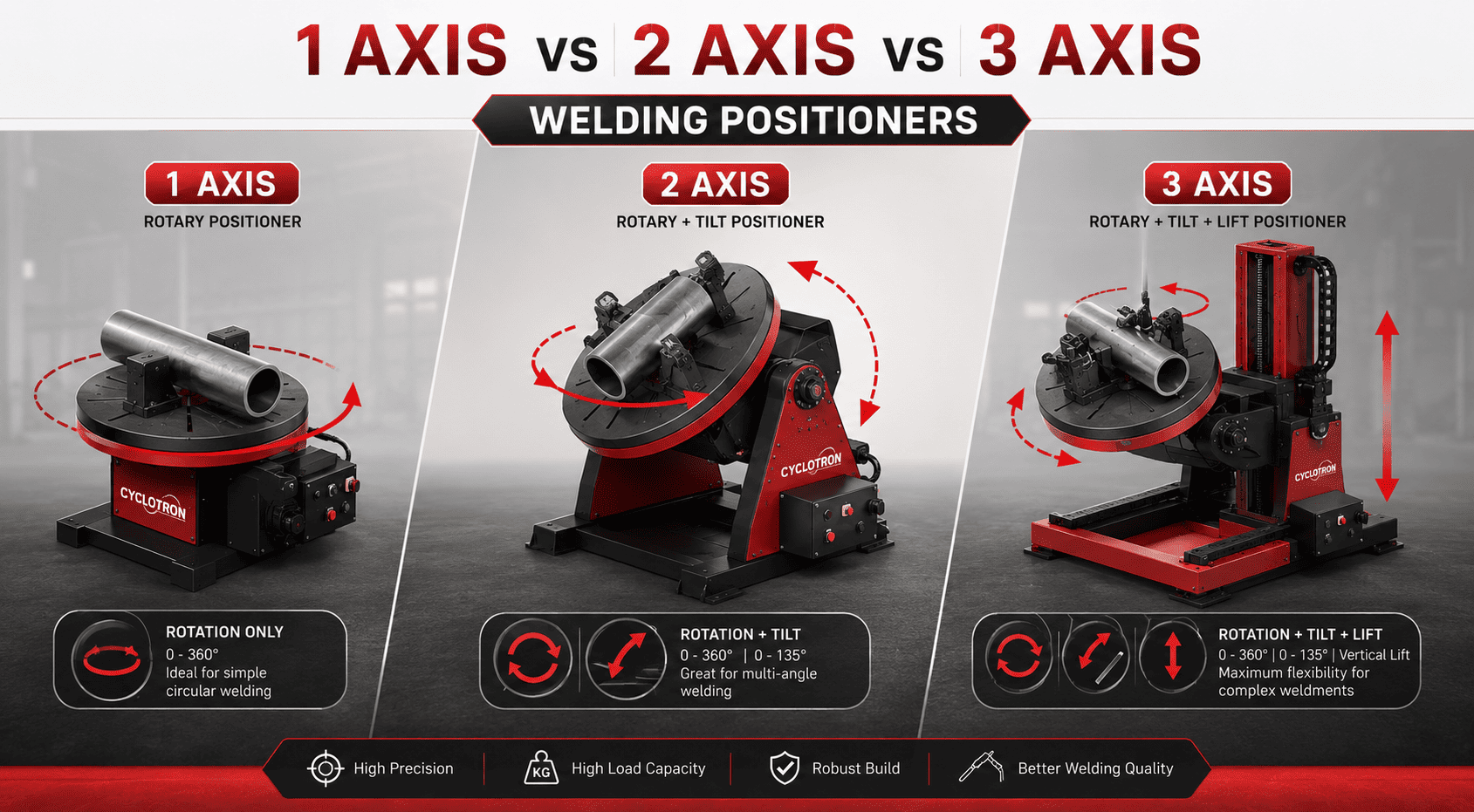
1 Axis vs 2 Axis vs 3 Axis Welding positioners
Compare 1 axis vs 2 axis vs 3 axis welding positioners based on rotation, tilt, flexibility, applications, cost, and automation. Learn which welding positioner is best for your fabrication needs.
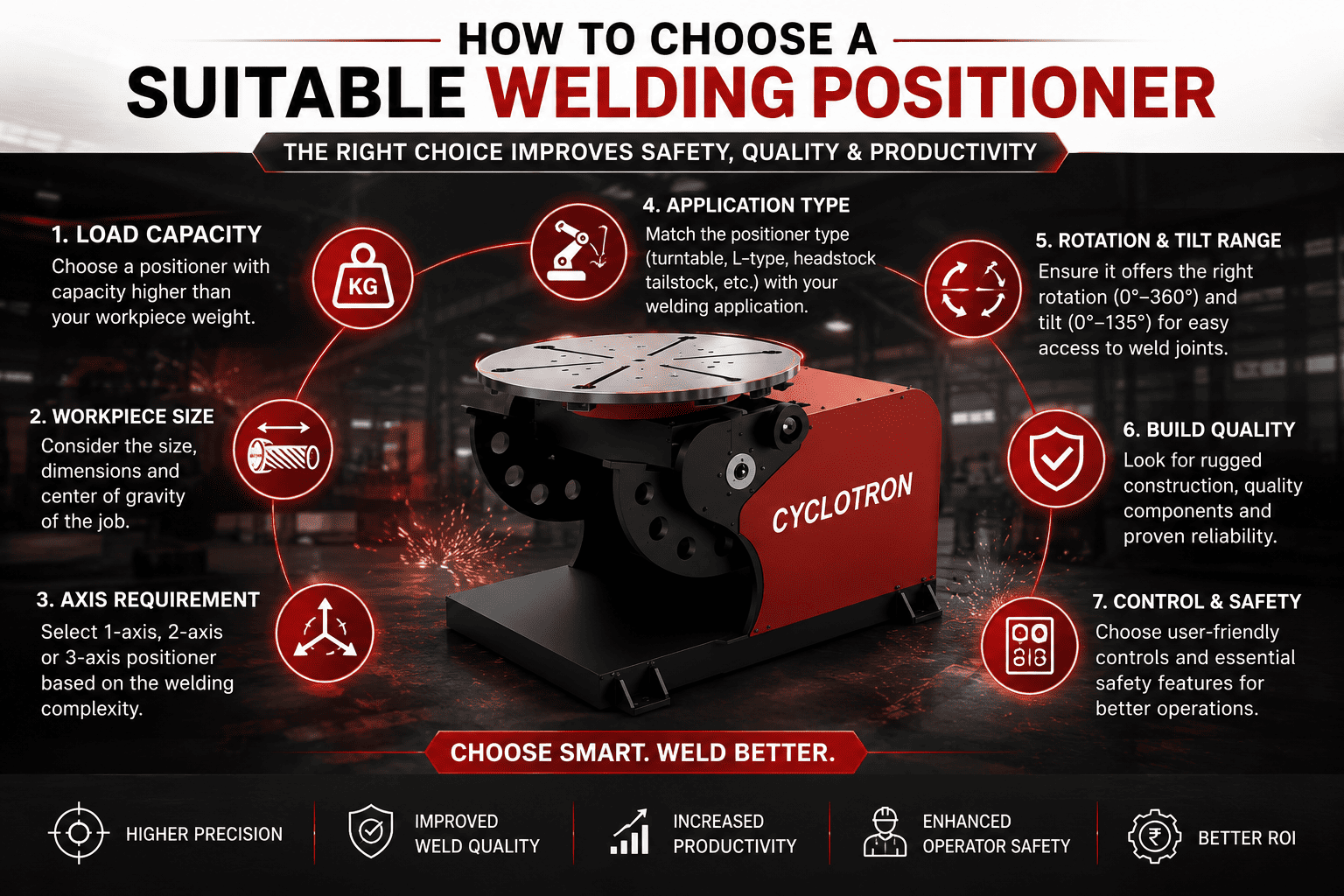
How to select a suitable welding positioner?
Selecting the right welding positioner plays a critical role in the fabrication setup. Welding positioners are designed to handle different load ranges.
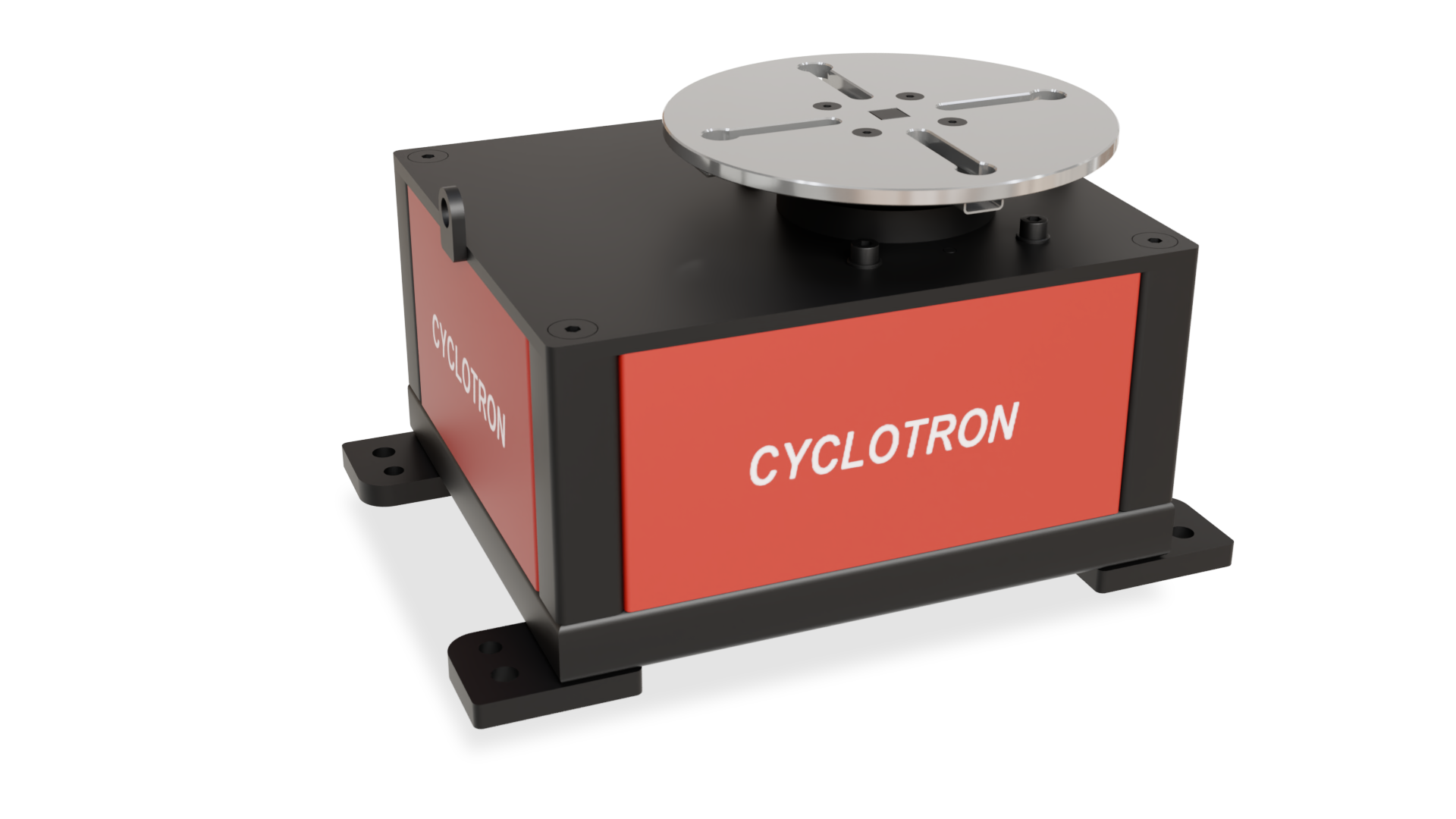
In this blog we will address all the commonly asked questions related to Welding positioners or Cyclotron Welding positioners specifically