Robotic Welding Positioners
A complete blog
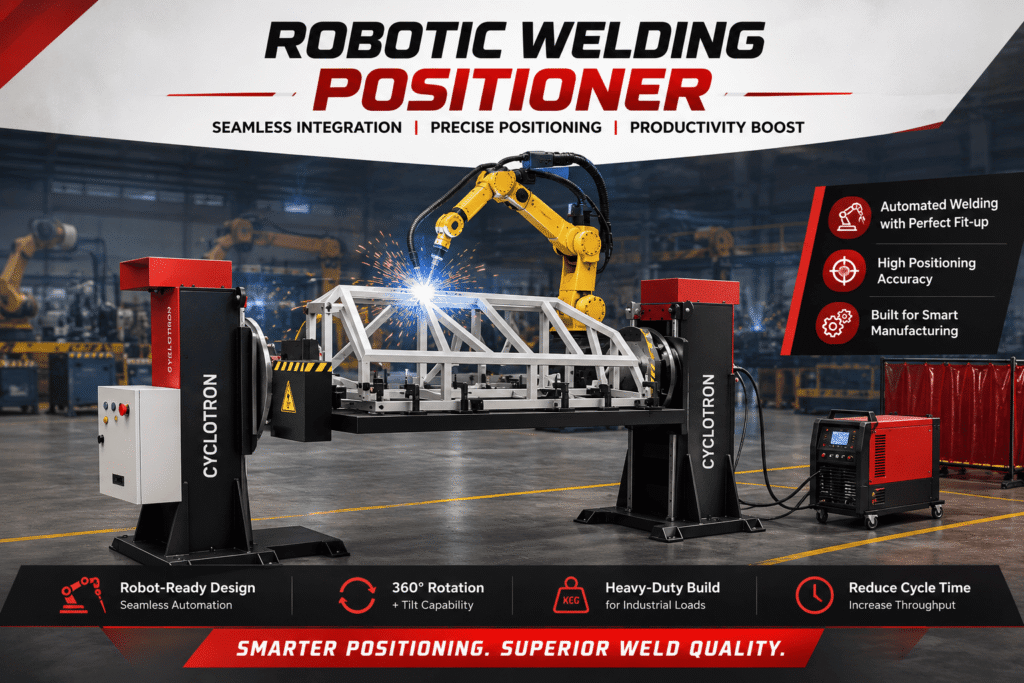
Buying a robotic welding positioner should not create extra work for your robot supplier. Cyclotron manufactures each positioner to match the external-axis requirements of your robot controller, including ABB, FANUC, Yaskawa/Motoman, KUKA, Panasonic, Kawasaki, and other leading brands.
Your robot supplier handles integration, programming, and commissioning, while we supply a positioner with the correct mechanical interface, electrical package, and technical documentation. The result is faster integration, fewer engineering changes, and a smoother path from installation to production.
Cyclotron Welding Positioners from India
Cyclotron manufactures industrial welding positioners from 100 kg to 100 Tons capacity, designed for robotic/manual welding, heavy fabrication, and high-production welding environments.
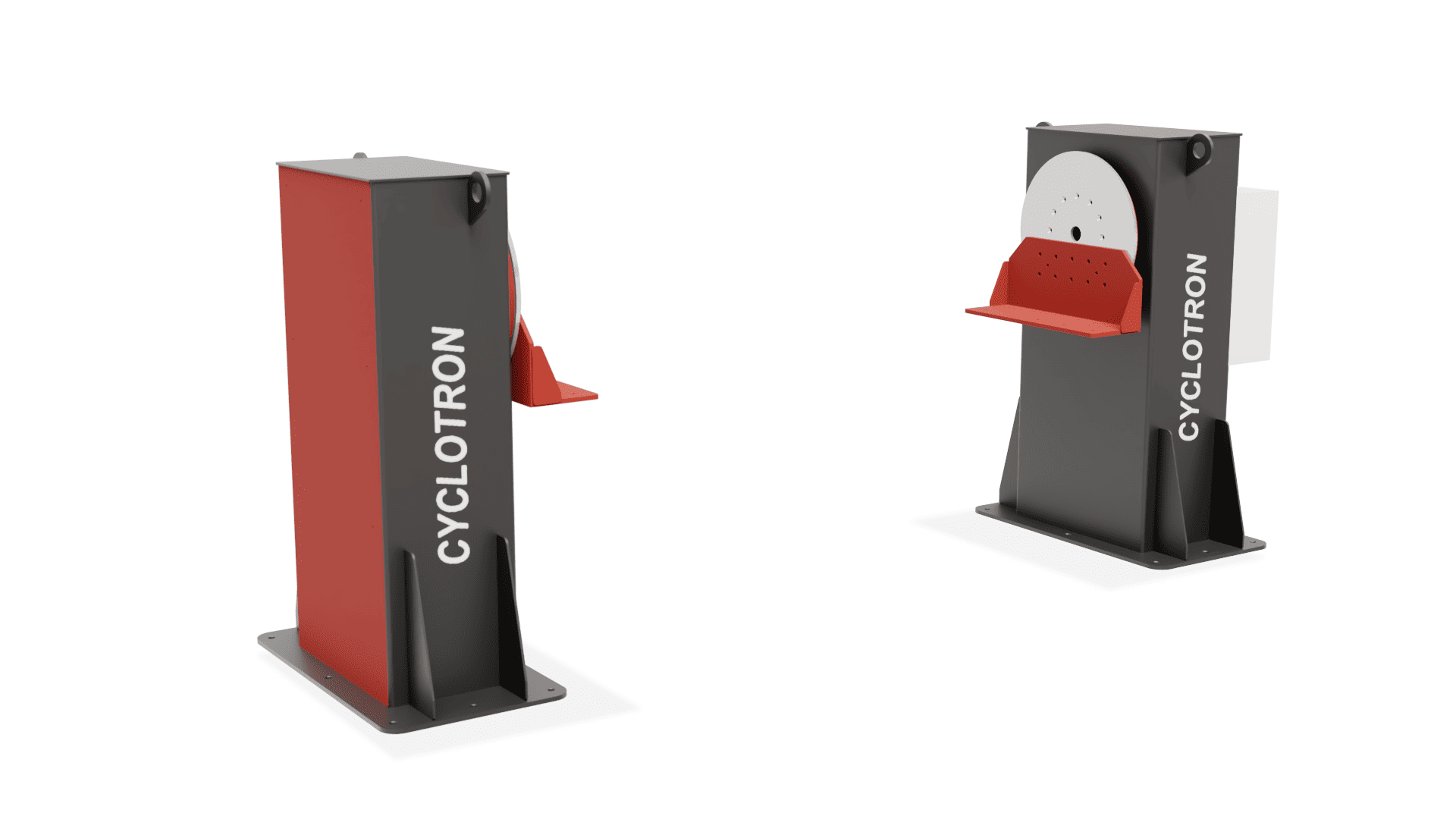
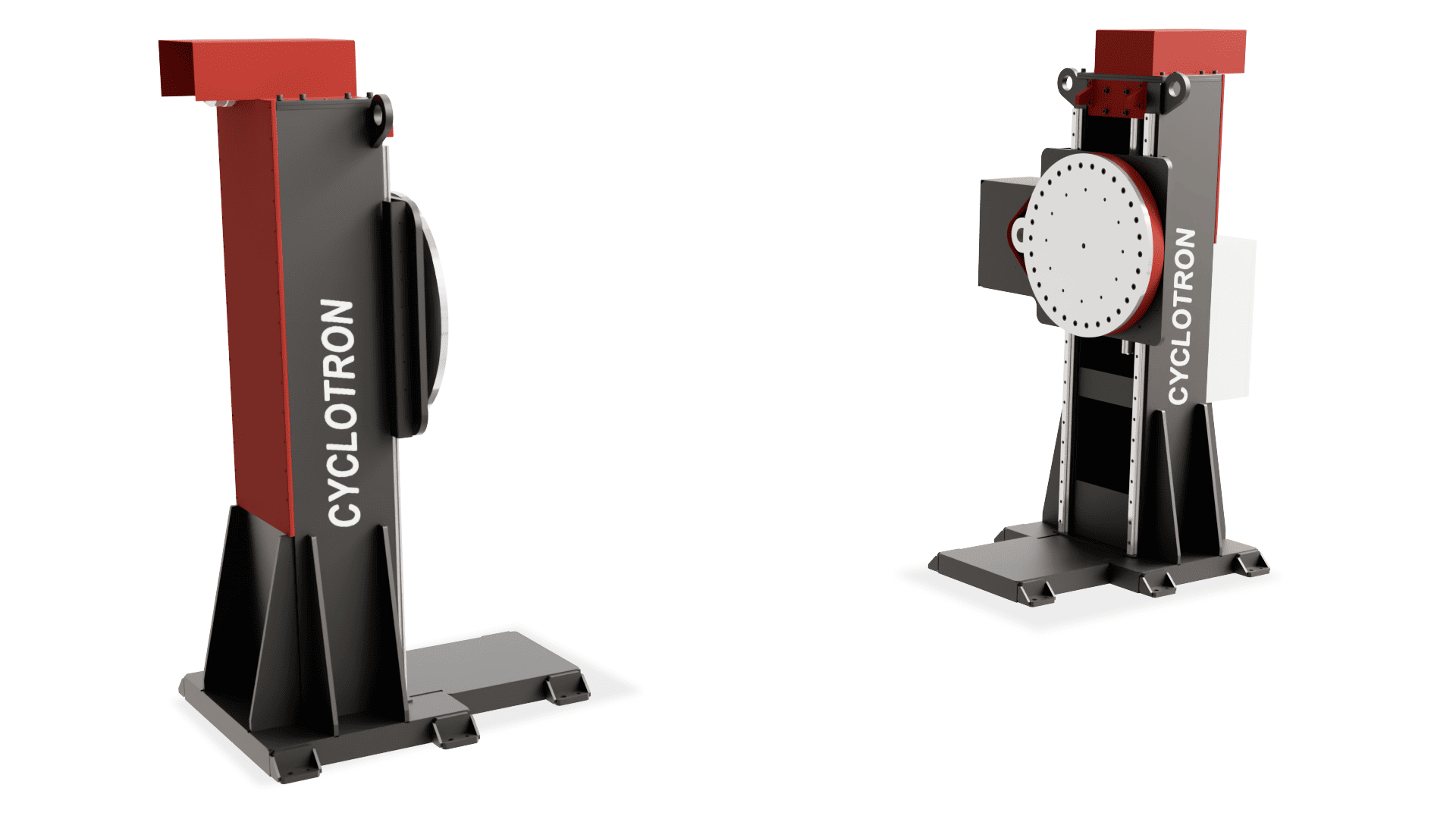
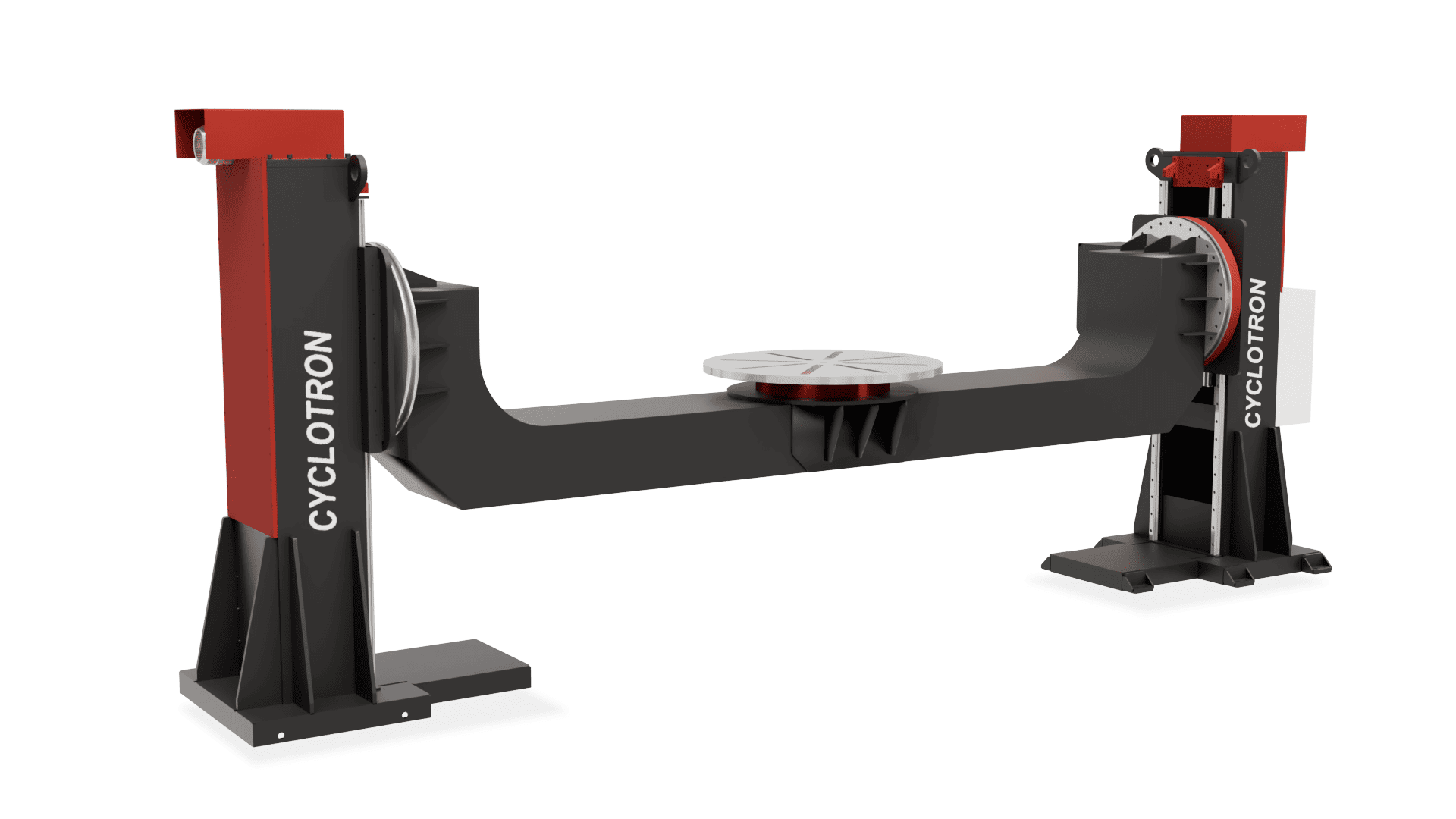
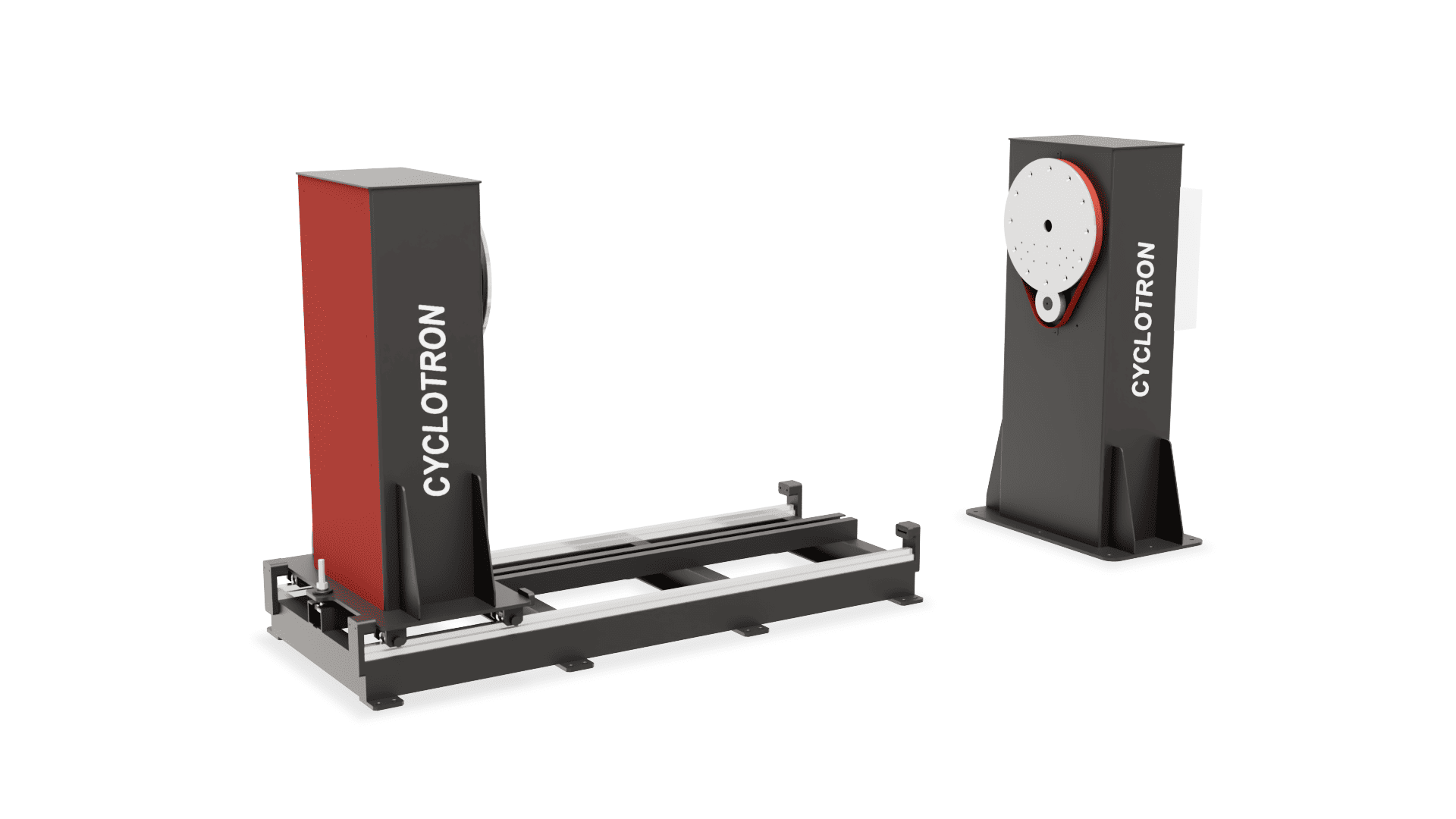
- Cyclotron manufactures all types of Manual/Robotic welding positioners like 1 axis, 2 axis, 3 axis, Headstock-tailstock, L Type, skyhook, etc
How the Handoff Actually Works
At Cyclotron positioners, every robotic welding project follows a simple process.
Step 1: You share your project details.
Tell us your robot make and model, workpiece weight, dimensions, welding process, and production target. We choose the correct drive system, gearbox, bearings, and structural design.
Step 2: We manufacture the positioner.
Every positioner is built to match the external-axis requirements of your robot. We select the specified servo motor, drive package, encoder feedback, mounting interface, cable routing, and electrical connections so your robot supplier can integrate the positioner with the controller.
Step 3: Your robot supplier completes the integration.
Once the positioner is delivered, your robot supplier integrates it with the robot controller, completes the external-axis setup, programs the welding application, and commissions the finished cell.
This is the standard practice followed throughout the automation industry. It keeps responsibility with the robot supplier for robot programming, warranty, and safety certification and enables us to focus on building a reliable welding positioner.
What We Build Into a Robot-Ready Positioner
Every robot welding positioner is manufactured around the robot platform it will work with. There is no universal interface that fits every controller. A typical positioner can include:
- Servo drive package for coordinated motion
- Absolute encoder or resolver specified by the robot OEM
- OEM-approved servo motor and drive combination
- Mechanical mounting interface for the selected robot controller
- Precision gearbox matched to load and inertia
- Slip ring for continuous rotation applications
- Weld current return path with earthing brush to protect bearings
- Internal cable routing and connector specification requested by the integrator
- Heavy-duty fabricated steel construction
- Machined faceplate with fixture mounting holes
- Dual-unit nameplate showing metric and imperial ratings
- CE-ready electrical design for export projects
Every project is supplied with manufacturing drawings, installation information, and technical documents that help the robot supplier complete integration without modifying the equipment.
Servo vs VFD. Which One Do You Need?
The drive system depends on how the robot will weld.
A VFD-controlled positioner works well when the table rotates into position, stops, and the robot performs the weld. This is known as an index-and-weld application. Many fabrication shops use this approach because it is simple and cost-effective.
A servo-controlled positioner is required when the robot and the positioner move together while welding. The robot controller treats the positioner as an external axis and keeps both motions synchronized throughout the weld.
Servo systems cost more because they include servo motors, servo drives, encoder feedback, and robot-specific interface hardware. That additional cost is worthwhile only when coordinated motion is required.
Many robotic welding cells do not need servo control. We recommend the drive system based on the welding process instead of automatically specifying the most expensive option.
Cell Configurations We Build For
1. Single Station
Best for low and medium production where the operator loads the fixture after each welding cycle.
2. Twin Station (H-Frame or Turntable)
Loading takes place on one station while welding continues on the other. This reduces idle time and increases productivity.
3. Ferris Wheel
Used for higher production volumes where continuous loading and unloading keep the robot working with minimal interruption.
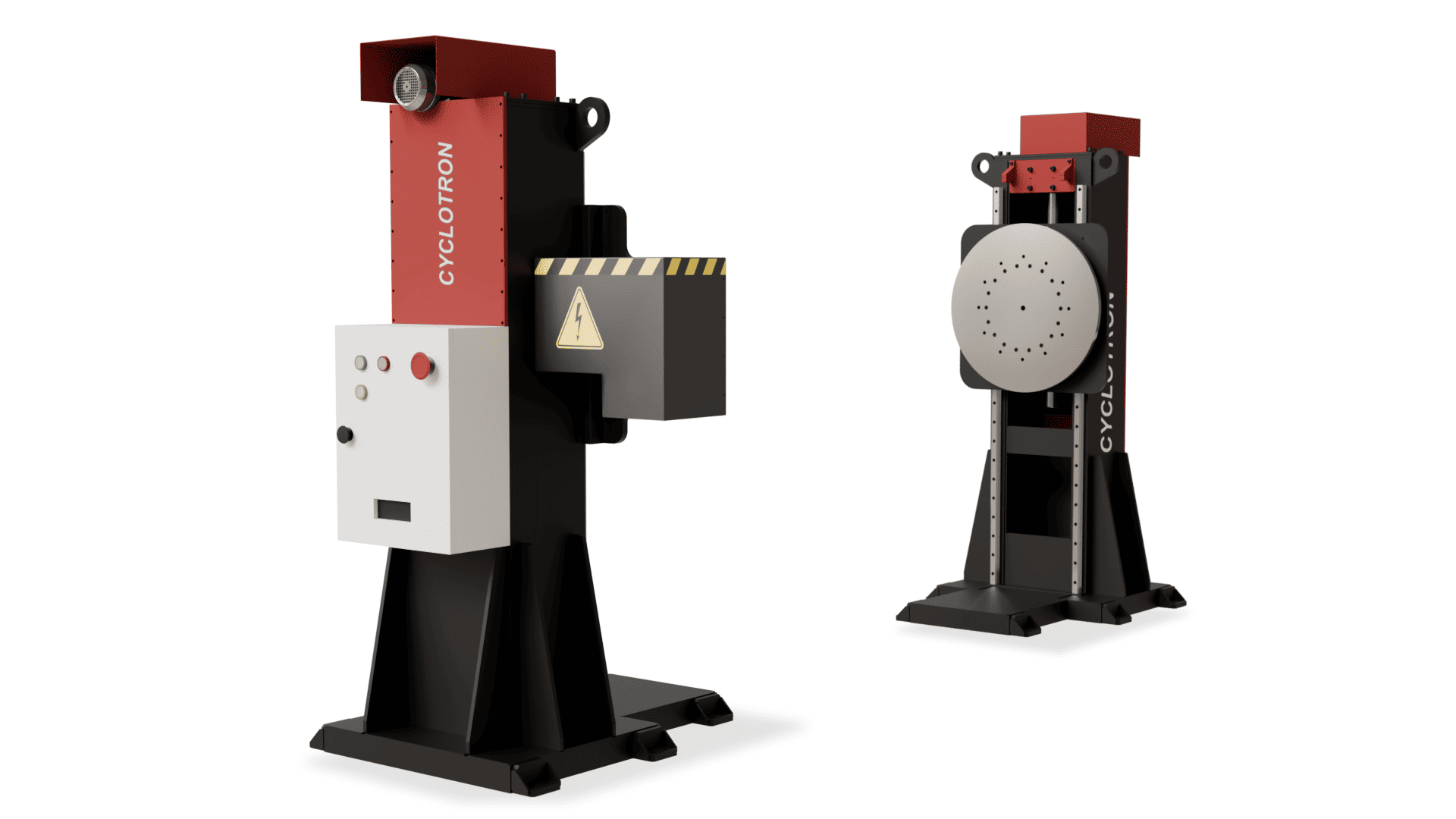
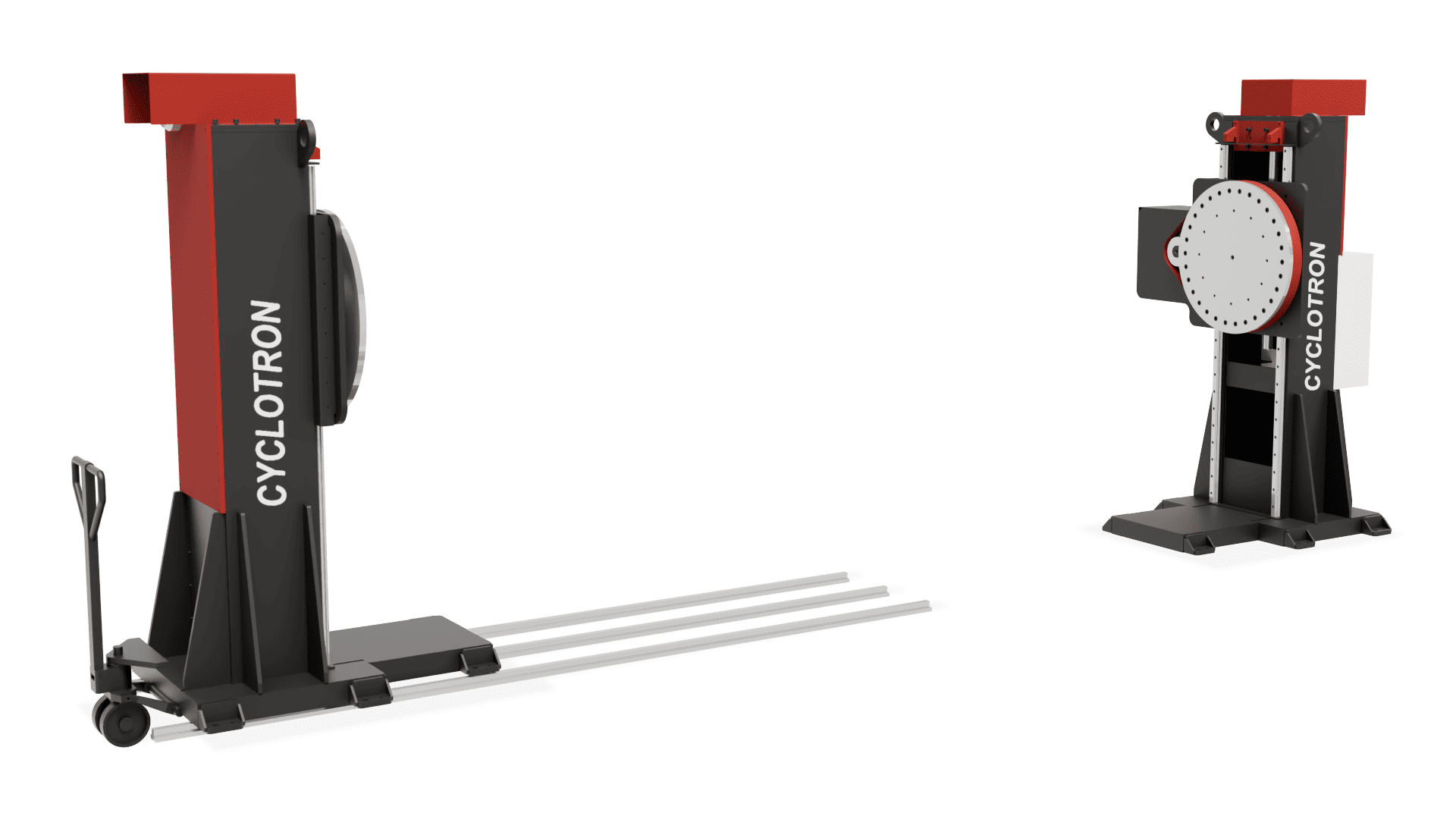
4. Headstock Tailstock External Axis
Built for long fabrications, structural components, pressure vessels, pipes, and heavy assemblies that need support from both ends.
Cyclotron manufactures the positioner for each configuration. Cell layout, robot placement, guarding, safety fencing, programming, and commissioning are completed by the robot supplier or automation integrator.
What Your Robot Supplier Will Ask You For
Robot integrators need accurate technical information before configuring an external axis. Missing data often leads to additional engineering work and project delays.
Cyclotron supplies a complete interface document package that includes:
- Rated load capacity in kg and lbs
- Load capacity at the specified centre of gravity
- Maximum moment of inertia
- Gear ratio
- Servo motor part number
- Servo drive information
- Encoder or resolver specification
- Faceplate dimensions
- Mounting drawings
- Mechanical interface drawings
- Electrical cable specification
- Connector details
- Rotation speed
- Rotation limits
- Slip ring specification where applicable
- Overall installation drawings
Providing these details at the beginning of the project allows the robot supplier to configure the external axis without requesting additional measurements or reverse engineering the positioner.
Frequently Asked Questions
1. Do you integrate the robot?
No. Cyclotron manufactures the robotic welding positioner. Robot integration, programming, safety validation, and commissioning are completed by your robot supplier or automation integrator.
2. Which robot brands do you support?
We build positioners for ABB, FANUC, Yaskawa/Motoman, KUKA, Panasonic, Kawasaki, and many other industrial robot brands. Each machine is built to the OEM’s external-axis specification.
3. Do I need a servo or a VFD?
A VFD is suitable when the positioner stops before welding starts. Servo control is required when the robot and positioner move together during the weld.
4. Do you provide interface documentation?
Yes. Every positioner is supplied with the technical information your robot supplier needs, including load data, inertia values, gear ratio, motor details, encoder specification, mounting drawings, and cable information.
5. Do you ship internationally?
Yes. Cyclotron supplies robotic welding positioners to customers worldwide. Export packaging, shipping documentation, and dual metric/imperial specifications are available for international projects.
Cyclotron Welding Positioners from India
Cyclotron manufactures industrial welding positioners from 100 kg to 100 Tons capacity, designed for robotic/manual welding, heavy fabrication, and high-production welding environments.
- Cyclotron manufactures all types of Manual/Robotic welding positioners like 1 axis, 2 axis, 3 axis, Headstock-tailstock, L Type, skyhook, etc
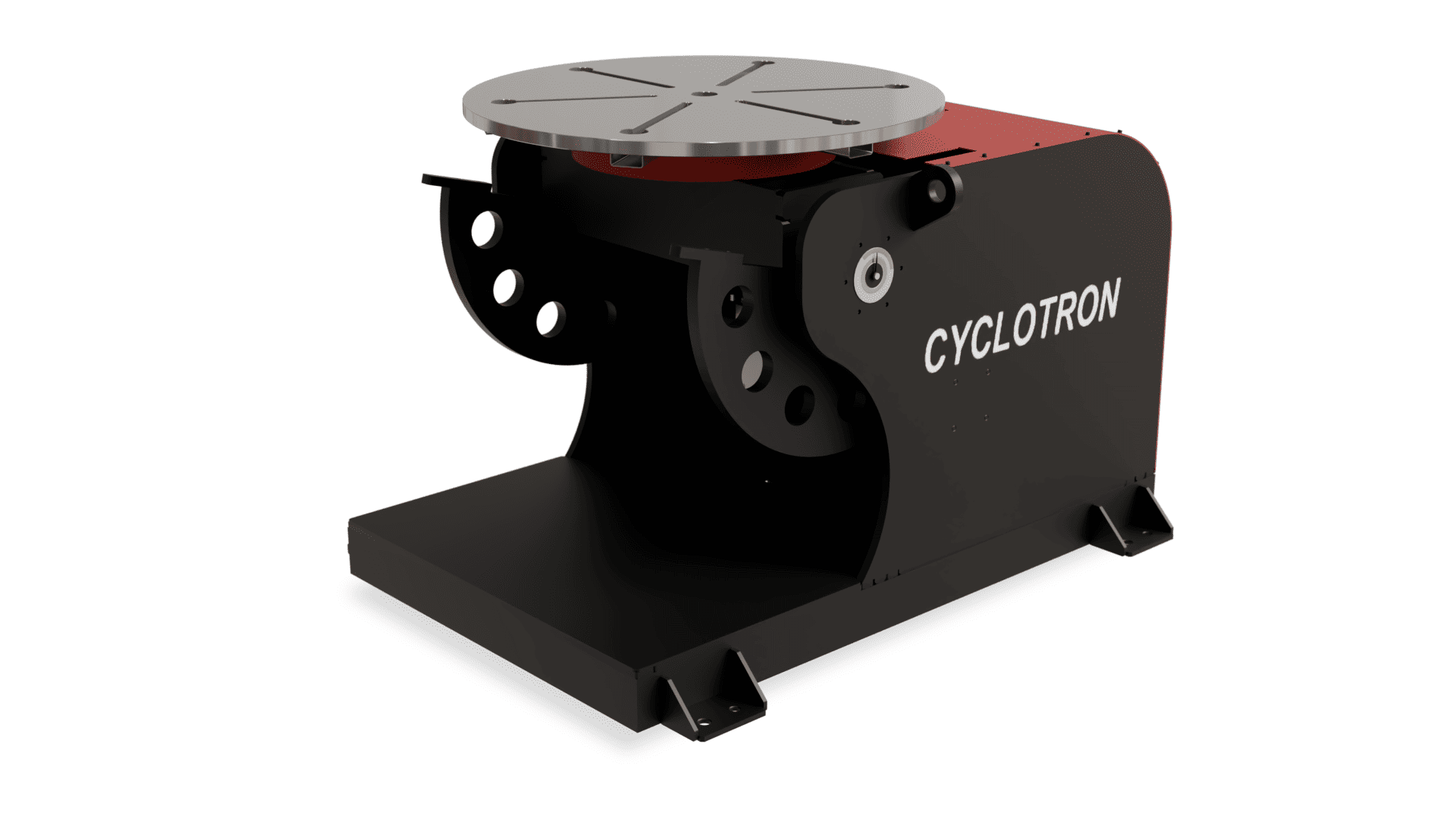
What is a welding positioner?
Its main purpose is to position the job at the best angle for welding, helping operators achieve better weld quality and greater efficiency.
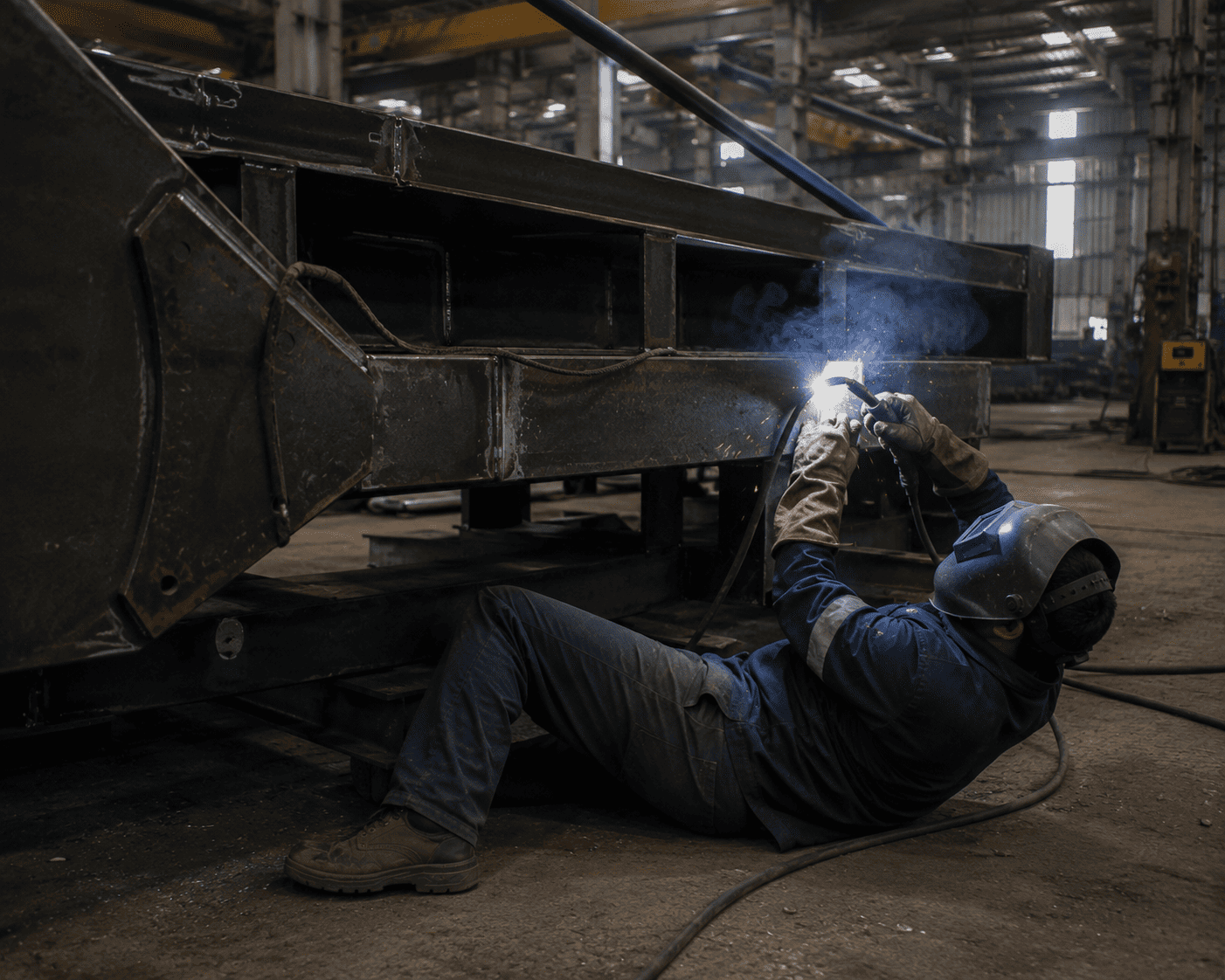
5 Common Welding Problems that a Positioner Can Solve
1. Poor weld quality due to welding positioners. 2. Excessive welder fatique 3. Longer welding cycle times, etc
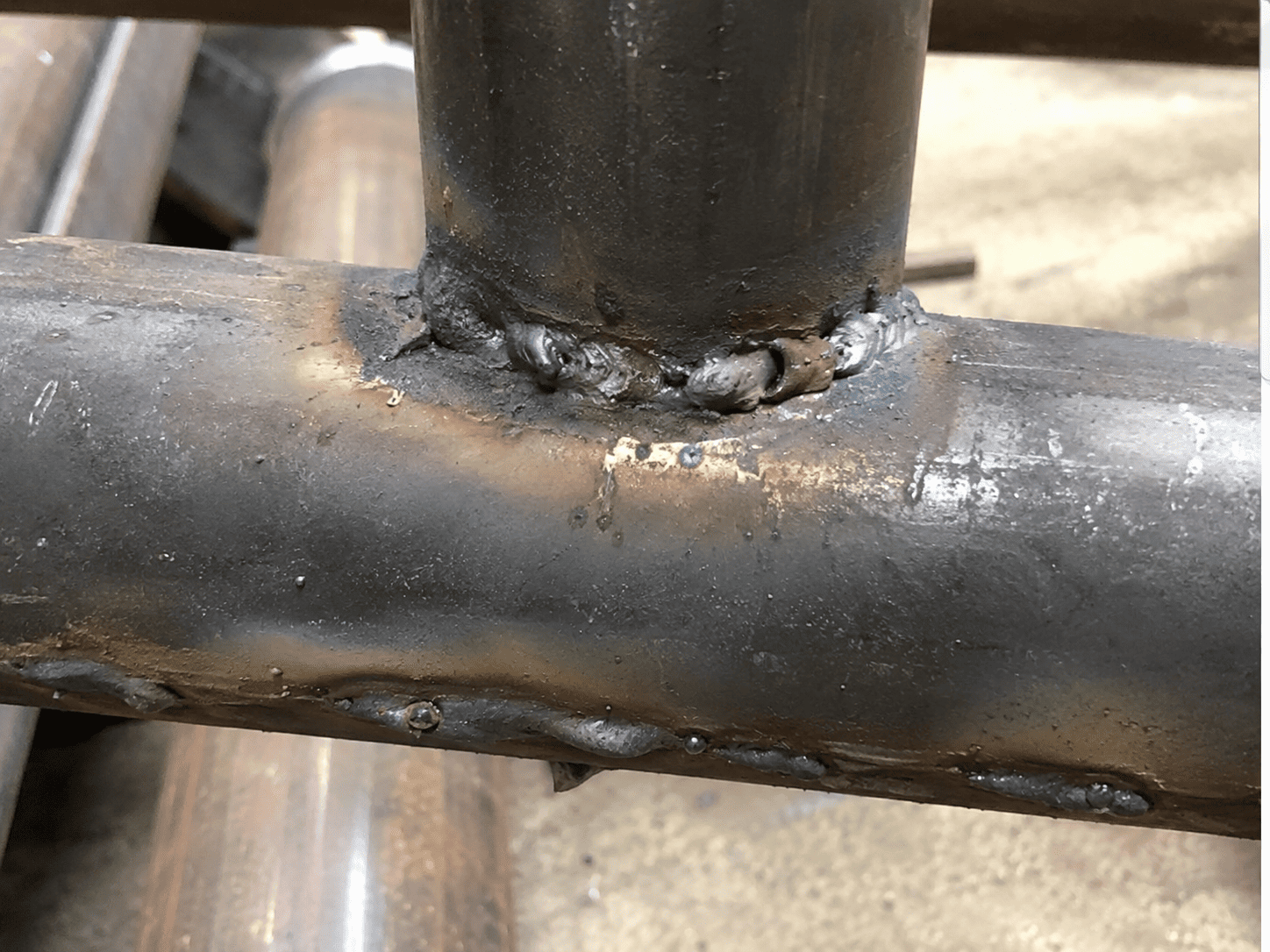
Inconsistent Welds- How a positioner can fix that
Welding positioner can help you with constantly changing weld angles, it can help you with operator fatique, etc
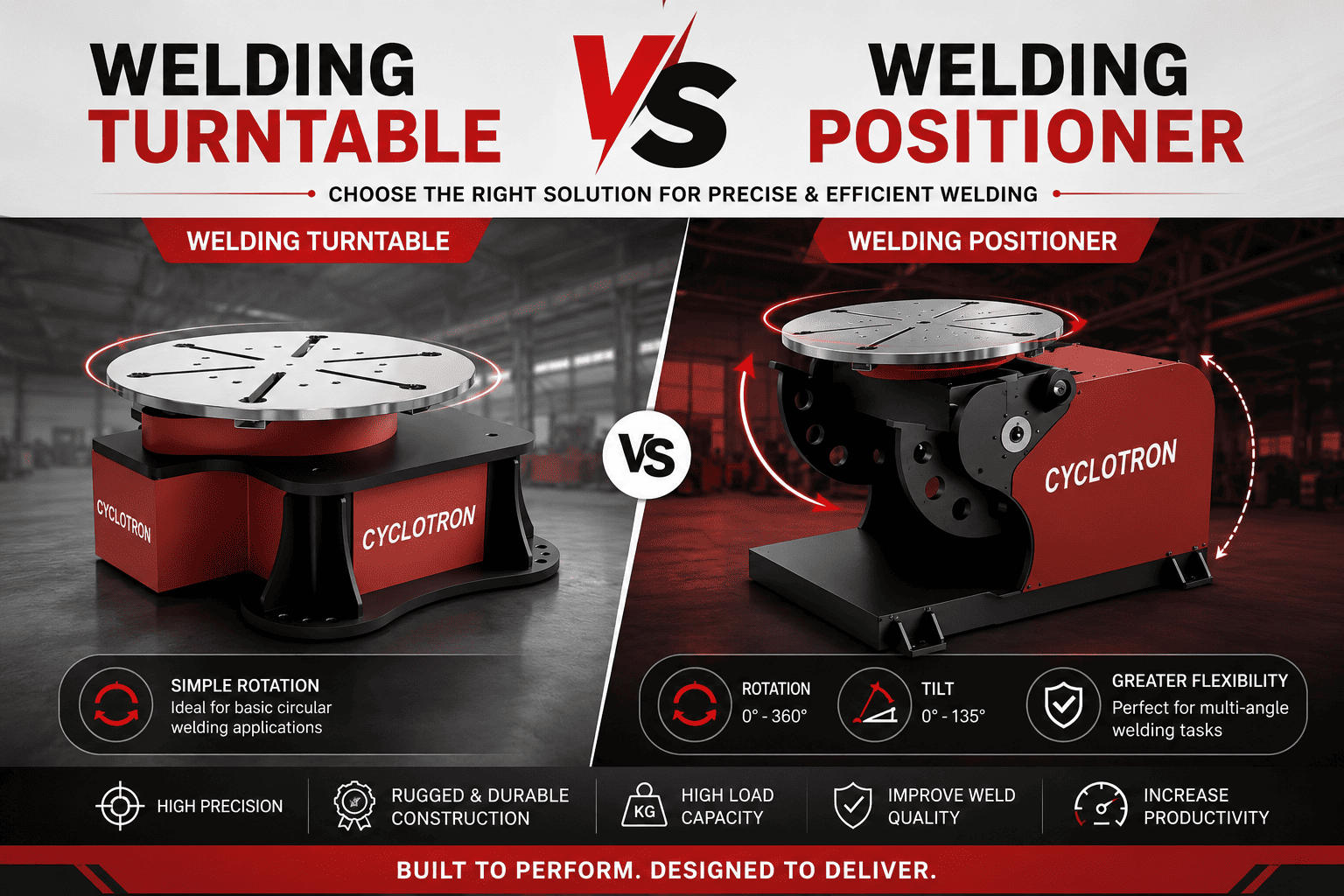
Welding Turntable vs Welding Positioner: What’s the Difference?
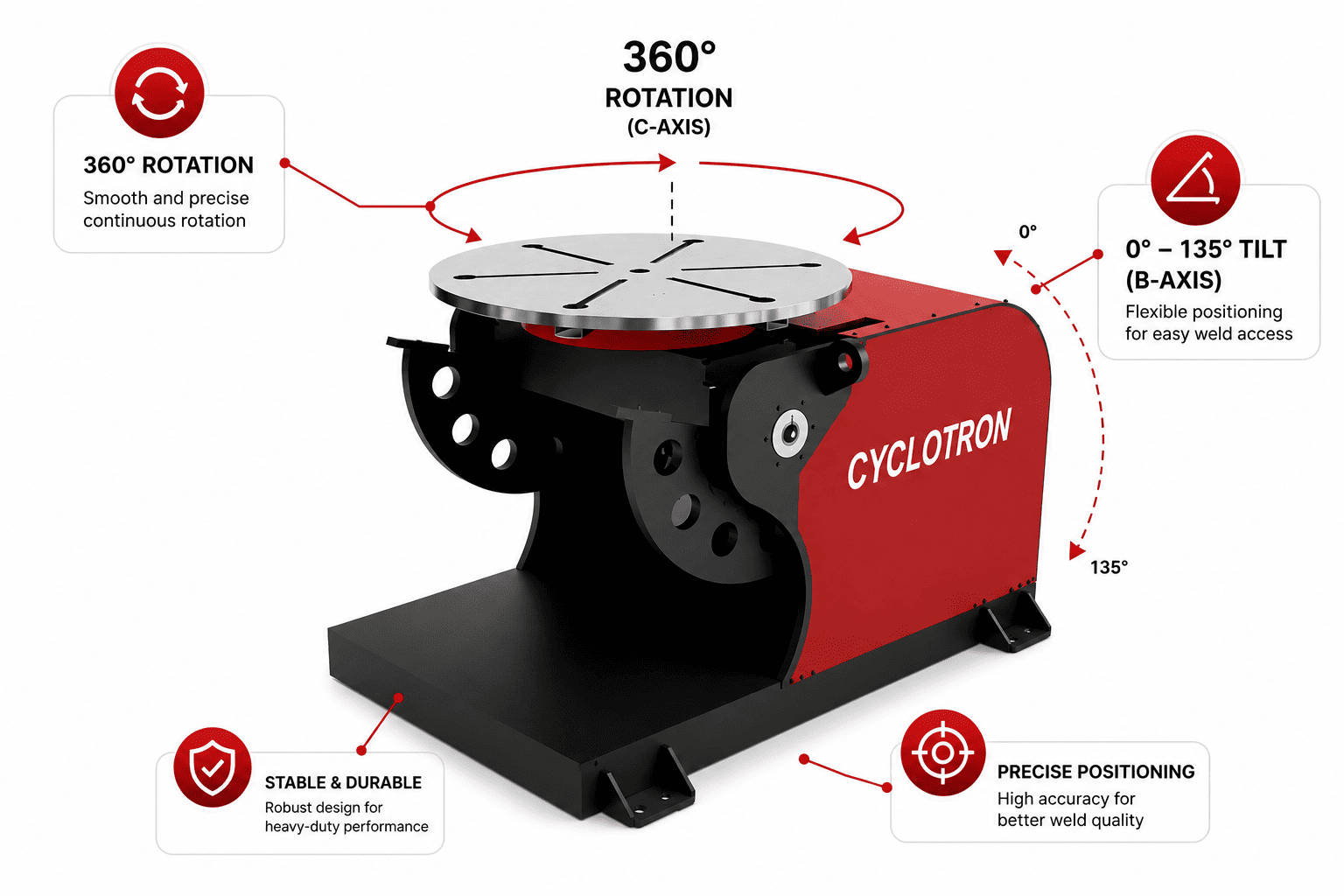
A welding turntable provides simple rotation for smooth, consistent welds. A welding positioner can also tilt and angle the workpiece,
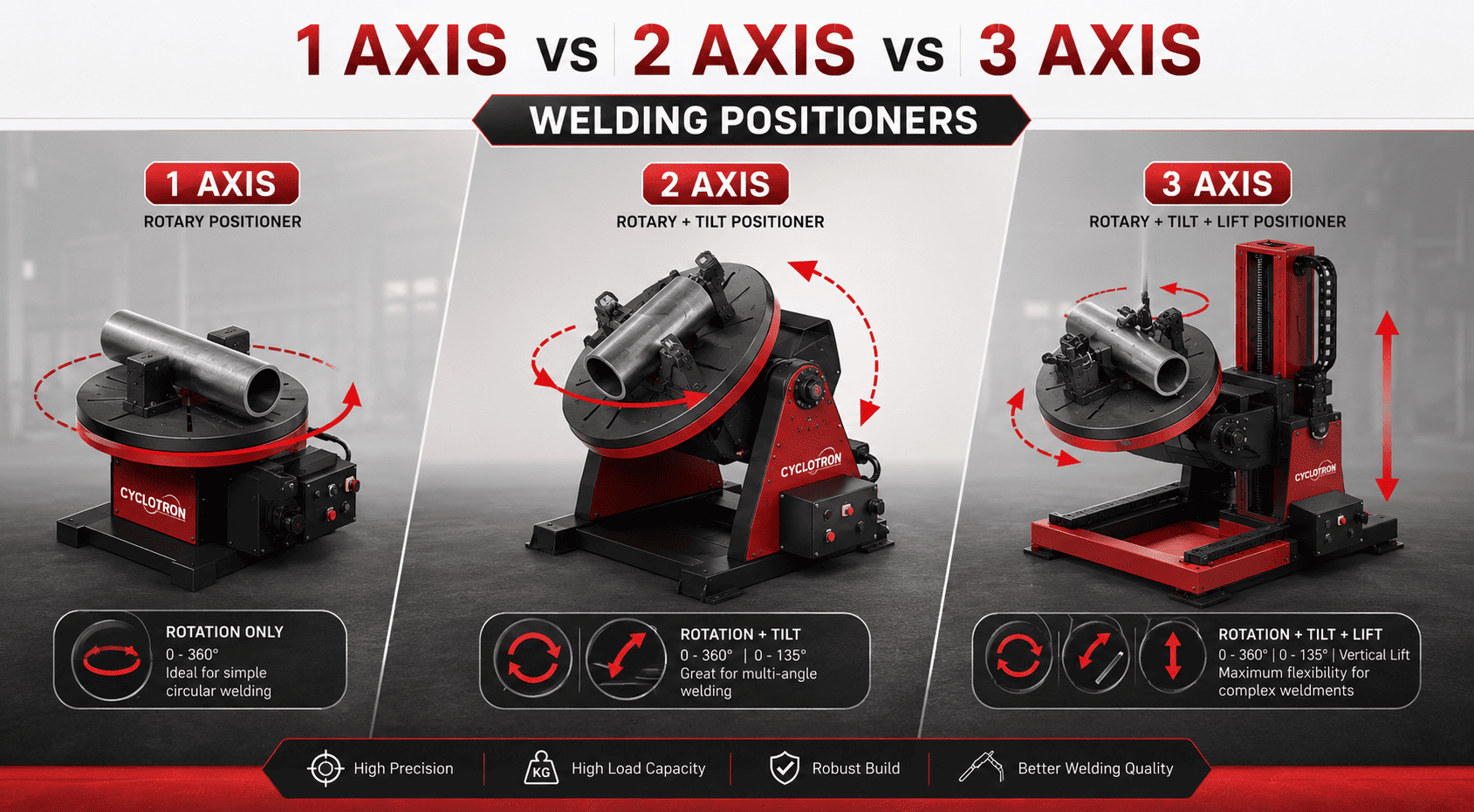
1 Axis vs 2 Axis vs 3 Axis Welding positioners
Compare 1 axis vs 2 axis vs 3 axis welding positioners based on rotation, tilt, flexibility, applications, cost, and automation. Learn which welding positioner is best for your fabrication needs.
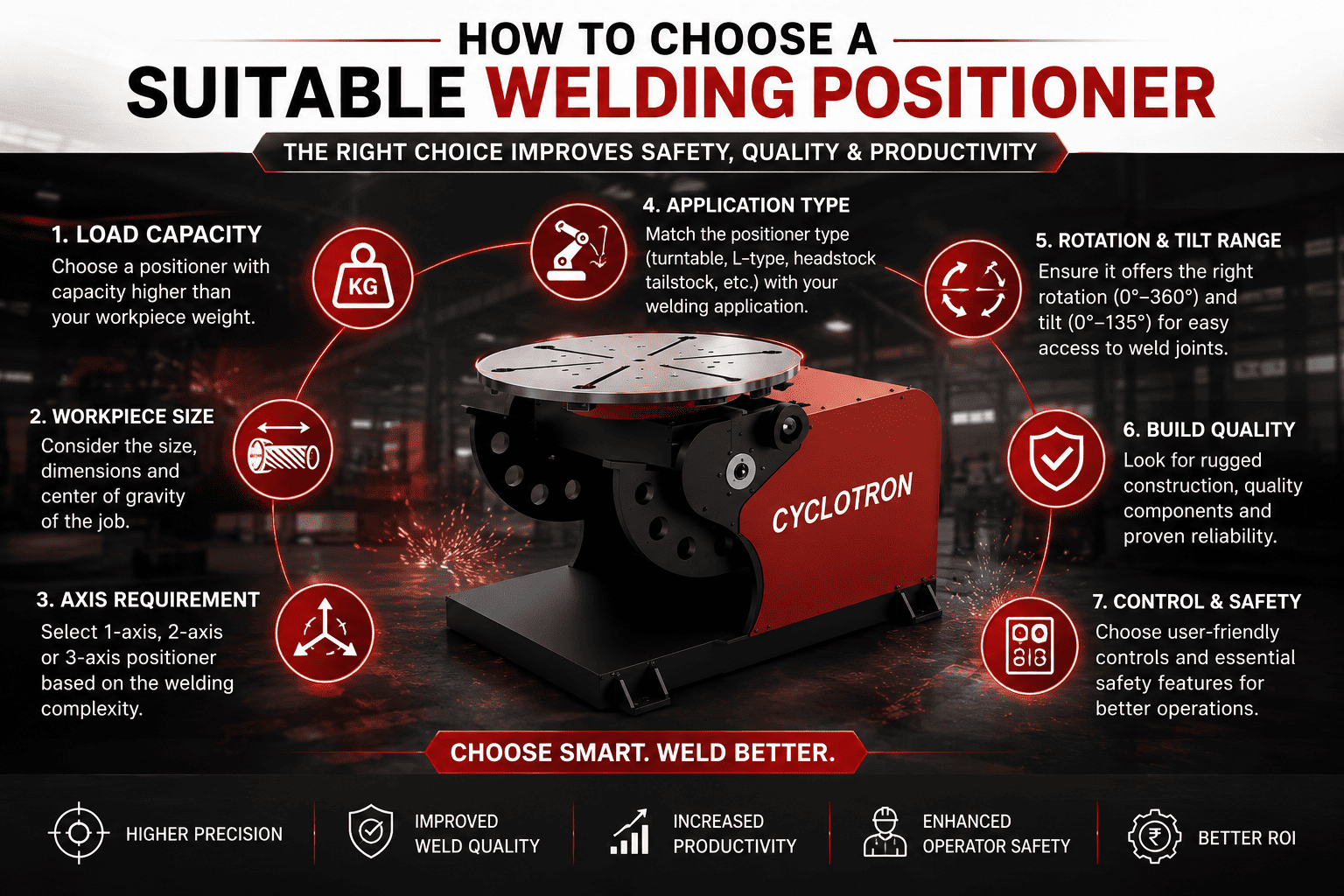
How to select a suitable welding positioner?
Selecting the right welding positioner plays a critical role in the fabrication setup. Welding positioners are designed to handle different load ranges.
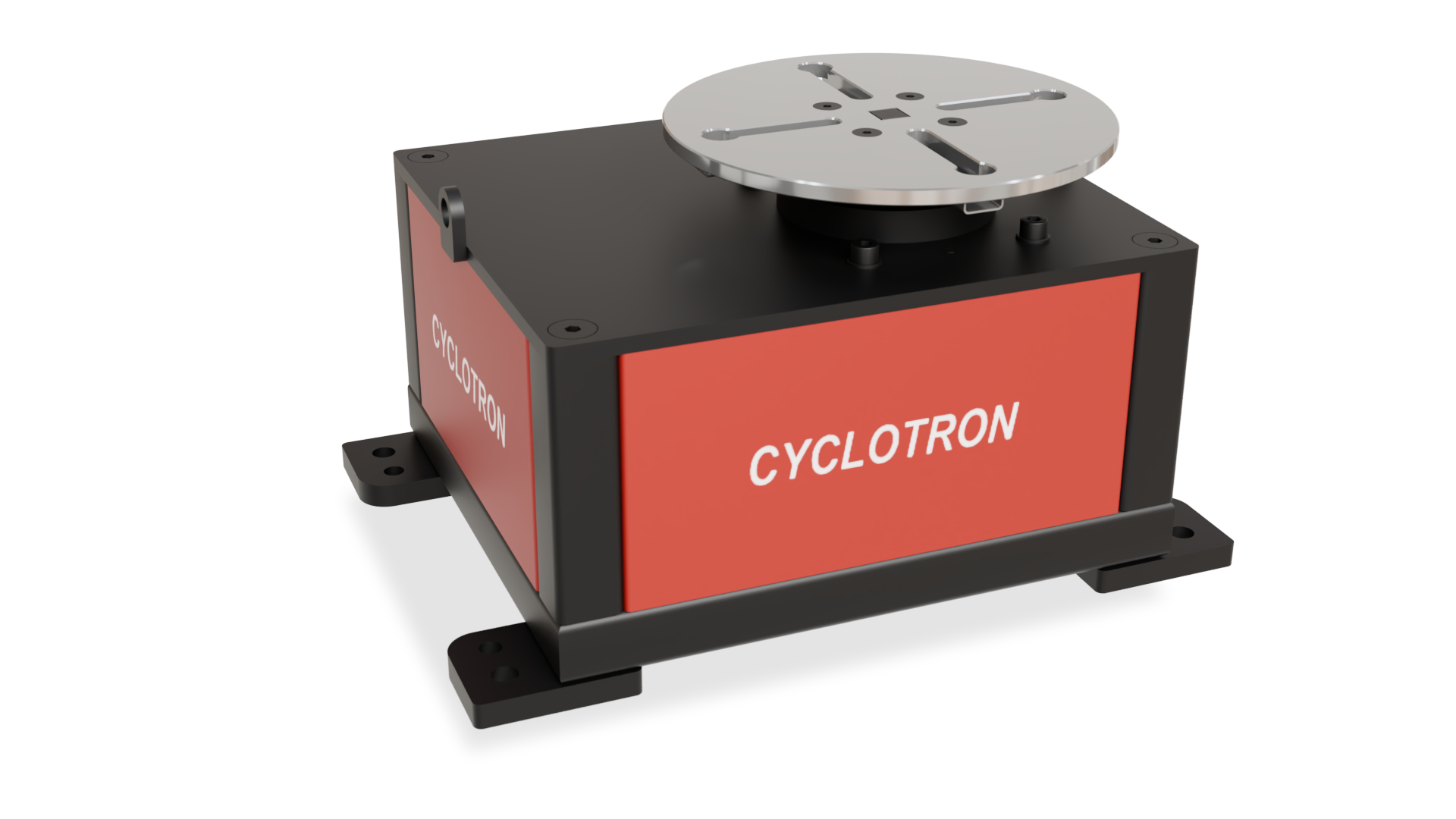
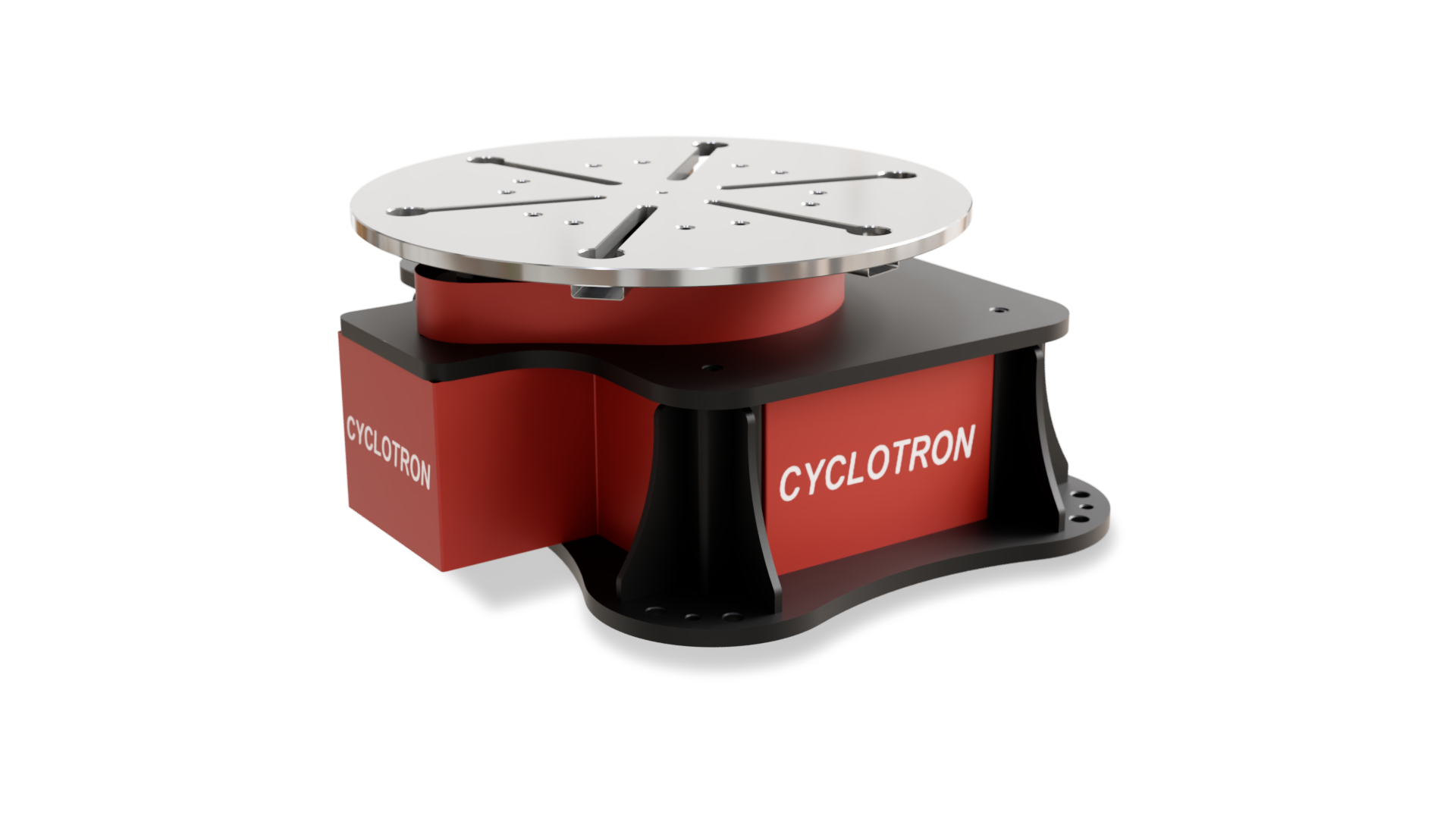
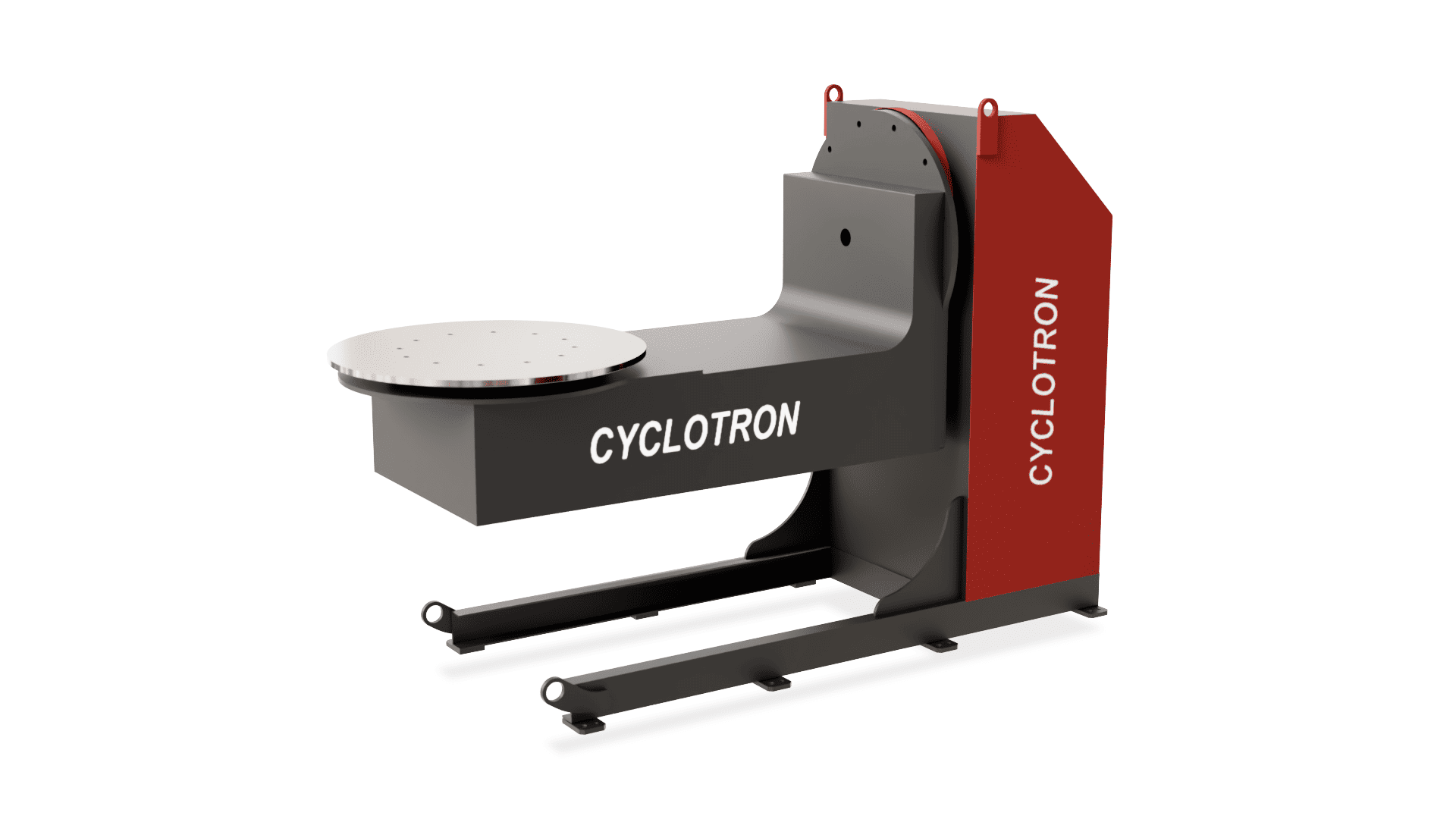
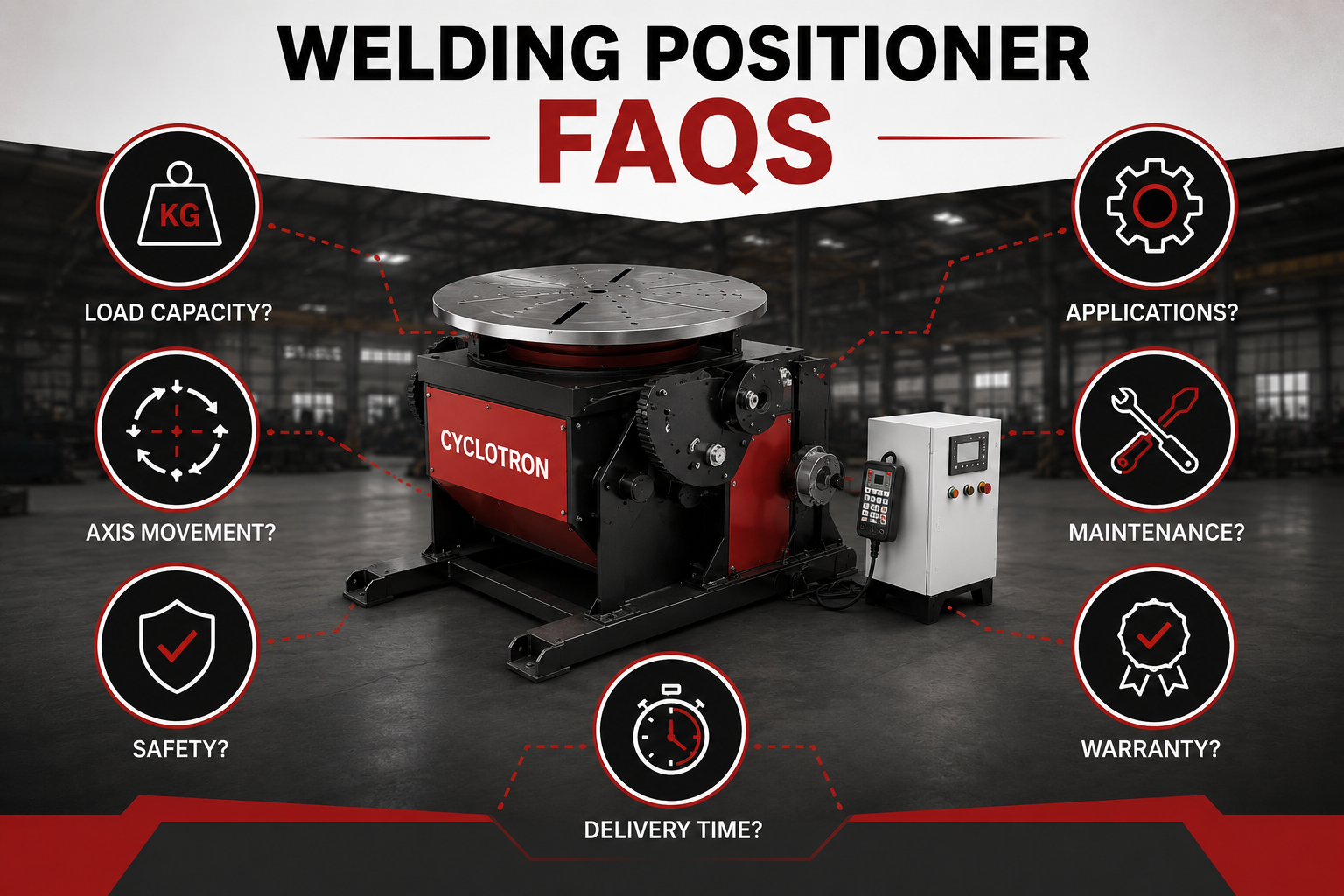
In this blog we will address all the commonly asked questions related to Welding positioners or Cyclotron Welding positioners specifically