Welding positioner price in India
A complete blog
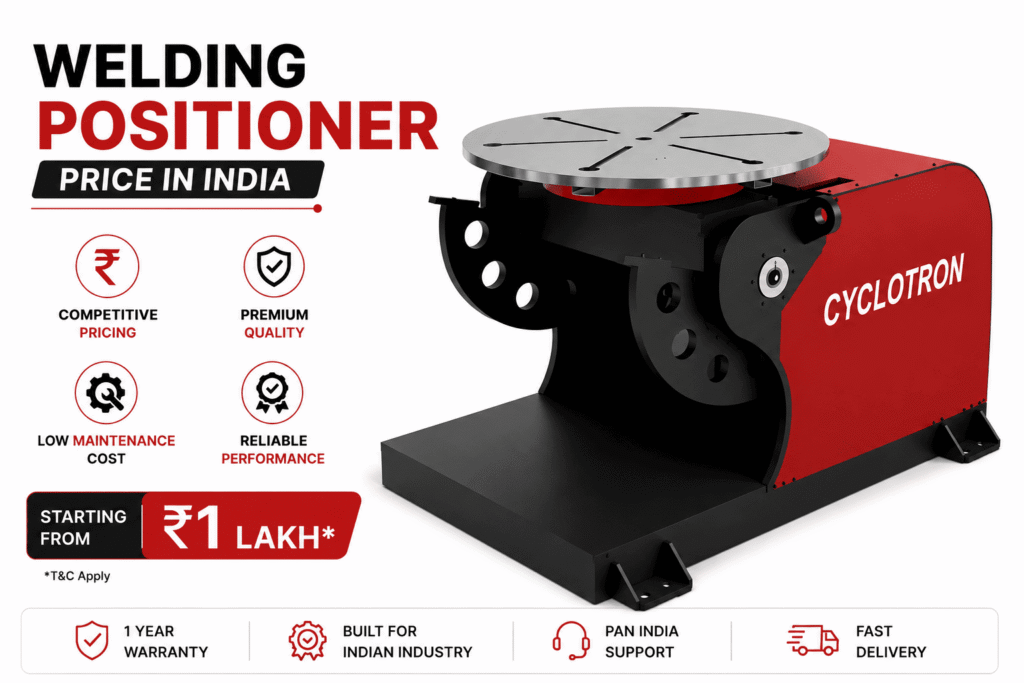
At Cyclotron, industrial welding positioners typically range from ₹50,000+ for a standard 100 kg model to ₹20 lakh+ for heavy-duty 10-ton systems. Across the Indian market, prices vary based on load capacity, tilt configuration, drive system, and automation requirements. As a quick reference, expect entry-level 100 kg models at the lower end, 1-ton positioners in the mid-range, and 10-ton heavy-duty machines well into industrial pricing. If you are looking for a fabrication shop, this guide gives actual numbers.
Cyclotron Welding Positioners from India
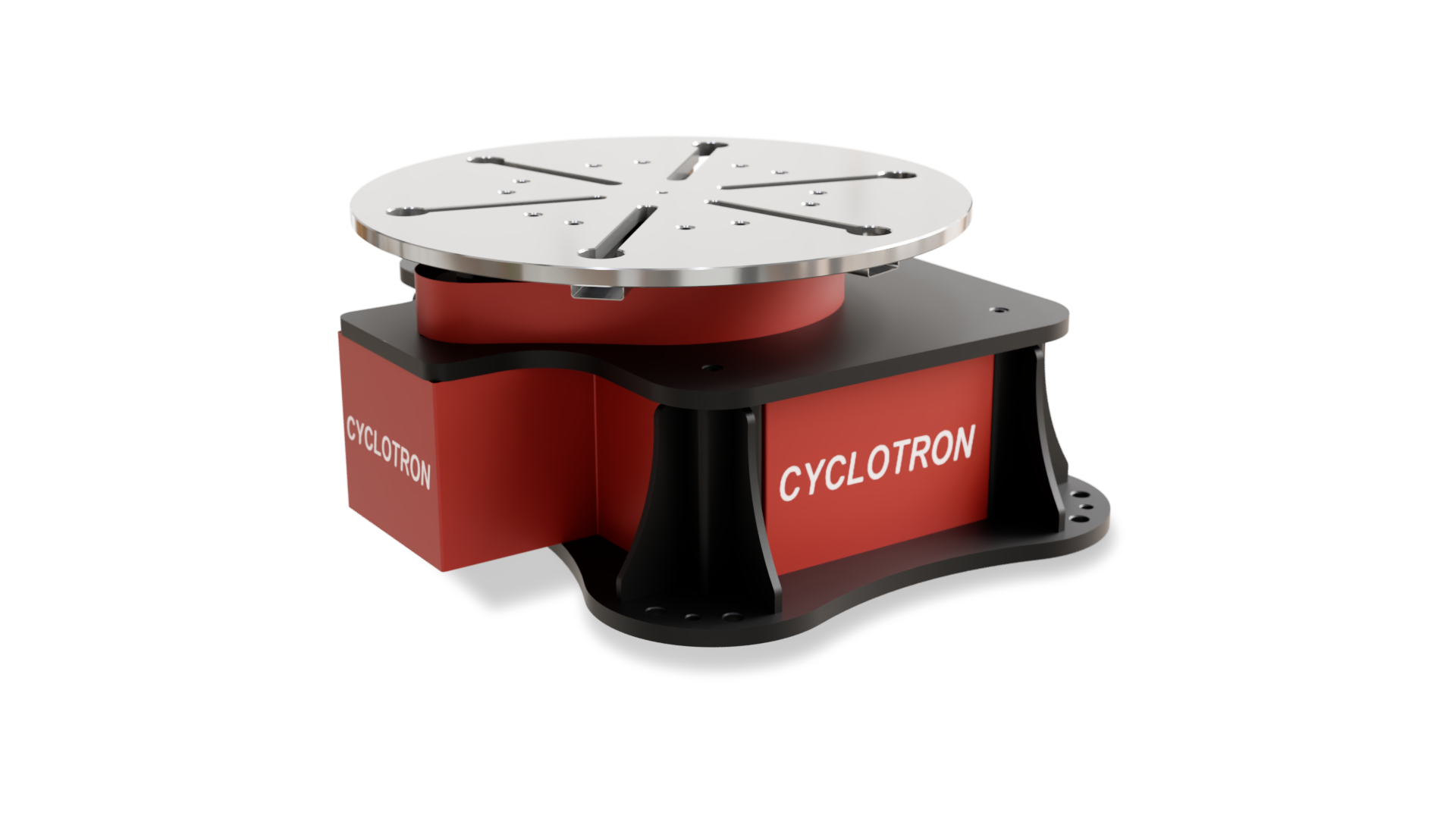
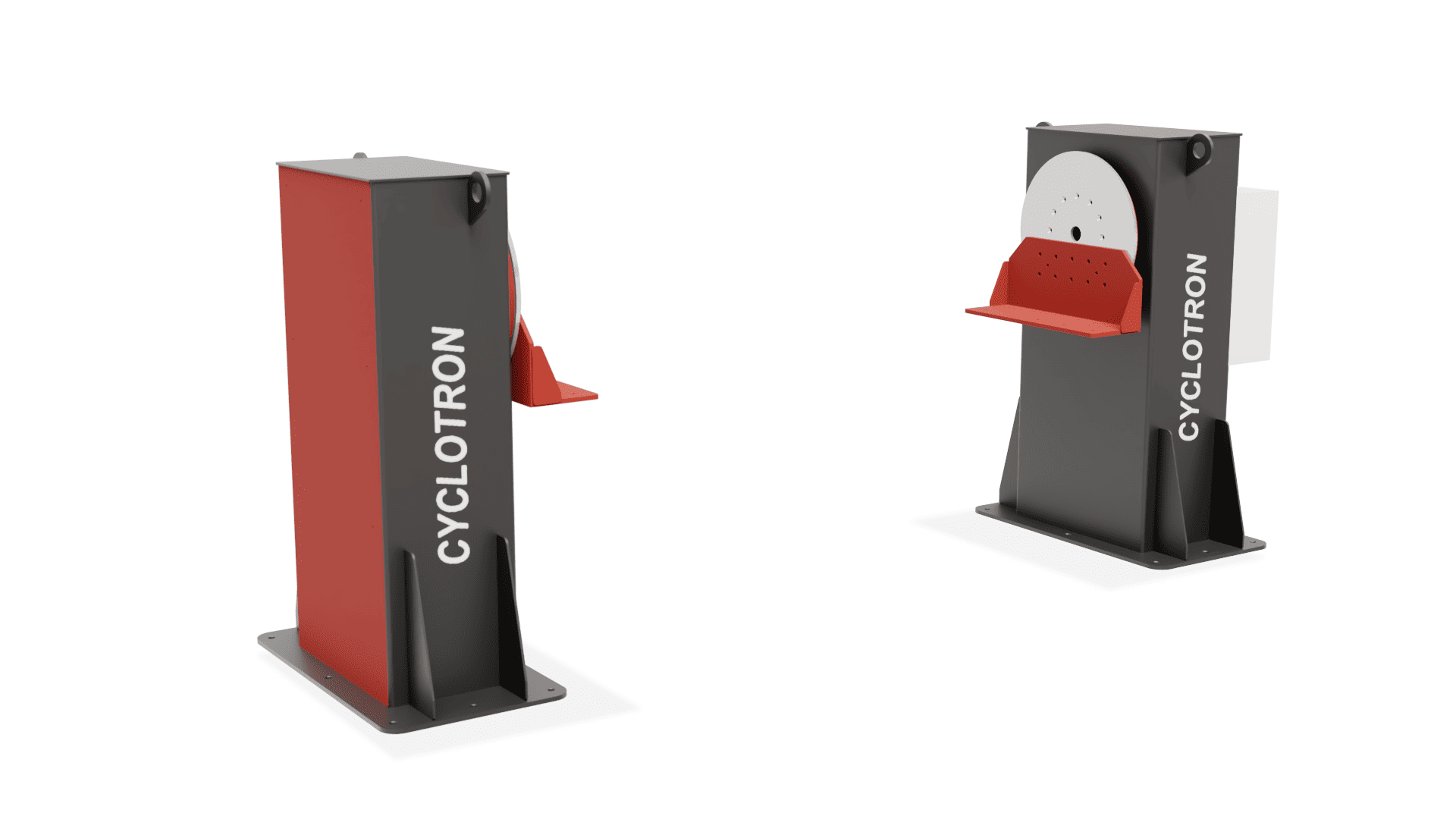
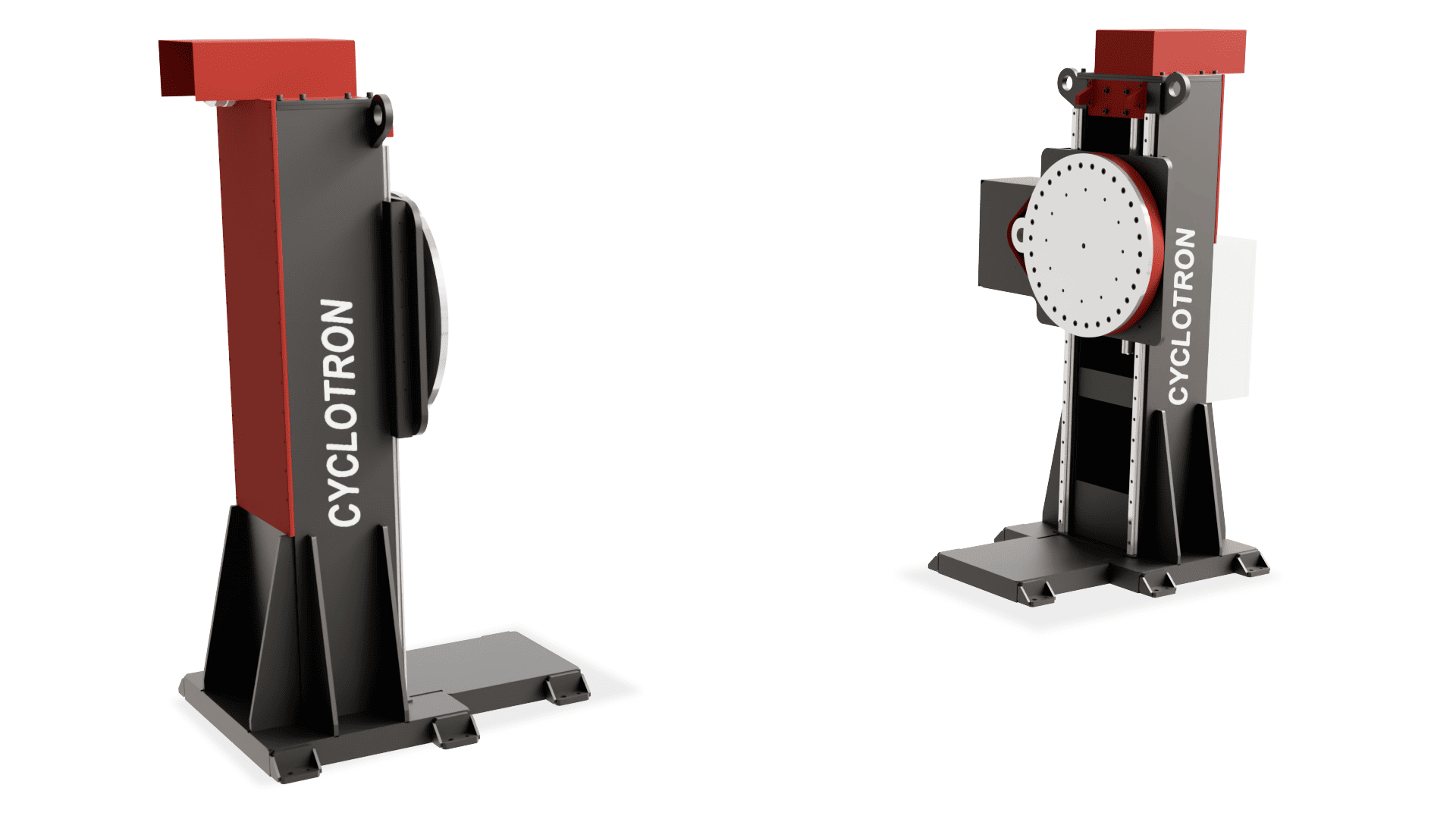
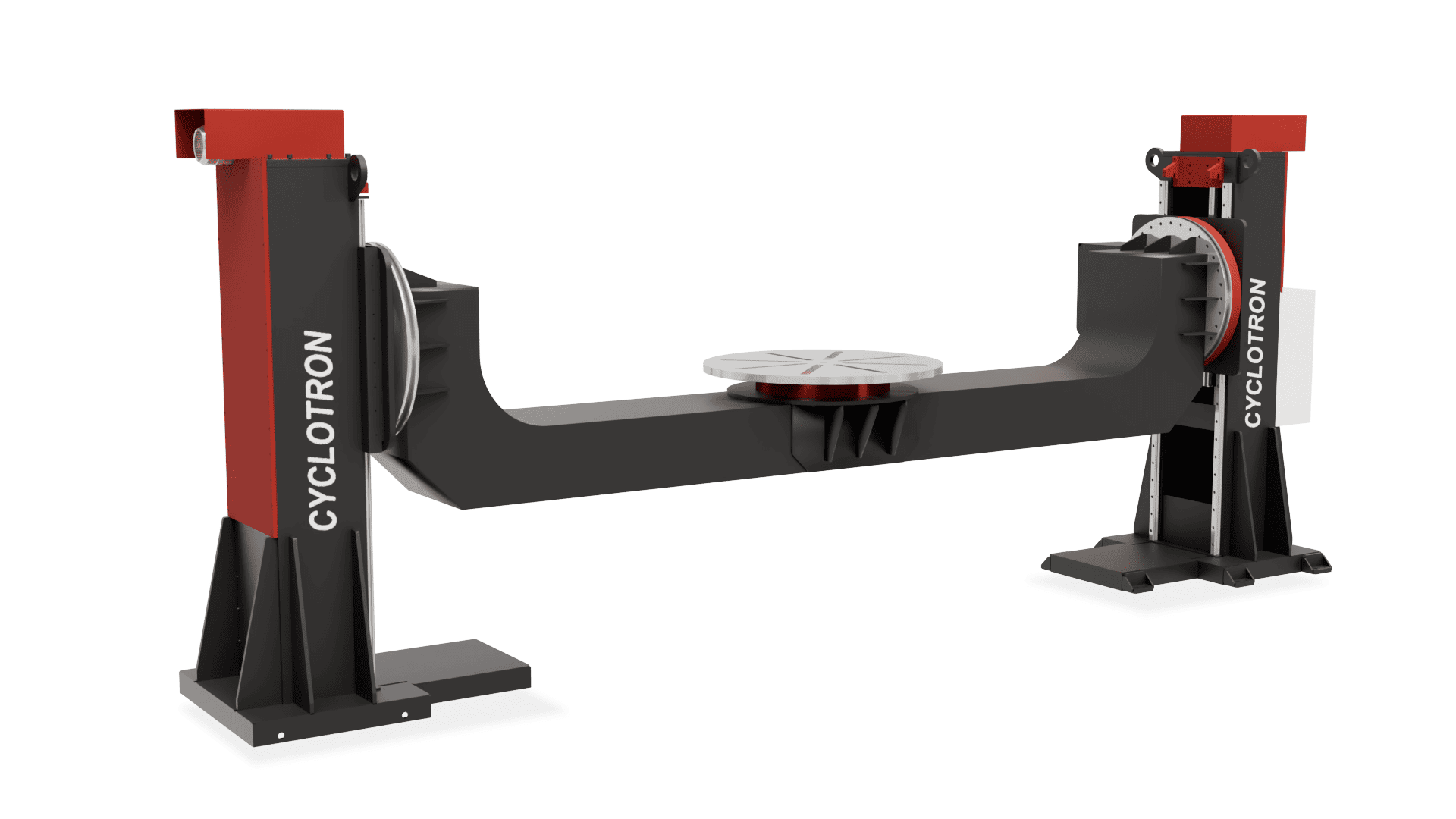
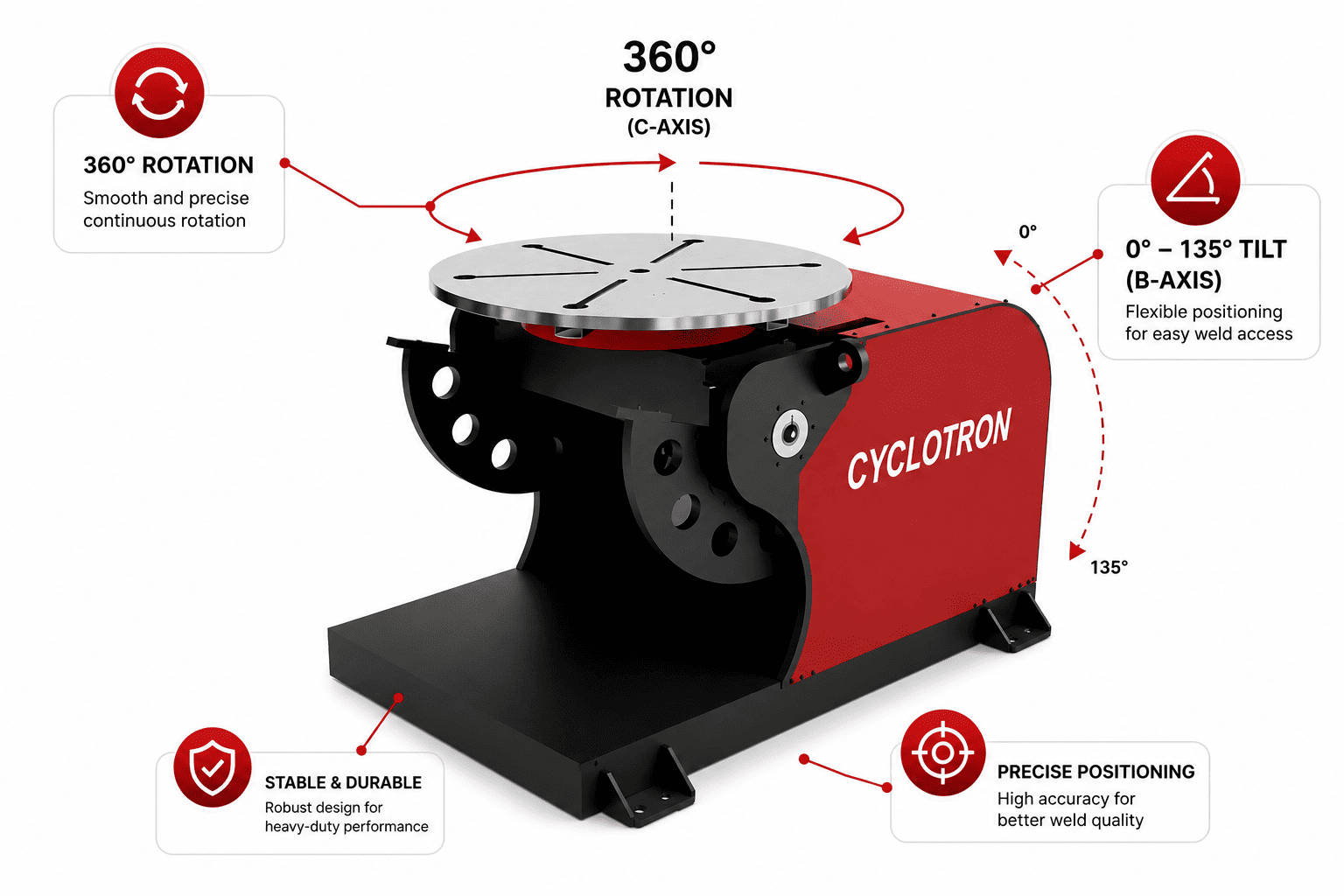
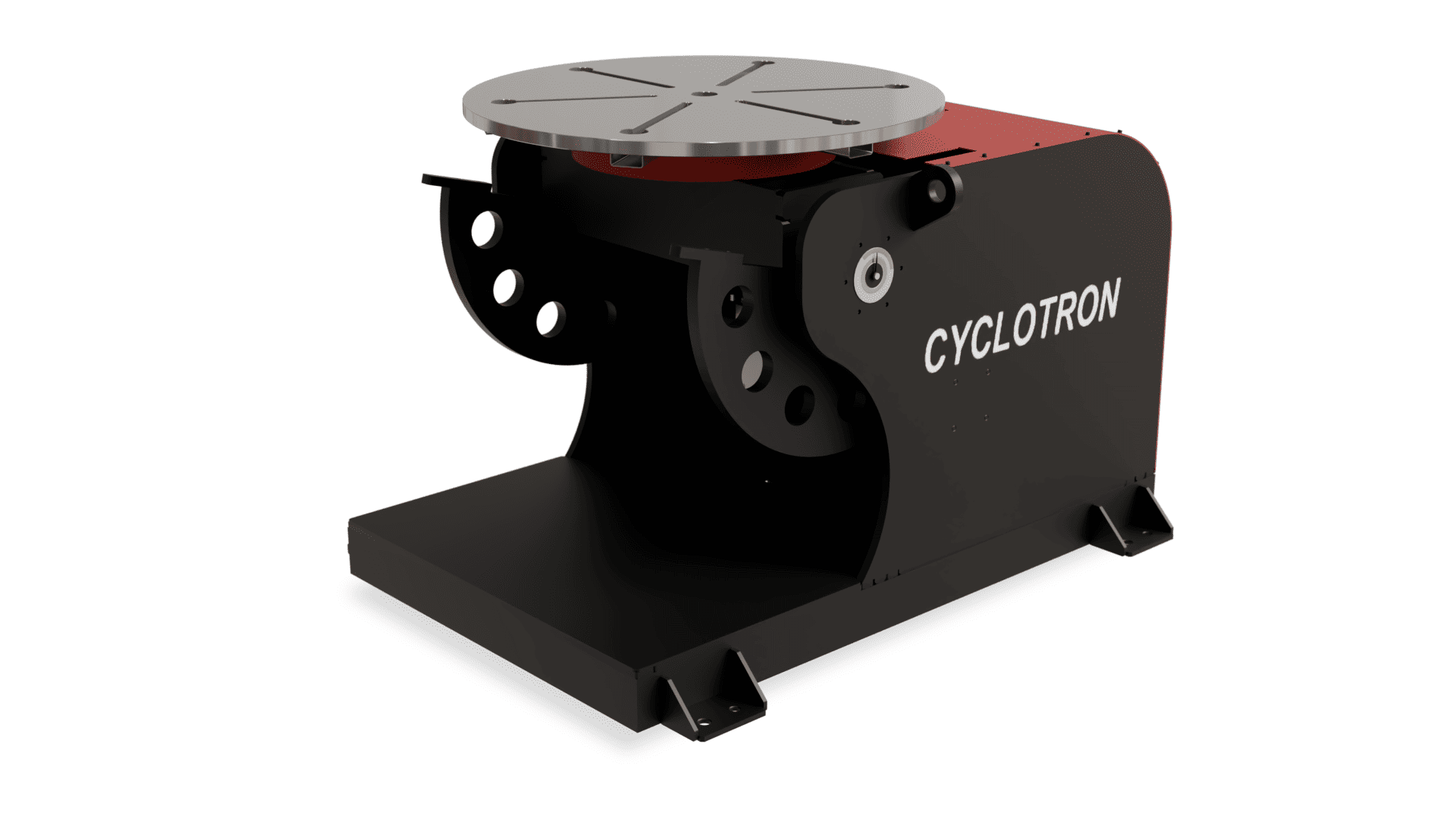
Cyclotron manufactures industrial welding positioners from 100 kg to 100 Tons capacity, designed for robotic/manual welding, heavy fabrication, and high-production welding environments.
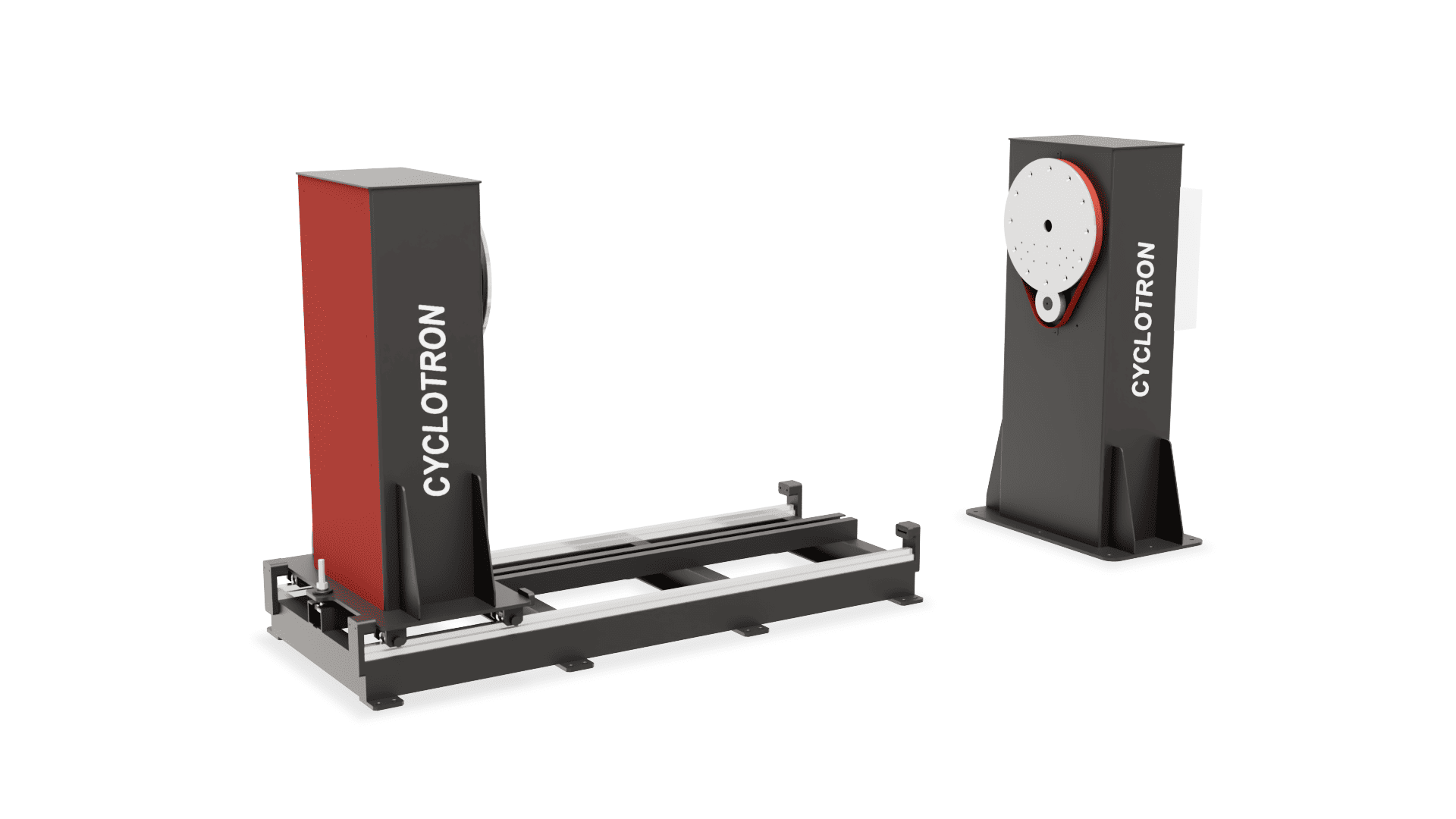
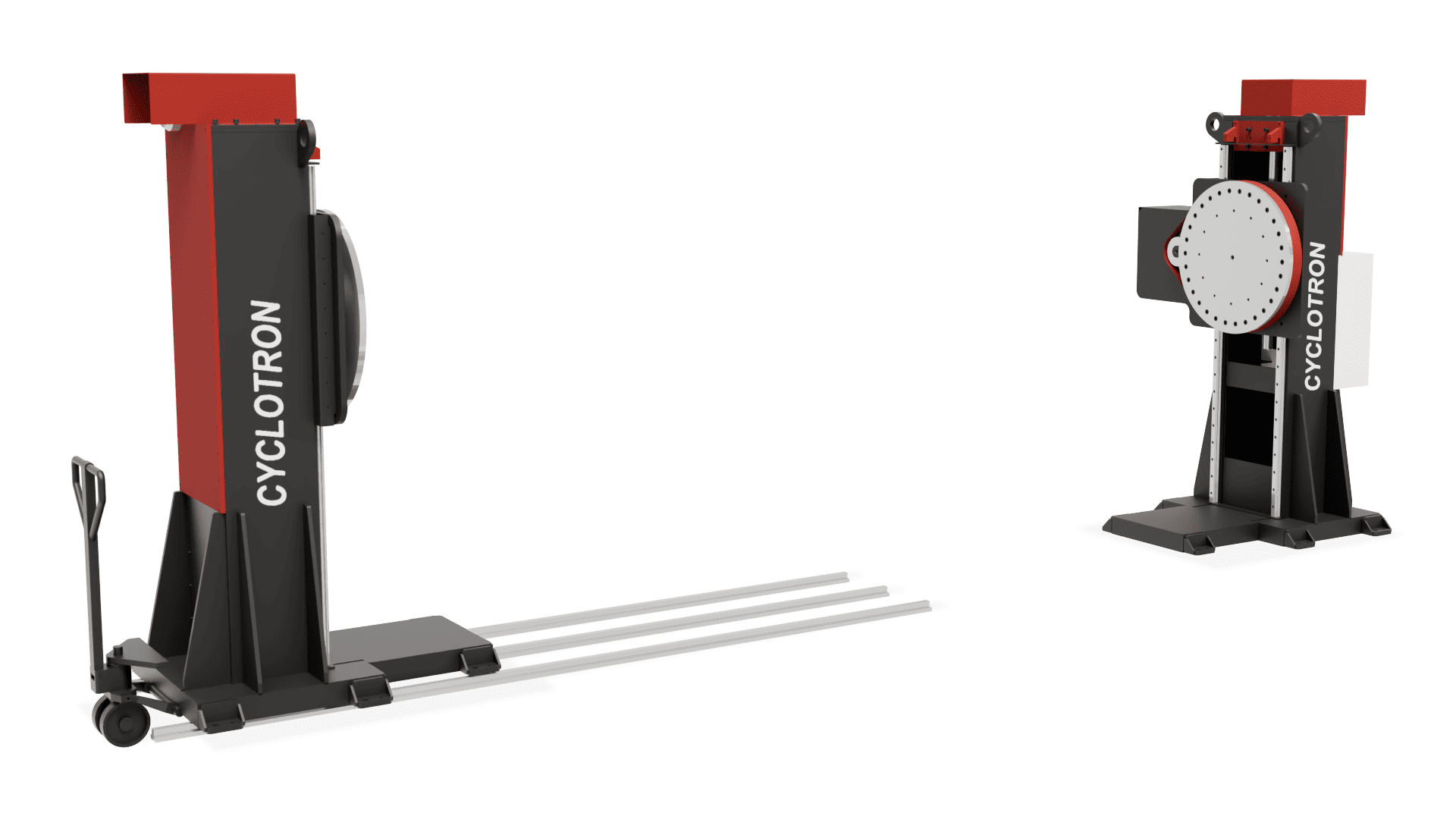
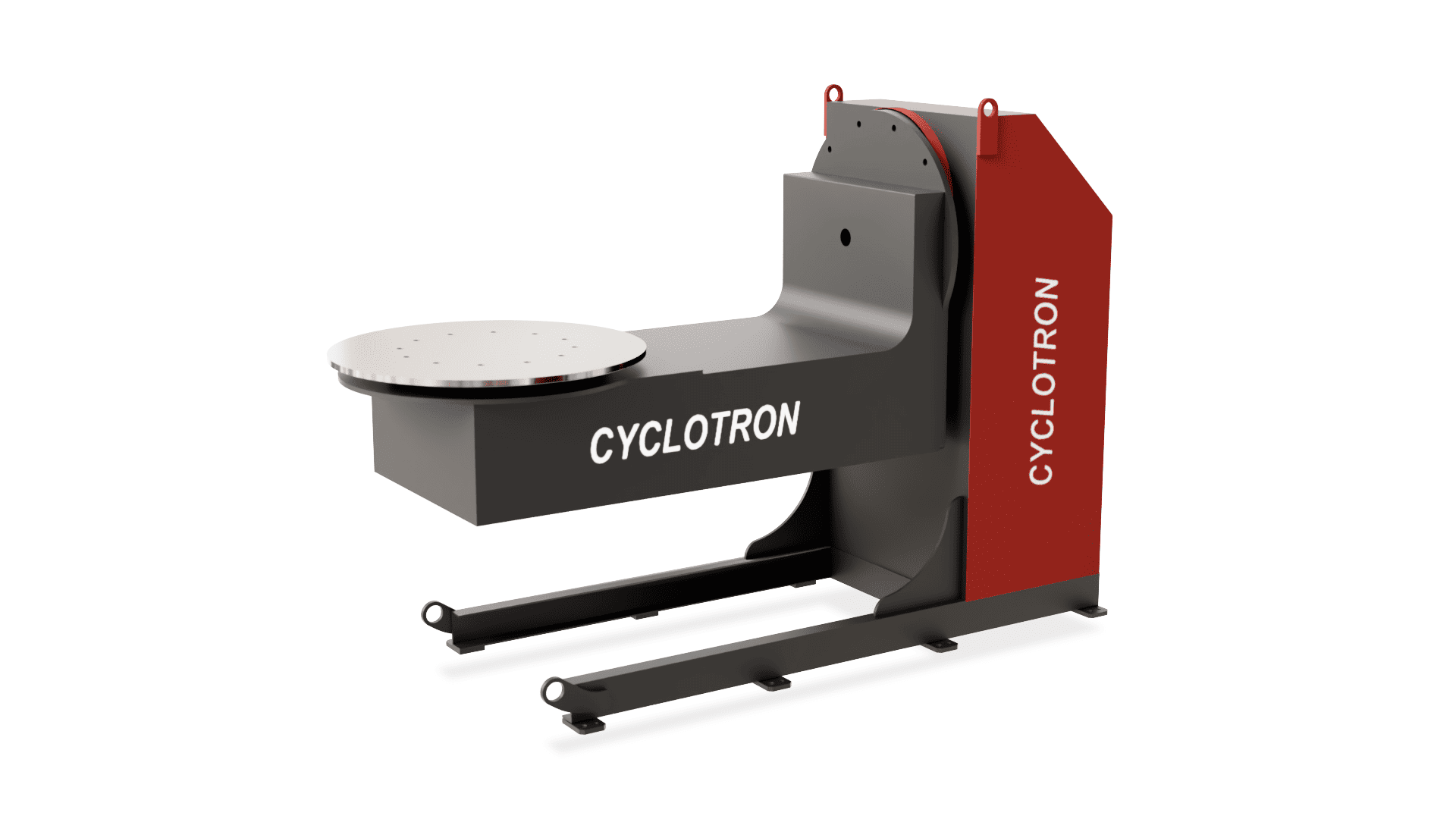
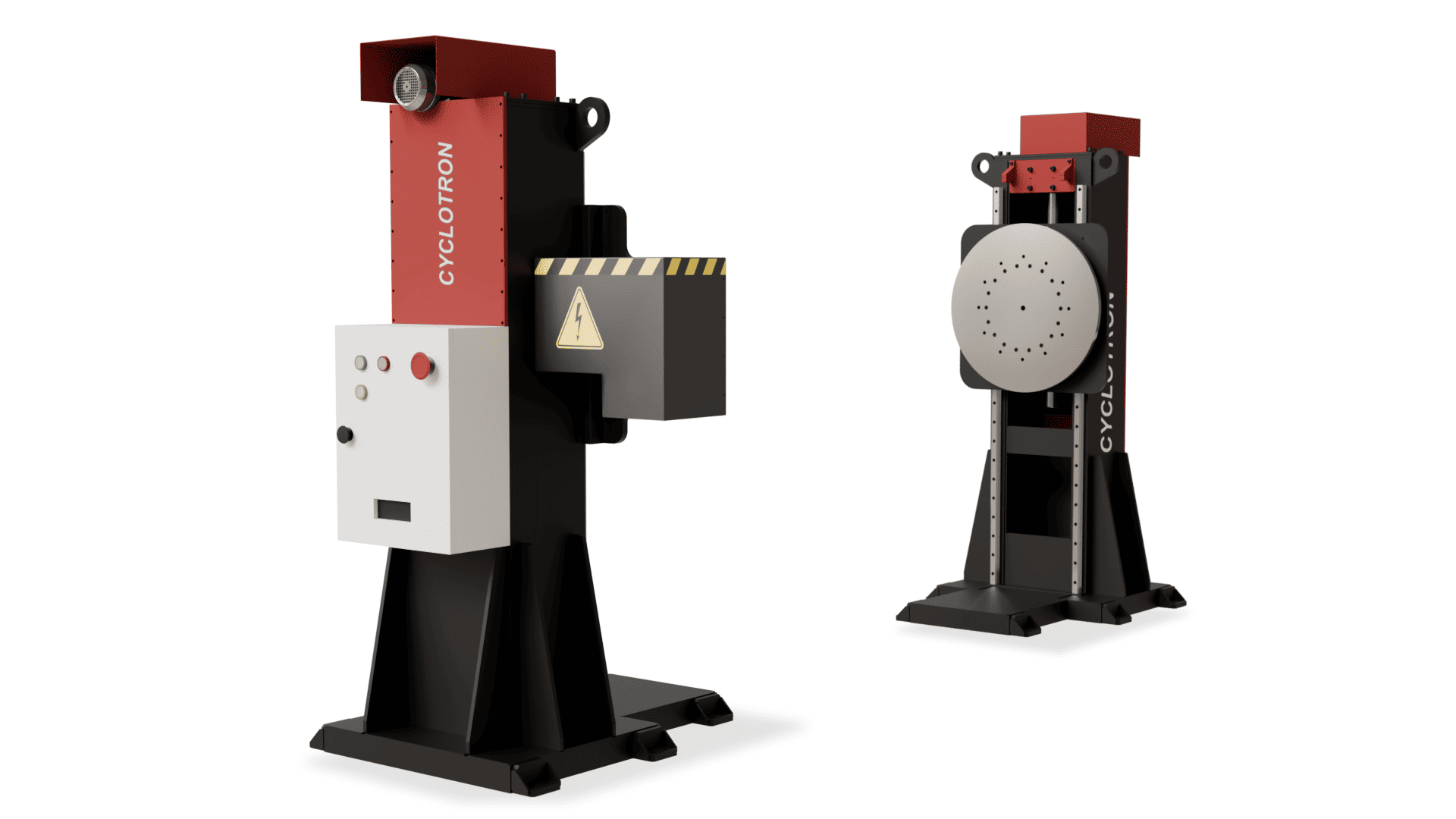
- Cyclotron manufactures all types of Manual/Robotic welding positioners like 1 axis, 2 axis, 3 axis, Headstock-tailstock, L Type, skyhook, etc
Welding Positioner Price List by Capacity
Below are typical price brackets based on machine capacity and configuration. Final pricing depends on specifications, automation, and accessories.
| Capacity | Type / Axes | Price Range (₹) | Typical Buyer |
|---|---|---|---|
| 100 kg | Rotation or Rotate + Tilt | ₹ 1,00,000+ | Small fabrication shops |
| 250–500 kg | Rotation or Rotate + Tilt | ₹ 2,50,000+ | Sheet metal & light fabrication |
| 1 Ton | Rotation or Rotate + Tilt | ₹ 3,00,000+ | Medium fabrication workshops |
| 2–3 Ton | Heavy-duty Rotate + Tilt | ₹ 4,00,000+ | Pressure vessel & structural fabrication |
| 5 Ton | Servo / VFD Positioner | ₹ 5,00,000+ | Heavy fabrication & OEMs |
| 10 Ton | Dual Axis Heavy Duty | ₹ 8,00,000+ | Wind energy & large fabrication plants |
| 25–50 Ton | Custom Multi-Axis Positioner | ₹ 15,00,000+ | Shipbuilding, infrastructure & heavy engineering |
What Drives the Cost?
Several engineering factors determine why one welding positioner costs significantly more than another, even when the rated capacity appears identical.
- Higher capacity and greater eccentricity require a stronger gearbox and structure.
- Additional rotation or tilt axes increase mechanical complexity.
- Premium gearbox, motor, and VFD brands improve reliability but increase cost.
- Hydraulic or servo tilt mechanisms cost more than manual systems.
- Robot-ready interfaces and PLC integration add automation value.
- Custom fixturing, chucks, and workholding often represent a significant additional investment.
Why Two "5 Ton" Positioners Can Differ by ₹3 Lakh
A 5-ton rating only applies at a specified eccentricity. A workpiece weighing 5 tons with a 400 mm offset places dramatically higher torque on the machine than the same weight at 100 mm. That means the larger-offset application requires a stronger gearbox, bearings, frame, and drive system. If a supplier quotes a price without asking about eccentricity and centre of gravity, they are likely sizing the machine incorrectly. The result can be premature gearbox failure, unstable rotation, or poor weld quality.
Is It Worth It? Payback
Consider a fabrication shop producing 180 weldments per month. A ₹8 lakh Cyclotron welding positioner saves 25 minutes on every weldment, reducing handling time by approximately 75 hours each month. Using a conservative shop operating cost of ₹1,000 per hour (including labour, overheads, and equipment utilisation), the monthly saving is ₹75,000, giving the machine a payback period of around 11 months.
Get an Accurate Price Within 24 Hours
Let Cyclotron size the right welding positioner for your application. Contact us at +91 7057997990 with your job weight, dimensions, and centre-of-gravity details. Our team provide a realistic machine recommendation and price within 24 hours. No lengthy enquiry forms and emails.
Frequently Asked Questions
1. What’s the cheapest welding positioner in India?
Standard 100 kg welding positioners are generally the most affordable option. They are ideal for light fabrication, repair work, and small production shops. Final pricing depends on rotation speed, controls, and workholding requirements.
2. Why won’t manufacturers publish prices?
Because capacity alone doesn’t determine the machine. Factors such as eccentricity, tilt angle, duty cycle, automation level, and workholding significantly affect the specification. Publishing a single price can be misleading if the machine is not correctly sized for the application.
3. Does the price include installation?
Standard pricing usually covers the machine only. Freight, installation, commissioning, operator training, custom fixturing, welding chucks, robot integration, and site-specific modifications are quoted separately based on the project scope.
4. Can a welding positioner be integrated with a robotic welding cell?
Yes. Most industrial welding positioners can be integrated with robotic welding systems using PLC or robot-controller communication. In automated cells, the welding positioner works as an external axis, rotating or tilting the workpiece in synchronisation with the robot movements to improve weld access, reduce repositioning time, and increase arc-on time.
5. What information should I send to get an accurate quotation?
Share your workpiece weight, dimensions, fixture weight, welding process, and centre of gravity (if known). Our engineers will recommend the right welding positioner. If you’re unsure, we’ll help you choose the best solution for your application.
Cyclotron Welding Positioners from India
Cyclotron manufactures industrial welding positioners from 100 kg to 100 Tons capacity, designed for robotic/manual welding, heavy fabrication, and high-production welding environments.
- Cyclotron manufactures all types of Manual/Robotic welding positioners like 1 axis, 2 axis, 3 axis, Headstock-tailstock, L Type, skyhook, etc

What is a welding positioner?
Its main purpose is to position the job at the best angle for welding, helping operators achieve better weld quality and greater efficiency.
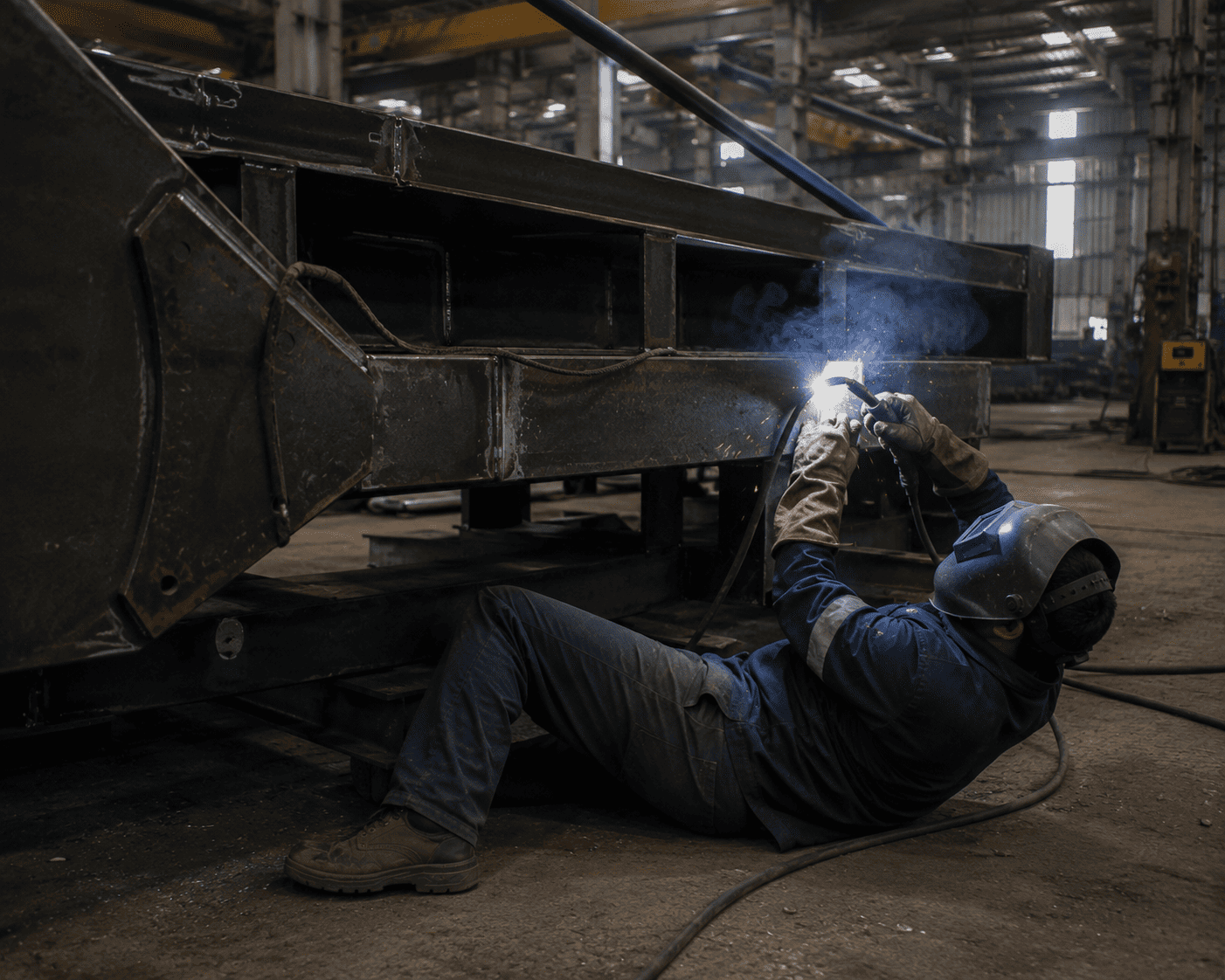
5 Common Welding Problems that a Positioner Can Solve
1. Poor weld quality due to welding positioners. 2. Excessive welder fatique 3. Longer welding cycle times, etc
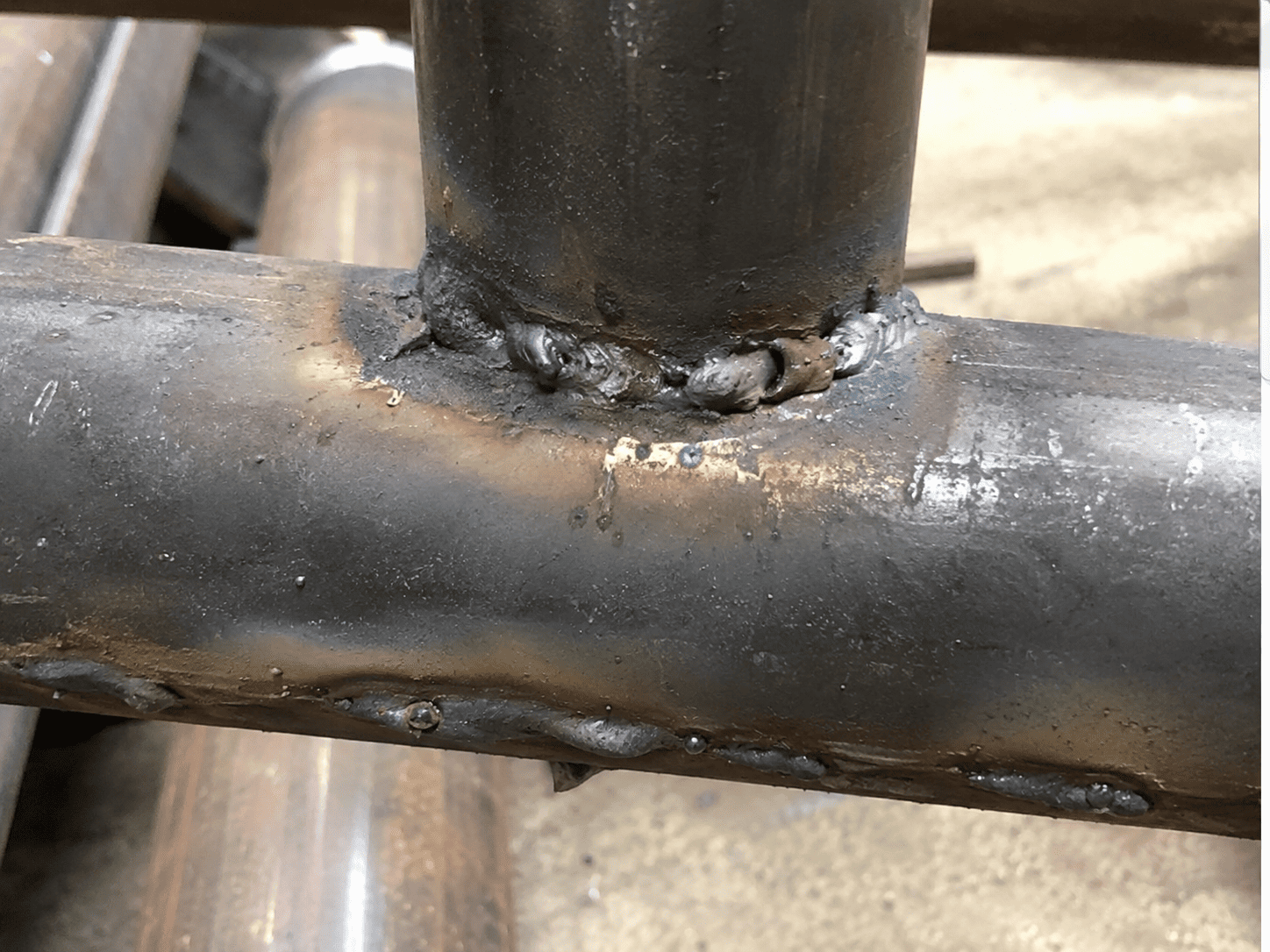
Inconsistent Welds- How a positioner can fix that
Welding positioner can help you with constantly changing weld angles, it can help you with operator fatique, etc
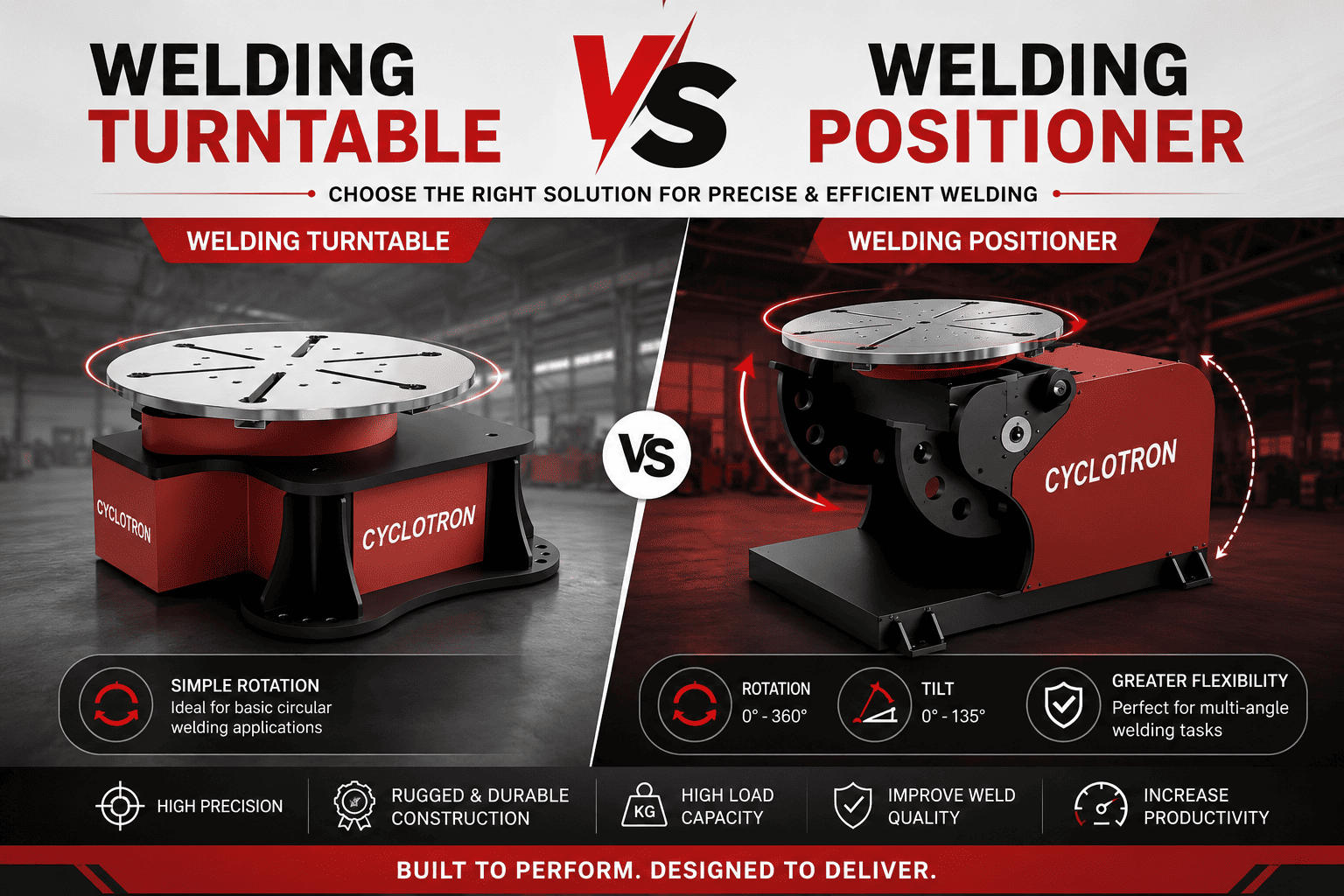
Welding Turntable vs Welding Positioner: What’s the Difference?
A welding turntable provides simple rotation for smooth, consistent welds. A welding positioner can also tilt and angle the workpiece,
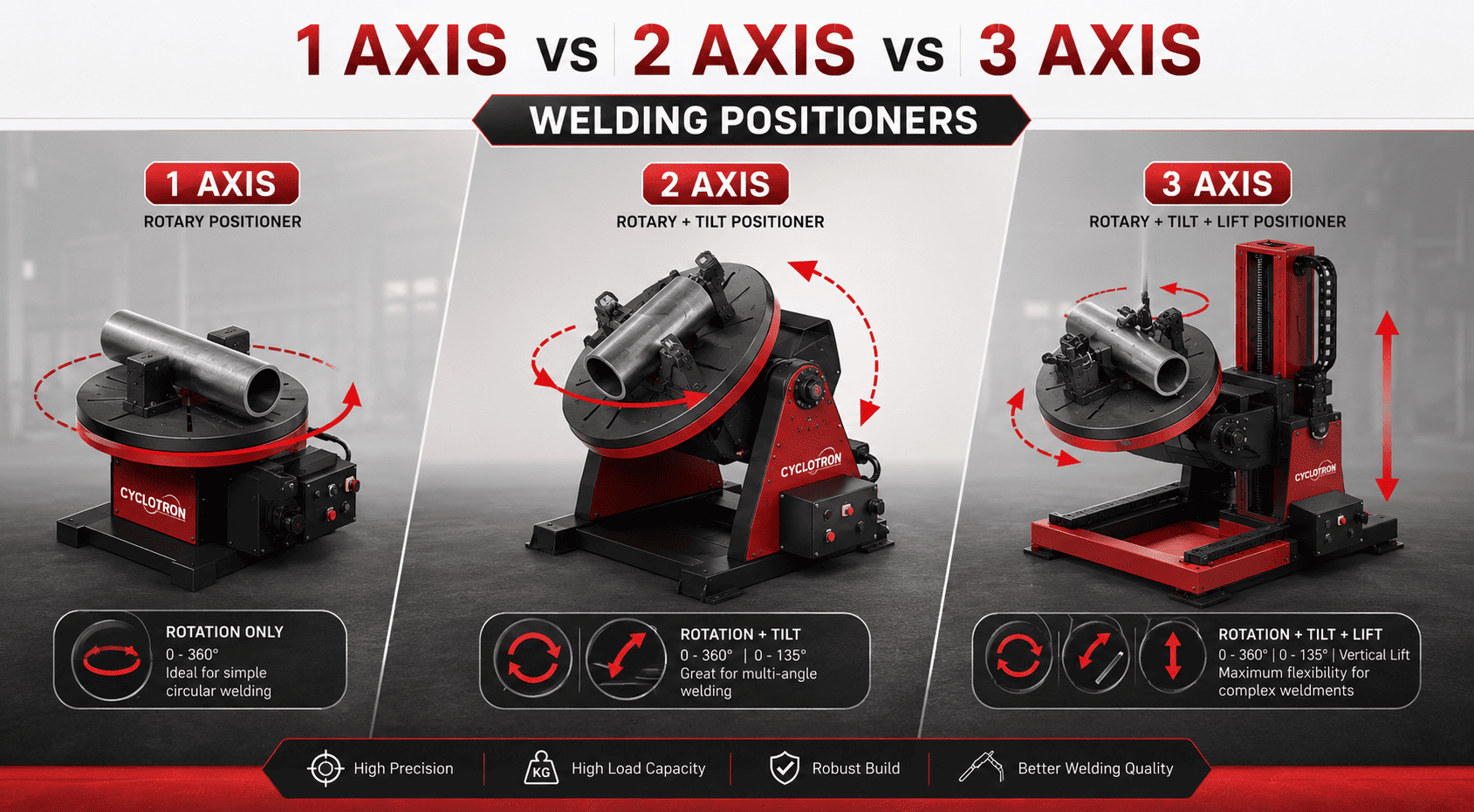
1 Axis vs 2 Axis vs 3 Axis Welding positioners
Compare 1 axis vs 2 axis vs 3 axis welding positioners based on rotation, tilt, flexibility, applications, cost, and automation. Learn which welding positioner is best for your fabrication needs.
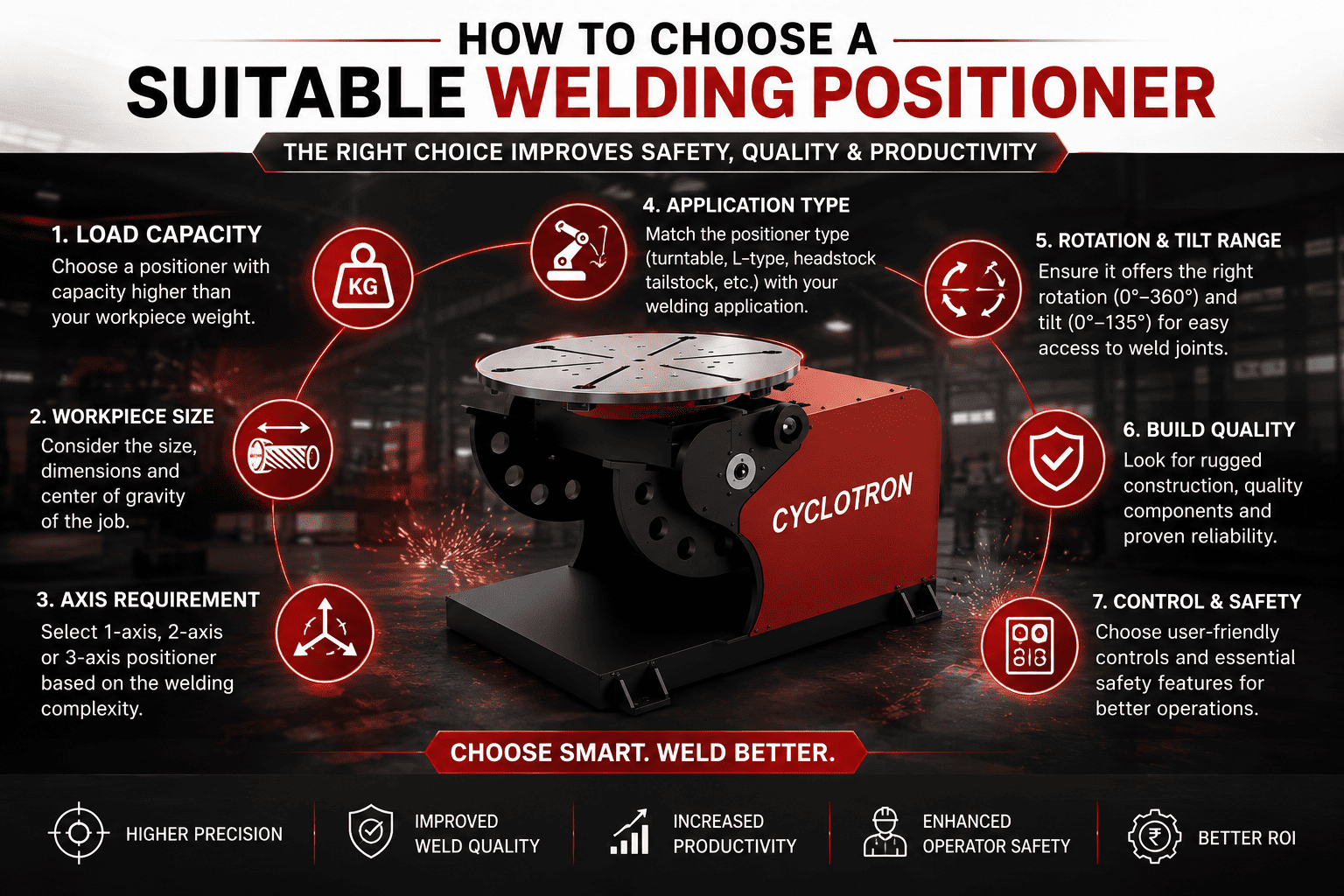
How to select a suitable welding positioner?
Selecting the right welding positioner plays a critical role in the fabrication setup. Welding positioners are designed to handle different load ranges.
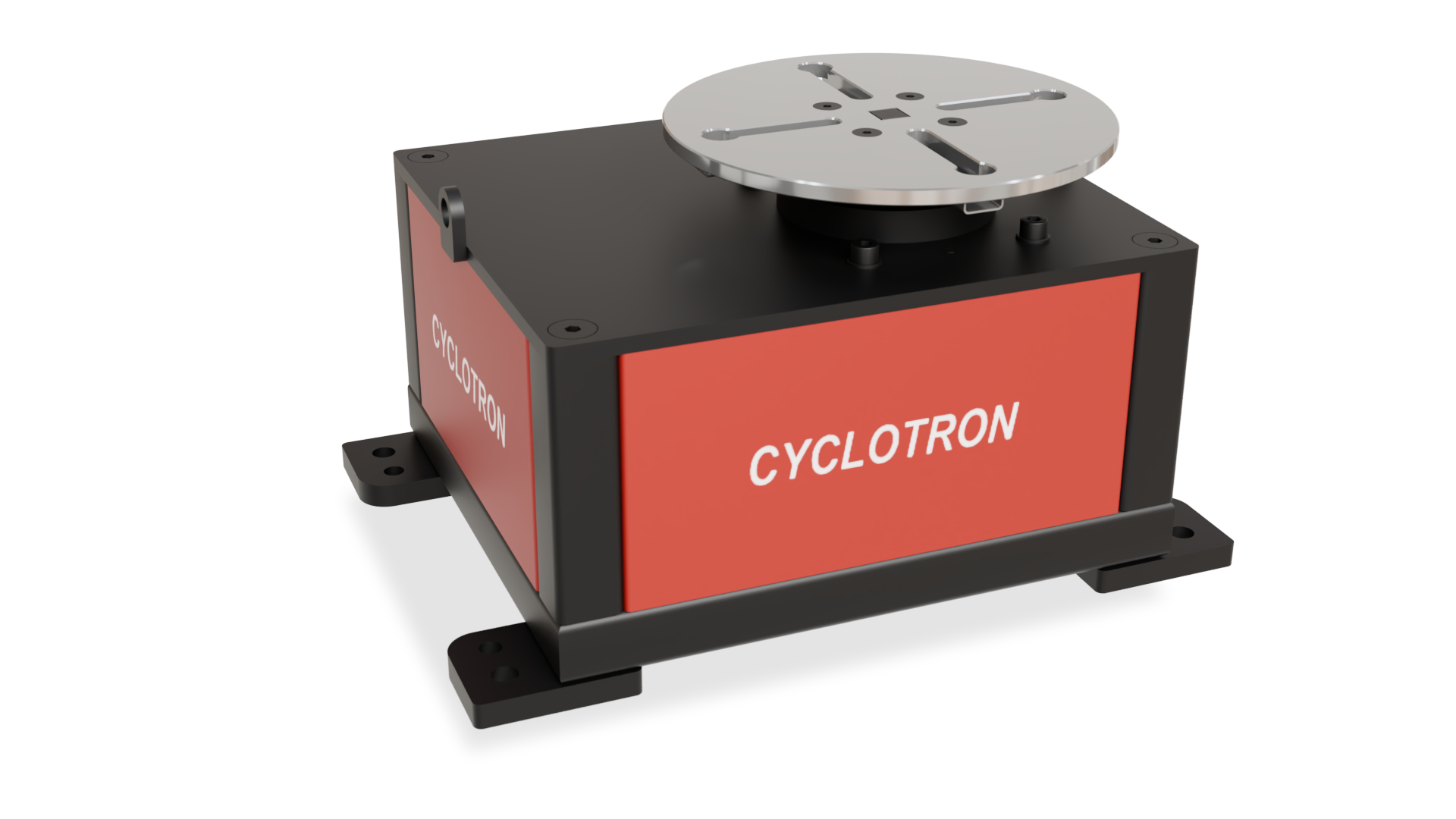
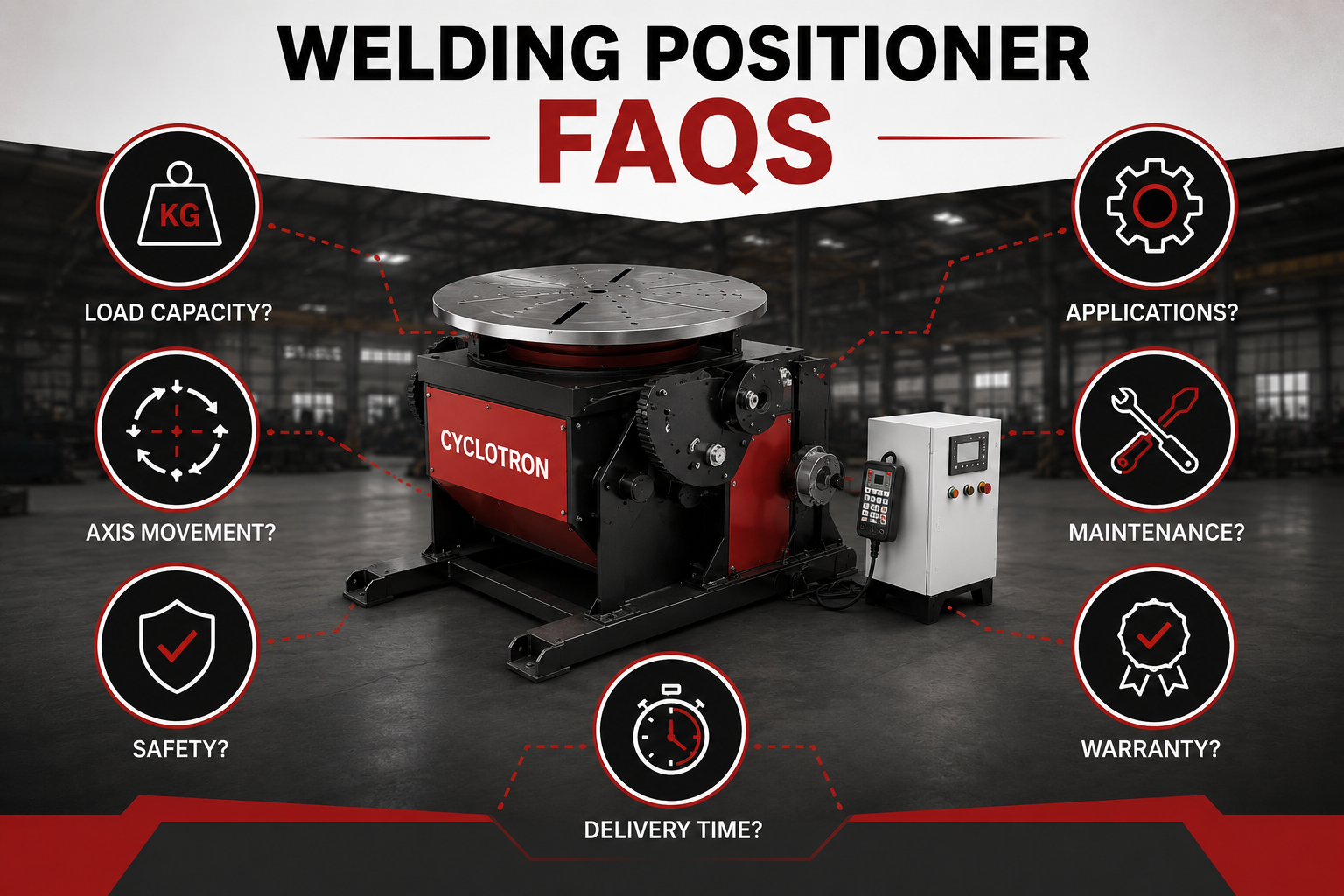
In this blog we will address all the commonly asked questions related to Welding positioners or Cyclotron Welding positioners specifically