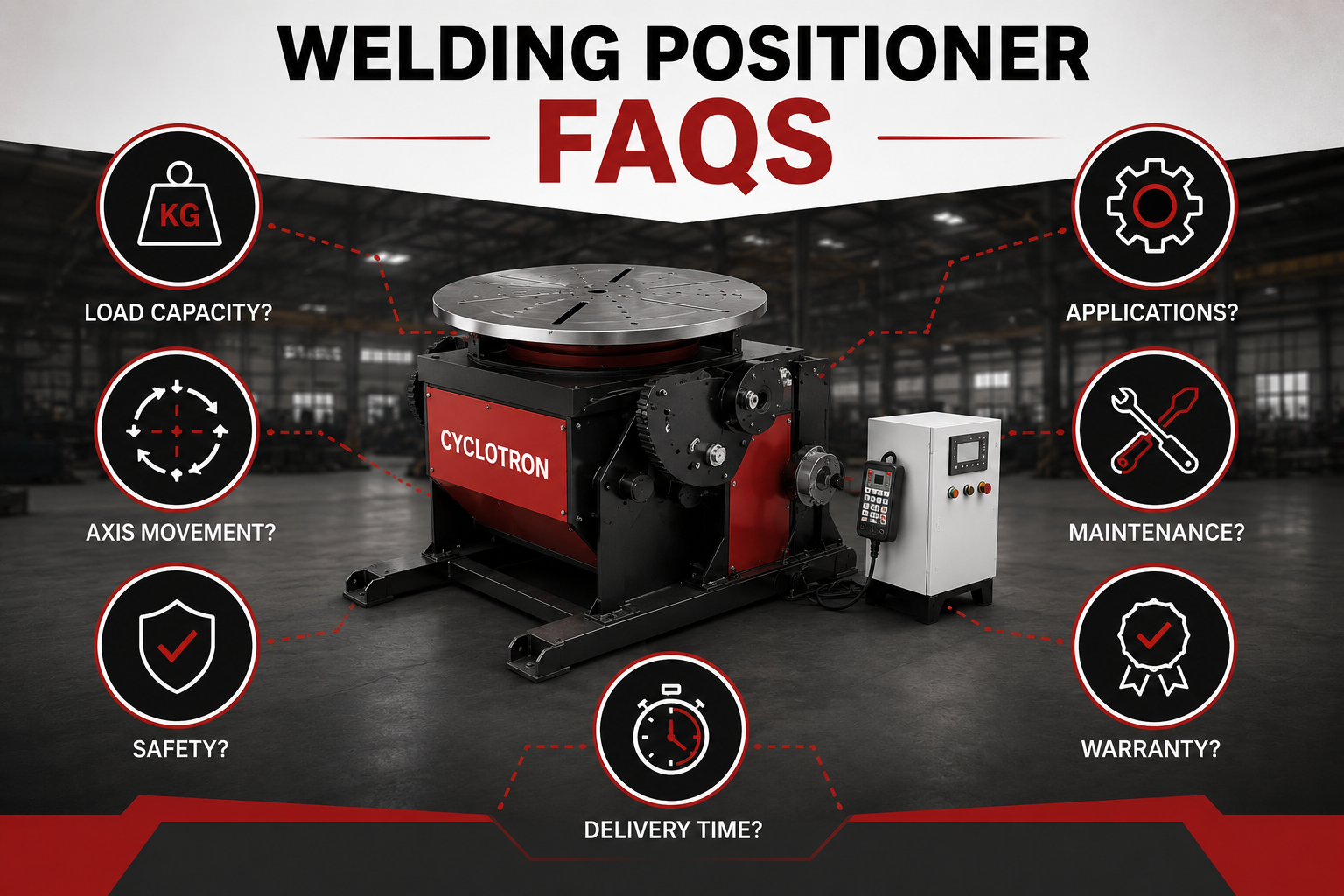
What is a headstock tailstock welding positioner ?
A simple guide
Welding large and heavy workpieces is challenging. While standard welding positioners work well for many applications, they often struggle to support long components that require stable and controlled rotation during welding. That’s where a headstock tailstock welding positioner becomes essential. Designed to handle lengthy, heavy, and sometimes unbalanced workpieces, this specialized welding positioner system provides the support and precision needed to improve weld quality, safety, and productivity.
What Is a Headstock Tailstock Welding Positioner ?
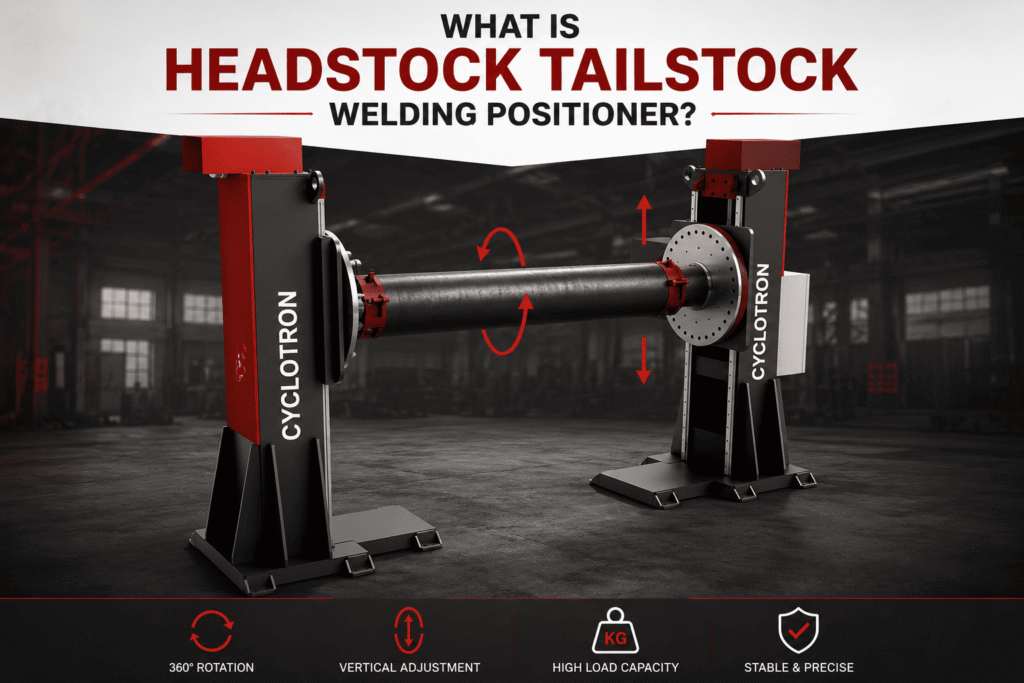
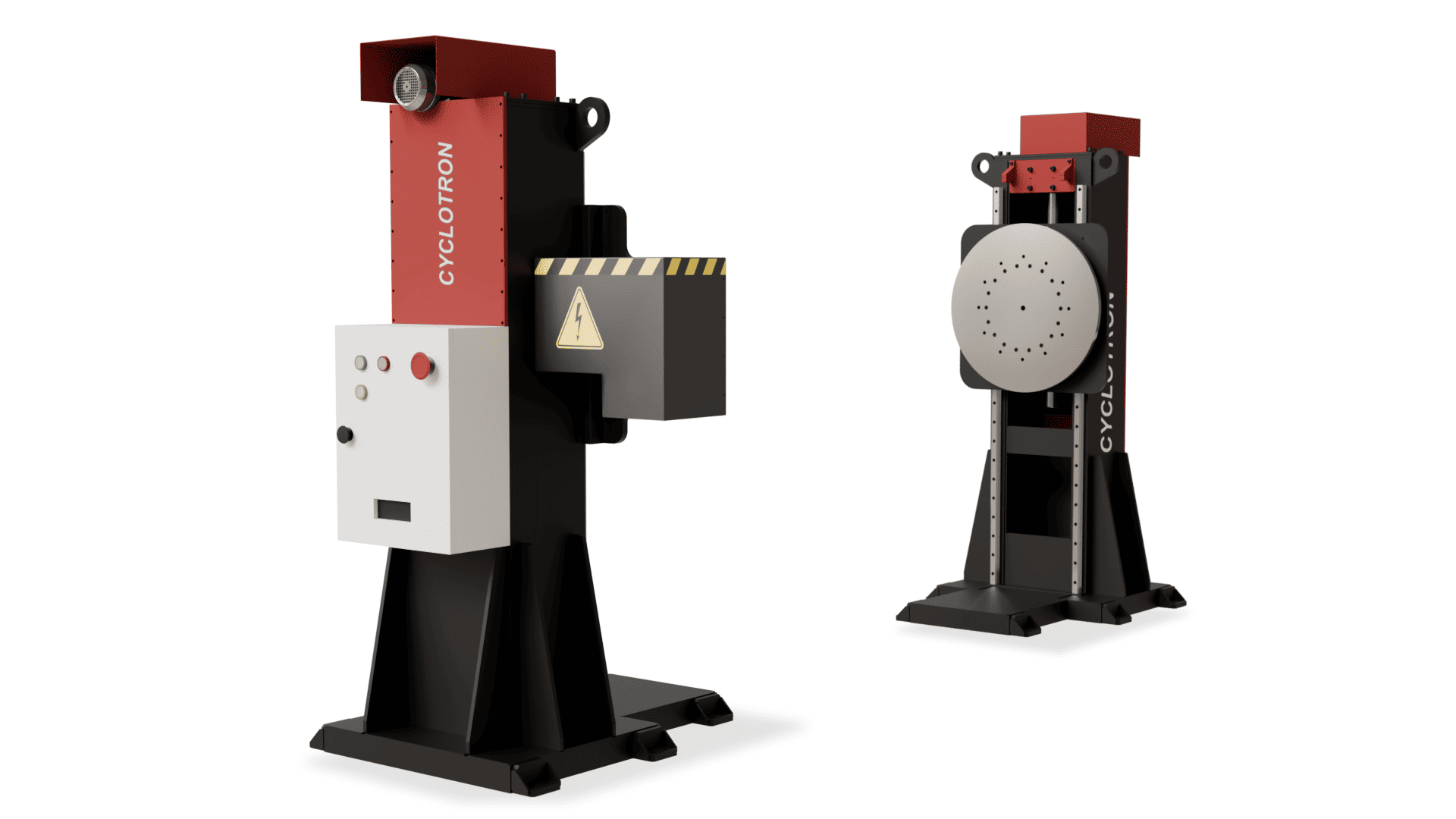
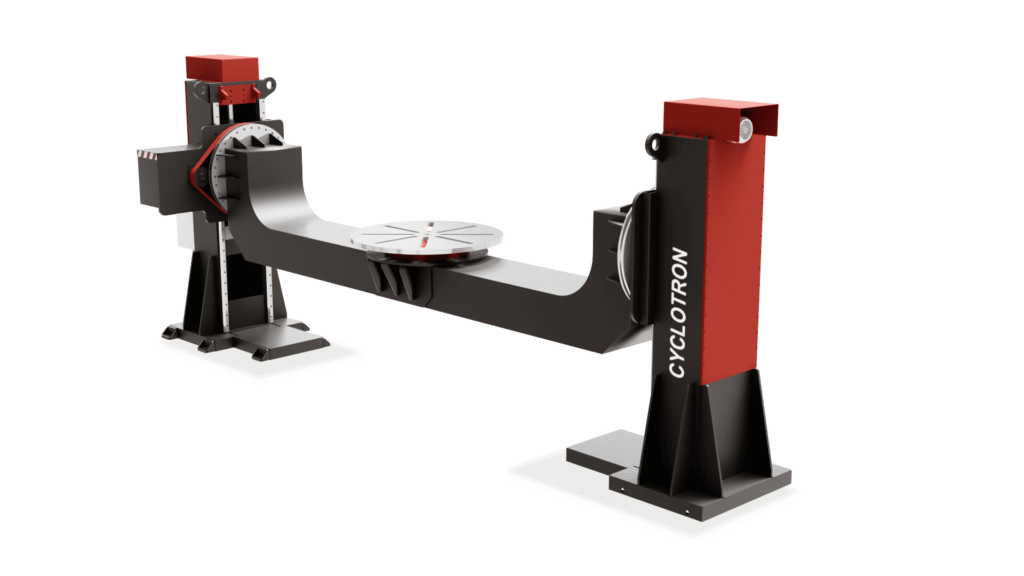
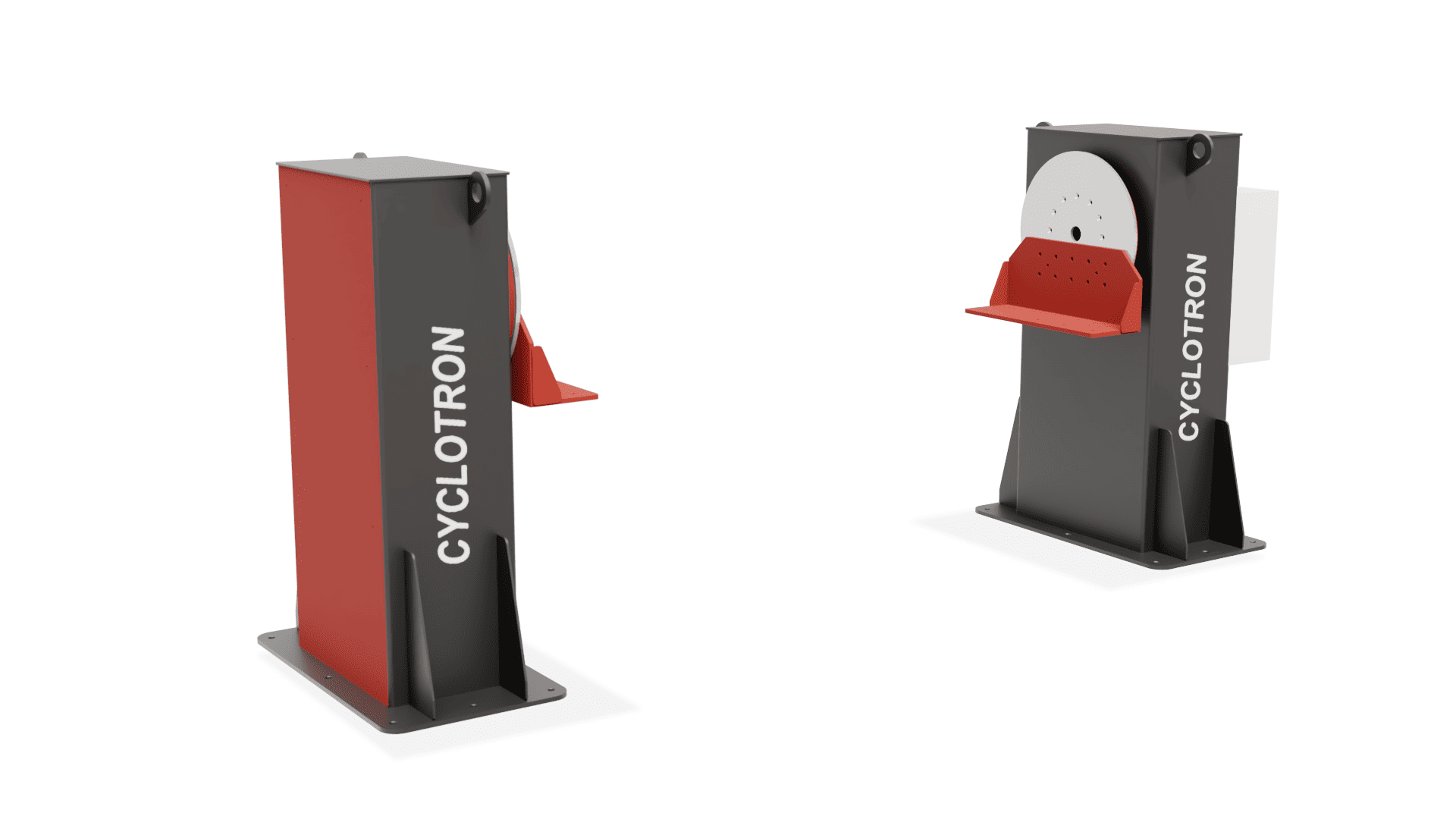
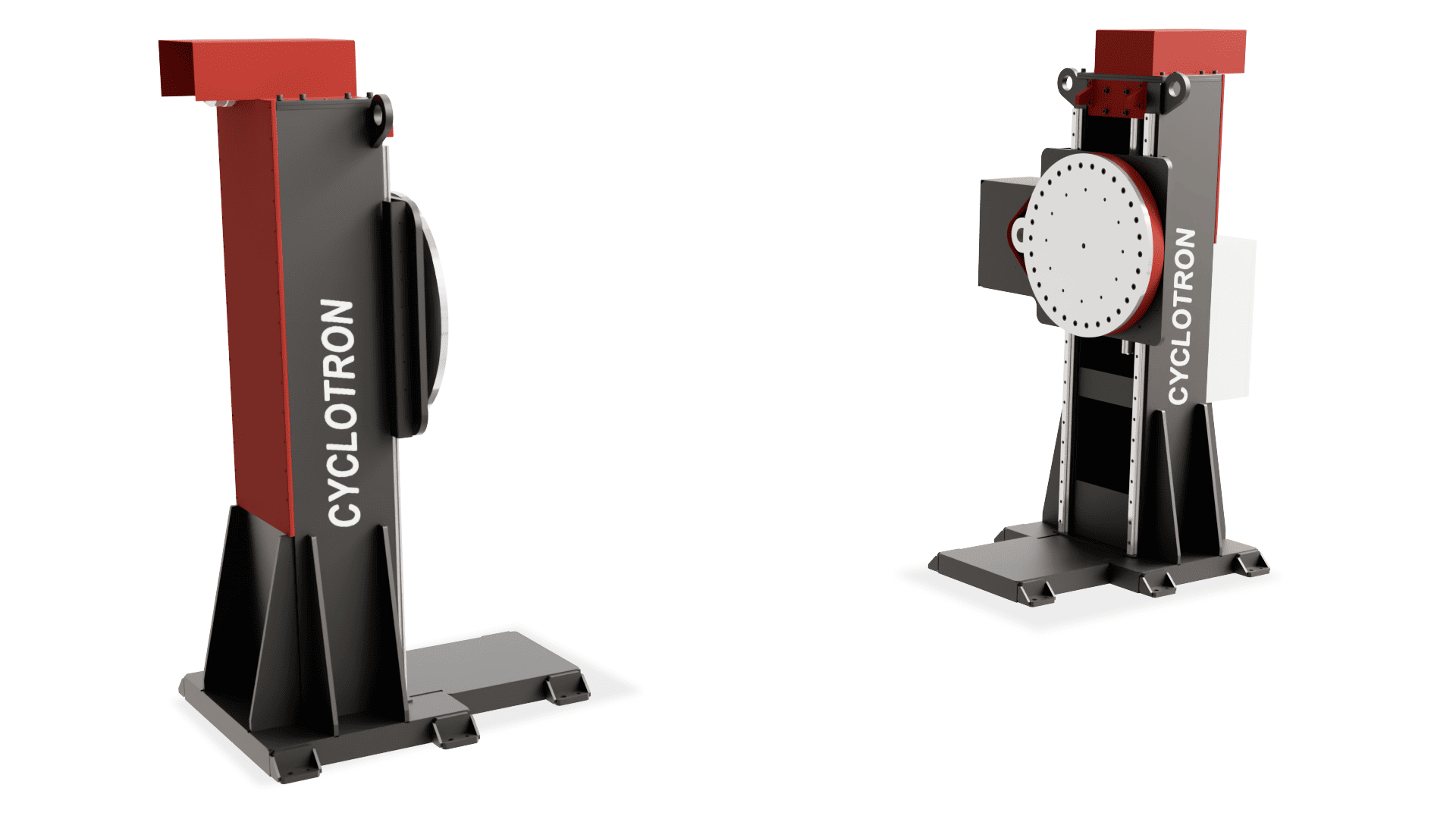
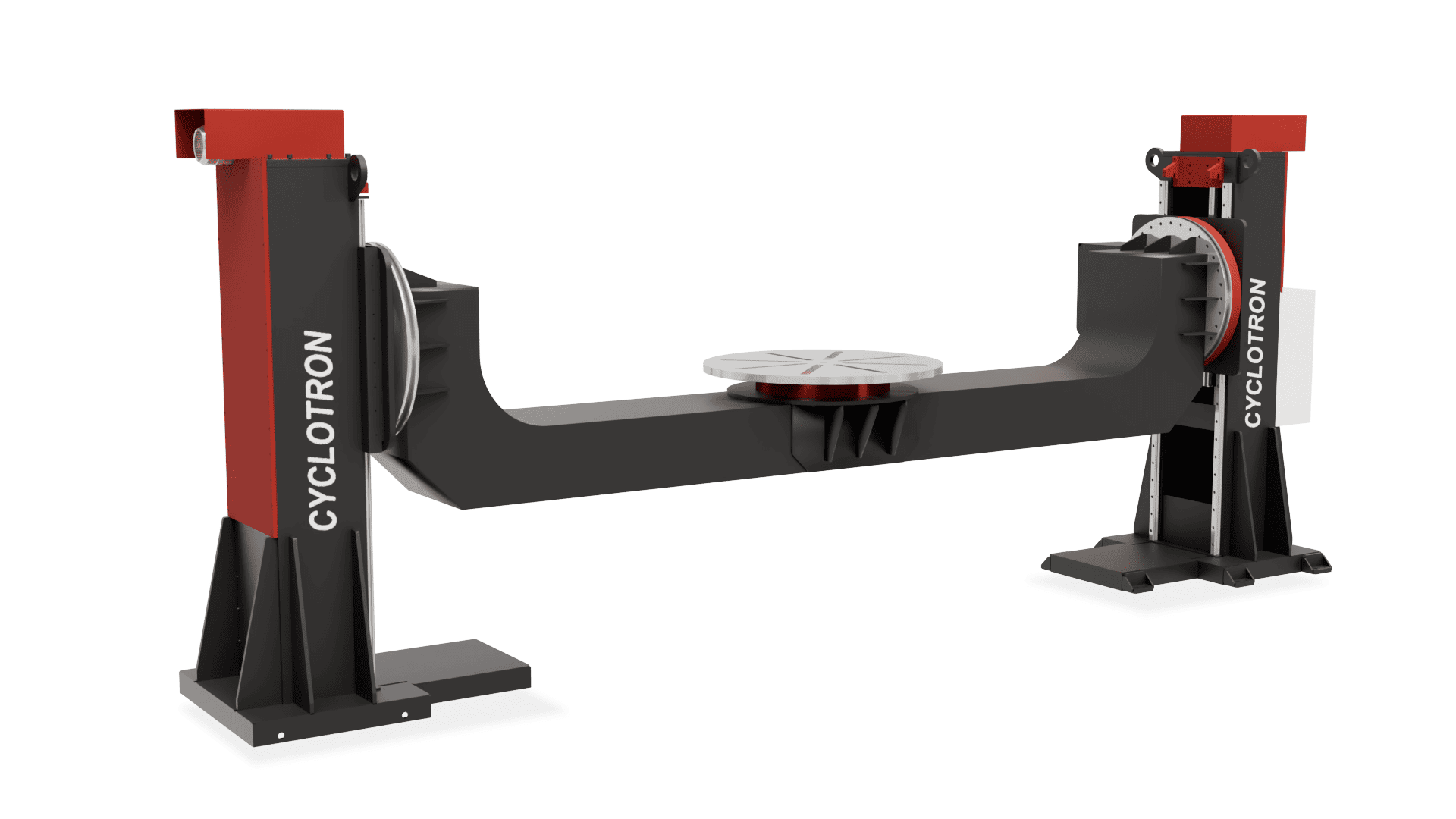
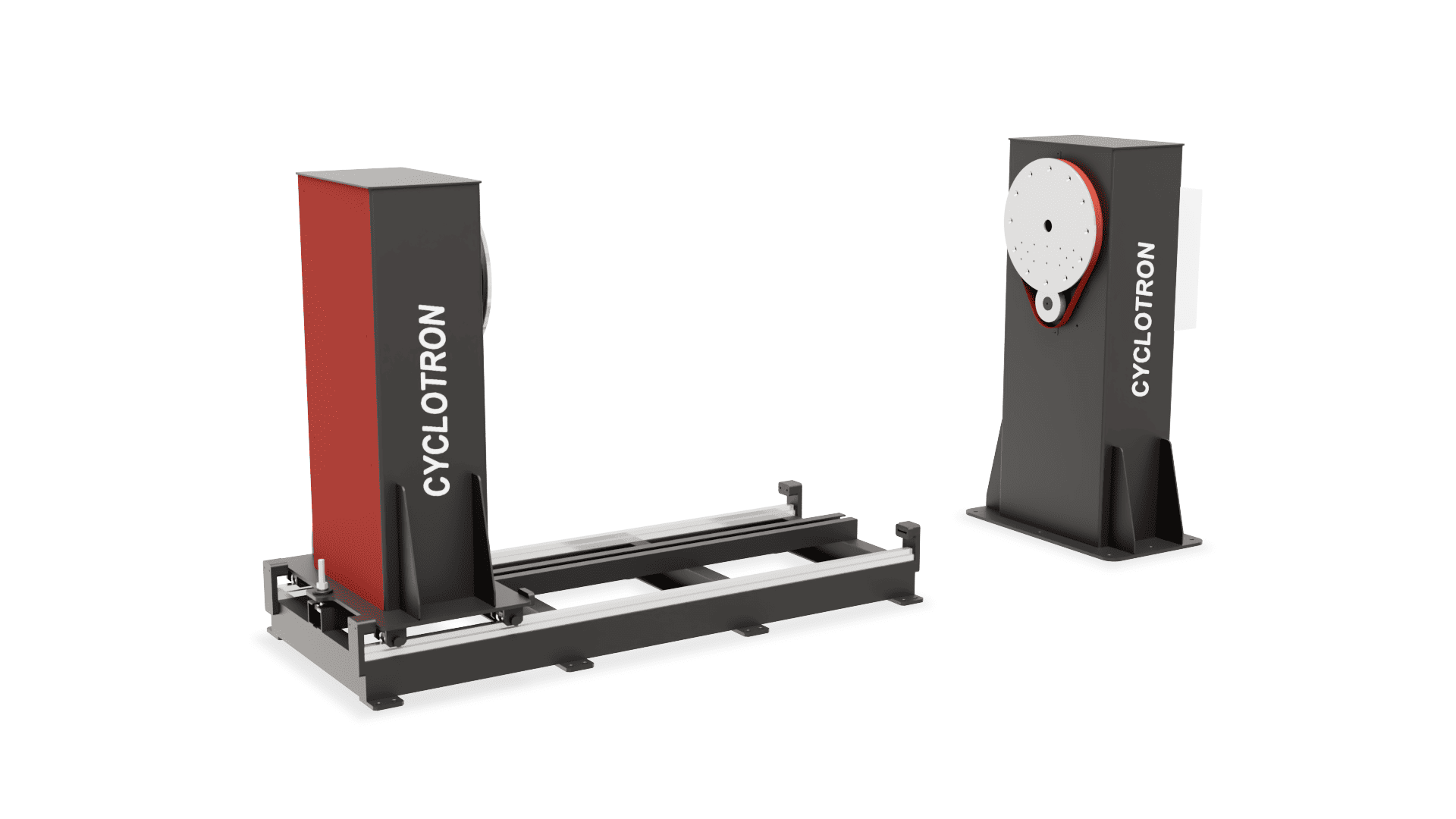
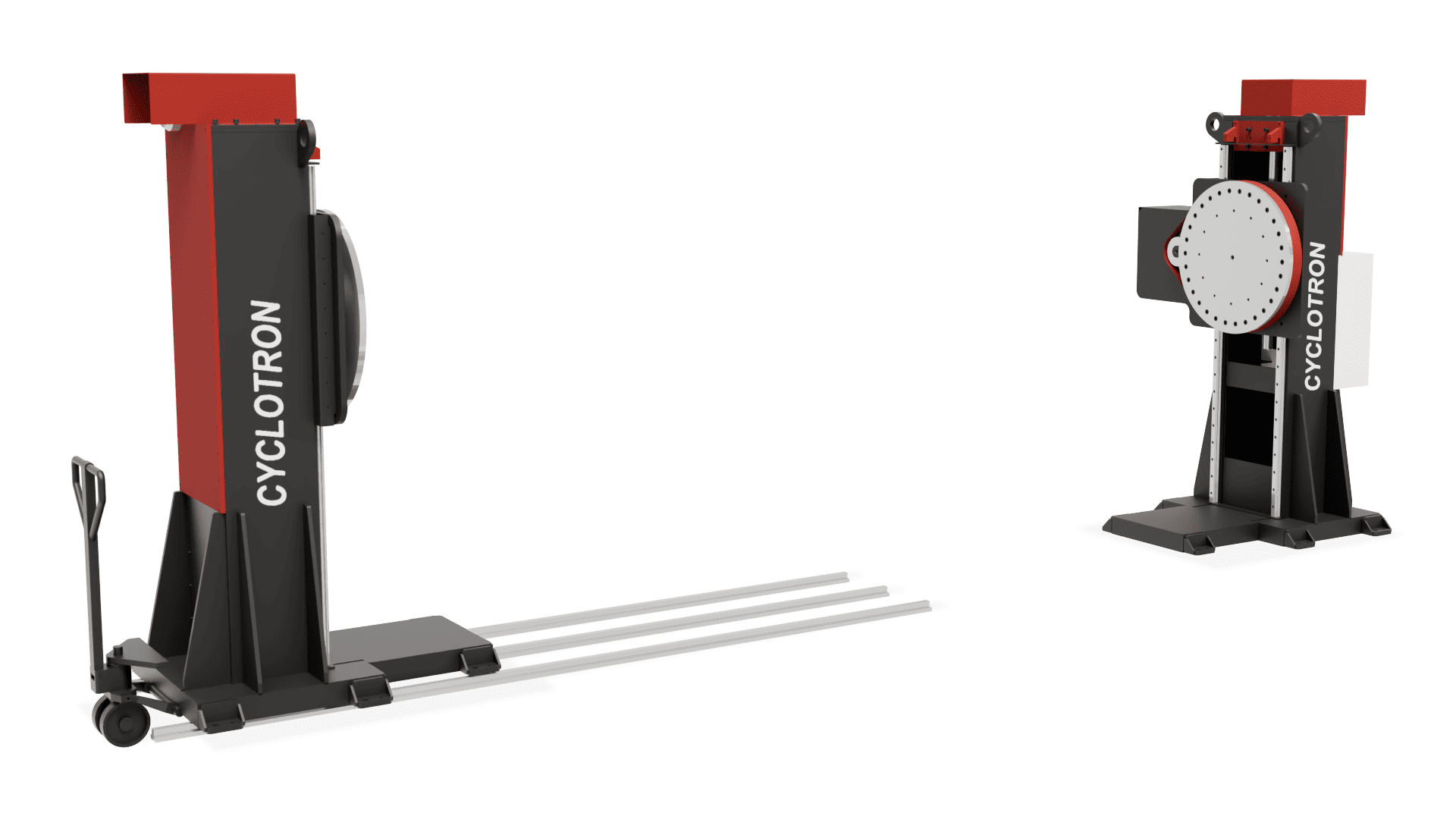
A headstock tailstock welding positioner is a specialized system used to rotate and support long or cylindrical workpieces during welding operations. It consists of two main units: the headstock and the tailstock.
The workpiece is mounted between these two supports. The headstock contains the drive mechanism that powers and controls rotation. The tailstock supports the opposite end of the job, keeping it aligned and stable throughout the welding process.
Unlike standard positioners that support a load from a single point, a headstock tailstock positioner distributes weight across both ends. This makes it ideal for long, heavy, or off-center fabrication projects where stability is critical. A welding headstock tailstock system helps operators achieve smoother welds while minimizing workpiece movement and distortion.
Cyclotron Welding Positioners from India
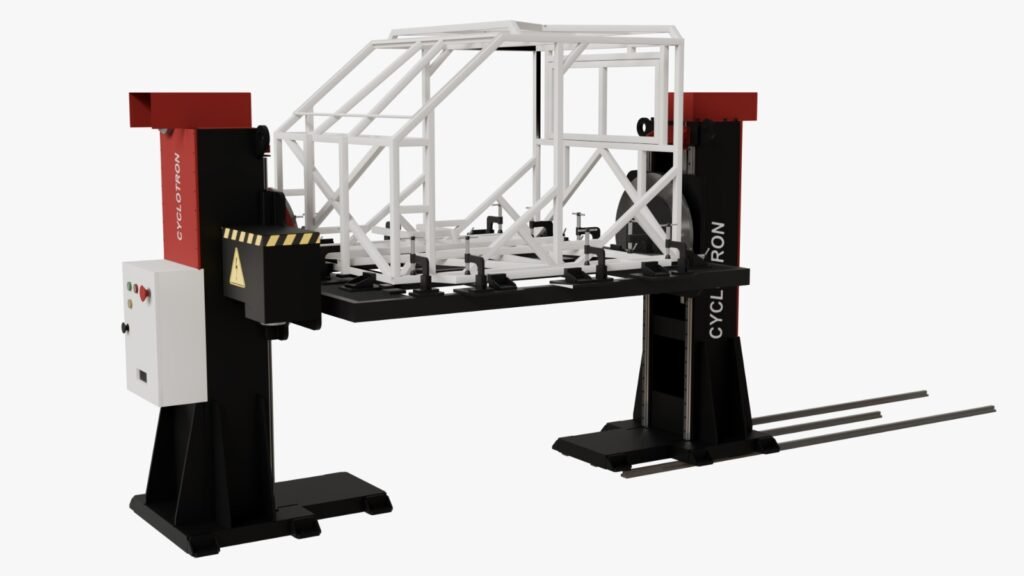
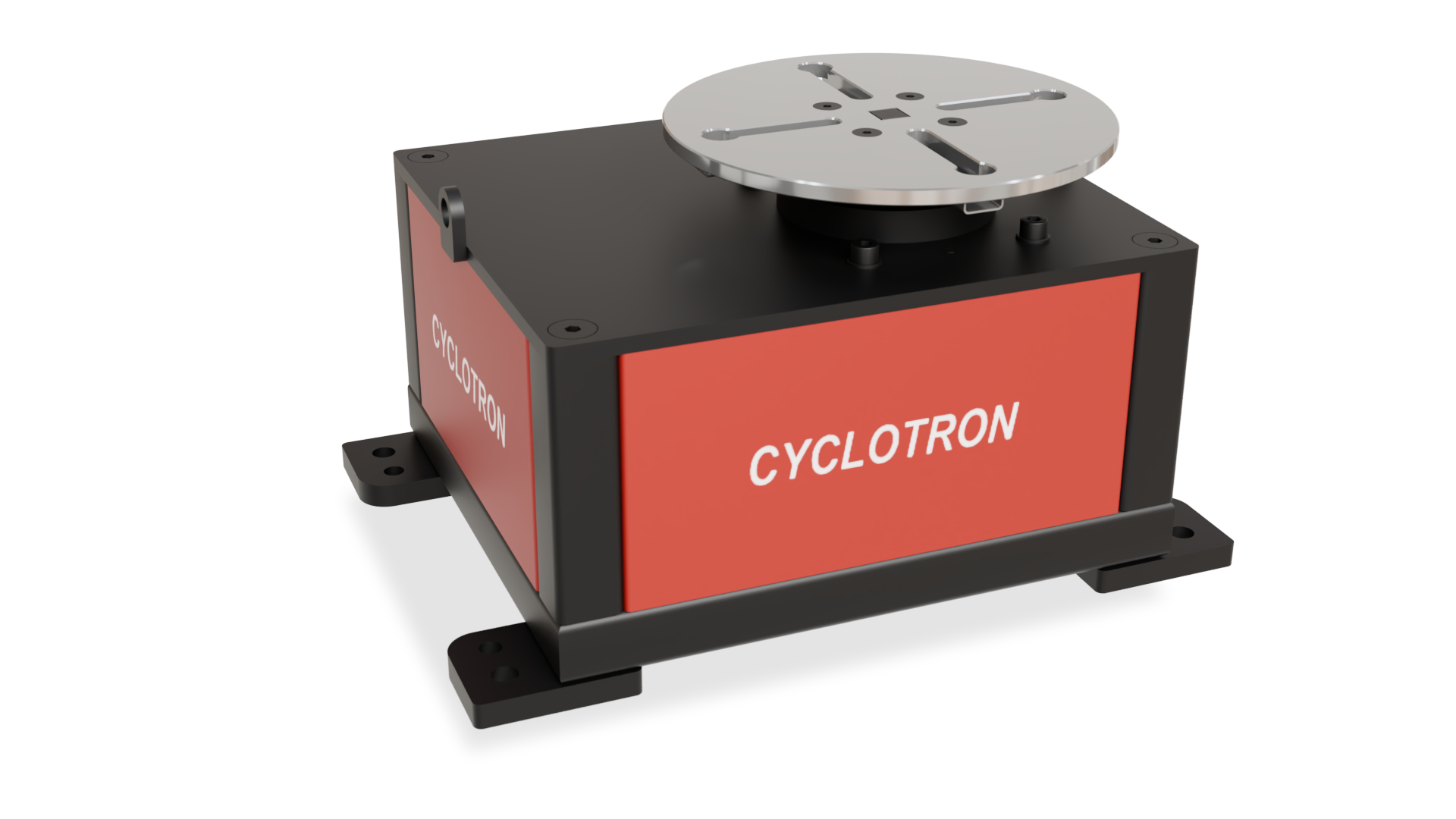
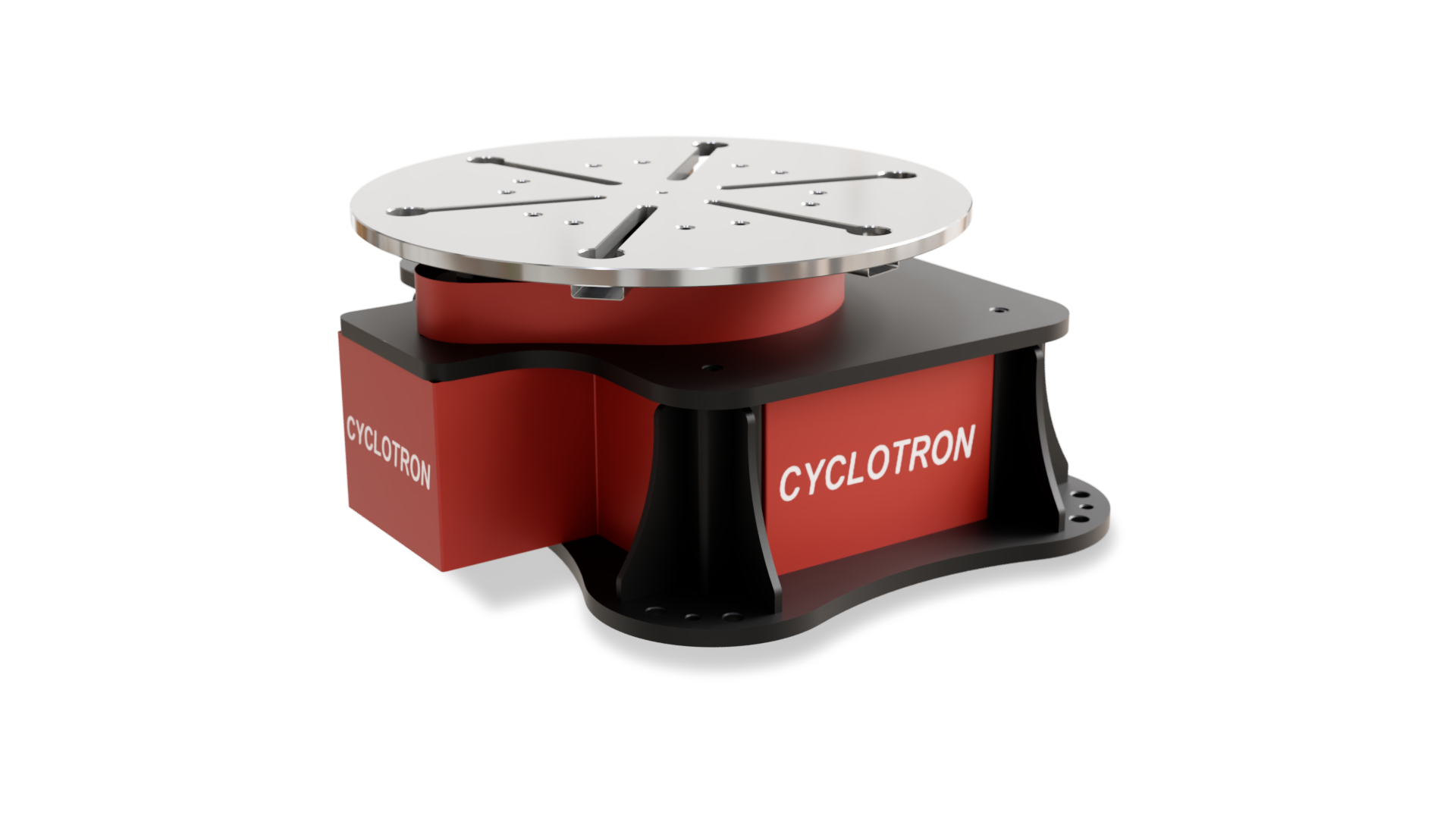
Cyclotron manufactures industrial welding positioners from 100 kg to 100 Tons capacity, designed for robotic/manual welding, heavy fabrication, and high-production welding environments.
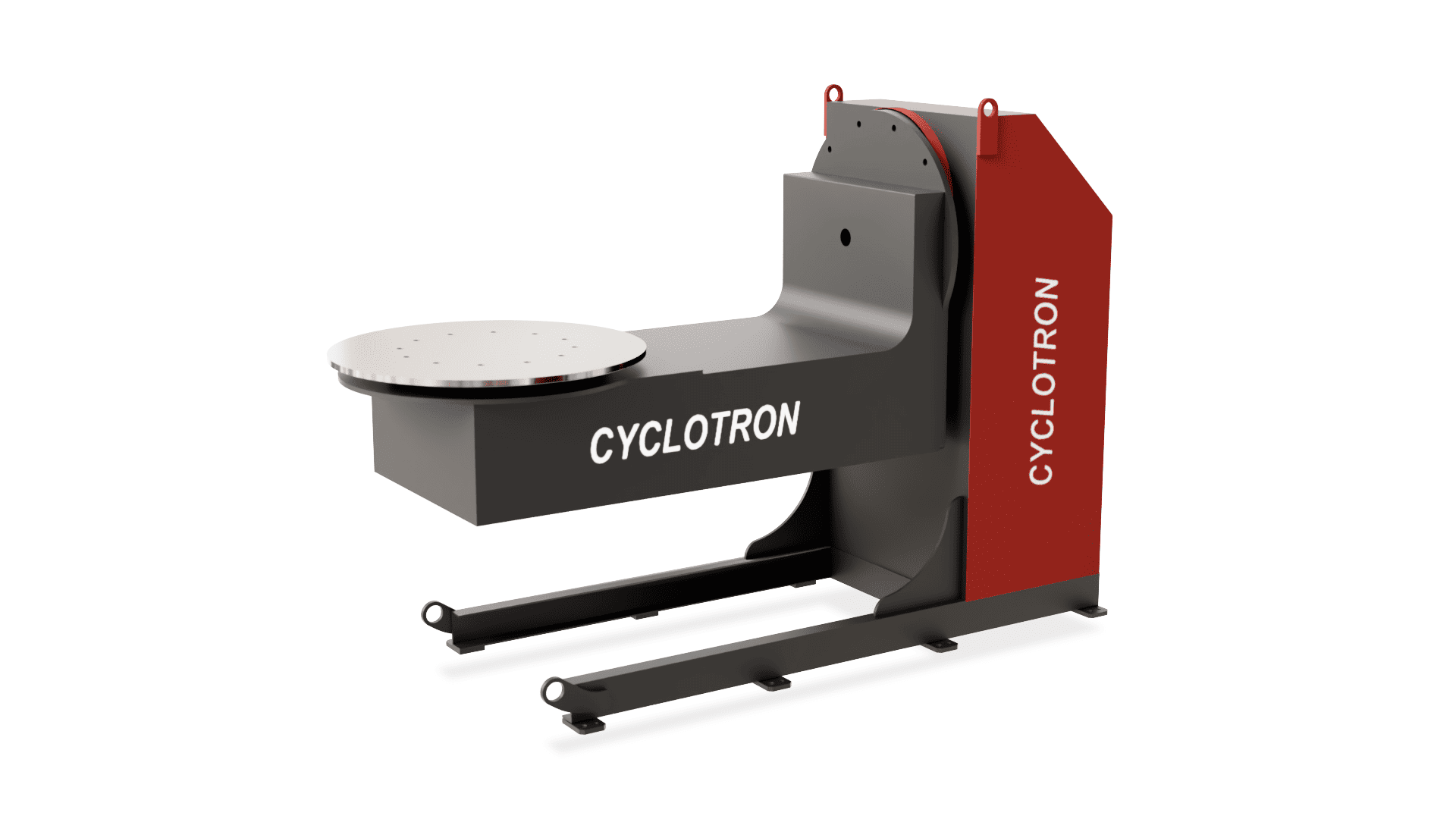
- Cyclotron manufactures all types of Manual/Robotic welding positioners like 1 axis, 2 axis, 3 axis, Headstock-tailstock, L Type, skyhook, etc
How Does a Headstock Tailstock Welding Positioner Work?
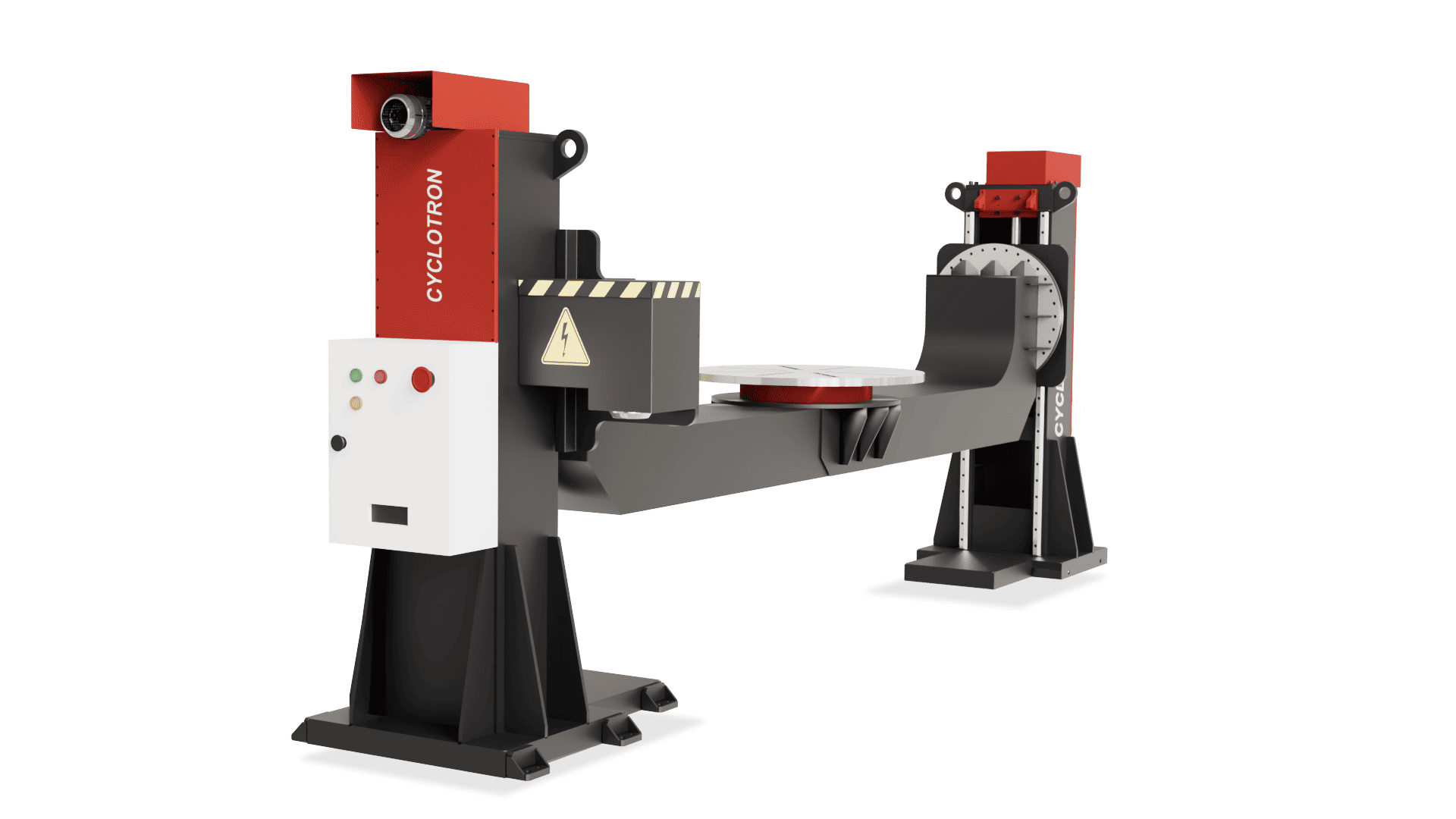
The working principle behind this positioner is that the workpiece is securely clamped between the headstock and tailstock. Once positioned, the motorized headstock rotates the job at a controlled speed, allowing welders or automated welding systems to maintain a consistent welding position.
To ensure smooth operation, both ends remain synchronized during rotation. Most systems also feature an adjustable tailstock that can be moved to accommodate different workpiece lengths.
For advanced fabrication environments, the system can be integrated with manipulators, robotic cells, and other automatic welding positioner solutions to improve efficiency and reduce manual intervention.
When Do You Need a Headstock Tailstock Welding Positioner?
Not every welding project requires a dual-support system. However, there are several situations where a headstock tailstock welding positioner becomes the most practical solution.
Long Workpieces
Components such as pipes, beams, shafts, and structural assemblies often exceed the capacity of standard positioners. Supporting the workpiece from both ends prevents sagging and improves rotational stability, making it a reliable long workpiece welding solution.
Heavy Fabrication Jobs
Large industrial components such as pressure vessels, wind tower sections, tanks, and heavy machinery parts require substantial load-bearing capacity. A heavy duty welding positioner helps manage these loads safely while maintaining accurate positioning.
Multi-Side Welding Applications
Some projects require continuous rotation to access multiple weld joints around the circumference of the workpiece. The headstock-tailstock arrangement allows smooth and uninterrupted movement, reducing setup time between weld passes.
High-Precision Welding
Maintaining alignment is essential when working with demanding fabrication tolerances. By securely supporting both ends of the workpiece, the system minimizes vibration and movement, resulting in more accurate and consistent welds.
Compared to standard turntables, headstock tailstock systems offer significantly better support for lengthy, oversized, and unbalanced loads.
Benefits of Headstock Tailstock Welding Positioners
Investing in a headstock tailstock system can deliver several operational advantages.
Better Load Distribution
Supporting the workpiece at both ends reduces stress on fixtures and helps prevent deflection during rotation.
Improved Stability
The dual-support design keeps long components aligned and minimizes unwanted movement.
Smooth Rotation of Long Jobs
Consistent and controlled rotation improves welding access and helps maintain uniform weld quality.
Higher Welding Accuracy
Stable positioning allows operators and automated systems to produce more precise welds with fewer defects.
Reduced Manual Handling
Less repositioning means improved workplace safety and faster production cycles.
Automation Ready
These systems integrate easily with robotic welding cells, manipulators, and industrial welding automation setups, making them ideal for modern manufacturing environments.
Factors to Consider Before Buying
Choosing the right welding positioner requires careful evaluation of your application requirements.
Important factors include:
- Load capacity
- Maximum workpiece length
- Rotation speed range
- Synchronization accuracy
- Compatibility with automation systems
- Fixture and tooling requirements
One of the most important considerations is selecting the correct center distance between the headstock and tailstock. Working with an experienced welding positioner manufacturer can help ensure the system matches your production needs and future expansion plans.
Conclusion
A headstock tailstock welding positioner is one of the most effective solutions for welding long, heavy, and complex workpieces. By providing stable support, smooth rotation, and improved accuracy, it helps manufacturers increase productivity while maintaining high weld quality.
If you’re looking for a customized welding automation solution, contact our team today for an application consultation and expert guidance on selecting the right system for your operation.
Frequently Asked Questions
1. What is a headstock tailstock welding positioner?
It is a welding positioner that supports a workpiece between a powered headstock and a supporting tailstock, allowing controlled rotation during welding.
2. What is the difference between a standard positioner and a headstock tailstock system?
A standard positioner typically supports the load from one point, while a headstock tailstock system supports both ends, making it better suited for long and heavy workpieces.
3. What industries use headstock tailstock welding systems?
Industries such as heavy engineering, structural steel fabrication, oil and gas, wind energy, pipe manufacturing, and pressure vessel production commonly use these systems.
4. Can headstock tailstock positioners handle heavy loads?
Yes. These systems are specifically designed to support and rotate heavy fabrication components while maintaining stability and alignment throughout the welding process.
What is a welding positioner?
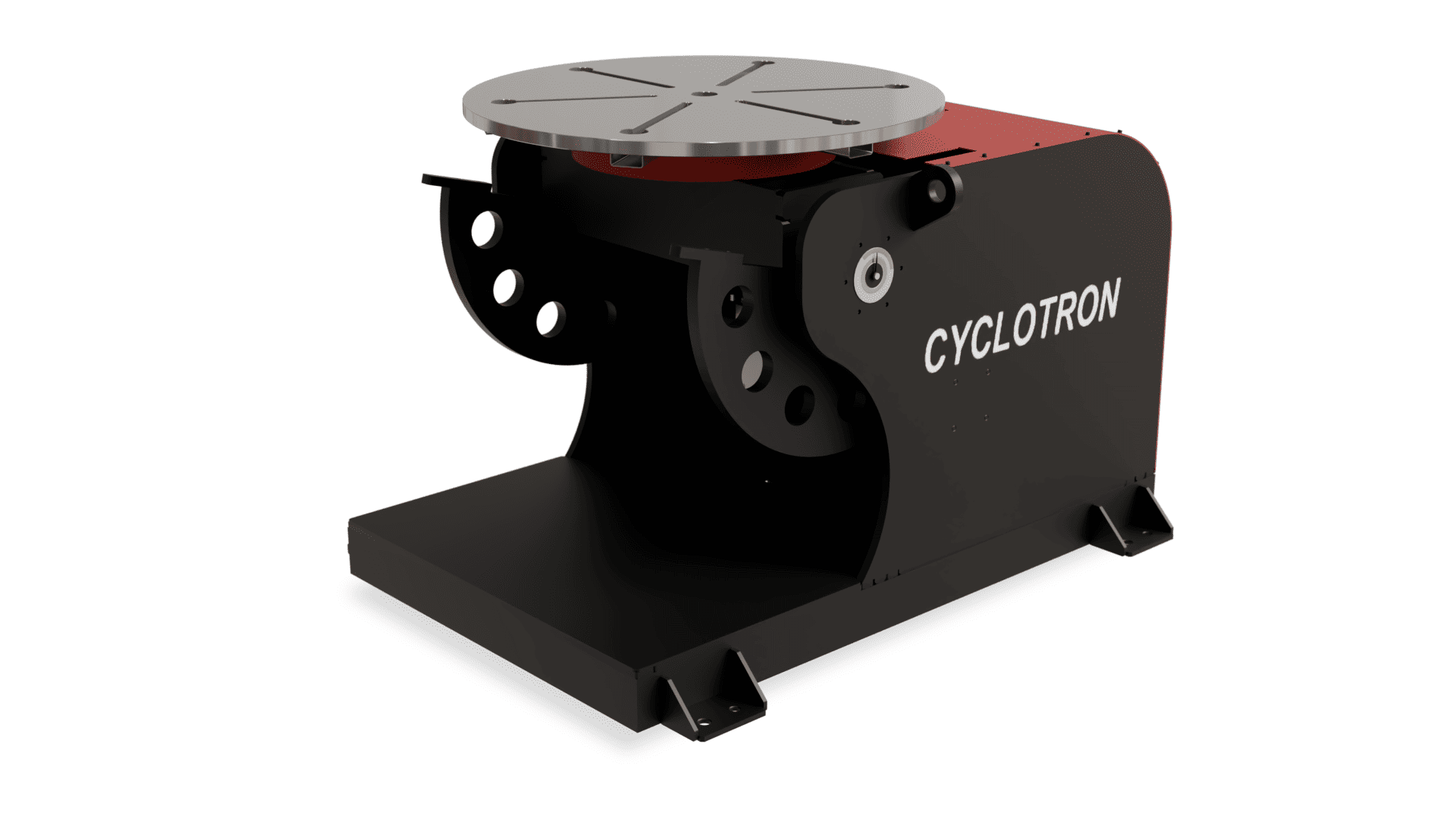
Its main purpose is to position the job at the best angle for welding, helping operators achieve better weld quality and greater efficiency.
5 Common Welding Problems that a Positioner Can Solve
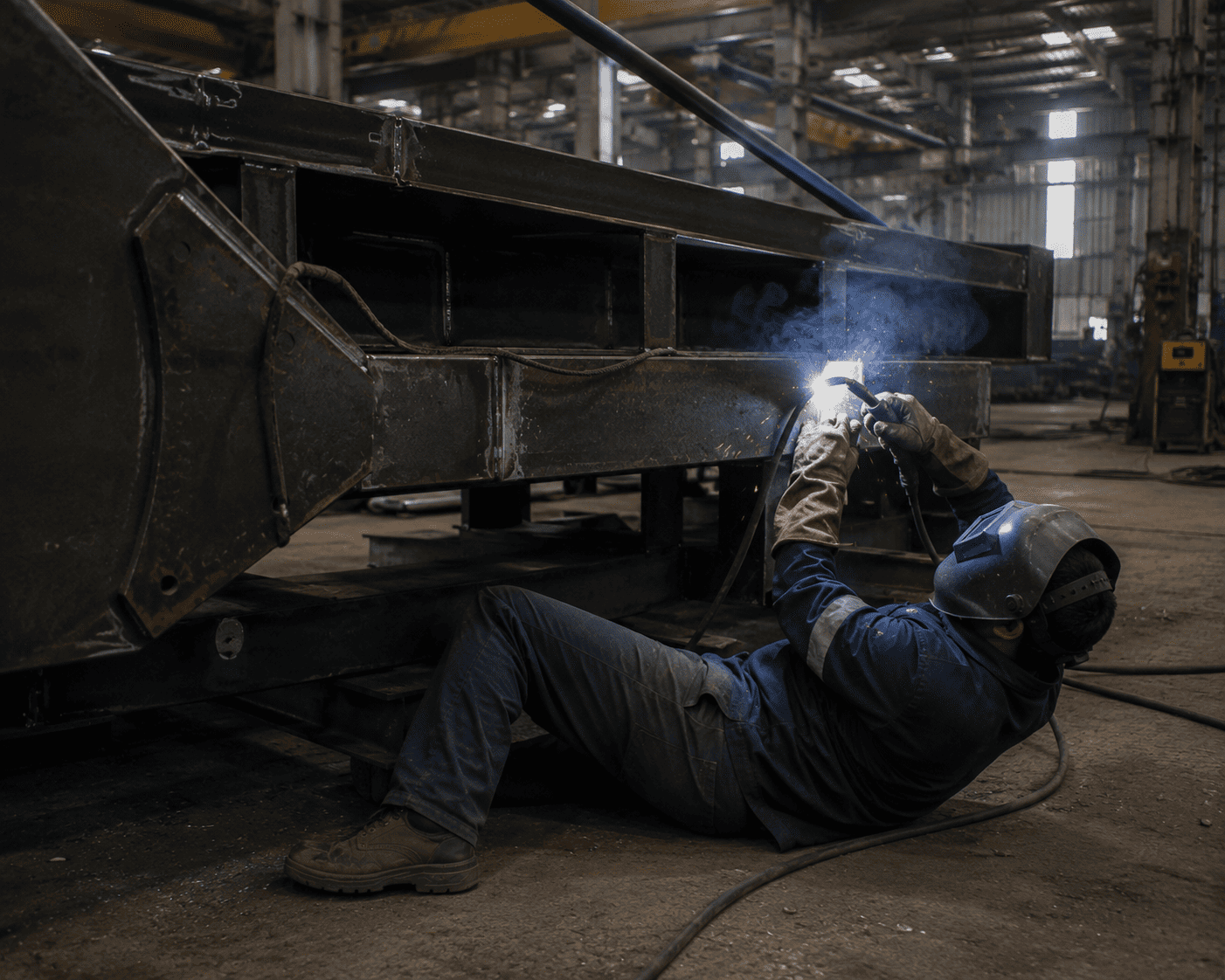
1. Poor weld quality due to welding positioners. 2. Excessive welder fatique 3. Longer welding cycle times, etc
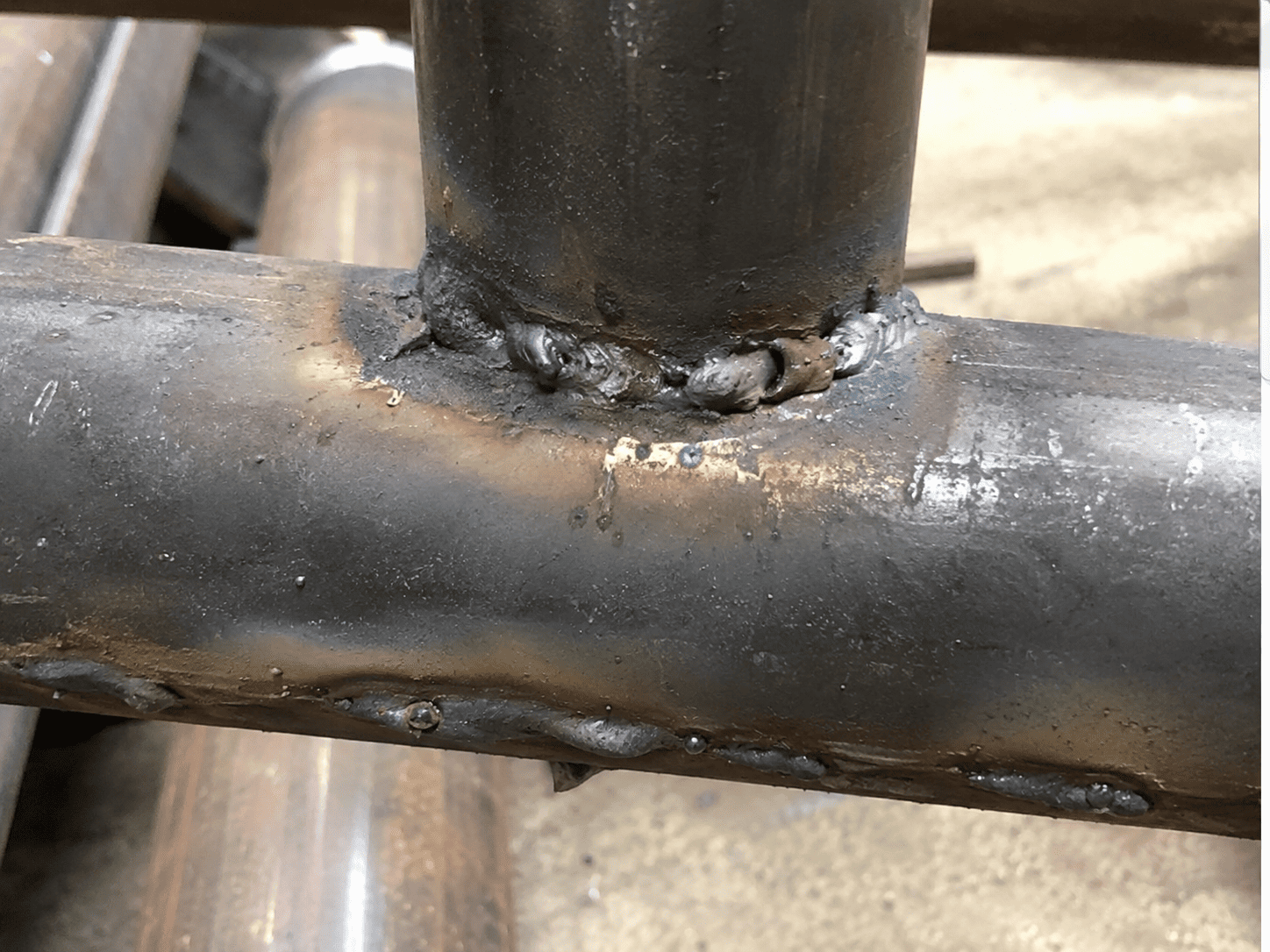
Inconsistent Welds- How a positioner can fix that
Welding positioner can help you with constantly changing weld angles, it can help you with operator fatique, etc
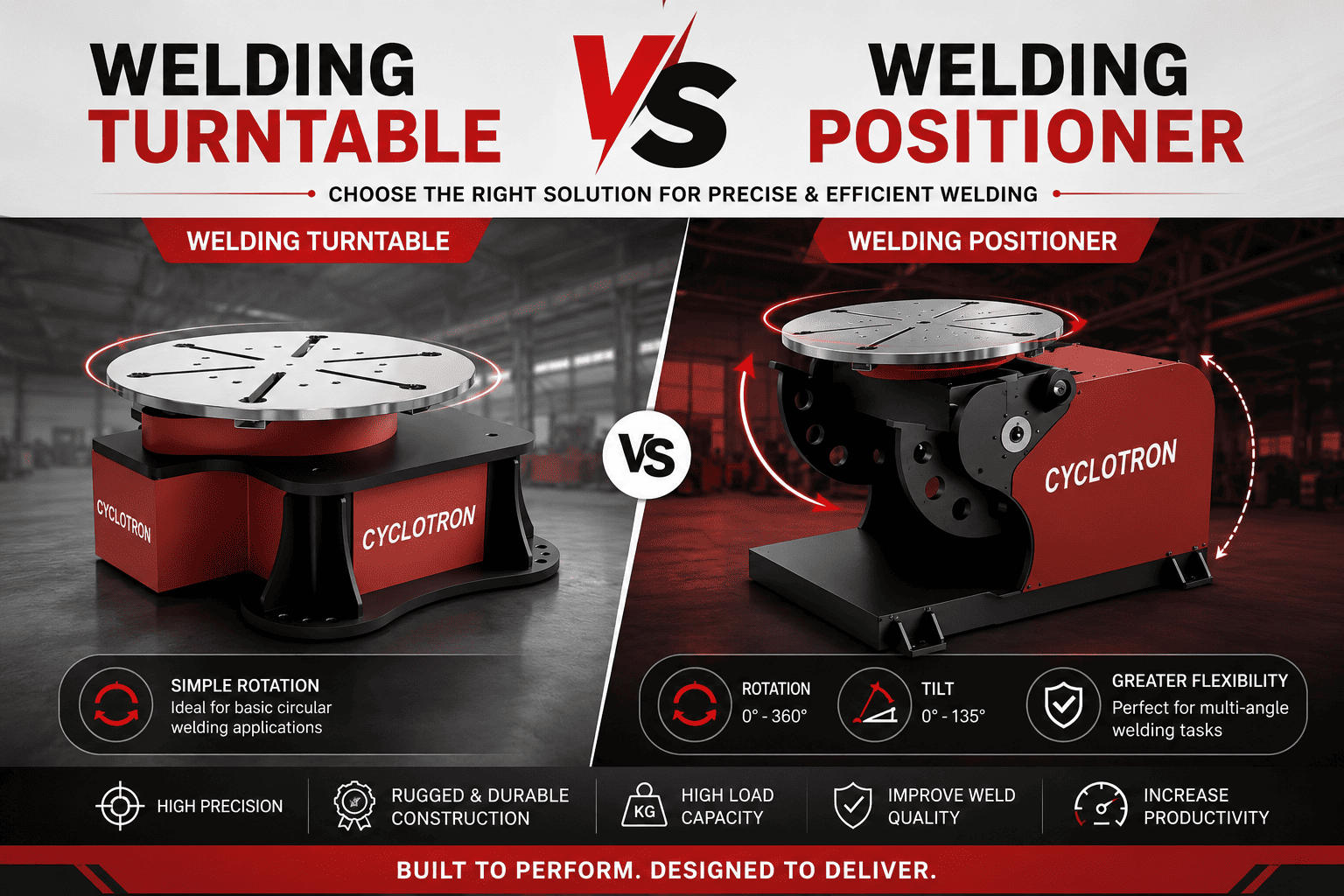
Welding Turntable vs Welding Positioner: What’s the Difference?
A welding turntable provides simple rotation for smooth, consistent welds. A welding positioner can also tilt and angle the workpiece,
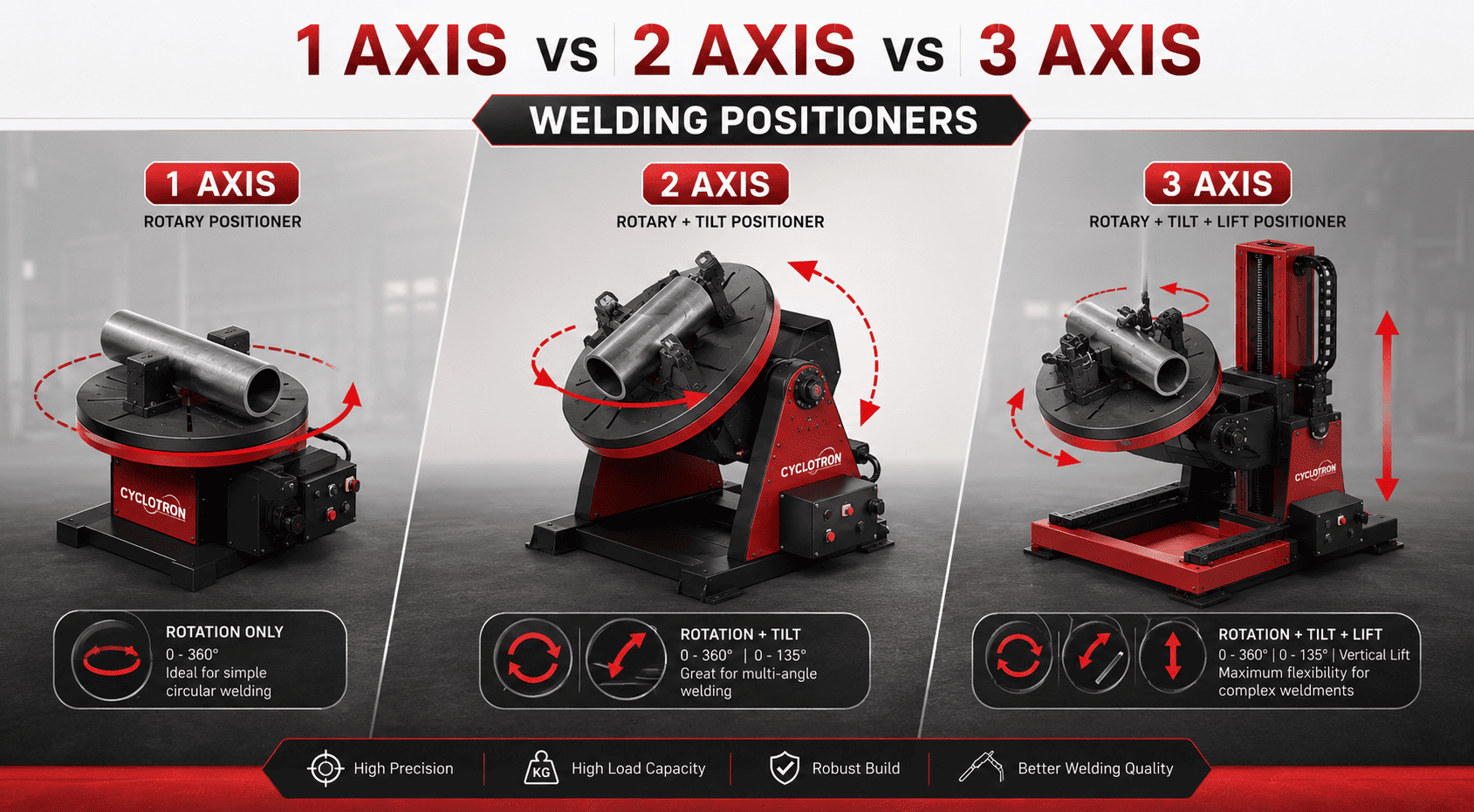
1 Axis vs 2 Axis vs 3 Axis Welding positioners
Compare 1 axis vs 2 axis vs 3 axis welding positioners based on rotation, tilt, flexibility, applications, cost, and automation. Learn which welding positioner is best for your fabrication needs.
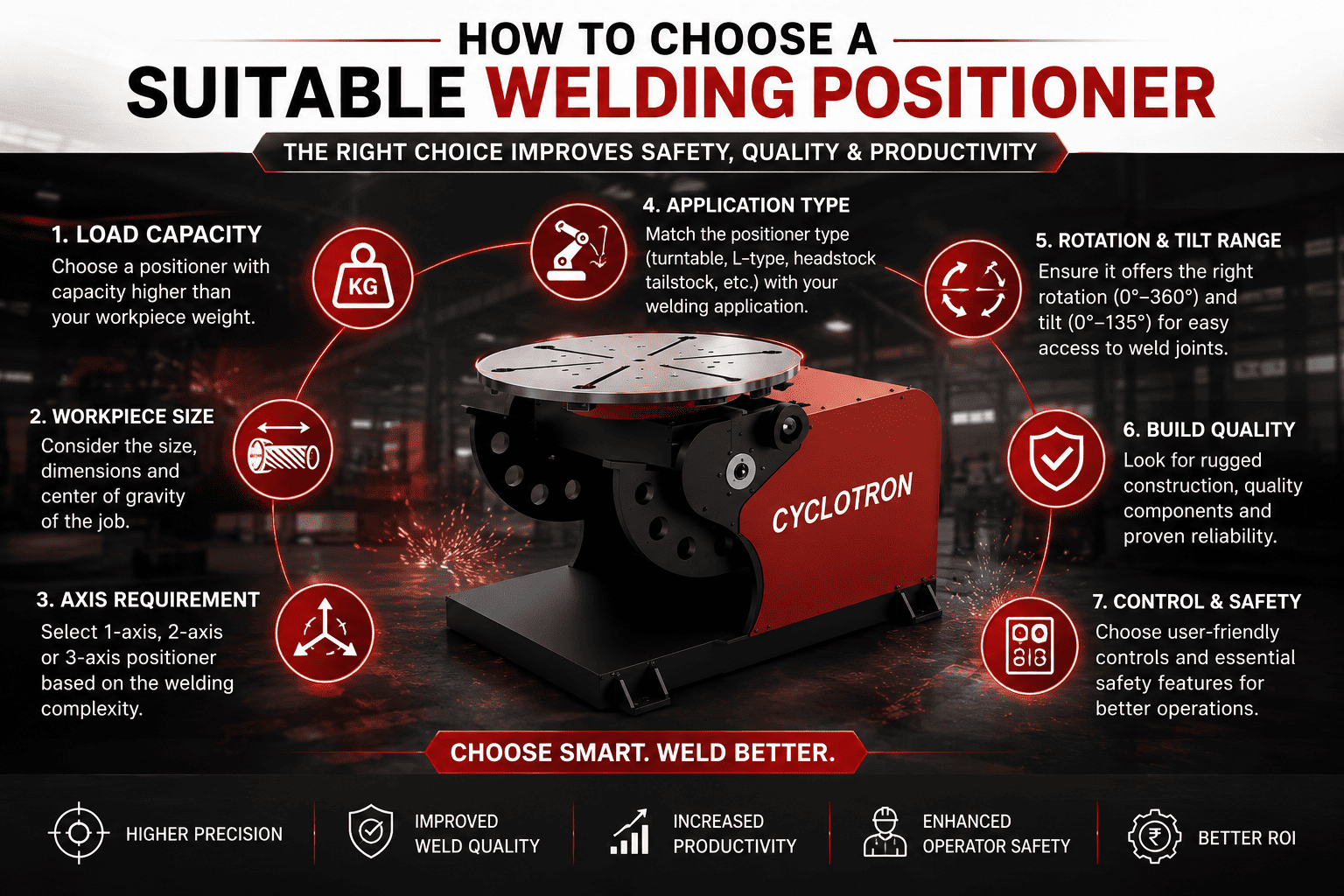
How to select a suitable welding positioner?
Selecting the right welding positioner plays a critical role in the fabrication setup. Welding positioners are designed to handle different load ranges.
In this blog we will address all the commonly asked questions related to Welding positioners or Cyclotron Welding positioners specifically